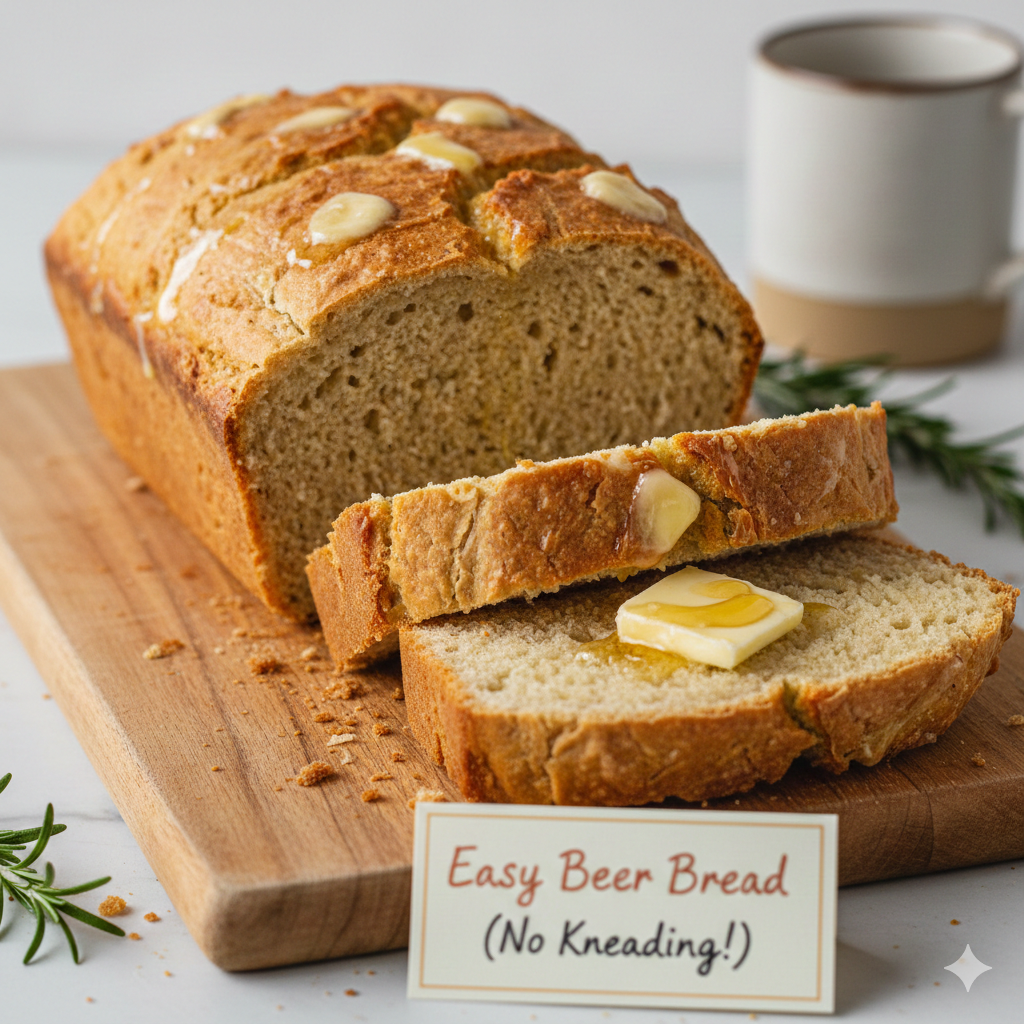
1. Introduction: The Magic of Bubbles and Barley
There is a specific kind of alchemy that happens when the fizz of a cold brew meets the humblest of pantry staples: flour. For many, the barrier to homemade bread is the intimidating trio of yeast, kneading, and waiting. We’ve all been there—staring at a packet of active dry yeast, wondering if the water is too hot, too cold, or if the “bloom” is actually happening.
Beer bread is the rebel of the baking world.It laughs in the face of proofing boxes and dough hooks. By leveraging the carbonation and natural yeast remnants in beer, combined with a chemical leavener like baking powder, you can produce a loaf that boasts a craggy, golden-brown crust and a tender, buttery crumb without breaking a sweat.
The Cultural Spirit of the Loaf
While “quick breads” have existed for centuries, beer bread as we know it gained massive popularity in the mid-20th century. It’s a staple of communal gatherings, from Midwestern potlucks to coastal braais in South Africa (where it’s often calledpotbrood). It is the ultimate “emergency bread”—the thing you bake when guests are coming over in an hour and you realize the bread bin is empty. It carries a rustic, farmhouse charm that suggests you spent all day in the kitchen, even if you actually spent that time on the couch.
2. Recipe Overview
| Attribute | Details |
| Cuisine Type | American / Rustic Artisan |
| Difficulty Level | Beginner (Zero kneading required) |
| Prep Time | 10 Minutes |
| Cook Time | 45–55 Minutes |
| Total Time | ~1 Hour |
| Dietary Info | Vegetarian, Nut-Free, Dairy-Free Optional |
3. Equipment and Tools
To achieve that perfect “bakery-style” lift, the right tools are essential.
- Loaf Pan:A standard 9×5-inch (23×13 cm) metal or glass loaf pan.
- Depth Requirement:Ensure it is at least 2.5 inches deep to accommodate the rise.
- Mixing Bowls:One large ceramic or stainless steel bowl for the dry ingredients.
- Whisk:For aerating the flour and ensuring even distribution of the baking powder.
- Rubber Spatula:Essential for folding the wet and dry ingredients without overworking the gluten.
- Small Saucepan or Microwave-Safe Bowl:For melting the butter topping.
- Wire Cooling Rack:To prevent the bottom of the bread from becoming soggy after baking.
4. Serving Suggestions
This bread is a chameleon. Depending on how you slice it, it fits into every meal of the day.
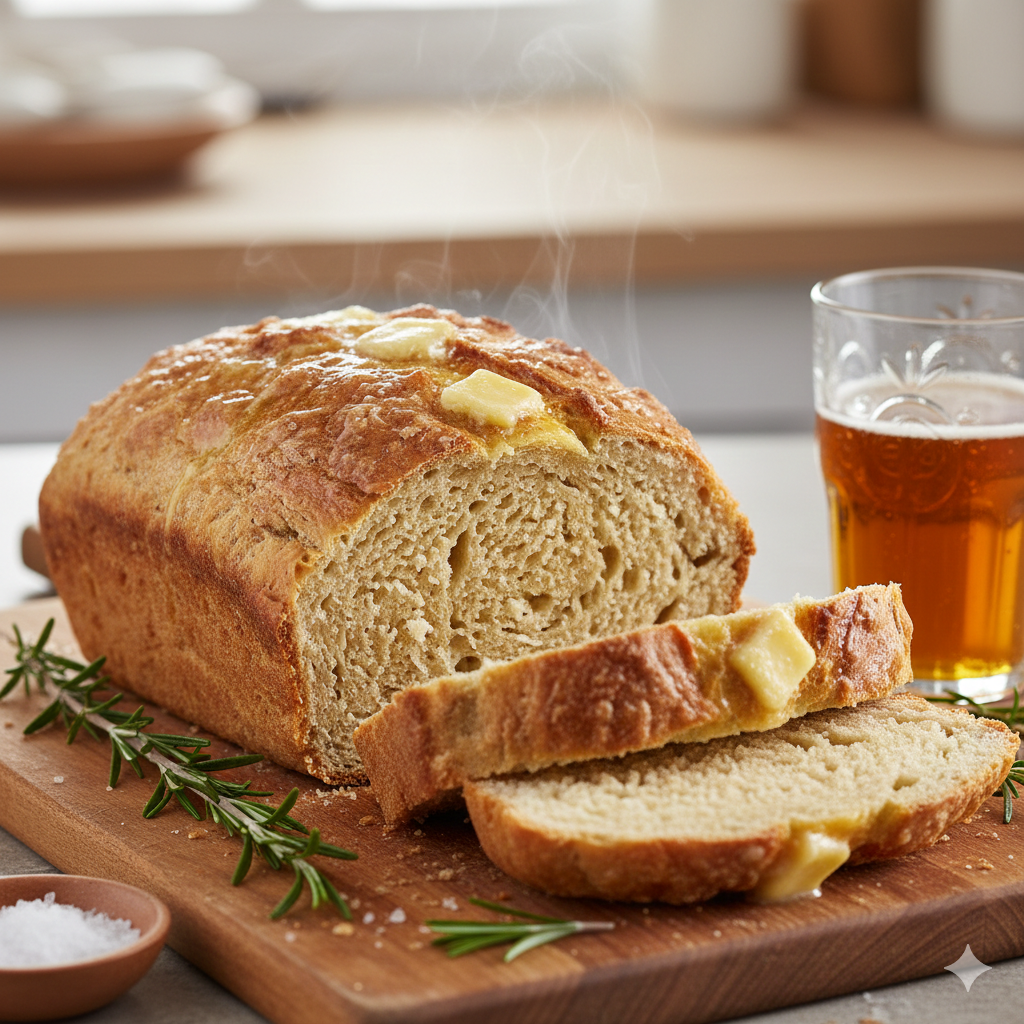
- The Classic Platter:Serve warm slices with a generous swipe of salted cultured butter and a drizzle of wildflower honey.
- The Savory Route:Toast a slice and top with smashed avocado, red pepper flakes, and a poached egg.
- Dinner Pairings:It is the mandatory companion for hearty beef stews, chili con carne, or roasted tomato basil soup. The absorbent crumb is designed for “mopping” up sauces.
- Beverage Pairings:*Evening:A crisp Amber Ale or a nutty Porter.
- Morning:A bold French Press coffee or a spicy Chai tea.
5. Nutritional Information (Per Slice)
Based on a 10-slice yield.
- Calories:245 kcal
- Total Fat:9g (mostly from the butter topping)
- Carbohydrates:36g
- Protein:5g
- Fiber:1.2g
- Health Note:While this is a comfort food, using a craft beer with live sediments can provide trace amounts of B vitamins and minerals like selenium and magnesium.
6. Storage and Reheating
Because beer bread is a “quick bread,” it lacks the preservatives of store-bought loaves.
- Room Temperature:Store in an airtight container or a beeswax wrap for up to 3 days.
- Refrigeration:Not recommended, as it can dry out the crumb.
- Freezing:Wrap the cooled loaf tightly in plastic wrap, then aluminum foil. It stays fresh for up to 3 months. Thaw at room temperature.
- Reheating:For the best experience, toast slices in a toaster or under a broiler for 2 minutes to revive the exterior crunch.
7. Expert Tips and Variations
Professional Secrets
- Sift Your Flour:If you want a lighter, less “dense” loaf, sift your all-purpose flour. This incorporates air and prevents clumps.
- The Butter “Bath”:Pouring half the melted butter at the bottom of the pan and half over the top creates a fried, savory crust that is world-class.
- Room Temp Beer:Cold beer can shock the batter and slow down the leavening. Let your beer sit out for 15 minutes before mixing.
Creative Variations
- Cheesy Garlic:Fold in 1 cup of sharp cheddar and 1 tablespoon of garlic powder.
- Herbaceous:Add 2 tablespoons of fresh rosemary or thyme.
- Sweet & Nutty:Use a Stout beer and add 1/2 cup of chopped walnuts and 2 tablespoons of maple syrup.
- Spicy:Add diced jalapeños and pepper jack cheese.
8. Ingredients Section
The Foundation
- 3 Cups (375g) All-Purpose Flour:Use a “spoon and level” method for accuracy.
- 3 teaspoons Baking Powder:Ensure it is fresh for maximum lift.
- 1 teaspoon Salt:Fine sea salt works best.
- 1/4 Cup (50g) Granulated Sugar:This feeds the yeast in the beer and helps with browning.
- 12 oz (355ml) Beer:One standard bottle/can.
- 1/4 Cup (56g) Unsalted Butter:Melted (to be poured over the top).
Substitutions
- Flour:You can swap 1 cup for Whole Wheat flour for a nuttier taste.
- Beer:Use Ginger Ale or Club Soda for a non-alcoholic version.
- Butter:Use coconut oil or a vegan butter substitute for a dairy-free loaf.
9. Step-by-Step Instructions
- Preheat and Prep:Set your oven to375°F (190°C). Grease your 9×5 loaf pan thoroughly with butter or non-stick spray.
- Mix Dry Ingredients:In a large bowl, whisk together the flour, baking powder, salt, and sugar.
- The “Pour”:Slowly pour the 12 oz of beer into the dry mixture.
- The Fold:Using a spatula, gently fold the mixture untiljustcombined. The batter should be thick and slightly lumpy.Do not overmix, or the bread will be tough.
- Transfer:Scrape the batter into the prepared loaf pan and smooth the top.
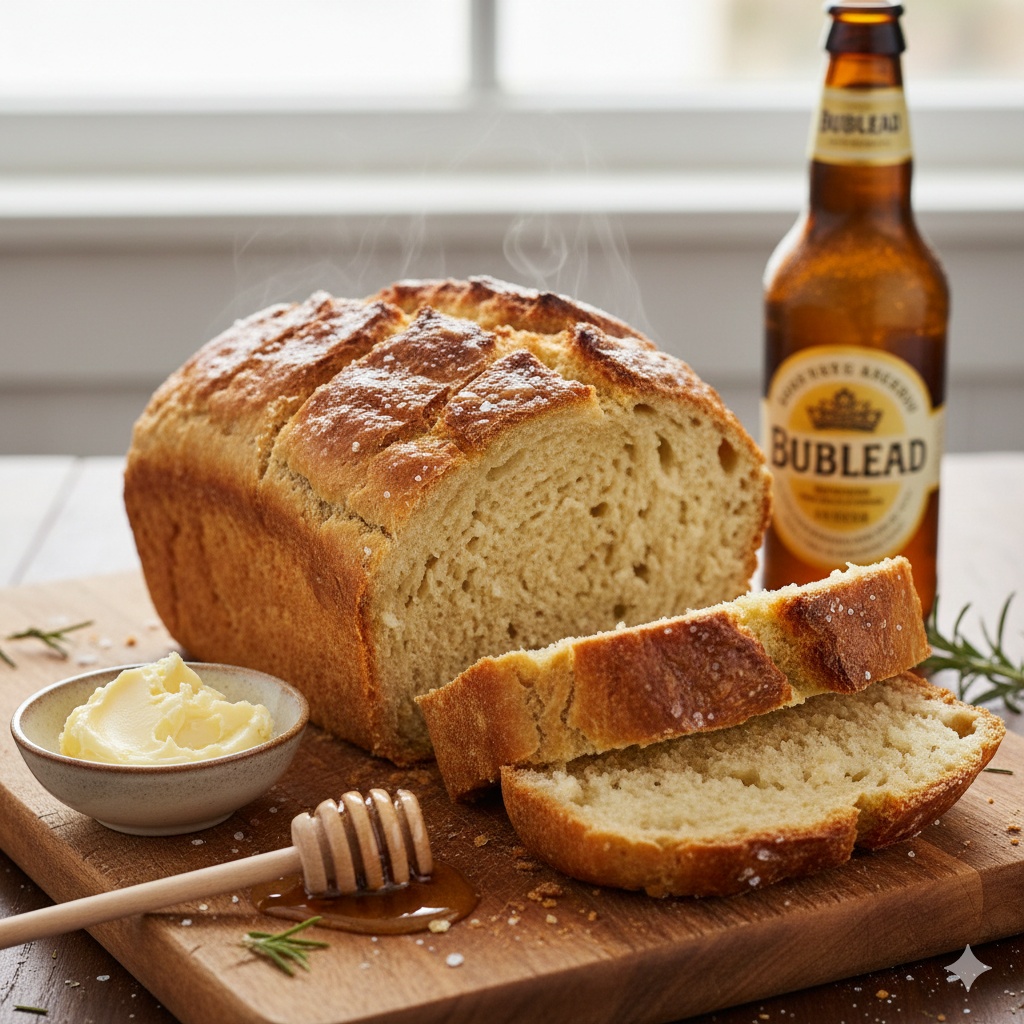
- The Butter Topping:Pour the melted butter evenly over the surface of the batter. This is the secret to the craggy, golden crust.
- Bake:Place in the center rack of the oven. Bake for45 to 55 minutes.
- The Doneness Test:Insert a toothpick into the center; it should come out clean. The top should be a deep golden brown and sound hollow when tapped.
- Cool:Let the bread rest in the pan for 5 minutes, then transfer to a wire rack. Waiting at least 15 minutes before slicing allows the internal steam to set the crumb.
10. Frequently Asked Questions (FAQ)
Q: Does the type of beer matter?
A:Absolutely. A light lager produces a mild, slightly sweet bread. An IPA adds a bitter, floral note. A Stout or Porter creates a dark, molasses-like richness. Avoid “ultra-light” beers as they lack flavor.
Q: Why is my beer bread so dense?
A:This usually happens if the flour was packed too tightly in the measuring cup or if the batter was over-mixed. Always spoon flour into the cup rather than scooping.
Q: Can I use Self-Rising flour?
A:Yes! If using self-rising flour, omit the baking powder and the salt from the recipe.
Q: Will this bread get me drunk?
A:No. The alcohol content evaporates during the baking process, leaving behind only the flavor and the carbonation.
Q: Can I bake this in a Dutch Oven?
A:Yes, though the baking time may decrease slightly. It will result in an even crustier, rounder loaf.