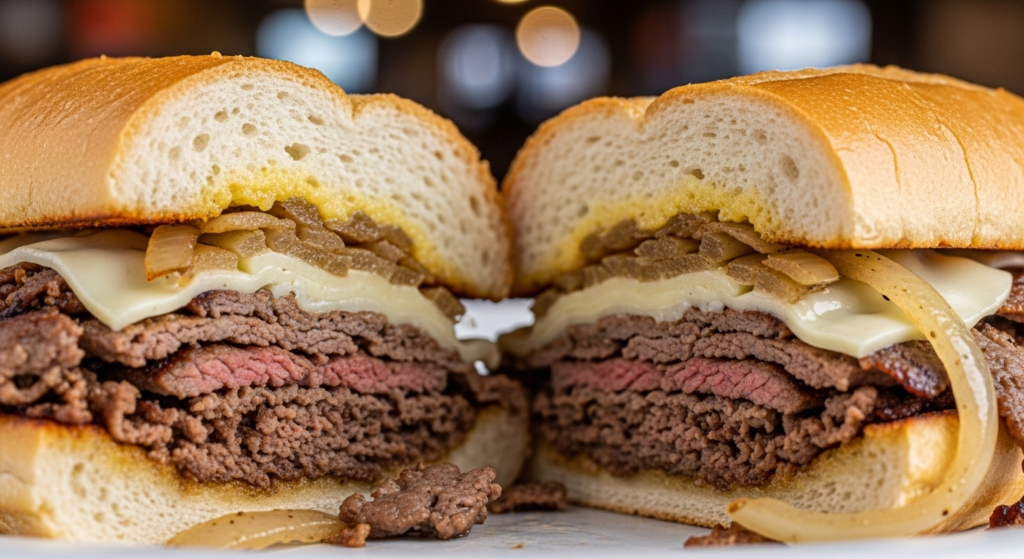
1. Introduction: A Love Letter to Philadelphia’s Finest
There are few sandwiches in the pantheon of American cuisine that command as much loyalty, debate, and pure sensory joy as thePhilly Cheesesteak. To the uninitiated, it might look like a simple assembly of meat, cheese, and bread. But to a Philadelphian—and to any culinary enthusiast—it is a meticulous balance of textures and temperatures that represents the grit and soul of the City of Brotherly Love.
Born in the 1930s on a hot dog stand owned by Pat Olivieri, the cheesesteak began as a humble steak sandwich without cheese. Legend has it that a cab driver caught a whiff of the sizzling beef, asked for a taste, and the rest became history. It wasn’t until the 1940s that provolone was added, creating the gooey, iconic masterpiece we crave today.
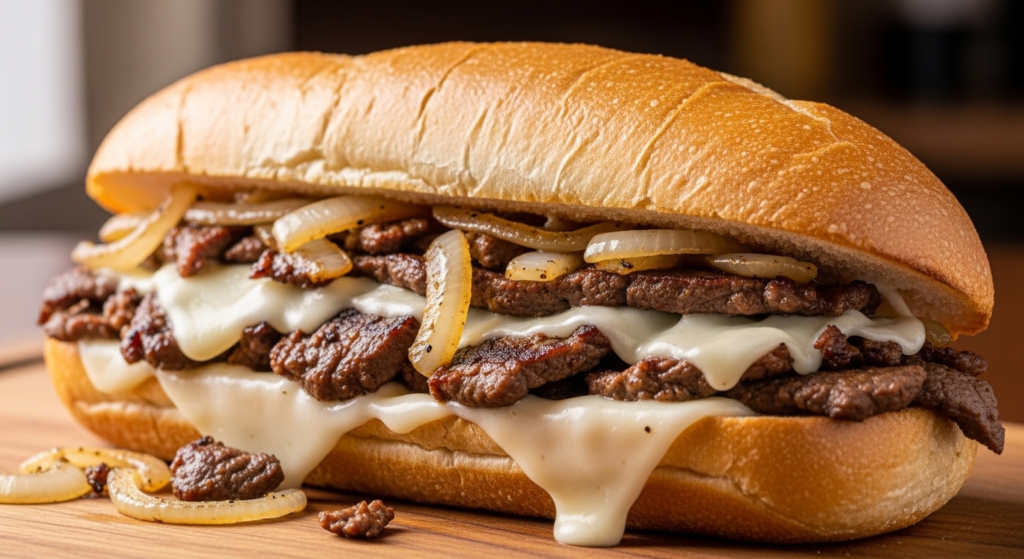
What makes a cheesesteak truly “Philly”? It’s thedrip. It’s the way the fat from thinly sliced ribeye melds with the molten cheese to create a natural “jus” that soaks into a soft, yet crusty, long roll. This isn’t just a meal; it’s a cultural landmark. In this guide, we aren’t just making a sandwich; we are honoring a tradition.
2. Recipe Overview
- Cuisine Type:American (Philadelphia Regional)
- Difficulty Level:Intermediate (Requires quick reflexes at the griddle)
- Total Time:30 minutes
- Prep Time:15 minutes (includes meat slicing)
- Cook Time:15 minutes
- Dietary Classifications:High-protein, Carnivore-friendly. (Can be modified for Low-Carb/Keto if served without the roll).
3. Equipment and Tools
To achieve the professional “sear and chop” method used in South Philly, you need the right gear:
- Large Flat-Top Griddle or 12-inch Cast Iron Skillet:A heavy-bottomed surface is crucial for heat retention.
- Two Sturdy Metal Spatulas:Used for flipping and “chopping” the meat as it cooks.
- A Very Sharp Chef’s Knife or Meat Slicer:Essential for getting that paper-thin ribeye.
- Bread Knife:For slicing the rolls without crushing them.
- Aluminum Foil:To wrap the sandwich for 2 minutes post-assembly—this “steams” the roll to perfection.
4. Serving Suggestions
A cheesesteak is a heavy hitter, so its companions should either lean into the decadence or provide a bright contrast.
- Plating:Serve in a plastic basket lined with wax paper for an authentic deli feel.
- Garnish:“Long hots” (roasted Italian long peppers) on the side or pickled cherry peppers for a vinegary snap.
- Sides:Old Bay-seasoned fries, onion rings, or a crisp vinegar-based coleslaw.
- Beverage Pairings:
- Beer:A crisp American Lager or a slightly bitter IPA to cut through the fat.
- Soda:A classic black cherry soda or root beer.
5. Nutritional Information (Per Serving)
- Calories:850 kcal
- Protein:45g
- Total Fat:48g
- Carbohydrates:58g
- Fiber:3g
- Iron:35% DV
- Health Note:This is a high-energy meal. To make it leaner, use top round beef, though you will sacrifice the signature silkiness of the ribeye fat.
6. Storage and Reheating
- Refrigeration:Store leftover meat and onions in an airtight container for up to 3 days. Store rolls separately at room temperature.
- Freezing:You can freeze the cooked meat for up to a month, though the texture of the cheese may change upon thawing.
- Reheating:Avoid the microwaveif possible. Reheat the meat in a skillet with a splash of beef broth to keep it moist. Toast the bread separately, then assemble.
7. Expert Tips and Variations
Professional Secrets
- The Freeze Trick:Place your ribeye in the freezer for 45–60 minutes before slicing. This firms the meat, allowing you to slice it razor-thin.
- The Roll Matters:In Philly,Amoroso’srolls are the gold standard. If you can’t find them, look for a “Hogie” roll that is soft on the inside but has enough structural integrity to hold the juices.
Creative Variations
- The Pizza Steak:Add marinara sauce and mozzarella.
- The Cheesesteak Hoagie:Add cold lettuce, tomato, and raw onion for a fresh crunch.
- The Chicken Cheesesteak:Substitute ribeye with thinly sliced chicken breast or thighs.
8. Ingredients Section
The Meat (The Star)
- 1.5 lbs Ribeye Steak:High-quality, well-marbled.
- Quality Tip:Avoid pre-packaged “steak strips.” They are often too thick and tough.
The Veggies (Optional but Recommended)
- 1 Large White Onion:Finely diced or sliced into thin half-moons.
- 1 Green Bell Pepper:(Optional—purists often skip this, but it’s popular globally).
The Cheese (The Great Debate)
- Cheez Whiz:For the authentic “Whiz Wit” (Whiz with onions) experience.
- Provolone:Use mild, non-smoked provolone for a creamy, sophisticated melt.
- White American:The best for a silky, unified sauce-like texture.
The Foundation
- 4 Long Italian Rolls:8-10 inches.
- Butter or Oil:For the griddle.
9. Step-by-Step Instructions
- Prep the Meat:Slice the par-frozen ribeye against the grain into paper-thin shavings. Consistency is key here; you want the meat to cook in seconds.
- Sauté the Aromatics:Heat your griddle to medium-high. Add a tablespoon of oil and toss on the onions. Cook until translucent and slightly caramelized. Move them to the cool side of the grill.
- The Sear:Crank the heat to high. Add the beef in a single layer. Let it sit for 60 seconds to develop a crust.
- The Chop:Using your two spatulas, begin chopping and tossing the meat. Mix in the onions. The meat should go from raw to grey/brown quickly.
- The Shape:Divide the meat into “loaves” roughly the length of your rolls.
- The Melt:Lay 2-3 slices of cheese over each meat pile. If using Whiz, drizzle it generously over the top.
- The Marriage:Slice your roll (not all the way through) and place it face-down over the cheesy meat loaf. This allows the steam to soften the bread and the meat to “grip” the roll.
- The Flip:Slide a large spatula under the meat and, with your other hand on top of the roll, flip the whole thing over.
- The Wrap:Wrap the sandwich tightly in foil for 2 minutes. This is the secret step that unites the ingredients.
10. Frequently Asked Questions (FAQ)
Q: What is the best cut of beef for a cheesesteak?A: Ribeye is the undisputed king because of its fat content. Flank steak or top round can be used but will be significantly drier.
Q: “Whiz Wit” vs. “Whiz Without”—what does it mean?A: It’s Philly shorthand. “Wit” means with grilled onions. “Without” means no onions.
Q: Why is my cheesesteak tough?A: You likely sliced the meat too thick or against the grain. The thinner the meat, the more tender the sandwich.
Q: Can I use a slow cooker?A: Technically yes, but it won’t be a Philly Cheesesteak. You’ll have a shredded beef sandwich. You need the high-heat sear for the authentic flavor.
Q: How do I prevent the bread from getting soggy?A: Don’t over-saturate with oil, and ensure your meat is well-drained of excess water (pat the raw steak dry before slicing).