
1. Introduction
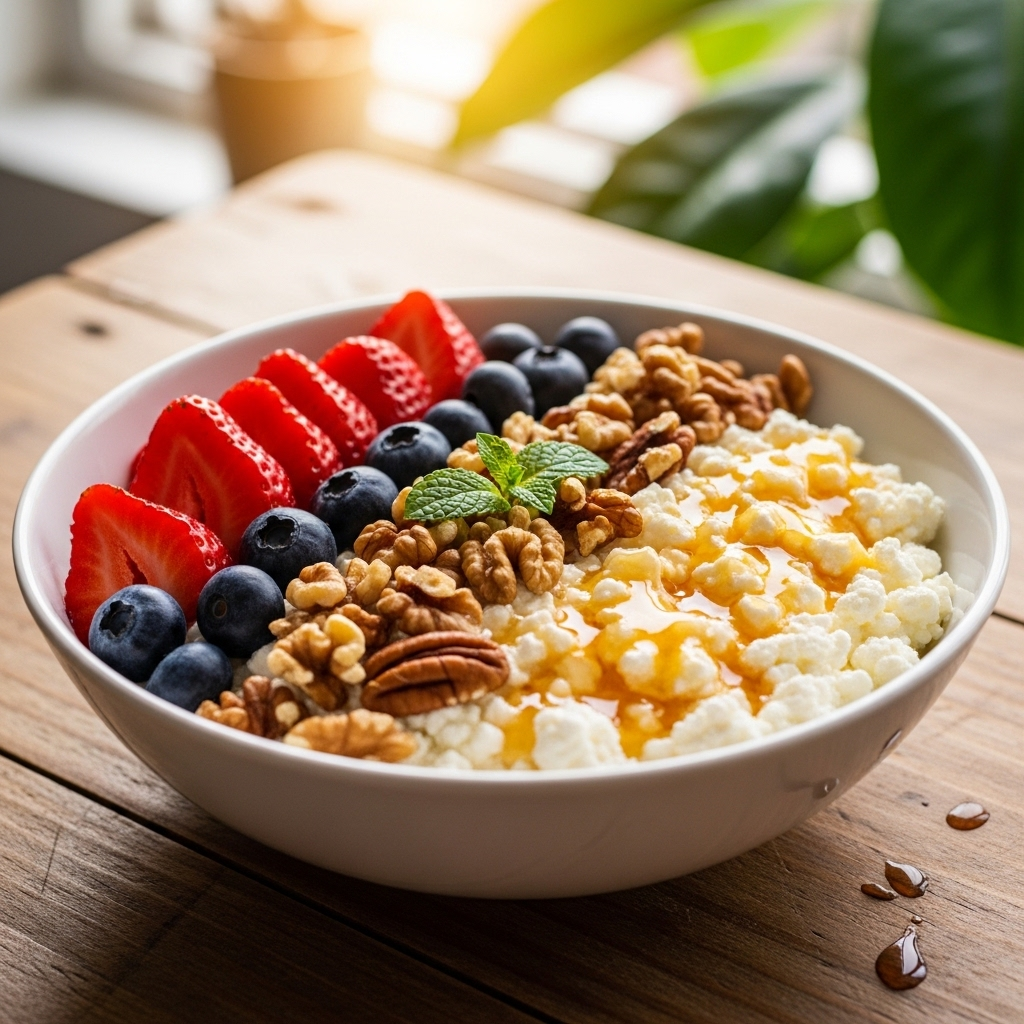
For decades, cottage cheese was the unsung hero of the “diet plate,” often relegated to a lonely scoop alongside a canned peach half. But times have changed. We are currently witnessing a “curd renaissance.” TheCottage Cheese Bowlhas emerged from the shadows of 1970s health fads to become a vibrant, social-media-famous staple for the modern, wellness-focused kitchen.
The beauty of the cottage cheese bowl lies in its remarkable versatility. It is a blank canvas that invites both sweet and savory interpretations. Whether you are craving the bright, acidic pop of heirloom tomatoes and balsamic glaze or the comforting sweetness of honey-drizzled berries and toasted nuts, this dish adapts to your mood and your macros.
Culturally, cottage cheese has roots deep in European farmhouse traditions, where it was a simple way to utilize milk that had soured slightly. Today, it represents a shift toward functional eating—prioritizing high protein, probiotics, and satiety without sacrificing flavor. This recipe isn’t just a meal; it’s a template for sustainable, nutrient-dense living.
2. Recipe Overview
- Cuisine Type:Modern American / Fusion
- Difficulty Level:Beginner
- Total Time:5–10 minutes (No-cook)
- Dietary Classifications:Vegetarian, Gluten-Free, High-Protein, Low-Carb (depending on toppings)
3. Equipment and Tools
While this is a “no-cook” assembly dish, the right tools ensure the perfect texture and presentation.
- Mixing Bowl (Small to Medium):A wide, shallow bowl is preferred over a deep, narrow one to allow for an even distribution of toppings.
- Measuring Cups and Spoons:Essential for those tracking macros or following specific nutritional goals.
- Chef’s Knife:For precision slicing of fruits or vegetables.
- Small Skillet (Optional):If you choose to toast your nuts or seeds for extra depth of flavor.
- Specifications:*Bowl Volume:16–24 oz capacity.
- Depth:2–3 inches to prevent toppings from sinking too deep.
4. Serving Suggestions
Plating Recommendations:
Start with a smooth base of cottage cheese. If you prefer a more refined texture, pulse the cottage cheese in a blender for 30 seconds to create a “whipped” consistency. Arrange your toppings in aesthetic rows or “clusters” to make the bowl visually appealing.
Garnish Ideas:
- Sweet:Fresh mint leaves, lemon zest, or a dusting of cinnamon.
- Savory:Microgreens, flaky sea salt, or cracked black pepper.
Beverage Pairings:
- Morning:An iced matcha latte or a crisp cold-brew coffee.
- Afternoon:Sparkling water with a squeeze of lime or a chilled Hibiscus tea.
5. Nutritional Information
(Per standard serving: 1 cup 2% cottage cheese + 1/2 cup fruit + 1 tbsp seeds)
| Nutrient | Amount |
| Calories | 280 kcal |
| Protein | 28g |
| Total Fat | 7g |
| Carbohydrates | 22g |
| Fiber | 5g |
| Calcium | 20% DV |
Health Benefits:
Cottage cheese is exceptionally high incasein protein, a slow-digesting protein that promotes muscle recovery and keeps you full for longer. It is also a significant source of B vitamins and essential minerals like phosphorus and selenium.
6. Storage and Reheating
- Refrigeration:The assembled bowl is best enjoyed immediately. However, you can prep the base (cottage cheese) in an airtight container for up to 3 days.
- Freezing:Not recommended.Freezing cottage cheese significantly alters its texture, causing it to become grainy and watery upon thawing.
- Reheating:This dish is designed to be served cold or at room temperature.
7. Expert Tips and Variations
Professional Tips:
- Temperature Matters:Serve the cottage cheese straight from the fridge. The contrast between cold cheese and room-temperature fruit or warm toasted nuts is a culinary delight.
- The “Whip” Trick:If you dislike the “curd” texture, blend the cottage cheese with a splash of milk or lemon juice. It becomes as smooth as Greek yogurt but with a richer flavor.
Creative Variations:
- The “Caprese” Bowl:Tomatoes, fresh basil, balsamic glaze, and extra virgin olive oil.
- The “Everything” Bowl:Avocado, cucumber, and a heavy sprinkle of Everything Bagel Seasoning.
- The “Tropical” Bowl:Mango, pineapple, macadamia nuts, and shredded coconut.
8. Ingredients Section
The Base
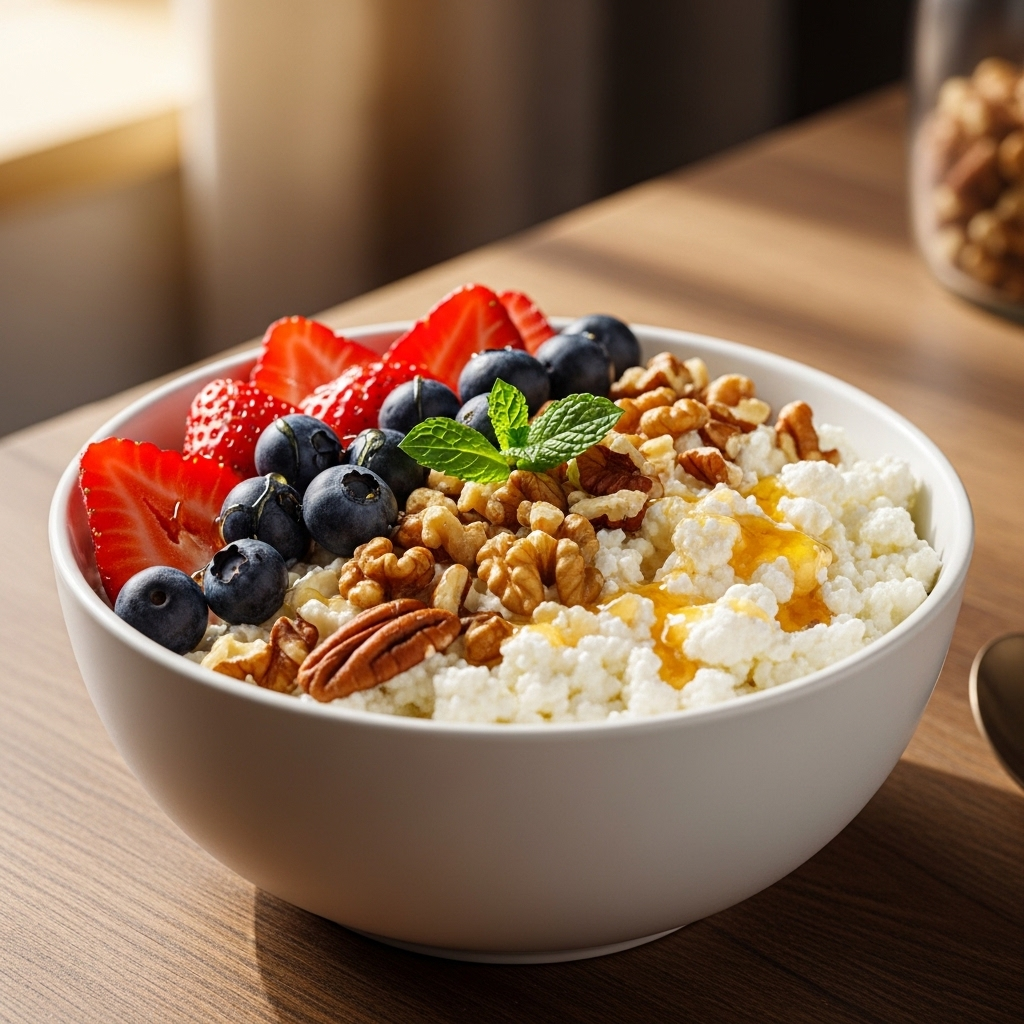
- 1 cup (225g)Low-sodium or regular Cottage Cheese (4% milk fat is recommended for creaminess).
The Sweet Toppings
- 1/2 cup (75g)Fresh Berries (blueberries, raspberries, or sliced strawberries).
- 1 tbsp (15g)Sliced Almonds or Walnuts.
- 1 tsp (7g)Honey or Maple Syrup.
- 1 tsp (5g)Chia Seeds or Hemp Hearts.
The Savory Toppings (Alternative)
- 1/2 cupDiced Cucumber and Cherry Tomatoes.
- 1/4 cupSliced Avocado.
- 1 tspExtra Virgin Olive Oil.
- PinchRed Pepper Flakes and Sea Salt.
9. Step-by-Step Instructions
- Prepare the Base:Scoop 1 cup of cold cottage cheese into your serving bowl. Use the back of a spoon to create a slight well in the center.
- Add Texture:Sprinkle your seeds (chia, hemp, or flax) directly onto the cheese. This allows them to absorb a little moisture and integrate into the base.
- Layer the Produce:Arrange your fruit or vegetables on one side of the bowl. For a professional look, keep colors grouped together.
- Add the Crunch:Place your nuts or granola in a separate cluster. This keeps them from getting soggy before you eat.
- The Final Drizzle:Finish the bowl by drizzling your liquid component (honey for sweet, olive oil for savory) over the entire surface.
- Season:Add your final touches—cinnamon for sweet, or salt/pepper/herbs for savory. Serve immediately.
10. Frequently Asked Questions (FAQ)
Q: Is cottage cheese better than Greek yogurt?
A: Both are excellent. Cottage cheese generally has slightly more protein and less sugar than flavored yogurts, though Greek yogurt contains different probiotic strains.
Q: Can I use fat-free cottage cheese?
A: You can, but 2% or 4% fat versions provide a much more satisfying mouthfeel and help with the absorption of fat-soluble vitamins in your toppings.
Q: How do I stop the bowl from getting “watery”?
A: Cottage cheese naturally releases whey. Stir the container thoroughly before scooping, or drain the excess liquid if you prefer a thicker consistency.
Q: Is this a good post-workout meal?
A: Absolutely. The high protein content and moderate carbs (from fruit) make it ideal for muscle repair and glycogen replenishment.
Q: Can I make this savory?
A: Yes! Savory cottage cheese is a huge trend. Try it with smoked salmon, dill, and capers for a “bagel-less” lox experience.