1. Introduction
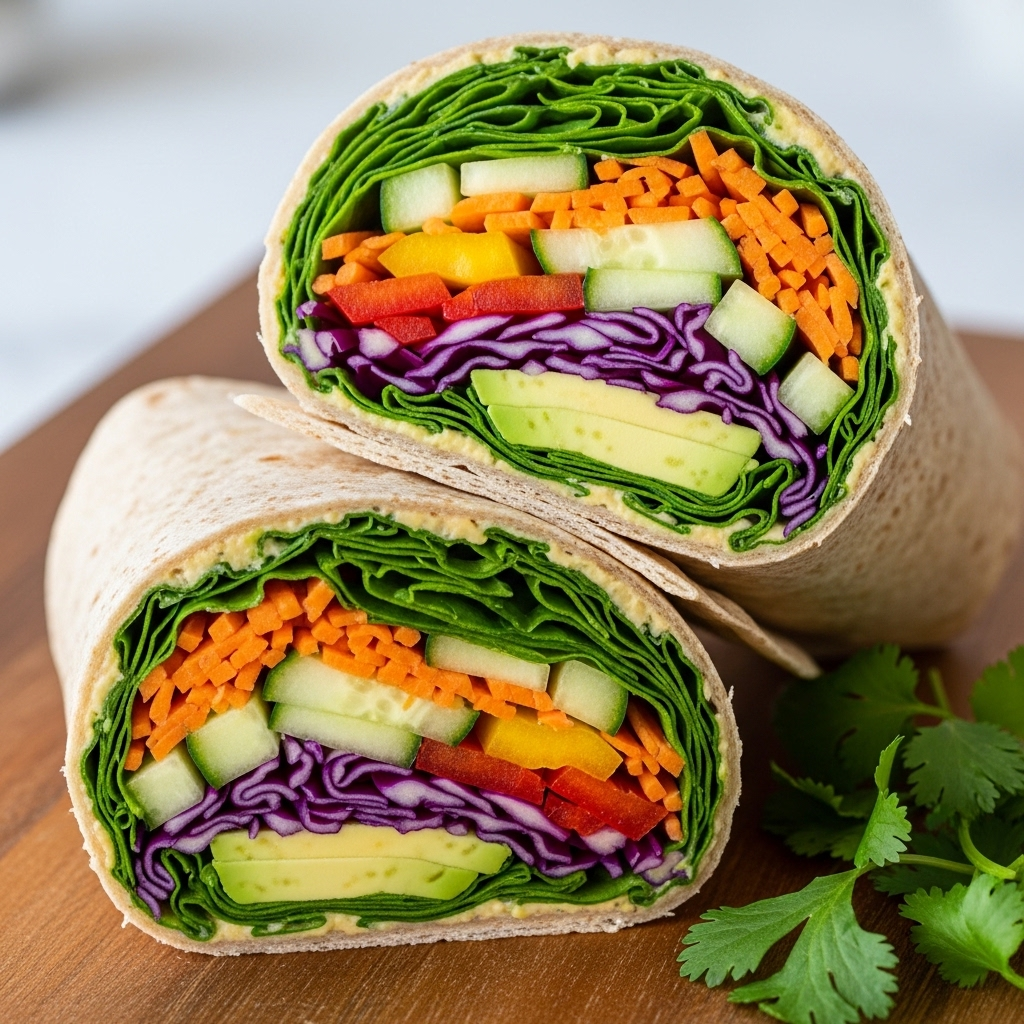
The humble veggie wrap is often unfairly dismissed as the “consolation prize” of the sandwich world—a dry, uninspired collection of lettuce leaves tucked into a floury tortilla. However, when executed with intention, the veggie wrap is a culinary powerhouse. It is a vibrant, textural masterpiece that celebrates the peak of the season’s harvest, offering a symphony of crunches, creamy spreads, and zesty finishes.
Originating from the global tradition of flatbread-wrapped street foods—from the Middle Eastern falafel wrap to the Indian kathi roll—the modern veggie wrap has evolved into a staple of contemporary wellness culture. This recipe isn’t just about “eating your greens”; it’s about a sophisticated balance of macronutrients and flavors. Whether you are a dedicated vegan or simply someone looking to lighten up your lunch routine, this wrap provides a satisfying, portable meal that doesn’t leave you feeling sluggish. Its significance lies in its versatility: it is a blank canvas for regional flavors, seasonal produce, and creative culinary expression.
2. Recipe Overview
- Cuisine Type:Modern International / Fusion
- Difficulty Level:Easy
- Prep Time:15 minutes
- Cook Time:0 minutes (No-cook recipe)
- Total Time:15 minutes
- Dietary Classifications:Vegetarian, Vegan-friendly (with substitutions), High-Fiber, Dairy-Free optional.
3. Equipment and Tools
To achieve the perfect wrap—one that is tightly rolled and evenly distributed—you will need a few basic but specific tools:
- Large Cutting Board:A wooden or high-quality plastic board at least 12×18 inches to provide ample space for vegetable prep and rolling.
- Chef’s Knife:A sharp 8-inch blade is essential for achieving the “matchstick” or julienne cuts required for a professional texture.
- Mandoline Slicer (Optional):Recommended for paper-thin slices of radishes or carrots.
- Small Offset Spatula or Back of a Spoon:For an even, edge-to-edge distribution of spreads.
- Parchment Paper or Wax Paper:Crucial for the “deli-style” wrap technique to keep the structure intact.
- Salad Spinner:To ensure all greens are bone-dry (moisture is the enemy of a structural wrap).
4. Serving Suggestions
A wrap is only as good as the company it keeps. To elevate this from a quick snack to a curated meal, consider these pairings:
- Plating:Cut the wrap on a sharp diagonal (bias) to showcase the colorful internal cross-section. Secure with a bamboo skewer.
- Side Dishes:Serve with a side of lightly salted kettle chips, a small bowl of chilled quinoa salad, or a refreshing gazpacho.
- Garnish:A wedge of lemon or lime on the side allows the diner to add a final hit of acidity.
- Beverage Pairings:
- Non-Alcoholic:Sparkling water with cucumber and mint or a tart hibiscus iced tea.
- Wine:A crisp, high-acidity Sauvignon Blanc or a dry Provence Rosé complements the fresh vegetable notes perfectly.
5. Nutritional Information
(Per serving, based on one large wrap)
| Nutrient | Amount |
| Calories | 380 kcal |
| Protein | 12g |
| Total Fat | 18g |
| Saturated Fat | 3g |
| Carbohydrates | 45g |
| Fiber | 9g |
| Sugar | 6g |
Health Benefits:This wrap is an antioxidant powerhouse. The inclusion of bell peppers provides over 100% of your daily Vitamin C requirement, while the healthy fats from avocado support nutrient absorption (specifically the fat-soluble Vitamins A, D, E, and K found in the greens).
6. Storage and Reheating
- Refrigeration:While best eaten fresh, you can store the wrap for up to 24 hours.Tip:Place a dry paper towel inside the container to absorb excess moisture from the vegetables.
- Freezing:This recipe isnot recommendedfor freezing, as the high water content in the fresh vegetables will lead to a soggy, unappealing texture upon thawing.
- Reheating:If you prefer a warm wrap, briefly toast the assembled wrap in a dry skillet over medium heat for 1 minute per side. Avoid the microwave, which will wilt the fresh greens.
7. Expert Tips and Variations
Professional Chef Tips
- The “Schmear” Barrier:Always apply your spread (hummus or cream cheese) from edge to edge. This acts as a moisture barrier, preventing the vegetable juices from making the tortilla soggy.
- Structural Integrity:Place your “heavy” ingredients (like cucumbers and carrots) in the center and the leafy greens on the outside.
- The Tight Roll:Think of it like a burrito. Fold the sides in first, then tuck the bottom over the filling and pull back slightly to “tension” the ingredients before rolling forward.
Creative Variations
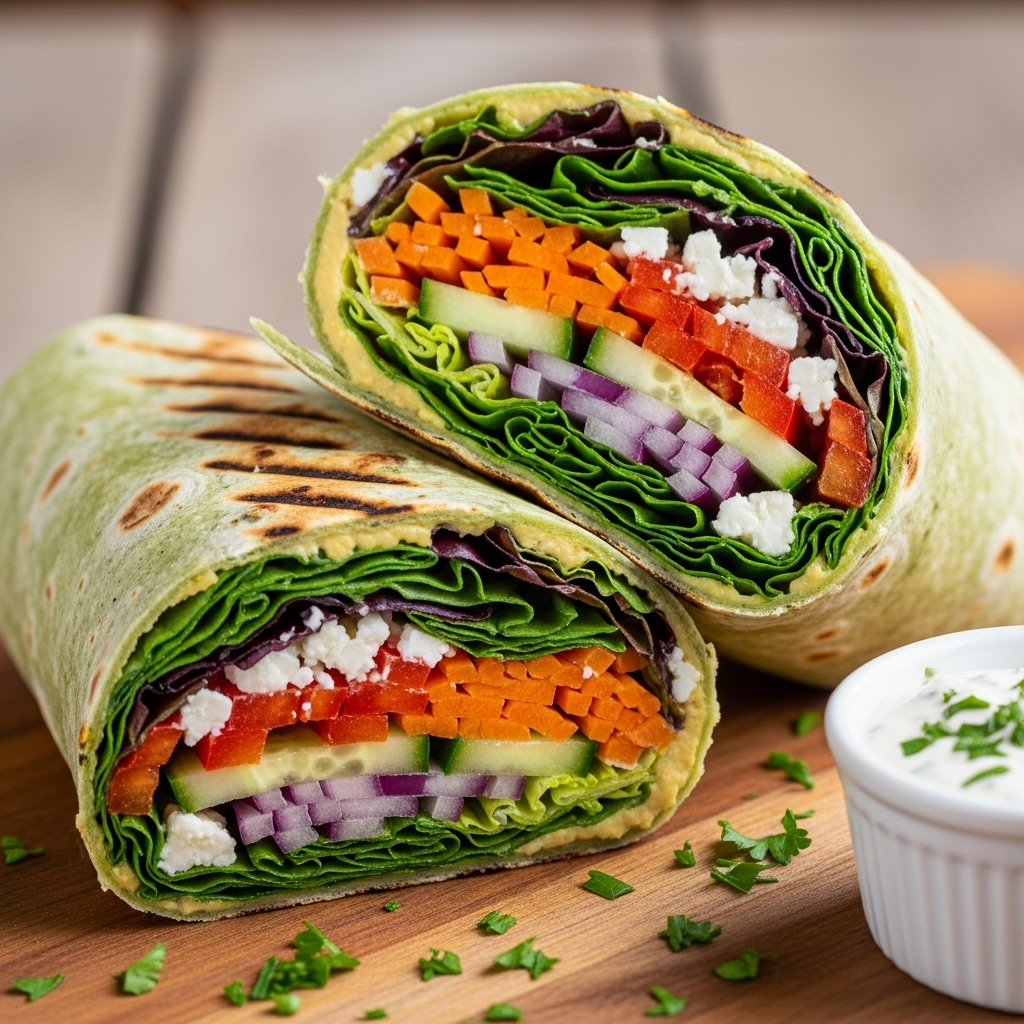
- The Mediterranean:Use roasted red pepper hummus, feta cheese, kalamata olives, and fresh oregano.
- The Spicy Southwest:Add black beans, corn salsa, pickled jalapeños, and a chipotle lime crema.
- The Asian-Inspired:Use a peanut ginger dressing, shredded cabbage, edamame, and fresh cilantro.
8. Ingredients Section
The Foundation
- 1 Large Flour Tortilla (10-12 inches):Use spinach or whole wheat for extra nutrients.
- 3 tbsp Classic Hummus:Smooth and creamy.
- 1/2 Ripe Avocado:Thinly sliced.
The Crunch (Vegetables)
- 1/2 cup English Cucumber:Cut into matchsticks (50g / 1.7oz).
- 1/2 cup Bell Pepper:Red or yellow, thinly sliced (40g / 1.4oz).
- 1/4 cup Shredded Carrots:Approximately one small carrot (30g / 1oz).
- 2-3 Radishes:Sliced into paper-thin rounds.
- 1/4 cup Red Cabbage:Finely shredded for color and bite.
The Flavor Boosters
- Handful of Baby Spinach or Arugula:Ensure it is thoroughly dry.
- 1 tbsp Sunflower Seeds or Pepitas:For an earthy, nutty crunch.
- 1 tsp Lemon Juice:Squeezed over the avocado to prevent browning.
- Salt and Freshly Cracked Black Pepper:To taste.
9. Step-by-Step Instructions
- Prep the Vegetables:Wash and dry all produce. Using yourChef’s Knife, slice the cucumber and bell peppers into thin, uniform strips (julienne). Shred the cabbage and carrots. Having uniform sizes ensures every bite has a bit of everything.
- Warm the Flatbread:Briefly warm the tortilla in a dry pan for 10 seconds per side. This makes the gluten more pliable and prevents the wrap from tearing during the rolling process.
- The Base Layer:Lay the tortilla flat. Use anoffset spatulato spread the hummus across the entire surface, leaving a small 1/2-inch border at the very top.
- Seasoning the Foundation:Place the avocado slices in the lower third of the tortilla. Sprinkle with lemon juice, salt, and pepper.Pro Tip:Seasoning your vegetables directly is the difference between a bland wrap and a gourmet one.
- Layering for Texture:Stack the carrots, peppers, cucumbers, and cabbage on top of the avocado. Keep the pile narrow and horizontal.
- Add the Greens:Top the vegetable stack with a generous handful of spinach or arugula. Sprinkle the seeds over the top for added texture.
- The Tuck and Roll:Fold the left and right sides of the tortilla toward the center (about 1-2 inches). Pick up the bottom edge, fold it over the filling, and gently “tuck” the edge under the vegetables to create a tight cylinder. Roll tightly toward the top border.
- The Deli Wrap (Final Touch):Place the wrap on a piece of parchment paper. Roll it tightly in the paper and twist the ends like a candy wrapper. Let it sit for 2 minutes; this allows the tortilla to “set” and ensures it won’t fall apart when you eat it.
- The Cut:Using a serrated knife, slice through both the paper and the wrap at a 45-degree angle.
10. Frequently Asked Questions (FAQ)
Q: How do I prevent my veggie wrap from getting soggy by lunchtime?
A: The key is moisture control. Dry your greens thoroughly with a salad spinner and use a thick spread like hummus or cream cheese to create a waterproof barrier against the tortilla. Avoid adding “wet” ingredients like tomatoes or vinaigrettes until right before eating.
Q: Can I make this gluten-free?
A: Absolutely. Use a large collard green leaf (with the stem shaved down) or a certified gluten-free wrap. Be aware that GF wraps are often more brittle, so warming them is essential for flexibility.
Q: What are the best protein additions for vegetarians?
A: To boost the protein content, consider adding smoked tofu strips, chickpeas, edamame, or a hard-boiled egg.
Q: My wrap always falls apart. What am I doing wrong?
A: You are likely overfilling it. It is tempting to pack in more veggies, but leaving enough “empty” tortilla space is necessary for the seal to hold. Also, warming the tortilla is a step you shouldn’t skip!
Q: Can I use different spreads?
A: Definitely. Try baba ganoush, pesto, herbed goat cheese, or even a spicy cashew cream for a vegan twist.