1. Introduction
Thetoast sandwichis perhaps the most fascinatingly minimalist creation in the history of British gastronomy. Often dismissed as a culinary punchline, this dish actually boasts a high-society pedigree, famously appearing inMrs. Beeton’s Book of Household Managementin 1861.
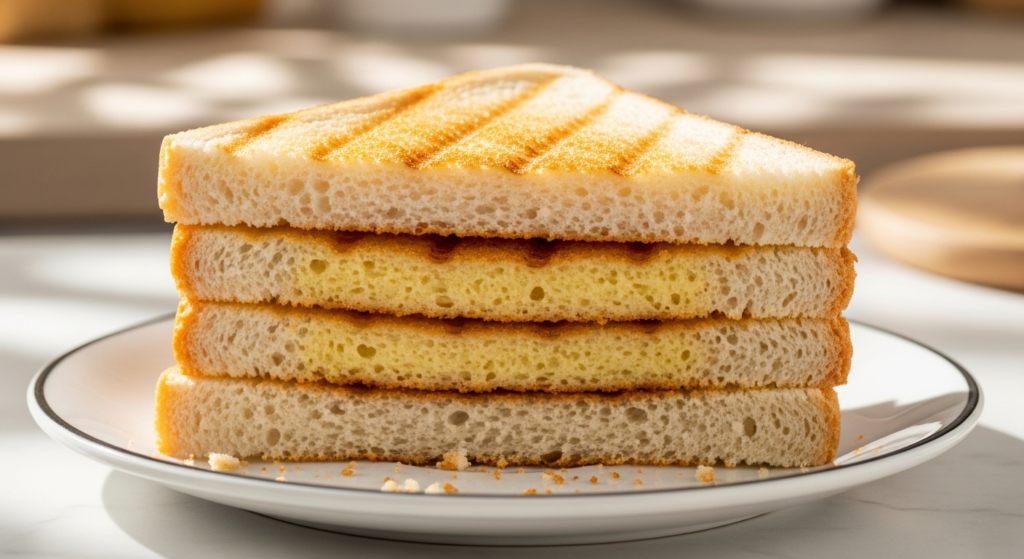
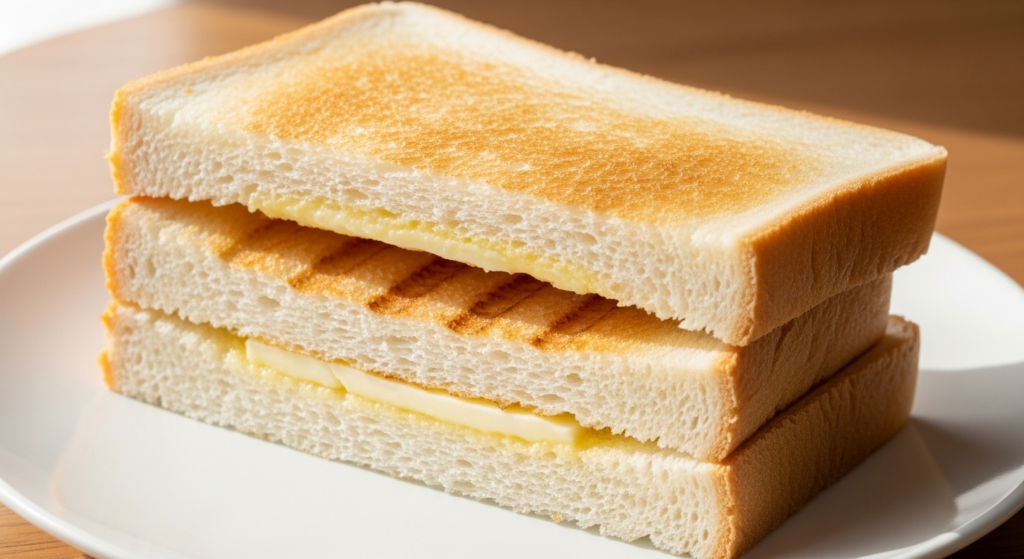
The concept is deceptively simple: a thin slice of toasted bread serves as the “filling” for two slices of fresh, heavily buttered bread. While it sounds like a product of extreme austerity, in the Victorian era, it was suggested as a light, digestible snack for “invalids” or those with delicate constitutions. It offers a unique textural play—the crunch of the toasted center contrasting against the soft, pillowy exterior. In a world of over-complicated gourmet trends, the toast sandwich stands as a cheeky, carb-on-carb monument to historical ingenuity and culinary curiosity.
2. Recipe Overview
- Cuisine Type:British (Victorian Era)
- Difficulty Level:Very Easy
- Prep Time:2 minutes
- Cook Time:3 minutes
- Total Time:5 minutes
- Dietary Classifications:Vegetarian (can be Vegan with plant-based butter)
3. Equipment and Tools
To achieve the perfect textural contrast, specific tools are recommended:
- Toaster or Grill:For browning the middle slice.
- Bread Knife:A serrated knife is essential for clean slices without squashing the loaf.
- Spreading Knife:A flexible palette knife or butter knife.
- Cutting Board:Wood or bamboo preferred.
- Small Skillet (Optional):If you prefer to toast your bread in butter for extra decadence.
4. Serving Suggestions
The toast sandwich is best served immediately while the center is still crisp.
- Plating:Cut diagonally into triangles to showcase the layers.
- Garnish:A sprinkle of flaky sea salt or a dash of freshly cracked black pepper.
- Side Dishes:A bowl of warm tomato soup or a crisp green salad with a sharp vinaigrette to cut through the richness of the butter.
- Beverage Pairing:A strong cup ofEnglish Breakfast teaor a crisp, cold ginger ale.
5. Nutritional Information
(Per serving based on standard white bread and salted butter)
- Calories:320 kcal
- Carbohydrates:45g
- Fat:14g
- Protein:6g
- Fiber:2g
- Health Benefits:High in energy-providing carbohydrates; gentle on the digestive system.
6. Storage and Reheating
- Storage:This sandwich doesnotstore well. The steam from the toast will quickly soften the outer bread, and the toast itself will lose its “snap.”
- Reheating:Not recommended. However, if you must, a brief 30-second stint in an air fryer at 180°C can revive some crispness.
7. Expert Tips and Variations
Professional Tips
- The “Double Butter” Technique:Butter both sides of the center toast to act as a moisture barrier, preventing the outer slices from getting soggy.
- The Bread Quality:Use high-quality sourdough or thick-cut farmhouse white bread for the best experience.
Creative Variations
- The Savory Twist:Add a thin layer of Marmite or Vegemite to the toast for an umami bomb.
- The Gourmet:Rub the hot toast with a clove of garlic and add a sprinkle of nutritional yeast or parmesan.
- The Spice Route:Mrs. Beeton originally suggested a pinch of salt and pepper, but a dash of cumin or chili flakes adds modern flair.
8. Ingredients Section
| Ingredient | Metric | Imperial | Substitution |
| Fresh White Bread | 2 slices | 2 slices | Whole wheat or Sourdough |
| Thin White Bread | 1 slice | 1 slice | Gluten-free bread |
| Salted Butter | 30g | 2 tbsp | Margarine or Vegan butter |
| Salt & Pepper | To taste | To taste | Herb salt or Smoked paprika |
9. Step-by-Step Instructions
- Toast the Filling:Place the thinner slice of bread in the toaster. Aim for a “medium-well” level of toast—golden brown and very firm.
- Butter the Base:While the toast is hot, generously butter the two fresh (untoasted) slices of bread.
- Season the Toast:Once the middle slice is toasted, butter it on both sides immediately. Sprinkle with salt and pepper while the butter is melting.
- Assemble:Place the hot toast between the two buttered, untoasted slices.
- Compress:Gently press down on the sandwich with the palm of your hand. This “fuses” the layers together.
- Slice:Use a serrated knife to cut the sandwich into triangles or fingers. Serve immediately.
10. Frequently Asked Questions (FAQ)
Q: Is this actually a real recipe?
A: Absolutely. It was popularized by Isabella Beeton in 1861 and even saw a resurgence in 2011 when the Royal Society of Chemistry promoted it as Britain’s most economical meal.
Q: Can I use different types of bread?
A: Yes. In fact, using a seeded loaf for the toast and a soft brioche for the exterior creates a fascinating texture.
Q: Why do I need to butter both sides of the toast?
A: Butter acts as an insulator. It keeps the heat in and prevents the moisture from the fresh bread from ruining the crunch of the toast.
Q: Is it healthy?
A: It is high in refined carbohydrates. It is a “comfort food” or an “energy meal” rather than a balanced nutritional powerhouse.
Q: Can I add cheese?
A: While no longer a “pure” toast sandwich, a thin slice of cheddar against the hot toast is a delicious modern upgrade.