1. Introduction: A Journey to the Azure Coast
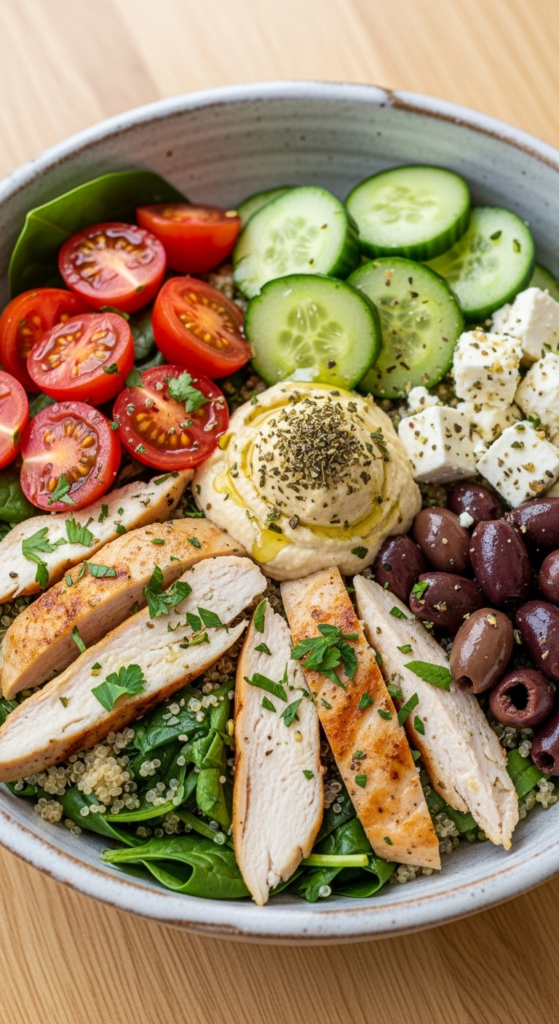
Close your eyes and imagine the salt-spray of the Aegean Sea, the warmth of the Levantine sun, and the bustling energy of a coastal marketplace. TheMediterranean Bowlis more than just a meal; it is a culinary philosophy captured in a single vessel. It represents thedieta mediterranea, a lifestyle celebrated not just for its longevity-boosting nutrients, but for its emphasis on freshness, color, and communal joy.
The beauty of the Mediterranean bowl lies in its “deconstructed” nature. Unlike heavy stews or complex pastas, the bowl celebrates each ingredient in its purest form. This dish traces its roots back to the “Mezze” tradition—small plates of hummus, tabbouleh, and grilled meats shared among friends. By bringing these elements together into a singular, cohesive bowl, we create a modern power-lunch that is as aesthetically pleasing as it is nourishing.
Whether you are looking for a vibrant meal-prep solution or a dinner that feels like a vacation on a plate, this recipe provides the perfect balance of crunchy, creamy, acidic, and savory notes.
2. Recipe Overview
- Cuisine Type:Mediterranean / Fusion
- Difficulty Level:Easy
- Prep Time:20 minutes
- Cook Time:15 minutes (for grains and protein)
- Total Time:35 minutes
- Dietary Classifications:Gluten-Free, Dairy-Free (optional), Vegetarian/Vegan (optional)
3. Equipment and Tools
To achieve professional-grade results, ensure you have the following kitchen essentials:
- Large Mixing Bowls:One for tossing the salad components and one for whisking the dressing.
- Medium Saucepan:2-quart capacity with a tight-fitting lid (for cooking quinoa or farro).
- Large Cast-Iron Skillet or Grill Pan:10–12 inches in diameter for searing protein.
- Chef’s Knife:A sharp 8-inch blade for precision dicing of vegetables.
- Measuring Cups and Spoons:For both metric and imperial accuracy.
- Mandoline Slicer (Optional):For achieving paper-thin cucumber or radish slices.
- Mason Jar:For emulsifying the lemon-tahini dressing.
4. Serving Suggestions
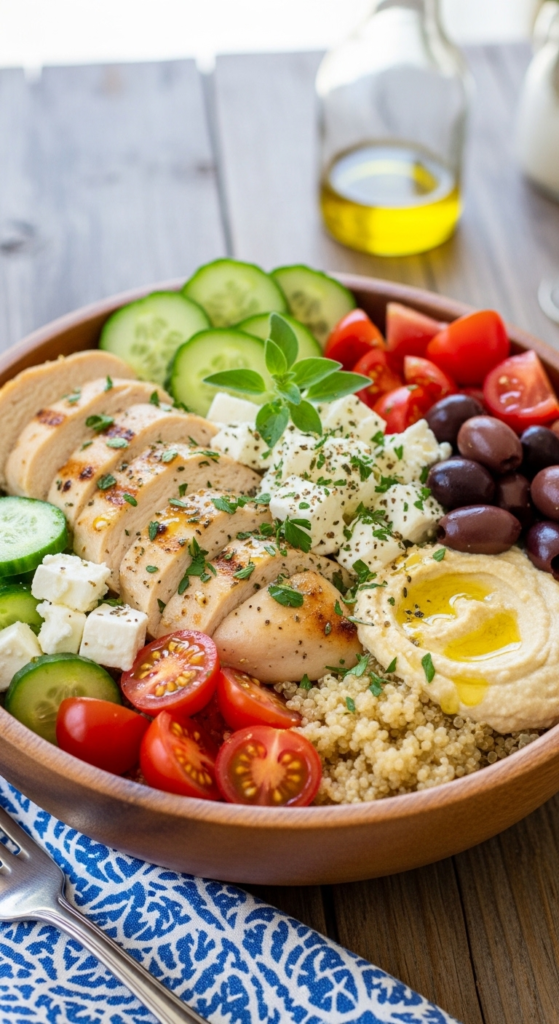
Plating Recommendations:Start with a base of grains in a wide, shallow bowl. Arrange the toppings in distinct “sectors” rather than mixing them immediately; this allows the diner to appreciate the colors and textures before diving in.
Garnish Ideas:
- A sprinkle ofAleppo pepperor sumac for a floral heat.
- Freshly torn mint leaves or flat-leaf parsley.
- Toasted pine nuts or hulled sunflower seeds for extra crunch.
Beverage Pairings:
- White Wine:A crisp Assyrtiko from Greece or a chilled Sauvignon Blanc.
- Non-Alcoholic:Sparkling water infused with cucumber slices and a sprig of rosemary.
5. Nutritional Information
Per Serving (approximate):
| Nutrient | Amount |
|---|---|
| Calories | 520 kcal |
| Protein | 28g |
| Carbohydrates | 45g |
| Healthy Fats | 24g |
| Fiber | 9g |
Health Benefits:This bowl is a powerhouse of heart-healthy monounsaturated fats (from olive oil and olives) and high-quality fiber. The inclusion of diverse vegetables provides a wide spectrum of antioxidants, specifically lycopene from tomatoes and vitamin C from bell peppers.
6. Storage and Reheating
Refrigeration:Store the grains, protein, and fresh vegetables in separate airtight containers. The ingredients will stay fresh for up to4 days.
Freezing:You can freeze the cooked grains (quinoa/rice) and the cooked protein (chicken/chickpeas). Donotfreeze the fresh vegetables or the dressing, as the texture will degrade significantly.
Reheating:If you prefer a warm bowl, reheat only the grain and protein base in a microwave (30–60 seconds) or on the stovetop with a splash of water. Add the cold vegetables and dressing just before serving to maintain the “fresh” contrast.
7. Expert Tips and Variations
- The “Salt Your Veggies” Rule:Toss your cucumbers and tomatoes in a pinch of salt 10 minutes before serving. This draws out excess moisture and intensifies their natural sweetness.
- The Grain Ratio:For fluffy quinoa, use a 1:2 ratio of grain to liquid. Always rinse quinoa under cold water first to remove the bitter saponin coating.
- Variations:
- The Greek Goddess:Add extra feta, Kalamata olives, and a dollop of Tzatziki.
- The Levantine Crunch:Use bulgur wheat as the base and add roasted eggplant and pomegranate arils.
- The Plant-Based Power:Swap chicken for crispy roasted chickpeas or herbed tofu.
8. Ingredients Section
The Base (Grains)
- Quinoa or Farro:1 cup (185g) dry
- Water or Vegetable Broth:2 cups (475ml)
- Sea Salt:½ tsp
The Protein
- Chicken Breast or Chickpeas:1 lb (450g)
- Dried Oregano:1 tsp
- Garlic Powder:½ tsp
- Olive Oil:2 tbsp (30ml)
The Fresh Toppings
- English Cucumber:1 large, diced (approx. 200g)
- Cherry Tomatoes:1 cup, halved (approx. 150g)
- Red Onion:¼ cup, thinly sliced (approx. 40g)
- Kalamata Olives:½ cup, pitted (approx. 65g)
- Feta Cheese:½ cup, crumbled (approx. 75g)
Lemon-Tahini Dressing
- Tahini:3 tbsp (45g)
- Lemon Juice:2 tbsp (30ml)
- Maple Syrup or Honey:1 tsp
- Warm Water:2-3 tbsp (to thin)
9. Step-by-Step Instructions
- Prepare the Grains:Combine quinoa and broth in a saucepan. Bring to a boil, then reduce heat to low, cover, and simmer for 15 minutes. Remove from heat and let sit, covered, for 5 minutes before fluffing with a fork.
- Marinate and Cook Protein:Rub your chicken or chickpeas with olive oil, oregano, and garlic powder. Heat a skillet over medium-high heat. Cook chicken for 6–7 minutes per side until the internal temperature reaches 165°F(74°C). If using chickpeas, sauté until skins are golden and slightly crisp.
- Prepare Vegetables:While the protein cooks, dice the cucumbers, tomatoes, and onions. Keep them separate to maintain their individual flavors until plating.
- Whisk the Dressing:In a small jar, combine tahini, lemon juice, and sweetener. Whisk vigorously. Add warm water one tablespoon at a time until the dressing reaches a “pourable” consistency.
- Assemble:Divide the grains into four bowls. Top with a generous portion of protein. Arrange the vegetables, olives, and feta in clusters around the protein.
- Final Touch:Drizzle the lemon-tahini dressing over the top and garnish with fresh herbs.
10. Frequently Asked Questions (FAQ)
Q: Can I make this bowl low-carb?A: Absolutely. Simply swap the quinoa or farro for cauliflower rice or a bed of massaged kale/arugula.
Q: Is tahini necessary for the dressing?A: If you aren’t a fan of tahini, a classic Greek vinaigrette (olive oil, red wine vinegar, dried oregano, and Dijon mustard) works beautifully.
Q: How do I stop my red onions from being too “sharp”?A: Soak the sliced onions in a bowl of ice water for 10 minutes before serving. This removes the harsh sulfurous bite while keeping them crunchy.
Q: Can I use dried herbs instead of fresh?A: For the marinade, dried herbs are excellent as they stand up to heat. For the garnish, however, fresh herbs provide a vital aromatic lift that dried herbs cannot replicate.
Q: Is this recipe kid-friendly?A: Yes! Because the ingredients are kept separate in the bowl, children can pick and choose the components they like, making it an interactive and “safe” way to introduce new flavors.