
1. Introduction: More Than Just a Dip
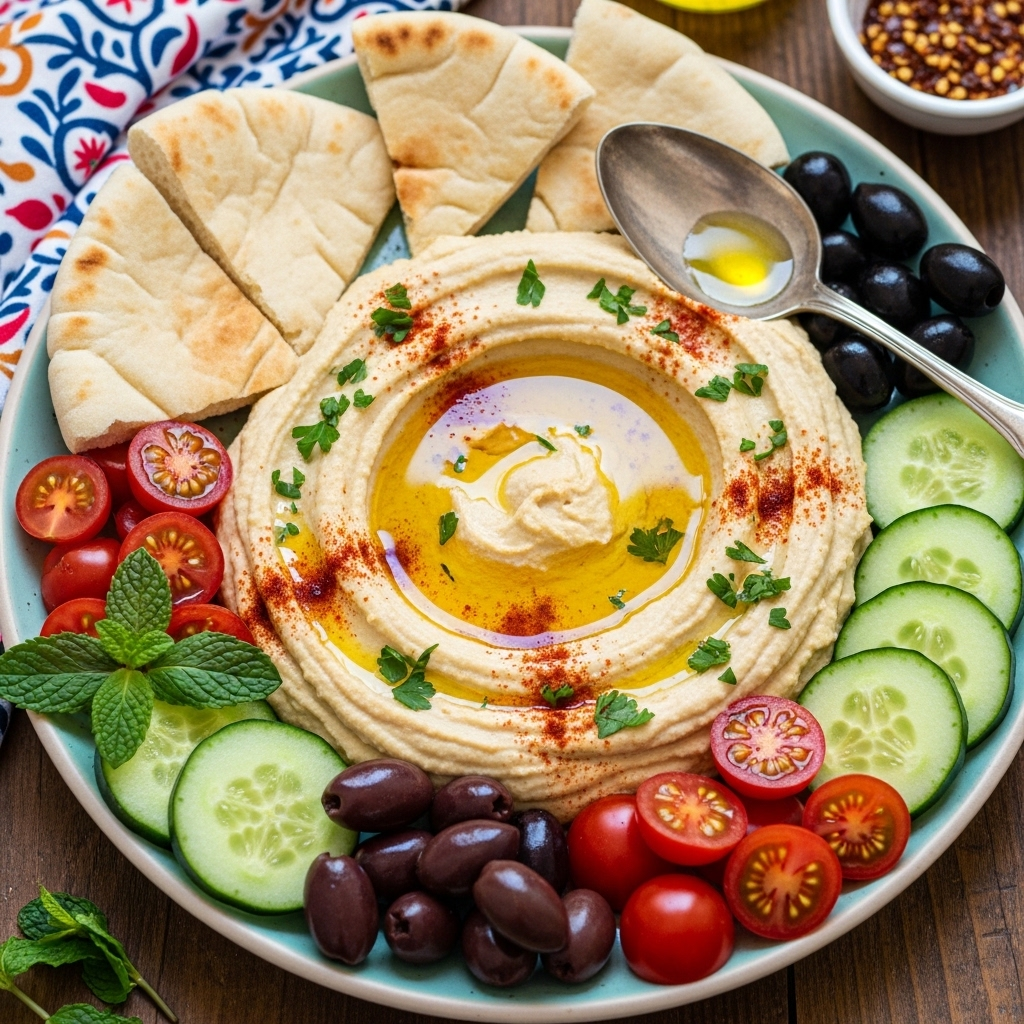
In the sun-drenched corridors of the Levant, hummus is not merely a snack; it is a cultural pillar. To sit before aHummus Plate(orMusabahain some regional variations) is to partake in a ritual that spans centuries. While many know hummus as a cold plastic tub found in the grocery aisle, the true experience is found in a warm bowl, swirled with premium olive oil, dusted with sumac, and topped with a mosaic of textures.
The magic of a hummus plate lies in the contrast: the silkiness of the blended chickpeas, the bite of whole legumes, the richness of tahini, and the bright acidity of fresh lemon. Historically rooted in the Middle East—with ongoing debates about its specific origin—this dish has evolved from a humble peasant breakfast into a global symbol of healthy, communal dining. Whether you are recreating the bustling energy of a Tel Aviv “hummusiya” or the quiet elegance of a Lebanese feast, this guide will transform your kitchen into a Mediterranean sanctuary.
2. Recipe Overview
- Cuisine Type:Middle Eastern / Levantine
- Difficulty Level:Intermediate (requires patience for texture)
- Prep Time:20 minutes (plus overnight soaking)
- Cook Time:60–90 minutes (for the chickpeas)
- Dietary Classifications:Vegan, Vegetarian, Gluten-Free, Dairy-Free, High-Protein
3. Equipment and Tools
To achieve professional-grade smoothness, your tools are as important as your ingredients.
- High-Speed Food Processor or Blender:A motor with at least 700 watts is recommended for emulsifying the tahini and chickpeas.
- Large Heavy-Bottomed Pot:A 5-quart Dutch oven is ideal for simmering chickpeas evenly.
- Fine Mesh Strainer:For rinsing chickpeas and achieving a smooth tahini base.
- Microplane or Fine Grater:For mincing garlic into a paste.
- Digital Kitchen Scale:To ensure the precise ratio of tahini to chickpeas.
- Shallow Ceramic Bowls:Traditional hummus is served in wide, shallow bowls to maximize “topping real estate.”
4. Serving Suggestions
A hummus plate is an edible canvas. Here is how to complete the masterpiece:
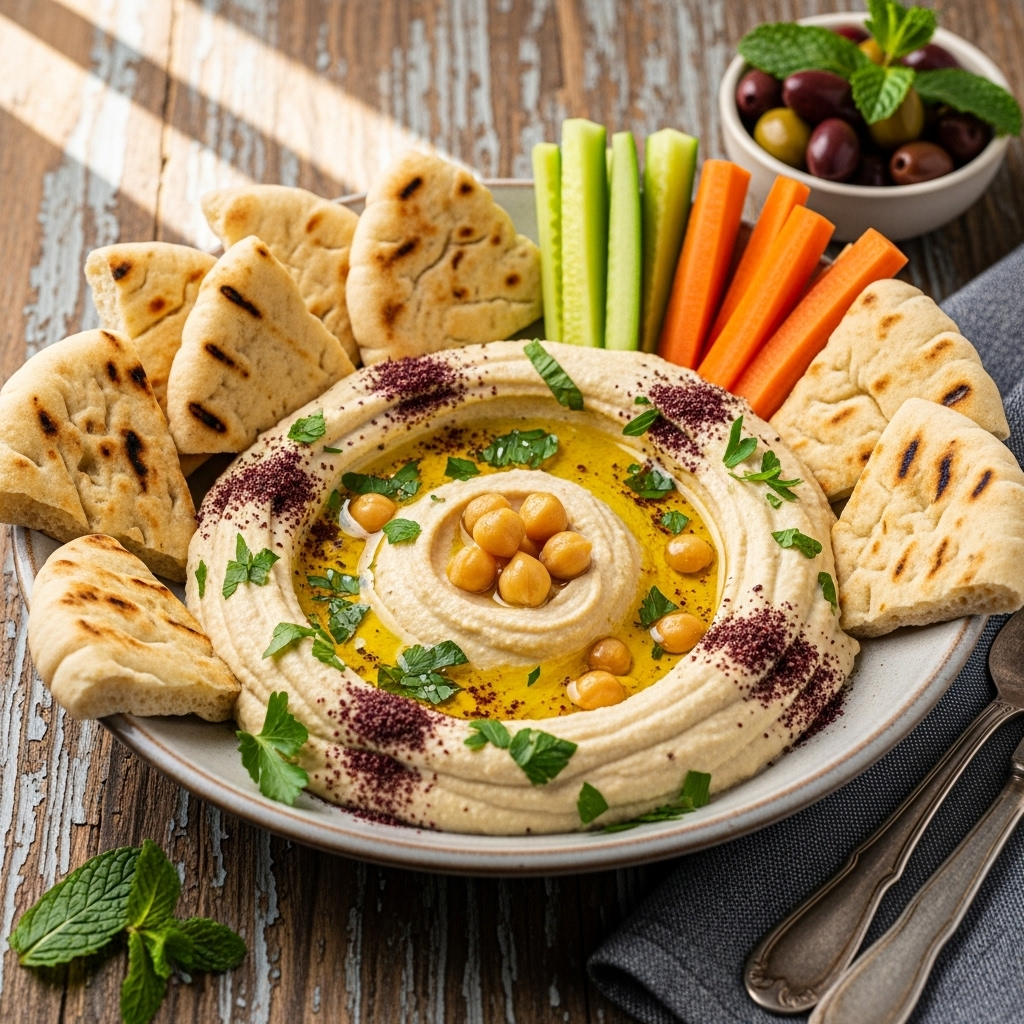
- Plating:Use the back of a large spoon to create a deep “well” or spiral in the hummus. This acts as a reservoir for olive oil.
- Garnish:A heavy dusting ofSumac(for tartness) orZa’atar(for earthiness), followed by chopped parsley and toasted pine nuts.
- Sides:Serve with warm, pillowy pita bread, pickled turnips, fresh radishes, and sliced raw onion.
- Beverage Pairings:*Non-Alcoholic:Iced mint lemonade (Limonana).
- Wine:A crisp, acidic white like Sauvignon Blanc or a dry Rosé to cut through the richness of the tahini.
5. Nutritional Information (Per Serving)
- Calories:345 kcal
- Protein:12g
- Fiber:9g
- Healthy Fats:22g (primarily monounsaturated from olive oil and tahini)
- Health Benefits:High in plant-based protein, iron, and folate. The low glycemic index of chickpeas provides sustained energy without blood sugar spikes.
6. Storage and Reheating
- Refrigeration:Store in an airtight container for up to 5 days. Note that hummus thickens when cold.
- Freezing:You can freeze hummus for up to 3 months, though the texture may become slightly grainy.
- Reheating:To enjoy it warm (the traditional way), microwave a portion for 30 seconds and stir in a teaspoon of warm water to restore the silkiness.Neverreheat the fresh toppings; add those after warming the base.
7. Expert Tips and Variations
- The Ice Cube Secret:Adding 2–3 ice cubes to the food processor while blending creates a cold emulsion that aerates the hummus, making it “fluffy” and pale.
- Avoid the “Garlic Bite”:Let your minced garlic sit in lemon juice for 10 minutes before blending. The acid mellows the harshness of the raw garlic.
- Variations:
- Beetroot Hummus:Blend in one small roasted beet for a vibrant pink hue.
- Spiced Lamb Topping:Top the plate with sautéed ground lamb, cinnamon, and allspice for a “Hummus Kawarma.”
9. Step-by-Step Instructions
Step 1: The Long Soak
Place the dried chickpeas in a large bowl and cover with double their volume of water. Add a pinch of salt. Soak for at least 12 hours. They will nearly triple in size.
Step 2: The Softening Boil
Drain the chickpeas and place them in a pot over medium-high heat. Add the baking soda. Stir constantly for 3 minutes—this raises the pH and weakens the chickpea skins. Add 1.5 liters of water and bring to a boil. Skim off any foam or rising skins. Simmer for 45–60 minutes until the chickpeas are so soft they can be crushed easily between two fingers.
Step 3: The Tahini Base
While the chickpeas cook, place the lemon juice, minced garlic, and a pinch of salt in your food processor. Let sit for 10 minutes. Add the tahini and blend until a thick, pale paste forms. Slowly drizzle in 2 tablespoons of ice water until the mixture is light and creamy.
Step 4: The Emulsion
Drain the cooked chickpeas (reserve a few for garnish). Add the hot chickpeas to the food processor. Blend for 3–5 minutes. This long blending time is the difference between “good” and “world-class” hummus. If it is too thick, add a splash of the chickpea cooking water or an ice cube.
Step 5: The Final Seasoning
Taste and adjust. Does it need more salt? A bit more lemon? The flavor should be balanced—nutty, tangy, and savory.
Step 6: Plating the Plate
Spread the hummus into your bowl. Create a well. Pour the olive oil generously into the center. Top with the reserved whole chickpeas, a dusting of paprika or sumac, and fresh herbs.
10. Frequently Asked Questions (FAQ)
Q: Can I use canned chickpeas?A: Yes, but the texture will never be quite as silky. If using canned, simmer them with a bit of water and baking soda for 20 minutes to soften them further before blending.
Q: Why is my hummus bitter?A: This is usually due to low-quality tahini or over-processing the garlic. Ensure your tahini is fresh (stir it well if it has separated) and use the lemon-soaking trick for the garlic.
Q: Do I need to peel the chickpeas?A: If you use the baking soda method, the skins will largely dissolve or become so soft they disappear during blending. Hand-peeling is not necessary for this recipe.
Q: What if I don’t have tahini?A: You can substitute with cashew butter or sunflower seed butter, though the flavor profile will shift significantly.
Q: How do I get that “restaurant” swirl?A: Place a large dollop of hummus in the center of the bowl. Hold the spoon still at a 45-degree angle against the hummus and rotate the bowl with your other hand.