1. Introduction
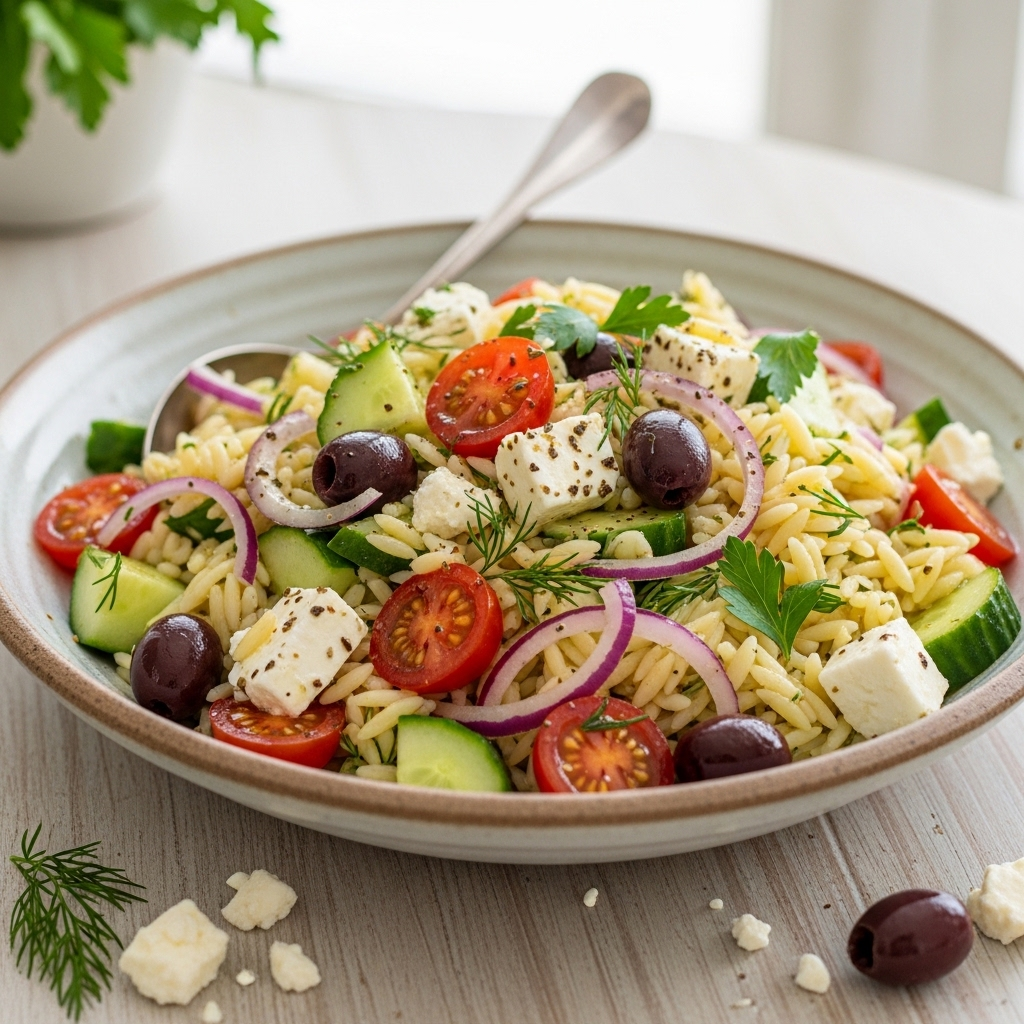
When the sun begins to linger a little longer in the evening sky and the air carries the faint scent of blooming jasmine, my kitchen naturally gravitates toward the vibrant flavors of the Mediterranean. There is something fundamentally restorative about the combination of lemon, olive oil, and fresh herbs. Among the pantheon of Greek-inspired dishes, theGreek Orzo Salad with Fetastands as a modern classic—a harmonious marriage between the heartiness of pasta and the refreshing crunch of a traditionalHoriatiki(village salad).
Orzo, orkritharakias it is known in Greece, is a rice-shaped pasta that serves as the perfect canvas for bold flavors. Unlike bulkier pasta shapes, orzo nestles perfectly alongside diced cucumbers and halved cherry tomatoes, ensuring that every single forkful contains a bit of everything.
This recipe isn’t just a side dish; it’s a story of culinary balance. It highlights the saltiness of sheep’s milk feta, the earthy richness of Kalamata olives, and the sharp, bright zing of a homemade vinaigrette. Whether you are hosting a seaside-themed dinner party, looking for the ultimate “make-ahead” office lunch, or simply need a reliable dish for a backyard barbecue, this salad delivers a sophisticated punch with minimal effort.
2. Recipe Overview
- Cuisine Type:Greek-Mediterranean Fusion
- Difficulty Level:Easy
- Total Preparation Time:15 minutes
- Total Cooking Time:8–10 minutes (for the orzo)
- Total Time:Approx. 25 minutes
- Dietary Classifications:Vegetarian. (Can be made Vegan by omitting feta or using a plant-based substitute. Can be made Gluten-Free using chickpeas or GF orzo).
3. Equipment and Tools
To achieve the perfect texture and flavor integration, having the right tools is essential.
Essential Kitchen Tools:
- Large Stockpot:For boiling the orzo. A5-to-6-quart potis ideal to allow the pasta enough room to move, preventing clumping.
- Fine-Mesh Sieve or Colander:To drain the orzo. Because orzo is small, a fine-mesh strainer is preferred over a standard colander with large holes.
- Large Mixing Bowl:A stainless steel or glass bowl with at least a4-quart capacityto allow for vigorous tossing without spilling.
- Sharp Chef’s Knife:For precision dicing of vegetables. Consistent sizing is key to the aesthetic of this salad.
- Small Glass Jar or Whisking Bowl:For emulsifying the lemon vinaigrette.
- Measuring Cups and Spoons:For both dry and liquid measurements to ensure the dressing-to-pasta ratio is perfect.
4. Serving Suggestions
Plating Recommendations
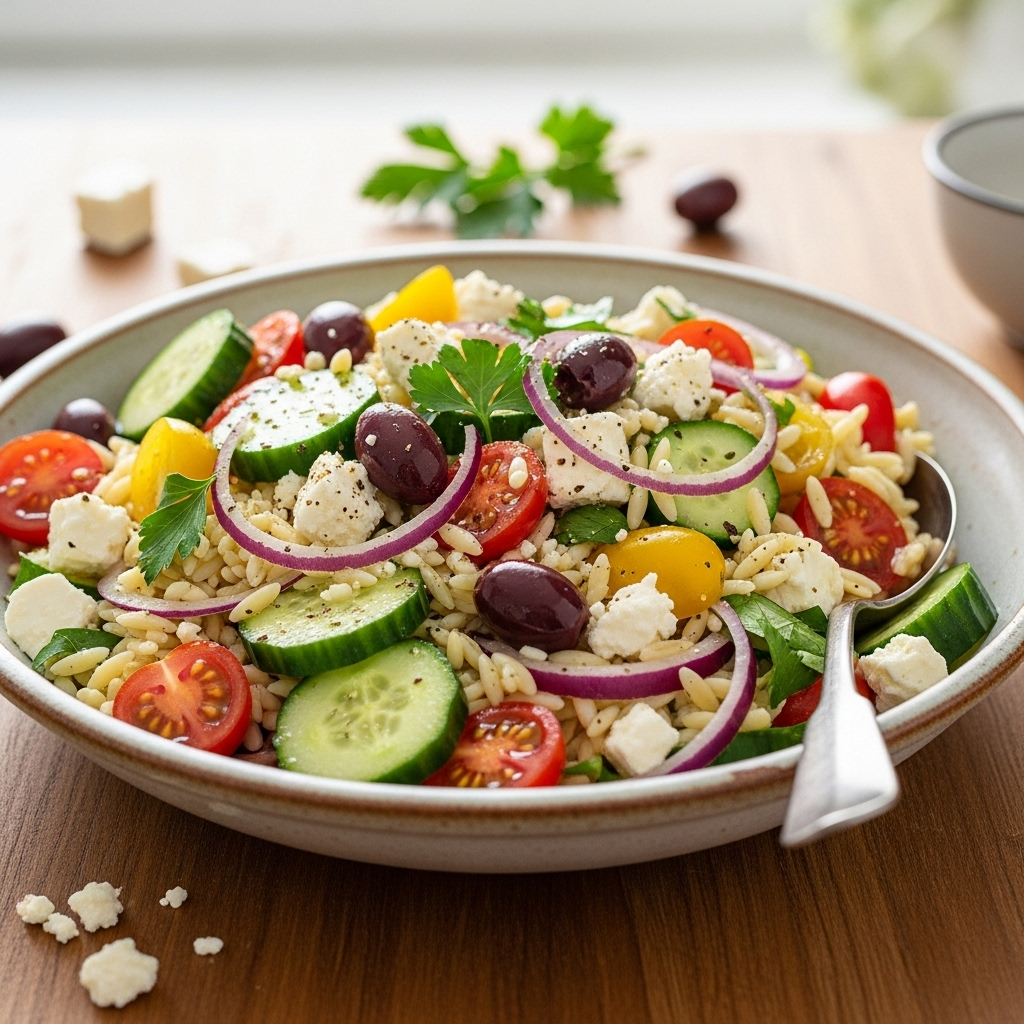
For a family-style presentation, serve the salad in a wide, shallow ceramic bowl. This prevents the heavier ingredients (like the olives and feta) from sinking to the bottom. For individual servings, use chilled salad plates to keep the vegetables crisp.
Garnish Ideas
- Fresh Microgreens:A sprinkle of arugula microgreens adds a peppery bite.
- Lemon Zest:Grate fresh zest over the top just before serving for an aromatic boost.
- Extra Virgin Olive Oil Drizzle:A final “finishing” swirl of high-quality, cold-pressed oil.
Complementary Side Dishes
- Proteins:Grilled lemon-oregano chicken skewers (Souvlaki), pan-seared sea bass, or garlic butter shrimp.
- Breads:Warm pita bread or crusty sourdough to soak up the leftover vinaigrette.
Wine and Beverage Pairings
- White Wine:An Assyrtiko from Santorini provides the perfect high-acidity backbone to match the lemon and feta.
- Non-Alcoholic:Sparkling water infused with cucumber slices and fresh mint.
5. Nutritional Information
Per 1.5-cup serving (approximate):
Health Benefits:This salad is rich in heart-healthy monounsaturated fats from olive oil and lycopene from the tomatoes. The inclusion of fresh herbs provides a boost of antioxidants.
6. Storage and Reheating
Refrigeration Guidelines
This salad is a champion of meal prep. Store in an airtight container for up to3–4 days. Note that the orzo will absorb the dressing over time.
Storage Tip
If making 24 hours in advance, keep half of the dressing aside and toss it into the salad just before serving to refresh the moisture and flavors.
Freezing Recommendations
Do not freeze.The high water content in cucumbers and tomatoes will cause the salad to become mushy and unappealing upon thawing.
7. Expert Tips and Variations
Professional Chef Tips
- The “Salt Water” Rule:Salt your pasta water generously. It should taste like the sea. This is your only chance to season the inside of the orzo.
- Stop the Carryover Cooking:Rinse the orzo under cold water immediately after draining. This removes excess starch (preventing sticking) and stops the cooking process to keep the pastaal dente.
- The Feta Factor:Always buy feta in a block stored in brine. Pre-crumbled feta is often coated in anti-caking agents that dry it out and dull the flavor.
Common Mistakes to Avoid
- Overcooking the Orzo:Mushy orzo ruins the texture. Aim for a firm bite.
- Dressing Too Early:If serving for a party, add the fresh herbs (especially mint) at the last minute to prevent them from turning black.
Creative Variations
- The Protein Power-Up:Add a can of rinsed chickpeas or shredded rotisserie chicken.
- The Grain Swap:Replace orzo with quinoa or farro for a nuttier, whole-grain profile.
- Roasted Twist:Instead of raw bell peppers, used jarred roasted red peppers for a smoky sweetness.
8. Ingredients Section
The Pasta
- Orzo:16 oz (450g) dried orzo pasta.
The Fresh Produce
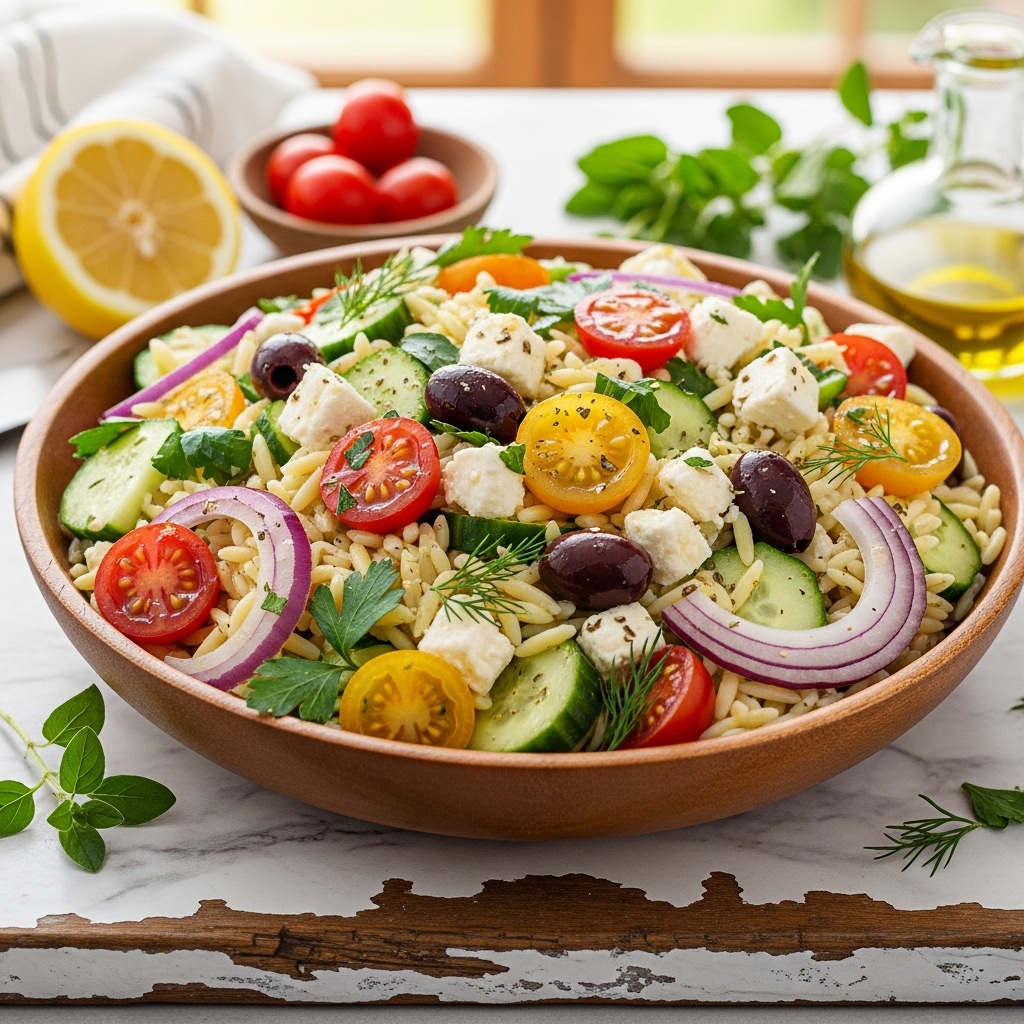
- English Cucumber:1 large, diced (approx. 2 cups). English cucumbers are preferred as they have thinner skins and fewer seeds.
- Cherry Tomatoes:1 pint (approx. 2 cups), halved.
- Red Onion:1/2 medium onion, finely diced.
- Bell Pepper:1 yellow or orange pepper, diced for color contrast.
- Fresh Parsley:1/2 cup, finely chopped.
- Fresh Mint:1/4 cup, chiffonade (optional but highly recommended).
The Mediterranean Pantry
- Kalamata Olives:1/2 cup, pitted and sliced.
- Feta Cheese:6 oz (170g) high-quality Greek feta, crumbled.
The Lemon Vinaigrette
- Extra Virgin Olive Oil:1/3 cup.
- Fresh Lemon Juice:3 tablespoons (approx. 1 large lemon).
- Red Wine Vinegar:1 tablespoon.
- Dried Oregano:1 teaspoon (Greek oregano is best).
- Garlic:1 clove, minced or pressed.
- Salt & Black Pepper:To taste.
9. Step-by-Step Instructions
Step 1: Cook the Orzo
Bring a large pot of salted water to a rolling boil. Add the orzo and cook according to package instructions (usually 8–9 minutes) untilal dente.
- Visual Cue:The pasta should be tender but still have a slight resistance when bitten.
Step 2: Cool and Drain
Drain the orzo in a fine-mesh sieve. Immediately rinse under cold running water for 30 seconds. Shake well to remove all excess moisture and transfer to your large mixing bowl. Drizzle with a teaspoon of olive oil to prevent sticking while you prep the rest.
Step 3: Prepare the Vinaigrette
In a small jar or bowl, combine the olive oil, lemon juice, red wine vinegar, minced garlic, dried oregano, salt, and pepper. Whisk vigorously or shake the jar until the dressing is emulsified and slightly thickened.
Step 4: Chop the Vegetables
Dice the cucumber, bell pepper, and red onion into uniform pieces (roughly the size of a chickpea). Halve the cherry tomatoes. Chop your fresh herbs finely.
- Chef’s Note:Consistent dicing ensures that the salad is easy to eat and looks professionally prepared.
Step 5: Combine
Add the chopped vegetables, sliced olives, and half of the crumbled feta to the bowl with the orzo.
Step 6: Dress the Salad
Pour the vinaigrette over the salad. Use a large spoon or spatula to toss everything together until the orzo is thoroughly coated.
Step 7: Final Touch and Chill
Fold in the remaining feta and the fresh herbs gently. Taste and add more salt or lemon juice if needed. For the best flavor, let the salad sit in the refrigerator for at least 30 minutes before serving.
10. Frequently Asked Questions (FAQ)
Q: Can I use a different type of pasta?A: Absolutely. While orzo is traditional for this texture, acini di pepe, ditalini, or even pearl couscous work beautifully as substitutes.
Q: How do I keep the red onion from being too overpowering?A: After dicing the red onion, soak the pieces in a bowl of cold water for 10 minutes, then drain. This removes the “sulfuric bite” while keeping the crunch.
Q: Is it okay to use bottled lemon juice?A: In a pinch, yes, but fresh lemon juice provides a floral acidity that bottled versions lack. Since this is a raw salad, the quality of the juice makes a significant difference.
Q: My orzo clumped together, how do I fix it?A: If the orzo has sat for a bit and clumped, simply rinse it again under cold water or toss it with a tablespoon of the dressing to break the strands apart.
Q: Can I make this dish warm?A: While traditionally served cold or at room temperature, you can serve it warm by tossing the ingredients with the freshly cooked (not rinsed) orzo. The feta will become slightly creamy and melty.