1. Introduction: The Art of the Morning Reset
In the rhythm of modern life, the morning hours are often a frantic race against the clock. We prioritize efficiency, but we shouldn’t have to compromise on health or flavor. Enter theOvernight Oat—a culinary innovation that has quietly revolutionized breakfast for millions.
The concept is deceptively simple: by soaking raw, rolled oats in milk or a dairy alternative overnight, you bypass the need for stovetop cooking. This technique creates a luxurious, pudding-like consistency that feels like an indulgence, despite being one of the most balanced breakfasts you can prepare.
While the modern “Mason jar” trend feels new, the roots of this dish run deep. It is a direct evolution ofBircher Muesli, invented around 1900 by the Swiss physician Maximilian Bircher-Benner. He championed a raw, whole-grain diet to improve his patients’ health, serving a mixture of soaked oats, grated apples, nuts, and lemon juice. Today, we have taken that foundation and turned it into an infinitely customizable canvas for modern nutrition. Whether you’re a professional on the move or a parent managing the morning rush, overnight oats offer a reliable, nutritious, and deeply satisfying start to the day.
2. Recipe Overview
- Cuisine Type:Contemporary Health Food / International
- Difficulty Level:Extremely Easy (No-cook)
- Total Prep Time:5–10 minutes
- Resting Time:6–12 hours (overnight)
- Dietary Classifications:Vegetarian, Vegan-friendly, Gluten-free (if using certified oats), Dairy-free (optional).
3. Equipment and Tools
The simplicity of this recipe means you don’t need a professional kitchen, but a few specific tools will ensure success every time:
- The Vessel:16 oz (475 ml) wide-mouth glass Mason jars are ideal. They are durable, stackable, and airtight, which preserves the texture of the oats.
- Measuring Tools:Standard dry measuring cups (1/2 cup) and high-quality measuring spoons are essential for the perfect ratio.
- Mixing Utensils:A long-handled silicone spatula is better than a spoon for ensuring that no dry oats remain stuck at the bottom or the corners of the jar.
- Special Notes:Avoid deep, narrow containers, as they make it difficult to stir the ingredients thoroughly, leading to uneven texture. Always ensure your containers have a secure, leak-proof lid.
4. Serving Suggestions
Your overnight oats are a blank canvas. Here is how to serve them like a professional:
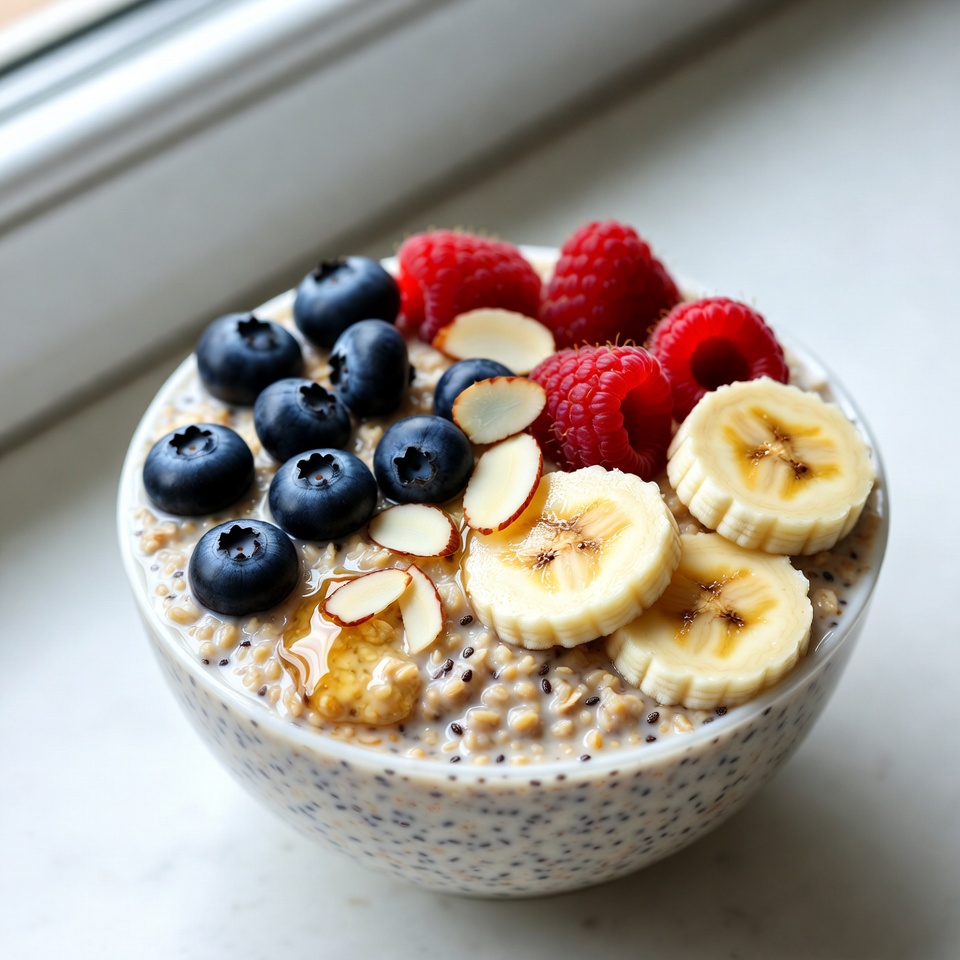
- Plating:If you are feeling fancy, transfer the oats into a shallow ceramic bowl. Layer your toppings in artistic sections rather than mixing them in completely—this provides a beautiful color contrast and texture variety.
- Garnish Ideas:Add a final “crunch” right before serving: toasted slivered almonds, hemp hearts, bee pollen, or a sprinkle of flaky sea salt.
- Complementary Sides:Pair with a high-protein side, such as a soft-boiled egg or a small serving of Greek yogurt, if you are looking for a more robust start.
- Beverage Pairings:A bright, acidic light-roast coffee or a ceremonial-grade matcha latte cuts through the creamy texture of the oats perfectly.
5. Nutritional Information
(Based on a standard serving: 1/2 cup rolled oats, 1/2 cup milk, 1 tbsp chia seeds)
- Calories:~300 kcal
- Protein:9g – 11g
- Fiber:10g – 12g
- Fat:7g – 9g (depending on the milk used)
- Key Micronutrients:High in manganese, phosphorus, magnesium, and iron.
Health Benefits:
- Steady Energy:The low glycemic index of oats provides sustained glucose release, preventing the mid-morning slump.
- Gut Health:Oats contain beta-glucan, a soluble fiber that supports healthy cholesterol levels and acts as a prebiotic for gut bacteria.
6. Storage and Reheating
- Refrigeration:Store in an airtight container forup to 5 days. The texture will change slightly; by day 3, the oats will be softer and much creamier.
- Freezing:You can freeze these in freezer-safe jars for up to 3 months. Leave an inch of headspace at the top to allow for expansion. Thaw in the refrigerator overnight.
- Reheating:While designed to be eaten cold, you can warm them in the microwave for 45–60 seconds. If doing so, add a splash of extra liquid, as they will thicken significantly when heated.
7. Expert Tips and Variations
Pro-Chef Secrets
- The “Salt” Rule:Always add a pinch of kosher salt to your mixture. It suppresses bitterness and brings out the natural sweetness of the oats.
- The Toasting Trick:If you have an extra 3 minutes, lightly toast your dry oats in a skillet until golden. It adds a deep, nutty complexity that takes the dish to a gourmet level.
Seasonal Adaptations
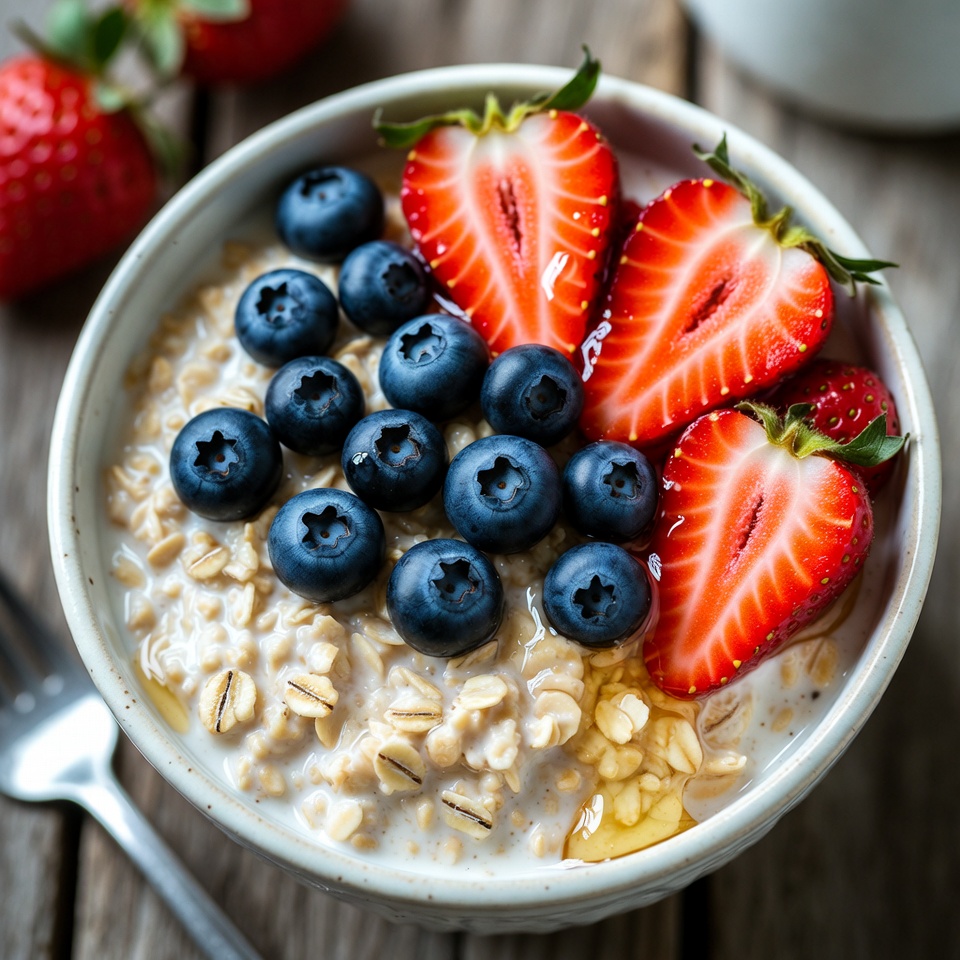
- Spring/Summer:Top with fresh macerated berries, mint leaves, and a drizzle of honey.
- Autumn/Winter:Incorporate pumpkin purée, apple pie spice, and chopped toasted pecans.
8. Ingredients Section
The Fundamental Ratio
Use a1:1 ratioof rolled oats to liquid.
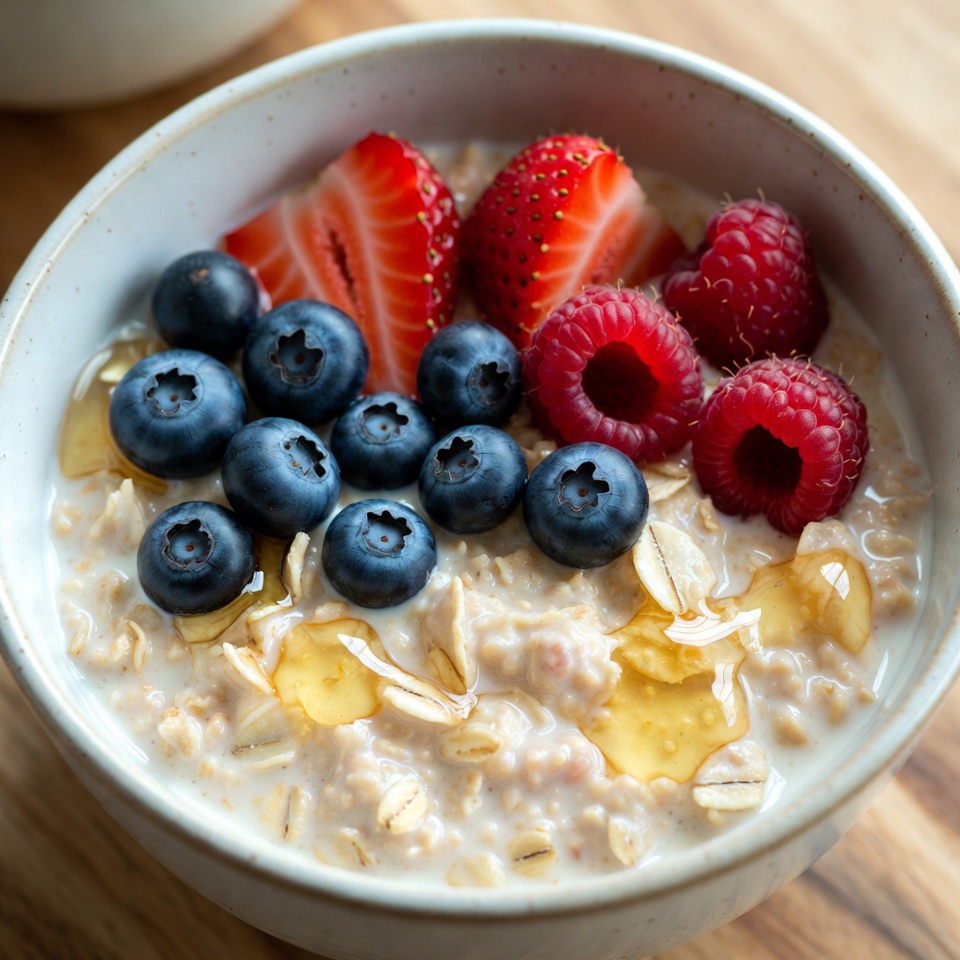
- Oats:1/2 cup (45g) Old Fashioned Rolled Oats (not Instant or Steel-cut).
- Liquid:1/2 cup (120ml) milk (almond, soy, dairy, or oat milk).
- The Thickener:1 tablespoon Chia Seeds (crucial for that pudding consistency).
- Flavor Profile:1/4 tsp pure vanilla extract, 1-2 tsp maple syrup (optional).
Sourcing Tips:Always purchase rolled oats labeled “certified gluten-free” if you have a sensitivity. For the best flavor, use high-quality, organic vanilla extract rather than imitation.
9. Step-by-Step Instructions
- Combine:In your jar, add the rolled oats, chia seeds, and salt.
- Liquid Addition:Pour in your milk, vanilla, and sweetener.
- Agitation:Stir vigorously for 30 seconds. Ensure you scrape the edges.
- The “Check”:Let the mixture sit for 5 minutes, then give it one final stir. This prevents the chia seeds from clumping.
- The Chill:Seal the jar and place it in the refrigerator for at least 6 hours, ideally overnight.
- Customize:In the morning, top with your fresh fruit, nuts, or seeds.
10. Frequently Asked Questions (FAQ)
Q: Why are my oats gummy?A: You likely used Instant Oats, which are processed to cook immediately and turn to mush when soaked. Stick to Old Fashioned Rolled Oats.
Q: Can I make these without chia seeds?A: Yes, but the texture will be thinner. If you skip them, you can substitute with 1 tablespoon of ground flaxseed or reduce the milk by 2 tablespoons to keep it thick.
Q: Are these safe for toddlers?A: Absolutely! They are soft, easy to chew, and packed with nutrients. Just ensure you cut any fresh fruit into appropriate sizes.
Q: Can I use protein powder?A: Yes. Add 1/2 scoop to the dry mix. Note that protein powder absorbs liquid, so you may need to add an extra 2 tablespoons of milk.
Q: Is there a way to make them “grab-and-go” easier?A: Yes, prepare them in individual portion-sized containers so you can just grab one as you head out the door.