1. Introduction
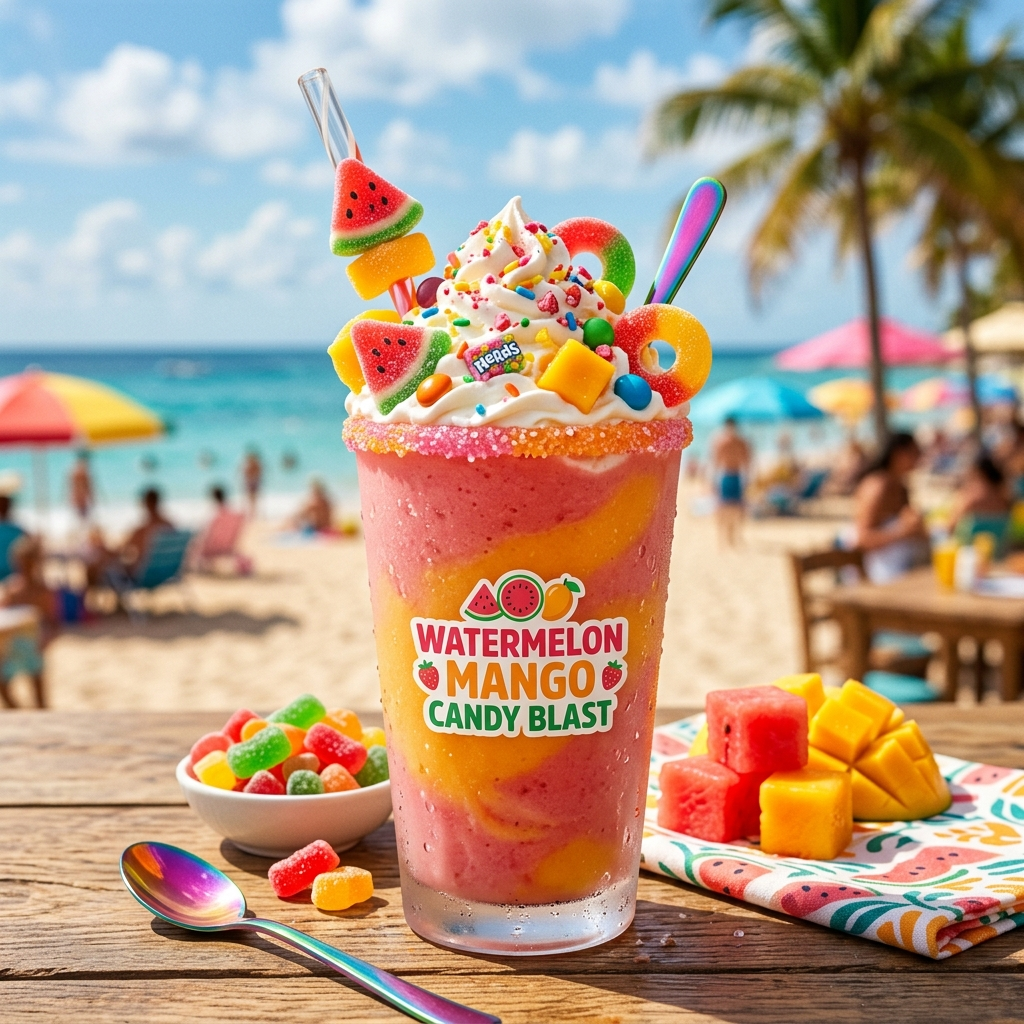
Imagine the peak of a sweltering July afternoon. The air is thick, and the only remedy is something ice-cold or vibrantly fresh. Enter theWatermelon Mango Candy Blast. This isn’t your average store-bought gummy; it is a sophisticated, homemade fruit fusion that captures the syrupy soul of a ripe mango and the hydrating crispness of a sun-warmed watermelon.
This recipe traces its roots back to the traditional “fruit leather” or “fruit roll-ups” that many of us enjoyed as children, but with a modern, gourmet twist. By combining the high water content of watermelon with the buttery, fibrous texture of mango, we create a candy that is naturally sweet, slightly tangy, and structurally perfect. Whether you are looking for a healthy school snack or a colorful addition to a charcuterie board, this “blast” of flavor bridges the gap between nostalgic treats and artisanal confectionery.
2. Recipe Overview
- Cuisine Type:Modern American / Healthy Snack
- Difficulty Level:Easy to Intermediate (Requires patience for dehydration)
- Prep Time:20 minutes
- Drying Time:6–8 hours (Oven) or 10–12 hours (Dehydrator)
- Dietary Classifications:Vegan, Gluten-Free, Refined Sugar-Free, Paleo-friendly
3. Equipment and Tools
To achieve the perfect “candy” consistency without burning the delicate fruit sugars, specific equipment is essential:
- High-Speed Blender:To ensure the mango fibers are completely pulverized.
- Fine-Mesh Strainer:Crucial for removing excess watermelon pulp and seeds.
- Large Baking Sheets:18×13 inch (Half-sheet pans) are ideal.
- Silicone Baking Mats (Silpat):These are non-negotiable. Parchment paper can wrinkle under the moisture, leading to uneven drying.
- Offset Spatula:For spreading the puree to a uniform thickness of3mm.
- Kitchen Shears:For cutting the finished product into strips.
- Food Dehydrator (Optional):If using, ensure it has adjustable temperature settings.
4. Serving Suggestions
The Watermelon Mango Candy Blast is visually stunning, boasting a deep coral hue.
- Plating:Roll the strips tightly and stand them upright in a glass jar for a “bouquet” effect.
- Garnish:Dust with a pinch ofTajín(chili-lime salt) for a Mexican-inspired “Chamoy” flavor profile.
- Pairings:Serve alongside a bowl of Greek yogurt or a sharp white cheddar cheese to balance the sweetness.
- Beverage:Pairs beautifully with sparkling mineral water and a sprig of fresh mint.
5. Nutritional Information
(Per 2-ounce serving)
| Nutrient | Amount |
| Calories | 85 kcal |
| Total Fat | 0.4g |
| Sodium | 2mg |
| Total Carbohydrates | 21g |
| Dietary Fiber | 2.5g |
| Sugars | 18g (Natural) |
| Protein | 1g |
| Vitamin C | 45% DV |
Health Benefits:This snack is a powerhouse of Lycopene (from watermelon) and Beta-carotene (from mango), providing high antioxidant support without the “sugar crash” associated with processed candies.
6. Storage and Reheating
Because this is a dehydrated product, moisture is the enemy.
- Room Temperature:Store in an airtight container with parchment paper separating layers for up to7 days.
- Refrigeration:Can be kept for up to3 weeks.
- Freezing:Wrap individually in plastic wrap and place in a freezer bag. They will last6 months.
- Pro Tip:If the candy becomes too hard, let it sit at room temperature for 10 minutes to regain its chewiness. Never “reheat” in a microwave as it will melt.
7. Expert Tips and Variations
Professional Chef Tips
- The “Border” Rule:Always spread the puree slightly thicker at the edges of the pan. The edges dry faster than the center; a thicker edge prevents burning.
- Temperature Control:Never exceed140°F (60°C). Higher temperatures “cook” the fruit rather than drying it, destroying the vibrant color and flavor.
Creative Variations
- The Tropical Kick:Add a teaspoon of fresh ginger juice to the blender.
- The Sour Blast:Incorporate the zest and juice of two limes to mimic “sour belt” candies.
- The Herb Infusion:Blend in 3-4 leaves of fresh basil for a sophisticated, savory undertone.
8. Ingredients Section
- 4 cupsRipe Watermelon (cubed, seeds removed) —Approx. 600g
- 2 cupsFresh Mango (Atulfo or Kent varieties work best) —Approx. 330g
- 1 tbspFresh Lemon Juice (acts as a natural preservative)
- Optional:1 tbsp Raw Honey or Agave (only if the fruit is under-ripe)
9. Step-by-Step Instructions
Step 1: The Puree Phase
Combine the watermelon and mango in your high-speed blender. Pulse until the mixture is a completely smooth liquid.
Note:Do not add water. The watermelon provides all the necessary liquid for blending.
Step 2: The Reduction (Optional but Recommended)
If your watermelon is particularly watery, pour the puree into a saucepan and simmer over medium-low heat for 10–15 minutes. This concentrates the sugars and reduces drying time in the oven.
Step 3: Prepping the Tray
Preheat your oven to its lowest possible setting (usually140°F – 170°F). Lay your silicone mat onto the baking sheet. Ensure the sheet is perfectly flat.
Step 4: The Pour
Pour the puree onto the mat. Use your offset spatula to spread it evenly. Aim for a thickness of about $1/8$ inch (3mm). Tap the tray on the counter to pop any air bubbles.
Step 5: The Dehydration
Place the tray in the oven. If your oven doesn’t go below170°F, prop the door open slightly with a wooden spoon to allow moisture to escape and to keep the temperature down.
Step 6: Testing for Doneness
After 6 hours, touch the center of the candy. If it is no longer sticky and peels away from the mat easily, it is done. It should be translucent and flexible.
10. Frequently Asked Questions (FAQ)
Q: Can I use frozen fruit?
A: Yes! Thaw the fruit completely first and drain any excess “thaw juice” from the watermelon to prevent the puree from being too thin.
Q: Why did my candy turn out brittle?
A: This usually means it was left in the oven too long or the temperature was too high. It should be “leathery,” not “snappy.”
Q: My fruit leather is sticking to the teeth, why?
A: This indicates a high sugar content or slightly under-dried fruit. Try drying for another 30 minutes next time.
Q: Is a dehydrator better than an oven?
A: Yes. Dehydrators have better airflow (fans), which results in a more consistent texture and more efficient drying.
Q: Can I use other fruits?
A: Absolutely. Berry-based “blasts” work well, but always keep a “meaty” fruit like mango or apple as a base to ensure the leather has body.