1. Introduction
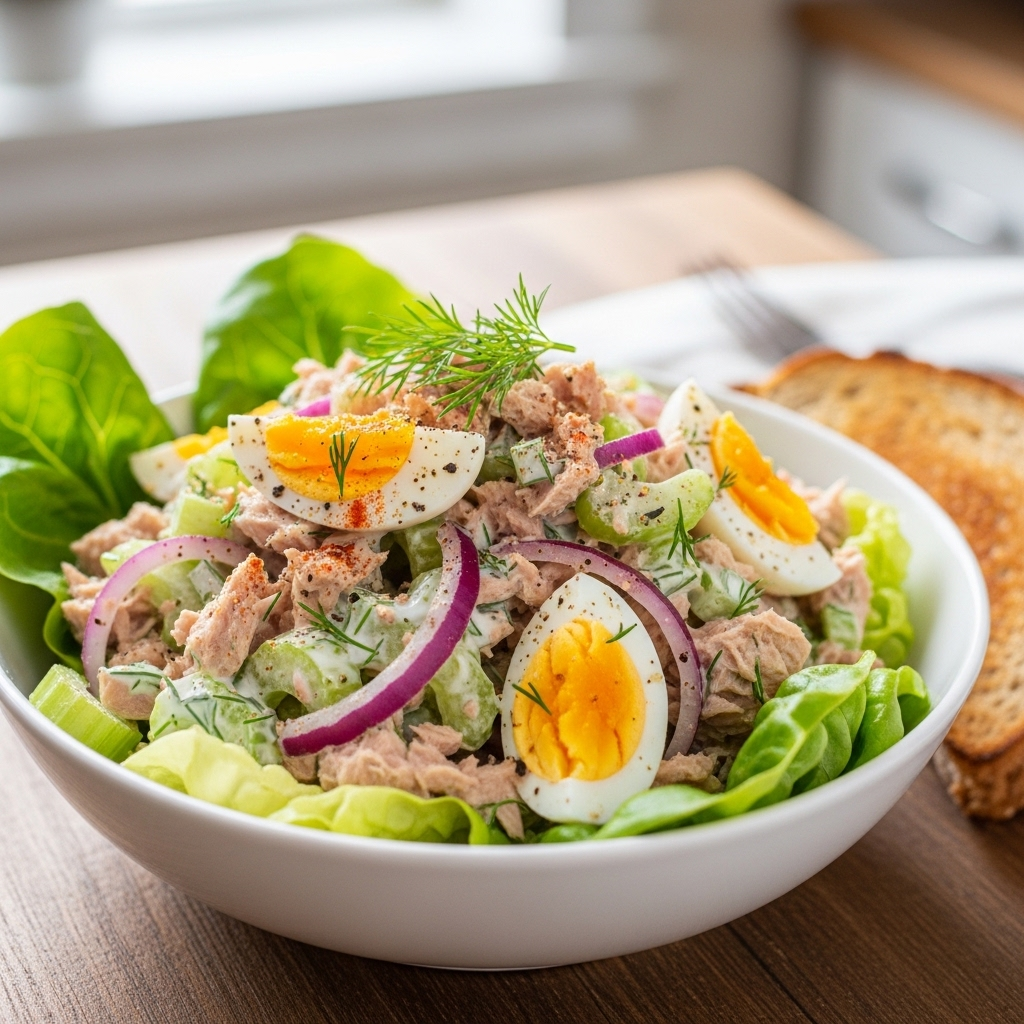
There is a common misconception that tuna salad is nothing more than a cafeteria staple—a mash of fish and heavy mayonnaise tucked between two soggy slices of bread. It’s time to retire that image. TheTuna Protein Saladwe are crafting today is a vibrant, nutrient-dense masterpiece that honors the simplicity of Mediterranean coastal cuisine while meeting the rigorous demands of a modern, health-conscious lifestyle.
The story of this dish begins in the fishing villages of the Amalfi Coast and the sunny terraces of Nice, where “Salade Niçoise” proved that canned fish could be the star of a sophisticated meal. Our version takes those traditional roots and optimizes them for the “power bowl” era. We’ve swapped heavy fats for bright acids and crunchy aromatics, creating a dish that doesn’t just fill you up—it fuels you. Whether you are a busy professional seeking a 10-minute gourmet lunch or an athlete looking for an efficient post-workout recovery meal, this recipe is your new gold standard.
2. Recipe Overview
- Cuisine Type:Modern Mediterranean / Fusion
- Difficulty Level:Beginner
- Prep Time:15 minutes
- Cook Time:0 minutes (No-cook recipe)
- Total Time:15 minutes
- Dietary Classifications:Gluten-Free, High-Protein, Low-Carb, Dairy-Free (optional), Keto-friendly.
3. Equipment and Tools
To achieve the perfect texture—where the tuna stays flaky rather than becoming a paste—the right tools are essential.
- Mixing Bowl:A medium stainless steel or glass bowl (approximately 3-quart capacity) to allow for toss-room without spilling.
- Chef’s Knife:A sharp 8-inch blade for precision dicing of vegetables.
- Colander/Fine Mesh Strainer:Essential for thoroughly draining the tuna and rinsing the chickpeas or beans.
- Citrus Juicer:To extract maximum juice from lemons while catching seeds.
- Whisk or Small Jar:For emulsifying the dressing before adding it to the salad.
- Measuring Tools:A set of standard US Imperial cups/spoons and a digital scale for Metric precision.
4. Serving Suggestions
Plating Recommendations
For a casual lunch, serve the salad in a wide, shallow pasta bowl to showcase the colors. For a formal brunch, use a ring mold to stack the salad in a perfect cylinder, topped with a sprig of fresh dill.
Garnish Ideas
- Microgreens:A handful of radish or pea shoots adds a peppery bite.
- Toasted Seeds:Sunflower or pumpkin seeds (pepitas) add a delightful textural contrast.
- Zest:A final grating of fresh lemon zest over the top awakens the aromatics.
Complementary Side Dishes
- Grain Base:Serve atop a bed of warm quinoa or farro.
- Crunchy Vessel:Use endive spears or crisp romaine hearts as “boats” for a low-carb crunch.
- Bread:A toasted slice of sourdough rubbed with a raw garlic clove.
5. Nutritional Information
(Calculated per 1.5-cup serving)
| Nutrient | Amount |
| Calories | 340 kcal |
| Protein | 38g |
| Total Fat | 14g |
| Carbohydrates | 12g |
| Fiber | 4g |
| Omega-3s | 800mg |
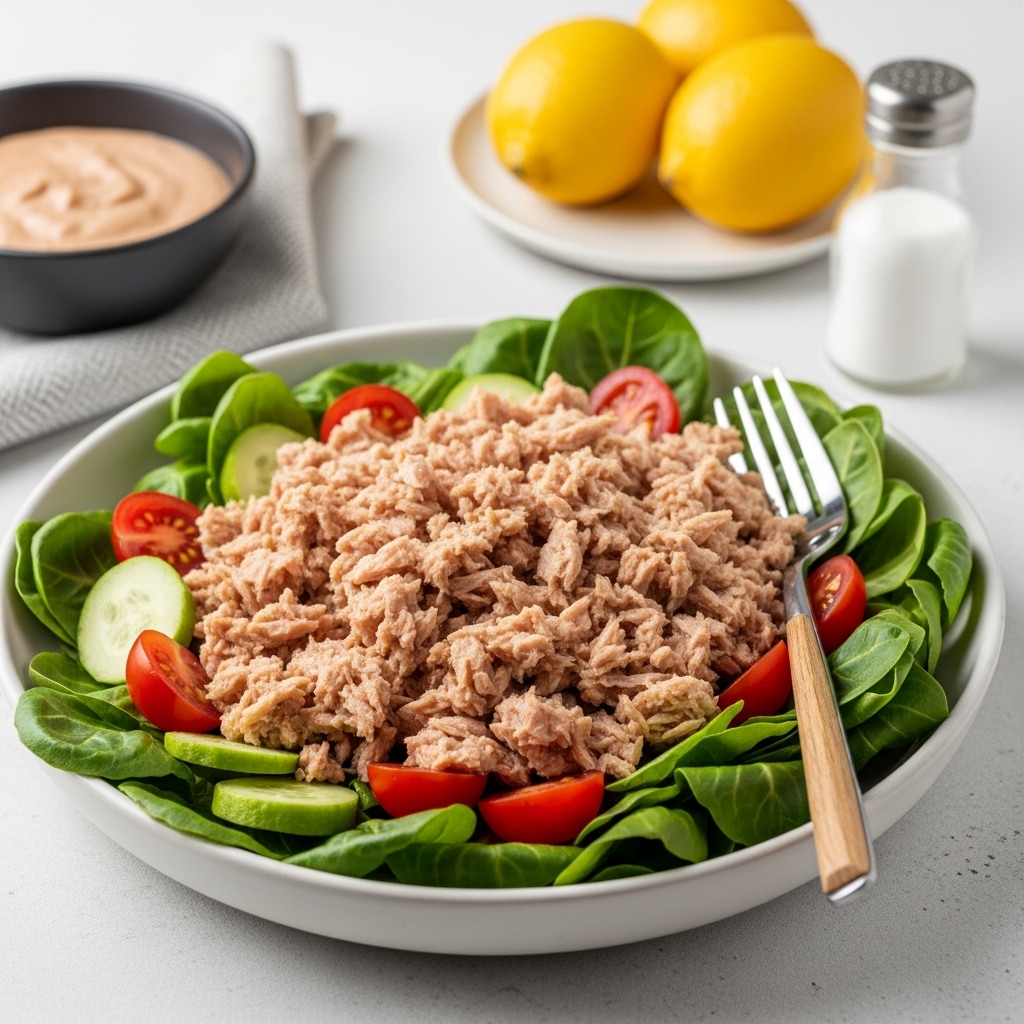
Health Benefits:This salad is an anti-inflammatory powerhouse. The tuna provides lean protein and essential Omega-3 fatty acids for brain health, while the colorful vegetables offer a broad spectrum of antioxidants and Vitamin C.
6. Storage and Reheating
- Refrigeration:Store in an airtight glass container for up to3 days. The flavors actually deepen after 2 hours of chilling.
- Freezing:Not recommended.The fresh vegetables (cucumbers and celery) will lose their structural integrity and become watery upon thawing.
- Pro-Tip:If meal prepping for the week, keep the dressing in a separate small container and toss just before eating to maintain maximum vegetable crunch.
7. Expert Tips and Variations
Professional Chef Tips
- The “Flake” Factor:Do not over-mix. Use a fork to gently break the tuna into bite-sized chunks rather than stirring it into a mush.
- Salt Management:Tuna can be naturally salty. Taste the saladbeforeadding extra salt, especially if you are using capers or olives.
Creative Variations
- The Greek Twist:Add feta cheese, Kalamata olives, and dried oregano.
- The Spicy Kick:Fold in diced jalapeños and a teaspoon of Tajín or sriracha.
- The Creamy Alternative:Substitute the olive oil dressing with mashed avocado for a Mayo-free creamy texture.
8. Ingredients Section
The Base
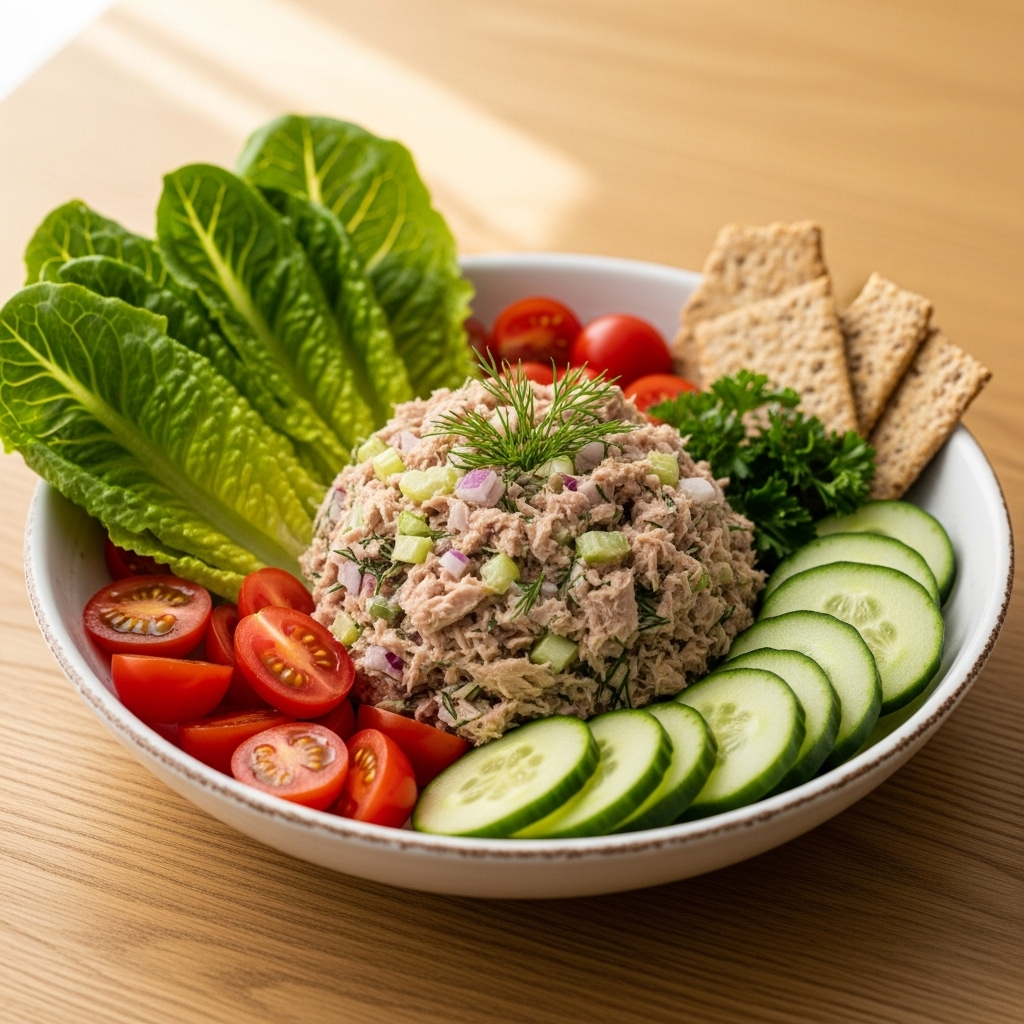
- Canned Tuna:2 cans (approx. 340g / 12oz) solid white albacore or skipjack, packed in water.
- Chickpeas (Optional for extra protein):1/2 cup (80g) rinsed and drained.
The Crunch (The “Mirepoix”)
- Celery:2 stalks (approx. 100g), finely diced.
- Red Onion:1/4 cup (40g), minced.
- English Cucumber:1/2 cup (75g), diced (seeds removed).
The Dressing
- Extra Virgin Olive Oil:2 tbsp (30ml).
- Lemon Juice:1.5 tbsp (approx. half a large lemon).
- Dijon Mustard:1 tsp (5g) for emulsification and tang.
- Fresh Herbs:2 tbsp chopped parsley or dill.
9. Step-by-Step Instructions
- Drain the Tuna:Open the cans and press the lid down firmly to drain all excess water. For a truly “clean” tasting salad, give the tuna a very light rinse in a mesh strainer and pat dry with a paper towel.
- Prepare the Aromatics:Mince the red onion and place it in a small bowl of cold water for 5 minutes. This “shaving” technique removes the harsh sulfurous bite while keeping the crunch. Drain and dry before using.
- Dicing the Veggies:Ensure your celery and cucumber are diced to a uniform size (approx. 1/4 inch). Consistency in size ensures every bite has the perfect ratio of tuna to crunch.
- Emulsify the Vinaigrette:In a small jar or bowl, whisk together the olive oil, lemon juice, Dijon mustard, and a pinch of black pepper. Whisk until the mixture thickens slightly and turns opaque.
- The Gentle Fold:Place the tuna in your large mixing bowl. Add the vegetables and chickpeas. Pour the dressing over the top. Using a large spoon or spatula, use a “folding” motion—scooping from the bottom and turning over—until the ingredients are coated.
- The Chill Factor:While you can eat this immediately, letting it sit in the fridge for20 minutesallows the acid in the lemon juice to lightly “pickle” the onions and penetrate the tuna.
10. Frequently Asked Questions (FAQ)
Q: Is it safe to eat canned tuna every day?
A: Due to mercury levels, most health organizations recommend limiting albacore tuna to once a week. Skipjack (often labeled “Light Tuna”) has lower mercury and can be consumed more frequently.
Q: Can I use tuna packed in oil instead of water?
A: Absolutely! If using oil-packed tuna, reduce the olive oil in the dressing by half, as the fish will already be quite rich.
Q: How do I stop the salad from getting watery?
A: The main culprit is the cucumber. Use an English (seedless) cucumber, or scoop out the watery seeds of a standard cucumber before dicing.
Q: Can I substitute the tuna with something else?
A: This recipe works wonderfully with canned salmon or even shredded rotisserie chicken for a different protein profile.
Q: What is the best way to transport this for lunch?
A: Use a “mason jar” method: Put the dressing at the very bottom, then the chickpeas, then the tuna, and the fresh vegetables on top. Shake just before serving!