1. Introduction
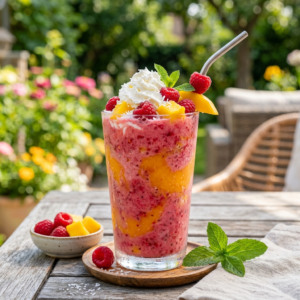
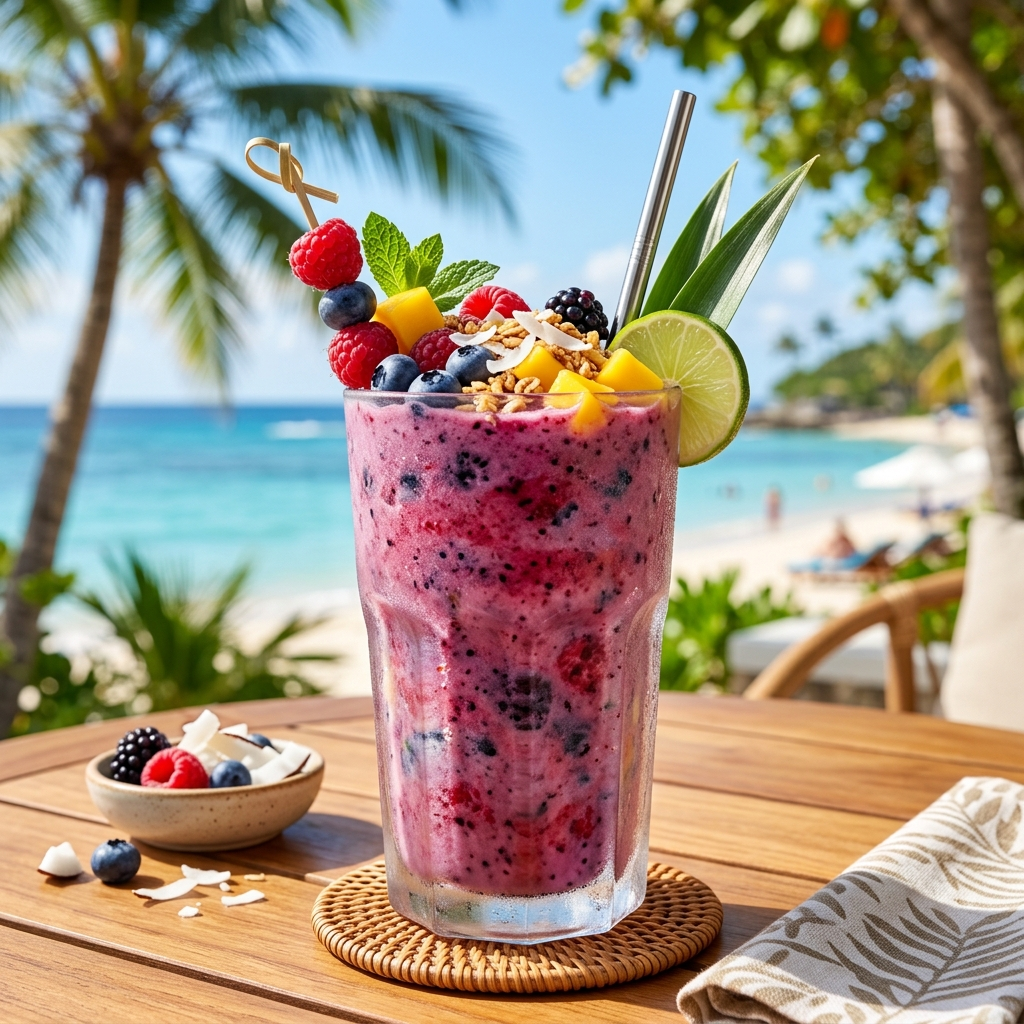
Imagine standing on a sun-drenched beach, the salt air misting your face while the rhythmic sound of turquoise waves provides the soundtrack to your afternoon. Now, imagine capturing that exact feeling in a glass. TheTropical Berry Frost Smoothieisn’t just a drink; it’s a sensory getaway designed to transport your palate to the tropics, no passport required.
This recipe was born from a desire to bridge the gap between a decadent dessert and a functional health tonic. While many smoothies lean too heavily into sugary syrups or purely “green” earthy tones, the Tropical Berry Frost finds the “Goldilocks zone.” It utilizes the natural acidity of frozen raspberries and blueberries to cut through the creamy, buttery richness of tropical mango and coconut milk.
What sets this particular blend apart is the “frost” element. By utilizing specific freezing techniques and a touch of citrus zest, we achieve a texture that sits somewhere between a traditional smoothie and a fine fruit sorbet. It’s thick enough to eat with a spoon but smooth enough to sip through a straw. Whether you’re fueling up after a high-intensity workout or looking for a vibrant, kid-friendly snack that sneaks in antioxidants, this smoothie is your new gold standard.
2. Recipe Overview
- Cuisine Type:Modern American / Fusion
- Difficulty Level:Easy
- Prep Time:5 minutes
- Total Time:5 minutes
- Dietary Classifications:Vegan, Gluten-Free, Dairy-Free, Refined Sugar-Free, Paleo-friendly.
3. Equipment and Tools
To achieve the signature “frost” texture, the quality of your tools matters just as much as your ingredients.
- High-Speed Blender:A motor with at least900 wattsis recommended to pulverize frozen fruit into a silk-like consistency without leaving icy chunks.
- Volume Capacity:A blender jar with at least a1.5-liter (48 oz)capacity to allow for proper aeration.
- Silicone Spatula:Essential for scraping down the sides of the blender jar to ensure every berry is incorporated.
- Measuring Cups and Spoons:Both Metric and Imperial for precision.
- Citrus Zester:A fine microplane for adding the essential lime or lemon zest.
- Chilled Glassware:Using a pre-chilled glass (kept in the freezer for 10 minutes) helps maintain the “frost” integrity after pouring.
4. Serving Suggestions
Plating Recommendations
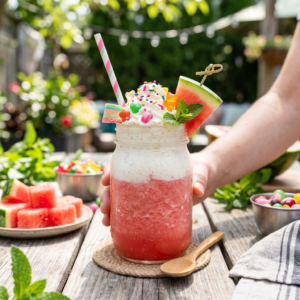
Serve in a tall hurricane glass or a wide-rimmed smoothie bowl. If serving as a bowl, keep the consistency slightly thicker by reducing the liquid by15%.
Garnish Ideas
- Fresh Mint:A single sprig adds a cooling aroma.
- Toasted Coconut Shavings:Adds a necessary crunch and reinforces the tropical profile.
- Fresh Berries:Drop 3–4 whole raspberries on top for a pop of color.
- Edible Flowers:Hibiscus or pansies for a high-end cafe aesthetic.
Beverage Pairings
If serving this at a brunch, pair it with a sparkling mineral water with a twist of lime. For a protein-heavy meal, it complements avocado toast with chili flakes or a light quinoa salad.
5. Nutritional Information
Per 16 oz Serving
| Nutrient | Amount |
| Calories | 245 kcal |
| Total Fat | 6g |
| Saturated Fat | 4g |
| Sodium | 15mg |
| Total Carbohydrates | 48g |
| Dietary Fiber | 9g |
| Sugars | 32g (Natural) |
| Protein | 3g |
Health Benefits:
- Antioxidant Powerhouse:Blueberries and raspberries contain anthocyanins which combat oxidative stress.
- Vitamin C Boost:Mango and lime provide over100%of your daily RDI, supporting immune health.
- Healthy Fats:Medium-chain triglycerides (MCTs) from coconut milk provide a quick energy source.
6. Storage and Reheating
Refrigeration
Smoothies are best enjoyed immediately. However, you can store this in an airtight mason jar for up to12 hours. Note: The “frost” texture will melt, and the ingredients may separate. Shake vigorously before consuming.
Freezing
If you have leftovers, pour the mixture into a silicone ice cube tray. These “smoothie cubes” can be tossed back into a blender later with a splash of liquid for a quick refresh.
Reheating
Not applicable. Never microwave or heat a frost smoothie; it will destroy the enzymatic profile and texture.
7. Expert Tips and Variations
Professional Chef Tips
- The “Liquid First” Rule:Always pour your coconut water or milk into the blender first. This creates a vortex that pulls the frozen solids down toward the blades, preventing “air pockets.”
- Zest is Best:Don’t skip the lime zest. The oils in the skin provide a floral fragrance that juice alone cannot replicate.
Common Mistakes
- Using Room Temp Fruit:This results in a “juice” rather than a “frost.” Always use frozen fruit for the structural integrity of the drink.
- Over-blending:Blending for too long generates heat from the friction of the blades, melting your smoothie. Stop as soon as it looks uniform.
Creative Variations
- The Protein Power-Up:Add one scoop of vanilla pea protein or collagen peptides.
- The Green Goddess:Add a handful of baby spinach. The dark berries will mask the green color, making it an “invisible” veggie boost.
- The Creamy Indulgence:Swap coconut water for full-fat canned coconut milk for a texture reminiscent of premium gelato.
8. Ingredients Section
Yields: 2 Servings
- Frozen Raspberries:150g (approx. 1 cup)
- Frozen Wild Blueberries:150g (approx. 1 cup)
- Frozen Mango Chunks:165g (approx. 1.5 cups) –Sourced: Kent or Ataulfo mangoes preferred for sweetness.
- Liquid Base:240ml (1 cup) Unsweetened Coconut Water or Light Coconut Milk.
- Citrus:1 tbsp Fresh Lime Juice + 1 tsp Lime Zest.
- Sweetener (Optional):1 tsp Agave Nectar or 1 Pitted Medjool Date.
- Liquid Gold:1/2 tsp Pure Vanilla Extract.
9. Step-by-Step Instructions
Step 1: Prep the Base
Pour240ml of coconut waterinto your blender jar. Add the vanilla extract and lime juice. Starting with the liquid ensures a smooth start for the motor.
Step 2: Add the “Frost” Elements
Layer in your frozen mango chunks first, followed by the raspberries and blueberries. Adding the densest frozen fruit (mango) closest to the blades helps create a thick emulsion.
Step 3: The Initial Pulse
Pulse the blender5–7 times. This breaks the large frozen chunks into smaller pieces without over-taxing the motor or heating the mixture.
Step 4: High-Speed Emulsion
Turn the blender to its highest setting for30–45 seconds. Watch for the “four-mound” vortex to form at the top, which indicates a perfect thick consistency.
Step 5: The Zest Finish
Stop the blender. Add the lime zest and give it one final2-second pulseto distribute the oils without pulverizing the zest into bitterness.
Step 6: Visual Check
The smoothie should hold its shape if you dip a spoon into it. If it’s too thick, add 1 tbsp of liquid at a time. If too thin, add 3–4 more frozen berries.
10. Frequently Asked Questions (FAQ)
Q: Can I use fresh fruit instead of frozen?
A: You can, but you will need to add at least2 cups of ice. This will result in a more diluted flavor. For the best “Tropical Berry Frost” experience, frozen fruit is non-negotiable.
Q: Why is my smoothie turning brown?
A: This usually happens if you add too many greens (like kale) or if the berries are oxidized. To keep the vibrant purple/pink hue, stick to the recipe ratios and add a squeeze of lemon/lime to prevent oxidation.
Q: Is this smoothie keto-friendly?
A: As written, no, due to the natural sugars in mango and berries. To make it keto, swap the mango forfrozen cauliflower rice(it adds creaminess without flavor) and use blackberries/strawberries which are lower on the glycemic index.
Q: My blender is stuck and won’t spin. What do I do?
A: This is an “air lock.” Stop the blender, use your spatula to stir the ingredients and break the air pocket, add 2 tablespoons of liquid, and try again.
Q: Can I make this a “Boozy” version?
A: Absolutely. A splash of white rum or coconut-flavored vodka transforms this into a sophisticated frozen cocktail for summer gatherings.
Q: How do I get that “Smoothie Bowl” thickness?
A: Reduce the liquid base to120ml (1/2 cup). You will likely need to use the “tamper” tool that comes with high-end blenders to push the fruit into the blades.