
1. Introduction
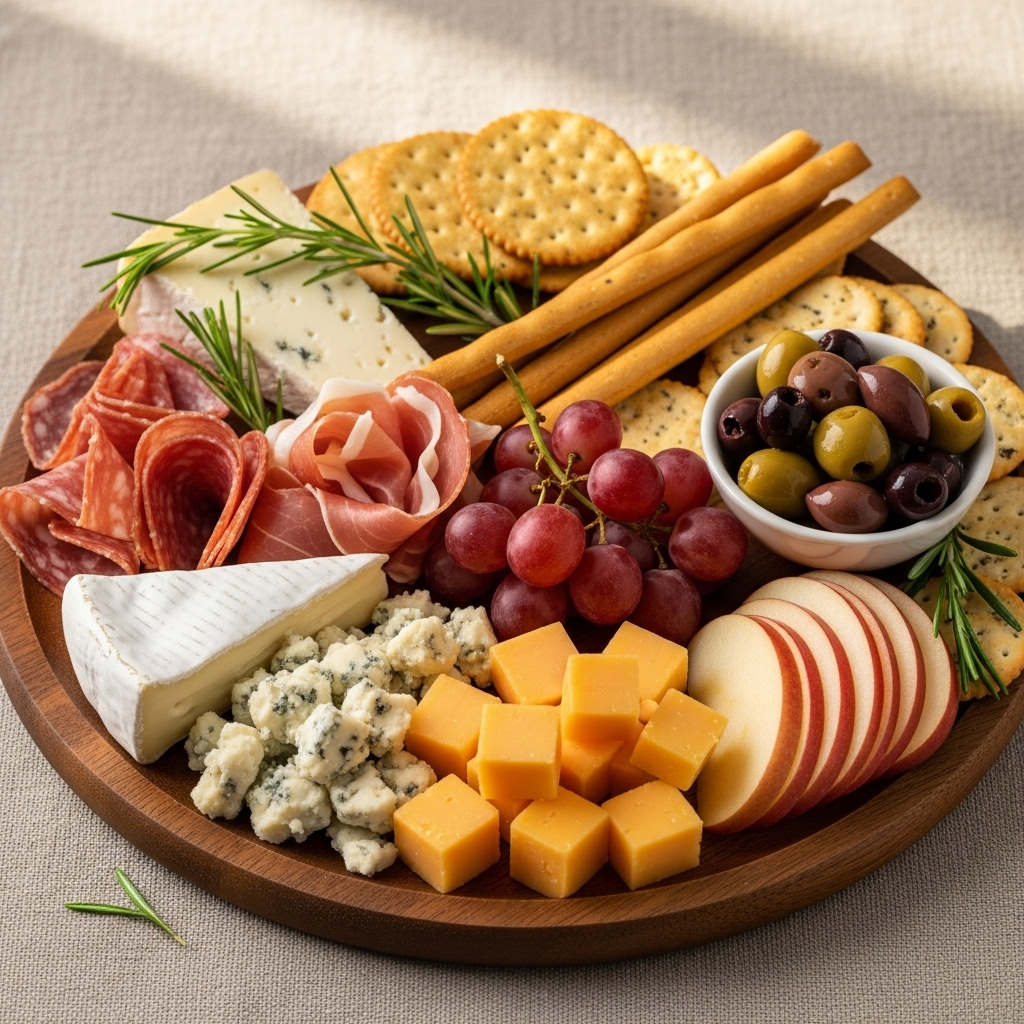
There is a distinct, primal joy in the “Snack Plate.” Whether you call it a “Girl Dinner,” a “charcuterie board,” or “munchies,” the concept of a deconstructed meal is as old as civilization itself. It is the antithesis of the rigid three-course dinner—a celebration of variety, color, and personal preference.
The Snack Plate is more than just a random assortment of fridge leftovers; it is a curated experience. It traces its roots back to the Mediterraneanmezzeand the Frenchhors d’oeuvreculture, where small bites were meant to stimulate the appetite and encourage conversation. In modern times, the Snack Plate has evolved into a centerpiece of social gatherings and a savior for busy weeknights. It’s a dish that demands no oven (usually) and offers a sensory playground of textures—crunchy, creamy, salty, and sweet.
The Significance of the “Snack”
In a fast-paced world, the Snack Plate represents a return to mindful eating. It encourages you to slow down, pick up a single grape, pair it with a sharp cheddar, and appreciate the contrast. It’s a culinary canvas where you are the artist, and the ingredients are your palette.
2. Recipe Overview
- Cuisine Type:International / Fusion
- Difficulty Level:Easy (No-cook)
- Total Time:15–20 minutes
- Dietary Classifications:Highly adaptable (Vegetarian, Gluten-Free, Keto-friendly options)
3. Equipment and Tools
Building a professional-grade snack plate requires more than just a dinner plate. To achieve that “Instagram-worthy” look, consider the following:
- The Base:A large wooden board (at least 12×18 inches), a slate slab, or a wide ceramic platter.
- Small Bowls (Ramekins):2–3 small bowls (2–4 oz capacity) for wet items like olives, honey, or dips.
- Cheese Knives:A set including a spreader, a pronged knife for hard cheese, and a wide blade for crumbly cheese.
- Honey Dipper:For a mess-free drizzle.
- Measuring Tools:While this is a “to-taste” recipe, having a set of measuring cups helps ensure a balanced ratio of proteins to produce.
4. Serving Suggestions
Plating Recommendations
The secret to a great plate isabundance. You want the board to look overflowing. Start by placing your bowls first (the anchors), then the cheeses, then the meats. Fill the remaining gaps with nuts and fruits until no part of the board is visible.
Garnish Ideas
- Fresh Herbs:Sprigs of rosemary or thyme add an earthy aroma.
- Edible Flowers:Pansies or nasturtiums for a pop of color.
- Pomegranate Seeds:For a jewel-like finish.
Beverage Pairings
- Wine:A crisp Sauvignon Blanc or a light Pinot Noir.
- Non-Alcoholic:Sparkling water with a splash of elderflower syrup and a lemon twist.
- Craft Beer:A hazy IPA or a refreshing Pilsner.
5. Nutritional Information
Per serving (based on a balanced mix of cheese, nuts, fruit, and crackers):
Health Benefits:Snack plates are excellent for satiety. By combining healthy fats (nuts/cheese), fiber (vegetables/fruit), and protein, you avoid the blood sugar spikes associated with high-carb snacks.
6. Storage and Reheating
- Refrigeration:Most components should be kept in airtight containers. Cheese is best wrapped in parchment paper, not plastic wrap, to allow it to “breathe.”
- Longevity:Pre-cut vegetables last 2–3 days. Hard cheeses last weeks, while soft cheeses should be consumed within 5 days of opening.
- Reheating:This is primarily a cold dish. However, if you include nuts, you can toast them in a pan for 2 minutes to revive their oils.
7. Expert Tips and Variations
Professional Chef Tips
- The Rule of Three:Aim for three types of cheese (Hard, Soft, Blue) and three types of crunch (Cracker, Nut, Fresh Veggie).
- Temperature Matters:Take your cheese out of the fridge 30 minutes before serving. Cold mutes the flavor of high-quality dairy.
- Acid is Key:Always include something pickled (cornichons, pickled onions) to cut through the richness of the fats.
Creative Variations
- The “Mezze” Board:Hummus, pita, feta, cucumber, and kalamata olives.
- The “Dessert” Board:Dark chocolate squares, strawberries, brie, and honey-roasted almonds.
- The “Kid-Friendly” Plate:Apple slices, string cheese, pretzels, and peanut butter dip.
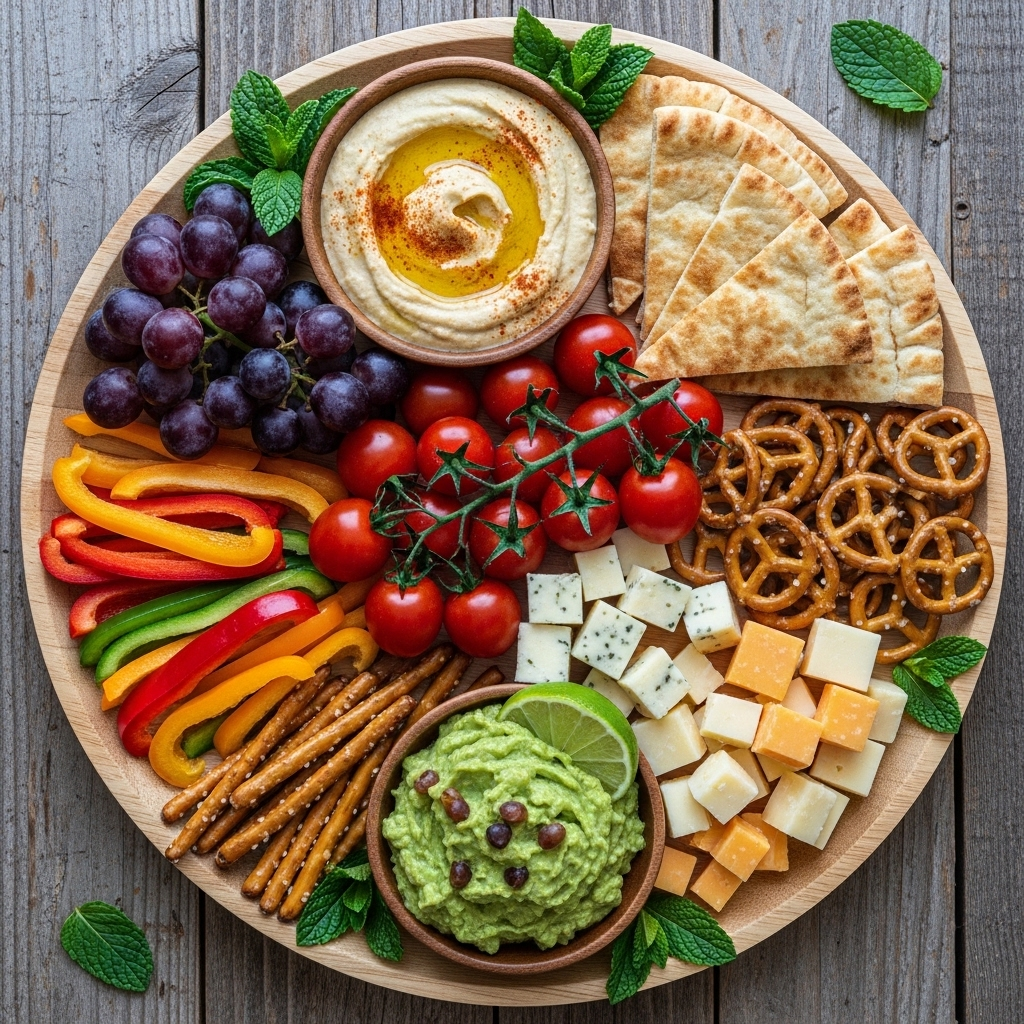
8. Ingredients Section
The Foundation (Proteins & Fats)
- Cheese:4 oz (115g) Aged Cheddar, 4 oz (115g) Creamy Brie, 2 oz (60g) Goat Cheese.
- Charcuterie (Optional):3 oz (85g) Prosciutto or Salami.
- Nuts:1/2 cup (60g) Raw Almonds or Walnuts.
The Fresh (Produce)
- Fruit:1 cup Grapes, 1 sliced Apple (tossed in lemon juice to prevent browning).
- Vegetables:1/2 cup Baby Carrots, 1/2 cup Sliced English Cucumber.
The Crunch (Grains)
- Crackers:1 sleeve of Multigrain Crackers or Sourdough Crisps.
- Pretzels:1/2 cup Gluten-free pretzel sticks.
The Accents
- Dips:1/4 cup Hummus or Fig Jam.
- Brine:1/4 cup Castlevetrano Olives.
9. Step-by-Step Instructions
- Prep the Produce:Wash all fruits and vegetables. Slice cucumbers into rounds and apples into thin wedges.Tip: Keep apple slices in a bowl of water with a pinch of salt to maintain crispness.
- Position the Anchors:Place your small bowls (containing olives and jam) on different areas of the board. This creates visual balance.
- Arrange the Cheese:Place the cheese blocks near the bowls. Slice a few pieces of the hard cheese to “invite” guests to start eating.
- Add the “S” Shapes:If using meat, fold prosciutto into ribbons or salami into fans and place them in a “river” flowing across the board.
- Fill with Grains:Add piles of crackers and pretzels near the cheeses they pair best with.
- The Final Fill:Use your nuts and small fruits (grapes/berries) to fill every single empty space.
- Garnish and Serve:Add your fresh herbs on top and serve immediately while the cheese is at room temperature.
10. Frequently Asked Questions (FAQ)
Q: How much food should I plan per person?A: For a light snack, aim for 2–3 oz of cheese/meat per person. For a meal replacement, double that.
Q: Can I make this in advance?A: You can prep the components, but don’t assemble more than 2 hours before. Crackers will lose their crunch if left next to moist fruits or dips.
Q: What if I have a nut allergy?A: Swap nuts for roasted chickpeas or sunflower seeds to maintain that essential crunch.
Q: How do I choose the best cheese?A: Look for a variety of milk sources (Cow, Goat, Sheep) and textures to keep the palate engaged.