
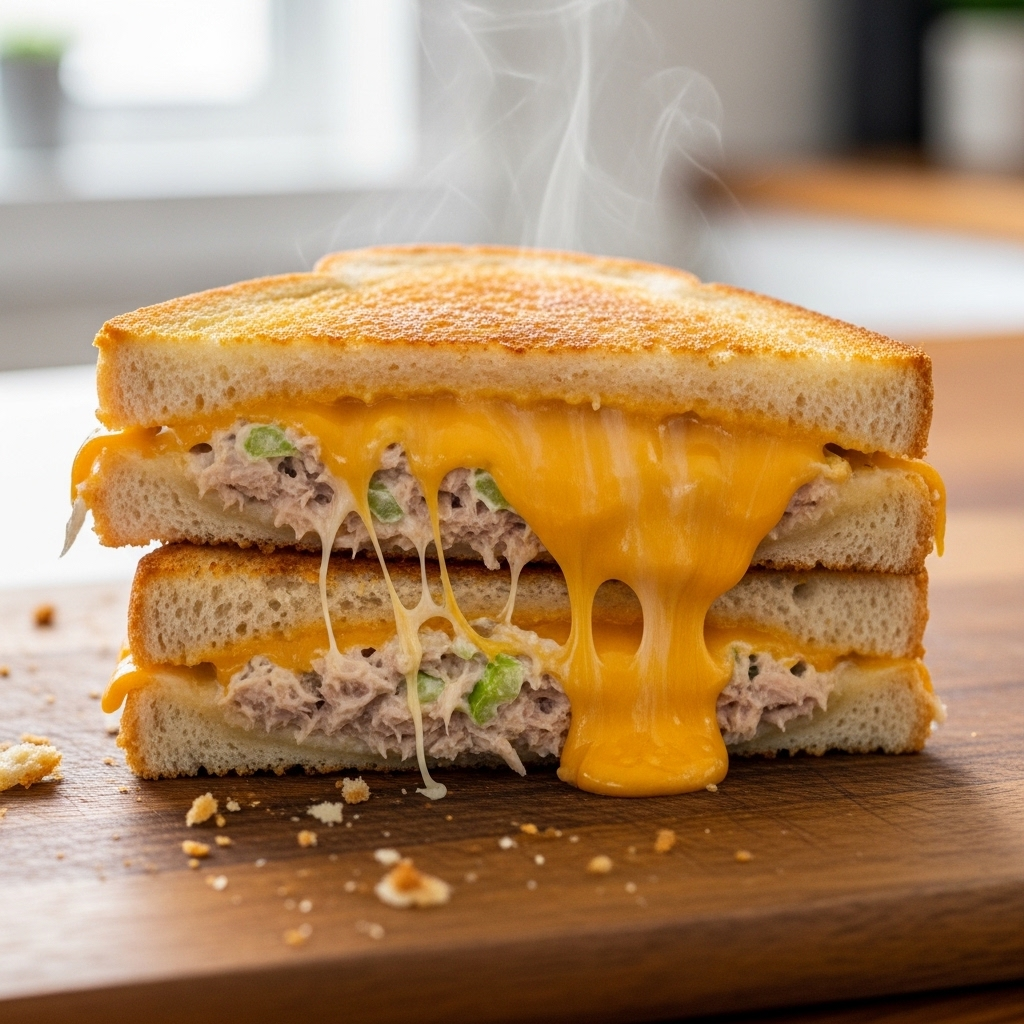
1. Introduction: The Evolution of a Coastal Classic
There is something undeniably nostalgic about the sizzle of butter in a cast-iron skillet and the scent of toasted sourdough. TheTuna Meltis more than just a sandwich; it is a culinary bridge between the humble pantry staple and the sophisticated diner classic. While its exact origins are debated—with some tracing its “invention” to an accidental spill of tuna salad onto a grilled cheese at a Woolworth’s lunch counter in the 1960s—its place in the pantheon of comfort food is undisputed.
A truly great tuna melt is a study in contrasts. You have the crunch of artisanal bread against the velvetiness of melted Gruyère or sharp Cheddar. You have the cold, zesty brightness of a well-seasoned tuna salad meeting the searing heat of the pan. This isn’t just a “leftovers” meal; it is a deliberate, textural masterpiece. Whether you’re a busy professional looking for a 15-minute gourmet escape or a home cook perfecting the art of the griddle, this recipe transforms the modest tin of fish into a five-star experience.
2. Recipe Overview
- Cuisine Type:American / Diner Classic
- Difficulty Level:Easy to Intermediate (focuses on temperature control)
- Prep Time:10 minutes
- Cook Time:8 minutes
- Total Time:18 minutes
- Dietary Classifications:Pescatarian, Nut-Free (can be made Gluten-Free with bread substitutions)
3. Equipment and Tools
To achieve that specific “diner-style” golden crust, the right tools are essential:
- Heavy-Bottomed Skillet:A 10-inch or 12-inch cast-iron skillet is preferred for even heat distribution. A non-stick pan also works well.
- Mixing Bowl:Medium-sized (approx. 1.5 – 2 liters) for combining the tuna salad ingredients.
- Offset Spatula or Wide Turner:Essential for flipping the sandwich without losing the filling.
- Small Saucepan or Microwave Bowl:For softening butter.
- Bread Knife:Serrated edge for clean slices of sourdough.
- Wire Cooling Rack:To prevent the bottom from getting soggy if not eating immediately.
4. Serving Suggestions
Plating Recommendations
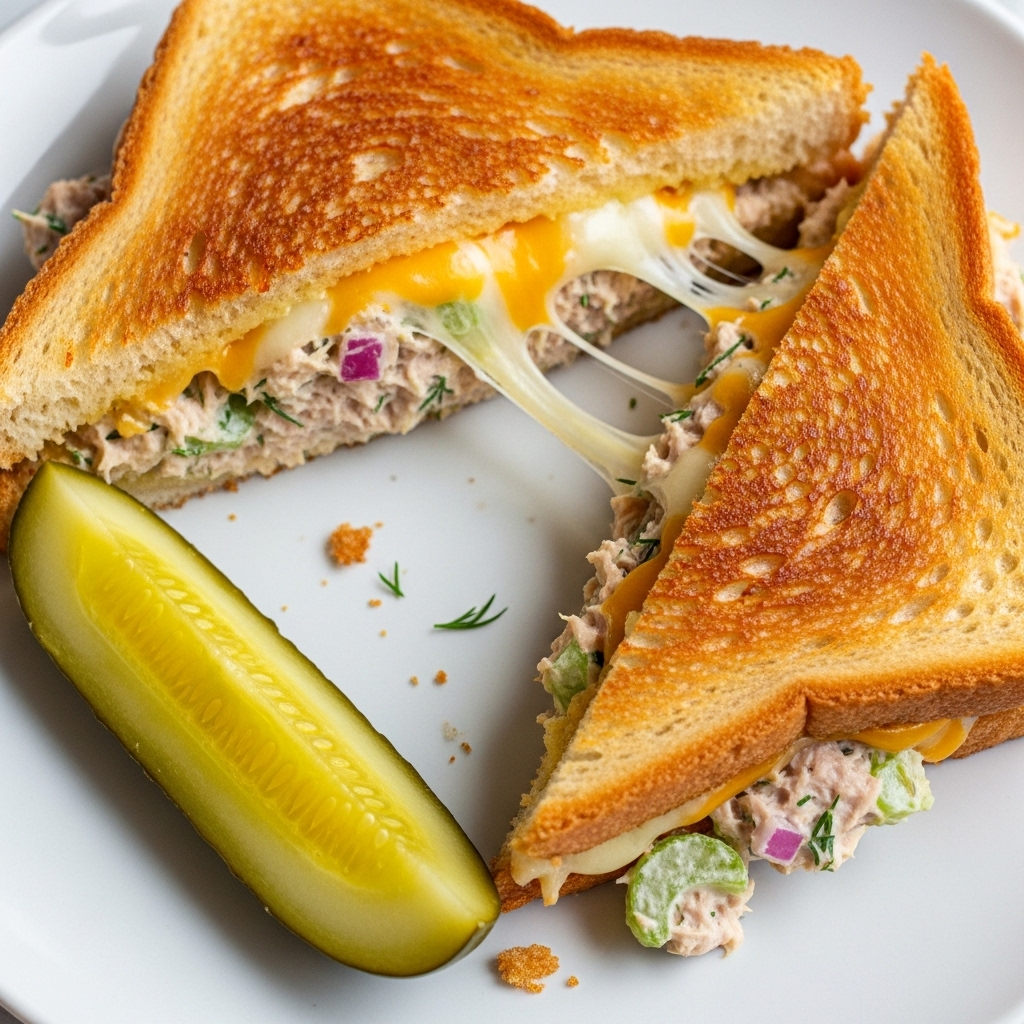
Cut the sandwich on a sharp diagonal. This not only looks professional but provides the perfect “corner” for that first bite. Serve on a warmed ceramic plate to keep the cheese gooey.
Garnish Ideas
- A sprinkle ofsmoked paprikaover the top.
- Freshly snippedchivesor dill.
- A single, high-qualityCornichon(mini pickle) pinned to the top with a bamboo toothpick.
Complementary Side Dishes
- Classic:Kettle-cooked potato chips and a crisp dill pickle spear.
- Healthy:A simple arugula salad with lemon vinaigrette to cut through the richness of the cheese.
- Hearty:A cup of creamy tomato basil soup.
Beverage Pairings
- Wine:A crisp, high-acidity white like aSauvignon Blancor an un-oakedChardonnay.
- Non-Alcoholic:An iced tea with lemon or a sparkling mineral water with a lime wedge.
5. Nutritional Information (Per Serving)
- Calories:540 kcal
- Total Fat:28g
- Saturated Fat:12g
- Cholesterol:75mg
- Sodium:980mg
- Total Carbohydrates:38g
- Dietary Fiber:3g
- Sugars:4g
- Protein:34g
Health Benefits:High in Omega-3 fatty acids (essential for heart health) and an excellent source of lean protein and Vitamin B12.
6. Storage and Reheating
Refrigeration
The tuna salad itself can be stored in an airtight container for up to3 days. However, once the sandwich is assembled and grilled, it is best enjoyed immediately.
Freezing
Freezing isnot recommendedfor the assembled sandwich or the tuna salad (mayonnaise breaks down and becomes oily when thawed).
Reheating
If you have leftovers, avoid the microwave.
- Air Fryer:350°F (175°C) for 3–4 minutes until the bread crisps up.
- Stovetop:Re-toast on low heat in a dry skillet with a lid to melt the cheese without burning the bread.
7. Expert Tips and Variations
Professional Chef Tips
- The Mayo Secret:Spread a thin layer of mayonnaise on theoutsideof the bread instead of butter. It has a higher smoke point and creates an incredibly even, mahogany-gold crust.
- Dry the Tuna:Squeeze your canned tuna until it is as dry as possible. Excess moisture leads to a “soggy bottom” sandwich.
- The Lid Trick:Cover the skillet with a lid for 60 seconds during the cooking process. This traps steam to melt the cheese thoroughly without over-toasting the bread.
Creative Variations
- The Spicy Melt:Add chopped jalapeños and use Pepper Jack cheese.
- The Mediterranean:Use oil-packed tuna, kalamata olives, sun-dried tomatoes, and Feta/Mozzarella blend.
- The “West Coast”:Add slices of ripe avocado and sprouts after grilling.
8. Ingredients Section
The Tuna Salad
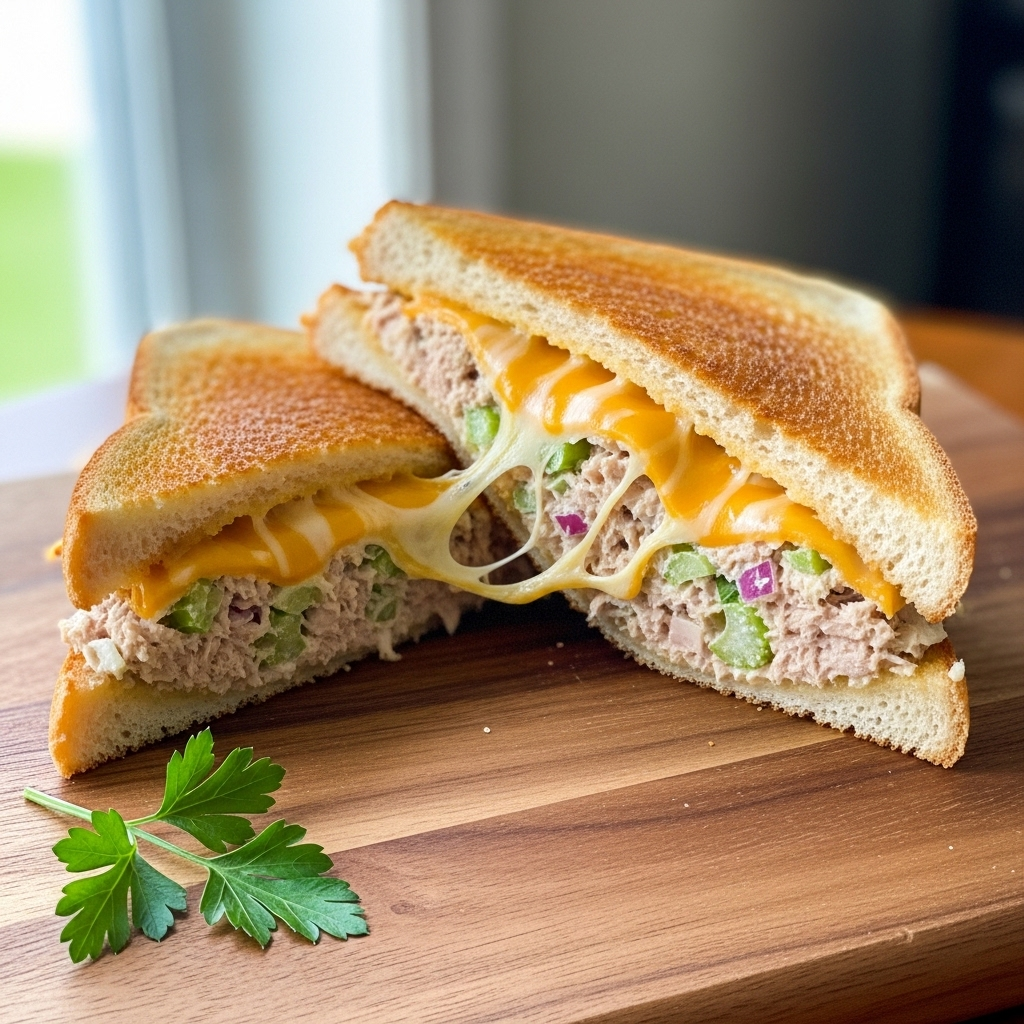
- 12 oz (340g)High-quality canned Tuna (Solid White Albacore in water, drained)
- 1/4 cup (60ml)Premium Mayonnaise
- 1 tbsp (15ml)Dijon Mustard
- 2 tbspFinely chopped Red Onion
- 2 tbspFinely chopped Celery (for crunch)
- 1 tbspFresh Dill, chopped
- 1 tspLemon juice (freshly squeezed)
- 1/2 tspCracked Black Pepper
- Pinchof Sea Salt (to taste)
The Sandwich Build
- 4 SlicesThick-cut Sourdough or Brioche
- 4 SlicesSharp Cheddar or Gruyère Cheese (approx. 2 oz per sandwich)
- 2 tbspUnsalted Butter, softened (or Mayonnaise for the crust)
- Optional:4 slices of Heirloom Tomato (patted dry)
9. Step-by-Step Instructions
- Prepare the Tuna Filling:In a medium mixing bowl, flake the drained tuna with a fork. Add mayonnaise, mustard, red onion, celery, dill, lemon juice, and pepper. Mix until combined but still slightly chunky.
- Bread Preparation:Lay out four slices of bread. Butter one side of each slice generously. This will be the “outside” that touches the pan.
- Layering:Turn two slices over (butter-side down). Place one slice of cheese on each. Divide the tuna mixture evenly between the two slices, spreading it to the edges.
- The “Lid”:If using tomatoes, place them on top of the tuna. Add the second slice of cheese (this acts as “glue” to hold the sandwich together). Top with the remaining bread slices, butter-side facing up.
- Preheat the Skillet:Place your skillet overmedium-low heat. Do not rush this; a hot pan will burn the bread before the cheese melts.
- The First Sear:Place sandwiches in the skillet. Cook for 3–4 minutes. Use your spatula to press down gently to ensure even contact.
- The Flip:Once the bottom is deep golden brown, carefully flip the sandwich.
- The Melt:Cook for another 3 minutes. If the cheese isn’t melting fast enough, place a lid over the pan for the final 60 seconds.
- Rest and Slice:Remove from the pan and let sit for 1 minute. This allows the cheese to set so the filling doesn’t slide out when cut.
10. Frequently Asked Questions (FAQ)
Q: Can I use tuna packed in oil?A: Yes! Oil-packed tuna is more flavorful. Just ensure you drain it very well to avoid an overly greasy sandwich.
Q: How do I stop the sandwich from being soggy?A: Two things: Dry your tuna thoroughly and use thick, sturdy bread like sourdough or ciabatta rather than soft white sandwich bread.
Q: Is there a substitute for mayonnaise in the filling?A: You can use mashed avocado or Greek yogurt for a tangier, lighter version, though the flavor profile will change significantly.
Q: What is the best cheese for a Tuna Melt?A: You want a cheese with a low melting point. Sharp Cheddar, Gruyère, Swiss, or Muenster are all excellent choices.
Q: Can I bake these in the oven instead?A: Yes. Bake at 400°F (200°C) on a parchment-lined sheet for about 5–7 minutes per side, but the stovetop method yields a superior crust.