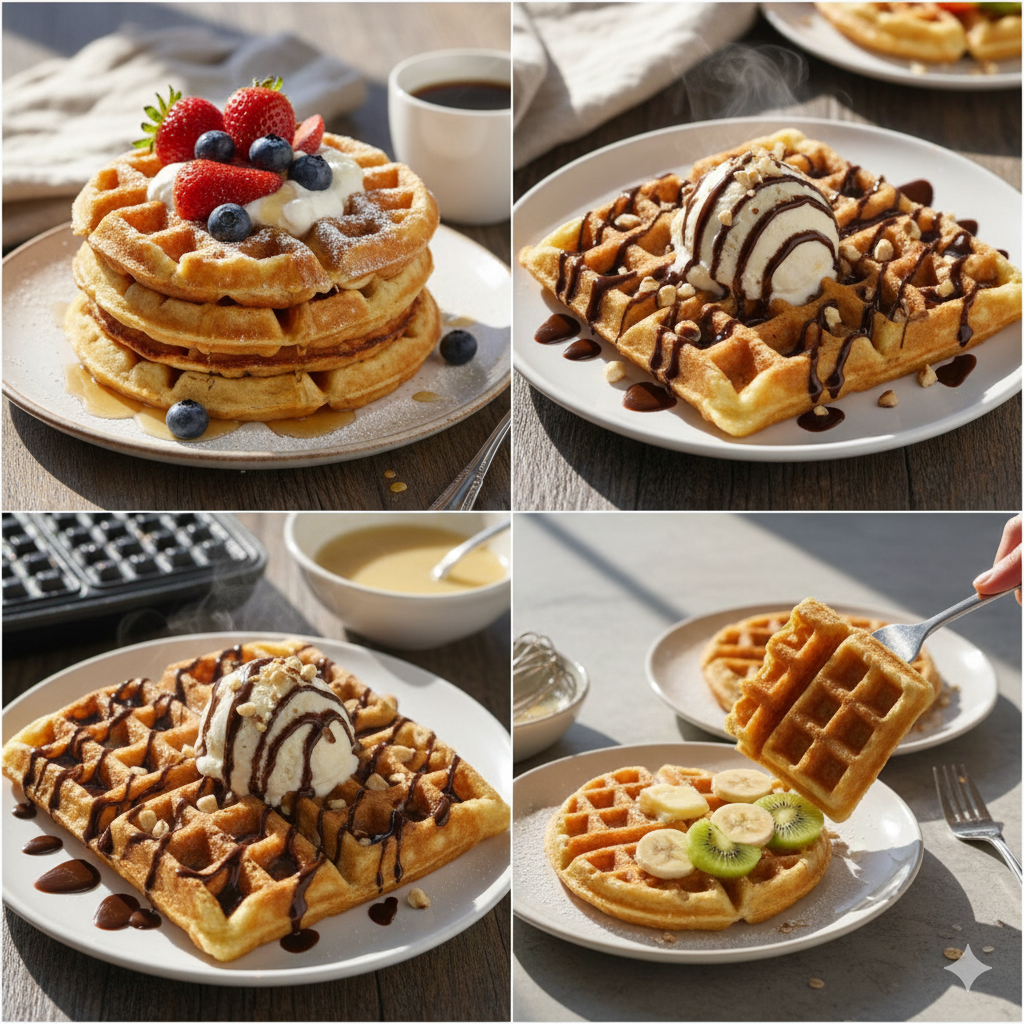
1. Introduction: A Tradition of Golden Perfection
There is an undeniable nostalgia attached to the Belgian waffle. Unlike the thin, crispy versions found in American diners, the authentic Belgian waffle—specifically the Brussels style—is a architectural marvel of breakfast cuisine.
Rooted in the 19th century and popularized globally at the 1958 Brussels World’s Fair, the true Belgian waffle is defined by its deep, grid-like pockets and its delicate, yeasted crumb. It is a dish that demands patience, relying on a slow fermentation process to develop a complex flavor profile that standard baking powder versions simply cannot match. Whether you are a weekend brunch enthusiast or a home baker looking to master a new craft, this recipe promises the quintessential Belgian experience: a crunch that shatters upon the first bite, revealing a steaming, pillowy interior.
2. Recipe Overview
- Cuisine:Belgian (Brussels-style)
- Difficulty Level:Moderate (Patience-driven)
- Prep Time:20 minutes + 60 minutes rising time
- Cook Time:20 minutes
- Total Time:1 hour 40 minutes
- Dietary Classification:Vegetarian
3. Equipment and Tools
Precision is the hallmark of the professional kitchen. Ensure you have the following ready:
- Deep-Grid Waffle Iron:Essential. Look for a model with at least a 2.5cm (1 inch) depth for true Belgian structure.
- Digital Kitchen Scale:Use this for measuring flour to the gram; volume-based measurements can vary by up to 20% due to packing.
- Large Mixing Bowl:Needs a capacity of at least 4 liters to allow for the yeast dough to expand.
- Whisk & Silicone Spatula:For gentle incorporation of ingredients.
- Wire Cooling Rack:Crucial for maintaining crispness; prevents steam buildup on the bottom of the waffle.
4. Serving Suggestions
The beauty of the Belgian waffle lies in its versatility.
- The Traditionalist:Serve simply with a heavy dusting of high-quality powdered sugar and nothing more.
- The Orchard Harvest:Top with warm, cinnamon-spiced stewed apples or fresh macerated raspberries.
- Beverage Pairings:A strong, dark-roast coffee provides the necessary bitterness to balance the waffle’s subtle sweetness. For a brunch setting, a dry, sparkling wine offers a refreshing contrast to the rich, buttery texture of the batter.
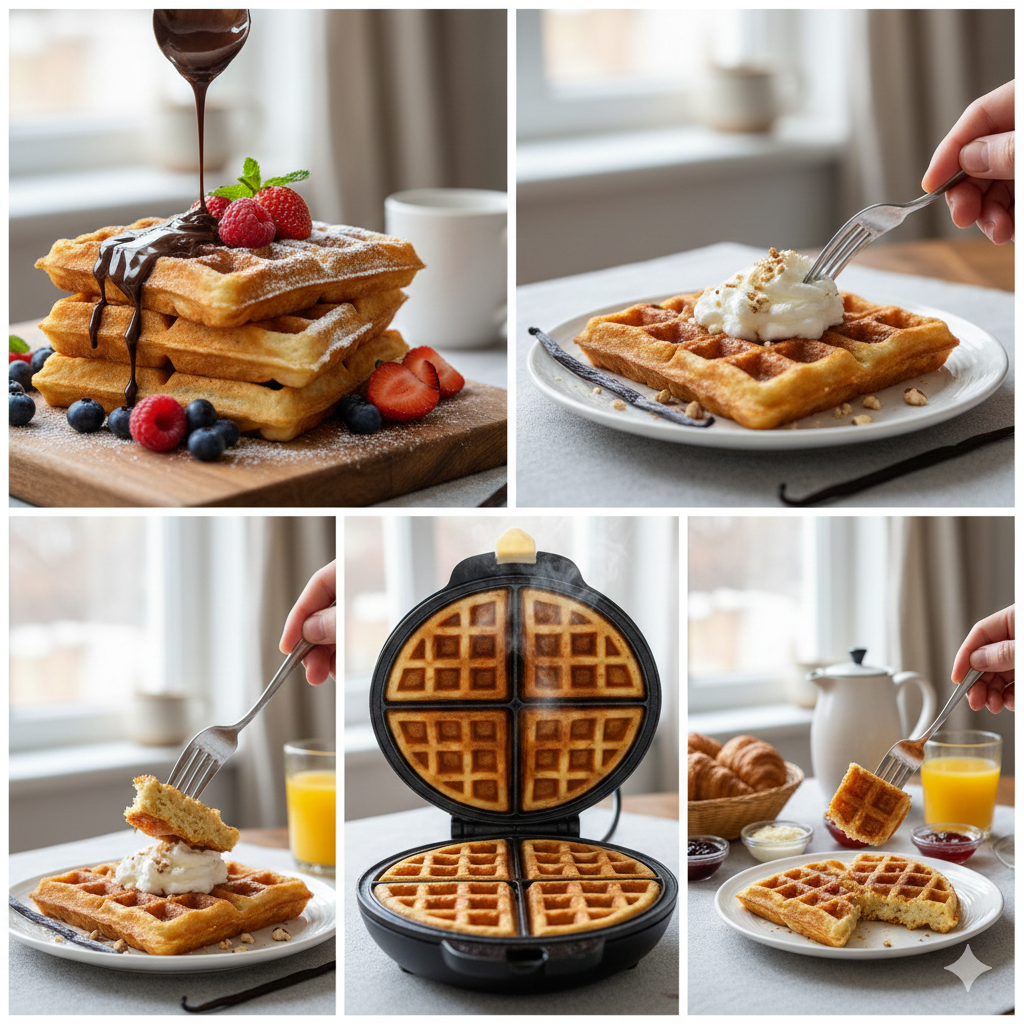
5. Nutritional Information (Per Serving)
Calculated based on a yield of 8 waffles.
- Calories:325 kcal
- Fat:16g
- Carbohydrates:39g
- Protein:8g
- Dietary Benefits:Provides a balanced mix of carbohydrates for sustained morning energy. Use whole milk for added calcium and protein.
6. Storage and Reheating
- Storage:Allow waffles to cool completely on a wire rack before transferring to an airtight container. Refrigerate for up to 2 days.
- Freezing:Wrap individual waffles in parchment paper and store in a freezer-safe bag for up to 1 month.
- Reheating:Do not microwave.Place frozen or refrigerated waffles directly into a preheated toaster or a $180^\circ\text{C}$ ($350^\circ\text{F}$) oven for 3–4 minutes. This restores the Maillard reaction, ensuring the exterior regains its signature crunch.
7. Expert Tips and Variations
- Chef’s Secret:Add 1 tablespoon of dark rum or vanilla bean paste to the wet ingredients for a professional depth of flavor.
- Common Mistake:Over-mixing. When you add the egg whites, fold them in with a light touch. Developing too much gluten will make the waffles tough.
- Seasonal Adaptation:In winter, fold in chopped pecans and a pinch of ground cardamom. In summer, serve with whipped mascarpone and fresh peach slices.
8. Ingredients
- All-Purpose Flour:250g (approx. 2 cups)
- Active Dry Yeast:7g (1 packet)
- Whole Milk (Warm, $40^\circ\text{C}$):350ml (1 ½ cups)
- Unsalted Butter (Melted):115g (½ cup)
- Eggs (Room Temperature):2, separated
- Sugar:25g (2 tablespoons)
- Salt:½ teaspoon
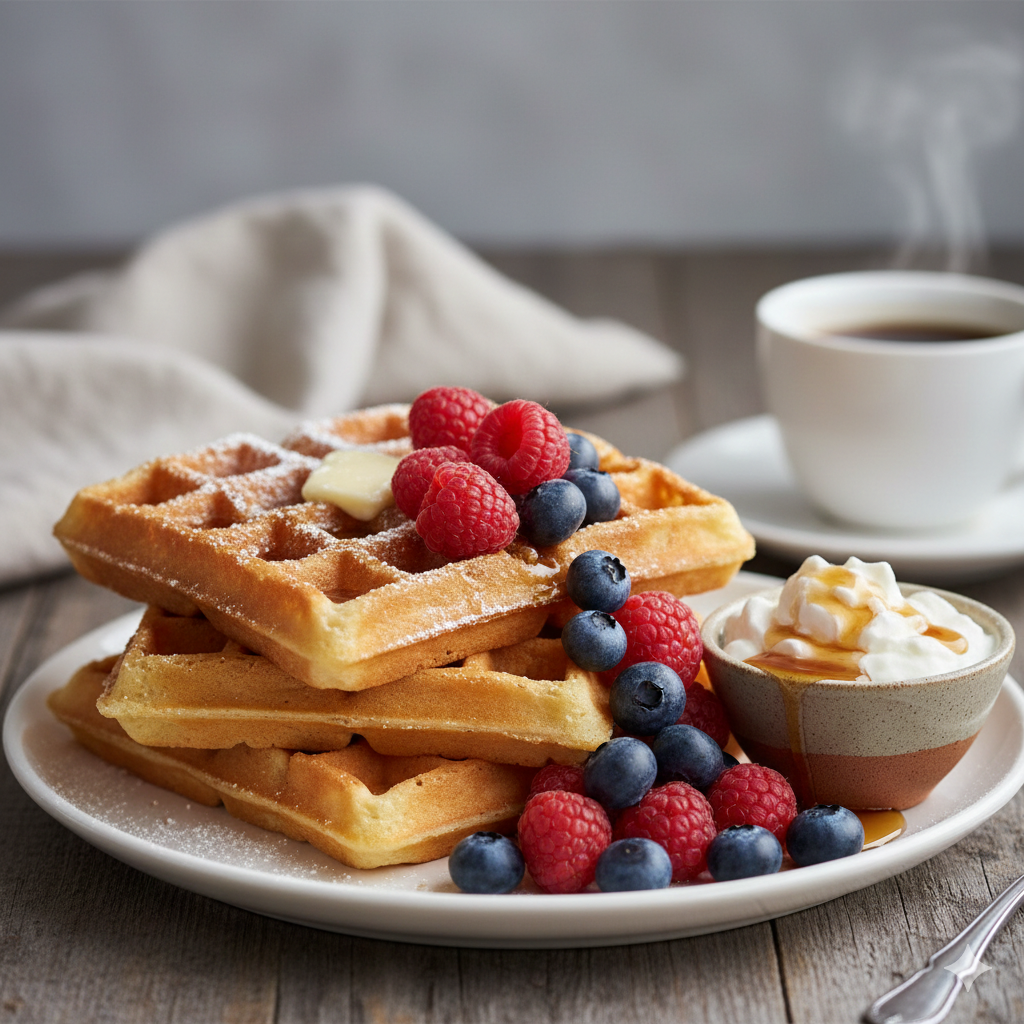
9. Step-by-Step Instructions
- Activate Yeast:In a small bowl, whisk the warm milk and sugar. Add the yeast and let it sit for 10 minutes until it blooms into a thick foam.
- Combine Dry:In your large bowl, sift the flour and salt.
- Mix Liquids:Whisk the egg yolks and cooled melted butter into the yeast mixture.
- Integrate:Pour the liquid into the flour. Whisk until the batter is smooth. It will be thinner than pancake batter.
- The Rise:Cover with a damp cloth and leave in a warm, dark place for 1 hour.
- The Aeration:Whisk the egg whites in a separate, clean bowl until they form stiff peaks. Gently fold these into the batter. This is the secret to the light, airy interior.
- Cooking:Preheat your iron to the medium-high setting. Pour the batter into the center, filling it about three-quarters of the way. Close and wait until the steam stops—this is your visual indicator for doneness.
10. Frequently Asked Questions (FAQ)
Q: Can I make this gluten-free?
A: Yes, use a high-quality 1:1 gluten-free flour blend, but note that the texture may be slightly denser as the yeast needs gluten proteins to create the structure.
Q: Why are my waffles collapsing?
A: You likely opened the lid too soon. The structure needs to be fully set by heat. If you see steam, let it cook for another 30 seconds.
Q: Can I use oil instead of butter?
A: You can, but you will lose the rich, nutty flavor profile that defines a traditional Belgian waffle.
Q: How do I get those perfect grid patterns?
A: Ensure your iron is sufficiently preheated before the first pour. Always use a silicone brush to lightly oil the grids if your iron isn’t non-stick.
Q: Why does the recipe call for separating eggs?
A: This mechanical leavening (whipped whites) creates air bubbles that expand in the heat, resulting in a lift that yeast alone cannot provide.