1. Introduction
Imagine standing in a bustling open-air market in Southeast Asia or a vibrant street corner in Mexico. Among the colorful displays of exotic fruits, one humble, pod-like fruit stands out for its bold, complex profile: theTamarind. Known as the “date of India,” tamarind is the secret weapon of global gastronomy, providing that unmistakable “zing” in everything from Pad Thai to Worcestershire sauce.
But tamarind isn’t just for savory curries or candies. When blended into a smoothie, it undergoes a magical transformation. The sharp, tart acidity of the tamarind pulp cuts through creamy bases like coconut milk or yogurt, creating a drink that is simultaneously refreshing, sophisticated, and deeply satisfying. This smoothie isn’t just a beverage; it’s a cultural bridge, bringing together the ancient traditions of Ayurvedic cooling drinks and the modern convenience of a breakfast shake.
Whether you are looking for a powerful antioxidant boost or simply want to break free from the monotony of strawberry-banana, thisTamarind Smoothieoffers a sensory journey that awakens the palate.
2. Recipe Overview
- Cuisine Type:Tropical / Fusion (Indo-Mexican influences)
- Difficulty Level:Easy
- Prep Time:10 minutes (plus 15 minutes for tamarind paste preparation if using fresh pods)
- Total Time:25 minutes
- Dietary Classifications:Vegetarian, Gluten-Free, Vegan-friendly (if using plant milk), Refined Sugar-Free (if using honey/dates)
3. Equipment and Tools
To achieve the velvety texture required for a high-end smoothie, ensure you have the following:
- High-Speed Blender:A 1000-watt+ blender (like a Vitamix or Ninja) is recommended to pulverize the fibrous bits of the tamarind.
- Fine-Mesh Strainer:Essential if you are extracting pulp from fresh tamarind pods to ensure no seeds or husks remain.
- Mixing Bowl:Small or medium size for soaking tamarind.
- Measuring Tools:Standard Imperial cups and spoons, or a digital scale for Metric precision.
- Tall Glassware:Chilled 12 oz or 16 oz glasses for serving.
4. Serving Suggestions
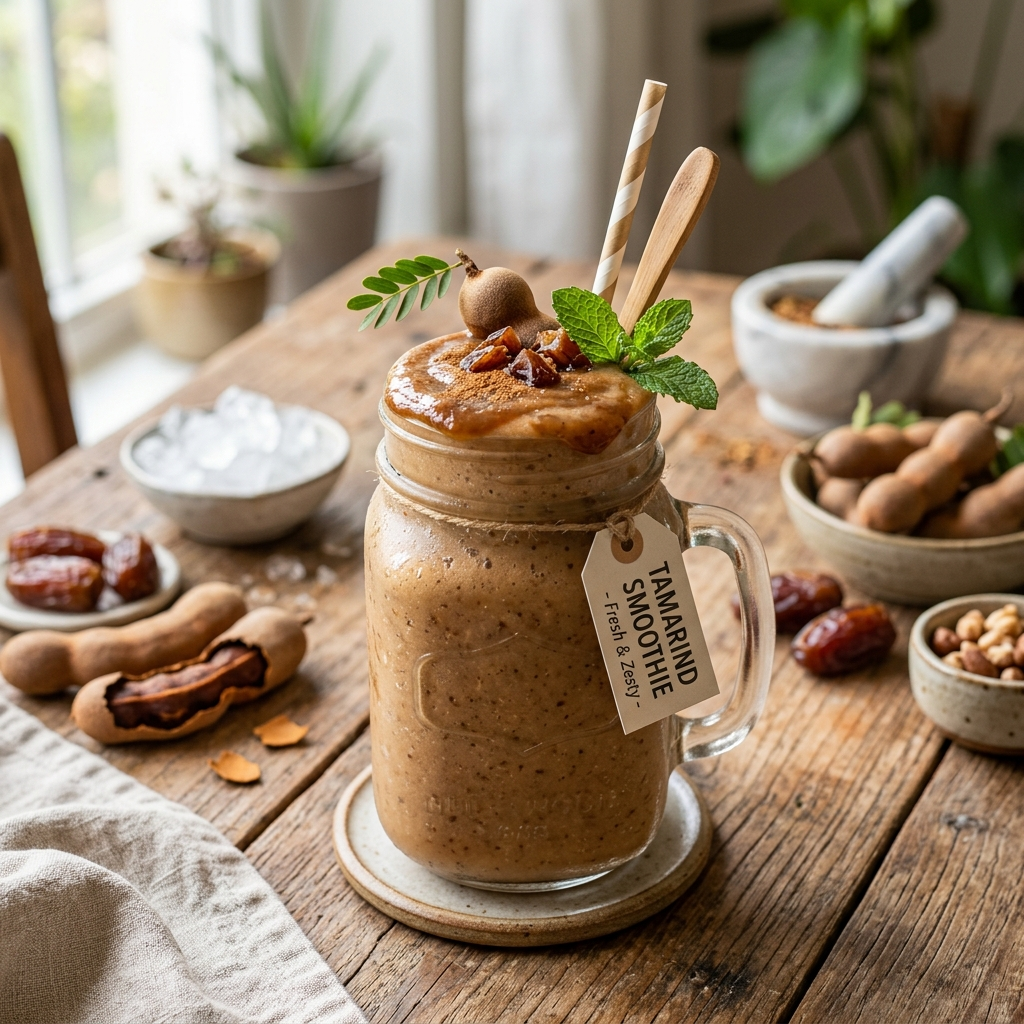
- Plating:Serve in a chilled glass. A salt or chili-lime (Tajín) rim adds a professional, savory-sweet contrast.
- Garnish:A sprig of fresh mint, a thin slice of lime, or a whole tamarind pod resting on the rim.
- Pairings:This smoothie pairs excellently with spicy breakfast dishes, such as Chilaquiles or spicy avocado toast, as the acidity helps cleanse the palate.
5. Nutritional Information
(Per 12 oz serving)
| Nutrient | Amount |
| Calories | 210 kcal |
| Total Fat | 4g |
| Sodium | 15mg |
| Total Carbohydrates | 42g |
| Dietary Fiber | 6g |
| Sugars | 28g |
| Protein | 3g |
Health Benefits:Tamarind is exceptionally high intartaric acid, a powerful antioxidant. It is also a great source of magnesium and potassium, aiding in digestion and heart health.
6. Storage and Reheating
- Refrigeration:Best consumed immediately. If necessary, store in an airtight jar for up to 12 hours. Shake well before drinking as separation is natural.
- Freezing:Pour leftovers into silicone ice cube trays. These “smoothie cubes” can be tossed back into a blender later for a quick refresh.
- Note:Smoothies do not require reheating.
7. Expert Tips and Variations
- The “Paste” Secret:If you find the smoothie too tart, add a pinch of sea salt. Salt suppresses bitterness and acidity while enhancing the sweetness of the fruit.
- Creamy Variation:Substitute the water/juice base with full-fat coconut milk for a “Tamarind Colada” experience.
- Energy Boost:Add a teaspoon of maca powder or hemp seeds for an earthy undertone and extra protein.
- Seasonal Swap:In the winter, add a pinch of cinnamon and ginger to create a warming, spiced version of the drink.
8. Ingredients Section
The Tamarind Base
- 2 tbsp (30g) Tamarind Pulp/Paste:High-quality, seedless paste is best.
- 1 Large Frozen Banana:Provides the creamy structure and natural sweetness.
- 1/2 cup (120ml) Liquid Base:Choice of coconut water, almond milk, or plain water.
The Balancing Act
- 1 tbsp Honey or Agave:Adjust based on the tartness of your tamarind.
- 1/4 tsp Pure Vanilla Extract:Rounds out the sharp edges of the fruit.
- 1/2 cup Greek Yogurt or Coconut Cream:For thickness and probiotics.
- 1 cup Ice Cubes:For a frosty, frappe-like consistency.
9. Step-by-Step Instructions
- Prepare the Tamarind:If using fresh pods, shell them and soak the pulp in 1/4 cup hot water for 15 minutes. Mash with a fork and push through a fine-mesh strainer to collect the concentrate. If using store-bought paste, proceed directly to step 2.
- Layer the Blender:Always add liquids first. Pour in your coconut water/milk, followed by the tamarind paste and honey.
- Add Solids:Add the frozen banana chunks and yogurt.
- Emulsify:Blend on a low speed initially to break up the frozen fruit, then increase to high speed for 45–60 seconds.
- Texture Check:If the smoothie is too thick, add a splash more liquid. If too thin, add more ice or frozen fruit.
- The Final Touch:Taste the smoothie. If it’s too tart, add a touch more sweetener. Blend for 5 seconds to incorporate.
- Serve:Pour into a glass and enjoy the immediate cooling sensation.
10. Frequently Asked Questions (FAQ)
Q: Can I use tamarind syrup instead of paste?
A: Yes, but syrups often contain high amounts of sugar. Reduce the extra sweetener (honey/agave) in the recipe accordingly.
Q: Why is my smoothie gritty?
A: This usually happens if the tamarind pulp wasn’t strained well or if using a low-powered blender. Try straining the final smoothie through a coarse sieve if the texture bothers you.
Q: Is tamarind safe for everyone?
A: Generally, yes. However, it can have a mild laxative effect if consumed in very large quantities.
Q: Can I make this a green smoothie?
A: Absolutely! A handful of baby spinach blends perfectly with tamarind. The dark color of the tamarind usually masks the green, making it a great way to “hide” veggies.
Q: Where do I find tamarind paste?
A: Look in the Asian or Latin American aisle of your local grocery store, or visit a specialty Indian market.