
1. Introduction
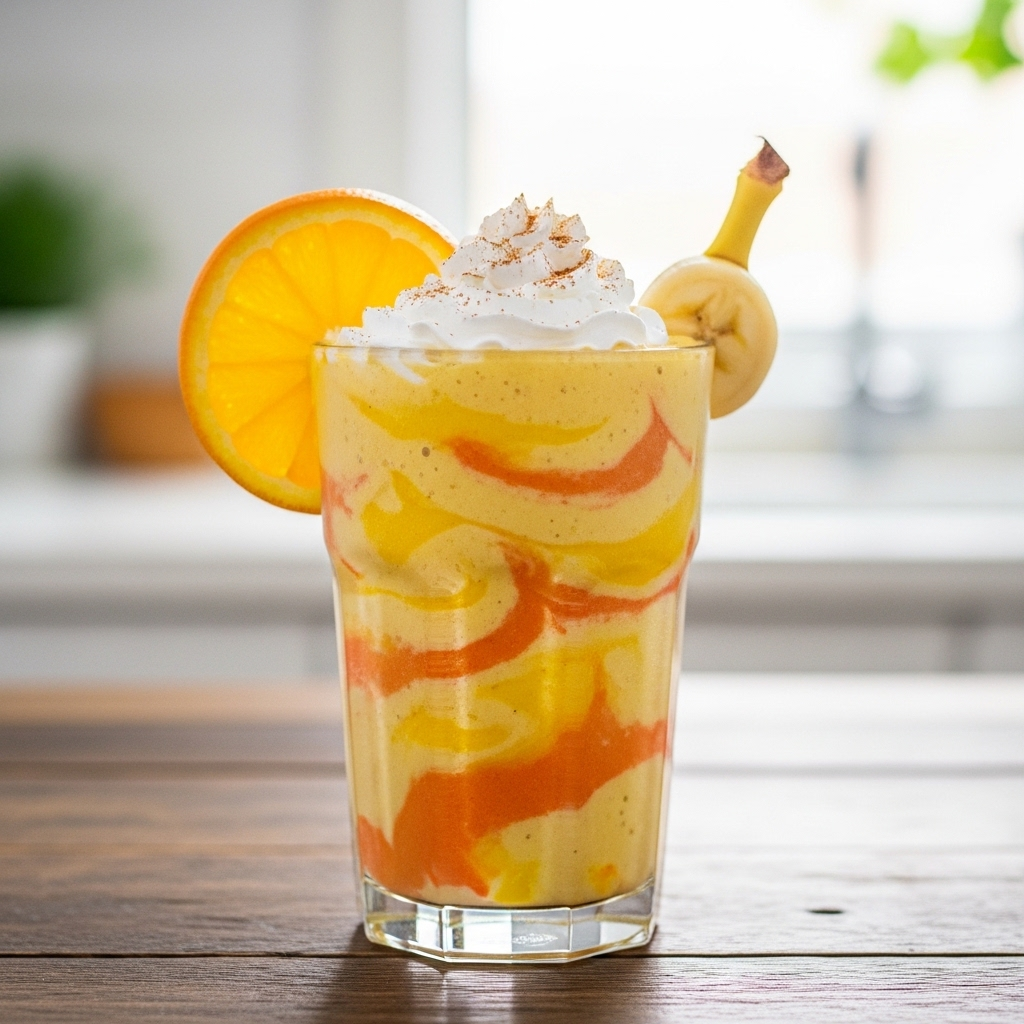
Imagine waking up to a burst of liquid sunshine. TheOrange Banana Smoothieis more than just a quick beverage; it is a vibrant fusion of citrusy zest and mellow, creamy sweetness that bridges the gap between a refreshing juice and a decadent milkshake.
Historically, the combination of citrus and cream dates back to the classic “Orange Creamsicle” treats of the mid-20th century. However, this modern smoothie adaptation strips away the artificial syrups and heavy sugars, replacing them with whole fruits and natural electrolytes. It’s a favorite in coastal cuisines and tropical regions where oranges are plucked fresh from the tree, but its universal appeal lies in its simplicity.
Whether you’re recovering from a high-intensity workout or looking for a kid-friendly breakfast that sneaks in a dose of Vitamin C, this smoothie is a culinary “reset button.” It’s bright, nostalgic, and incredibly revitalizing.
2. Recipe Overview
- Cuisine Type:American / Fusion
- Difficulty Level:Beginner
- Total Time:5 minutes
- Dietary Classifications:Vegetarian, Gluten-Free, Soy-Free, Naturally Sweetened. (Can be made Vegan with plant-based milk).
3. Equipment and Tools
To achieve that signature velvety texture, the quality of your tools matters as much as your fruit.
- High-Speed Blender:A blender with at least a900-watt motoris recommended to pulverize frozen fruit into a perfectly smooth consistency.
- Liquid Measuring Cup:2-cup (500ml) capacity for precise milk or juice ratios.
- Dry Measuring Cups/Spoons:For additions like hemp seeds or honey.
- Citrus Juicer:Manual or electric (if using fresh-squeezed oranges).
- Silicone Spatula:For scraping down the sides of the blender jar.
- Glassware:Highball glasses or 16 oz Mason jars for serving.
4. Serving Suggestions
- Plating:Serve in a chilled glass. A frosted glass keeps the smoothie thick for longer.
- Garnish:A thin wheel of fresh orange on the rim, a sprig of fresh mint, or a light dusting of orange zest.
- Complementary Sides:Pairs beautifully with avocado toast, a handful of raw almonds, or a light quinoa breakfast bowl.
- Beverage Pairings:If serving at a brunch, this acts as a non-alcoholic alternative to a Mimosa.
5. Nutritional Information
(Per 16 oz Serving)
| Nutrient | Amount |
| Calories | 210 kcal |
| Total Fat | 2g |
| Sodium | 45mg |
| Total Carbohydrates | 48g |
| Dietary Fiber | 6g |
| Sugars | 32g (Natural) |
| Protein | 5g |
Health Benefits:High inVitamin Cfor immune support,Potassiumfor heart health and muscle function, andB6for brain health.
6. Storage and Reheating
Smoothies are best enjoyed immediately. However, if you have leftovers:
- Refrigeration:Store in an airtight jar for up to24 hours. Shake vigorously before drinking as separation is natural.
- Freezing:Pour leftovers into silicone muffin tins or ice cube trays. These “smoothie cubes” can be tossed back into the blender for your next drink.
- Note:Do not reheat. This is a cold-service item.
7. Expert Tips and Variations
- The “Frozen Rule”:Always use at least one frozen component (the banana or the orange segments) to avoid using ice, which dilutes the flavor.
- Variation – The “Creamsicle”:Add 1/2 tsp of pure vanilla extract and use whole milk or full-fat coconut milk.
- Variation – The “Green Glow”:Add a handful of baby spinach. The orange juice helps neutralize the “earthy” taste of the greens.
- Avoid the “Bitter Bite”:If blending whole oranges, ensure every bit of the whitepithis removed, as it can make the smoothie bitter.
8. Ingredients Section
- 2 Large Oranges:Peeled and segmented (remove seeds). Navel or Valencia oranges work best.
- 1 Medium Banana:Preferably overripe (spotted) and frozen.
- 1/2 Cup Milk of Choice:Dairy, Almond, or Oat milk (120ml).
- 1/4 Cup Greek Yogurt:For probiotics and creaminess (60g).
- 1 tsp Honey or Maple Syrup:Optional (depending on fruit sweetness).
- 1/2 cup Ice:Only if using fresh (non-frozen) fruit.
9. Step-by-Step Instructions
- Prep the Fruit:Peel the oranges. For a smoother result, remove the thin membrane from the segments, though this is optional. Slice the frozen banana into chunks.
- Liquid First:Pour the milk and yogurt into the blender base. Adding liquids first prevents the blades from getting “stuck” on frozen solids.
- Add Solids:Place the orange segments and banana chunks on top of the liquid.
- The Blend:Start the blender on thelowest speed, gradually increasing tohigh. Blend for 45–60 seconds.
- Check Consistency:If the smoothie is too thick, add a splash more milk. If too thin, add more frozen banana or a few ice cubes.
- Final Touch:Taste for sweetness. Add honey or maple syrup if the oranges were particularly tart. Pulse once more to incorporate.
- Serve:Pour into a glass and enjoy immediately while the aeration is at its peak.
10. Frequently Asked Questions (FAQ)
Q: Can I use orange juice instead of whole oranges?
A: Yes, you can substitute 1/2 cup of high-quality orange juice, but you will lose the beneficial fiber found in the whole fruit pulp.
Q: How do I make this vegan?
A: Simply use a plant-based milk (like cashew or oat) and a dairy-free yogurt (like coconut milk yogurt). Swap honey for agave or maple syrup.
Q: My smoothie is too foamy. Why?
A: High speeds can sometimes incorporate too much air. Let the smoothie sit for 30 seconds or stir it gently with a long spoon to settle the foam.
Q: Can I add protein powder?
A: Absolutely. A scoop of vanilla protein powder complements the orange and banana flavors perfectly.
Q: Is this safe for toddlers?
A: Yes, it’s a fantastic way to get fruit into a child’s diet. Just ensure the oranges are thoroughly de-seeded.