1. Introduction
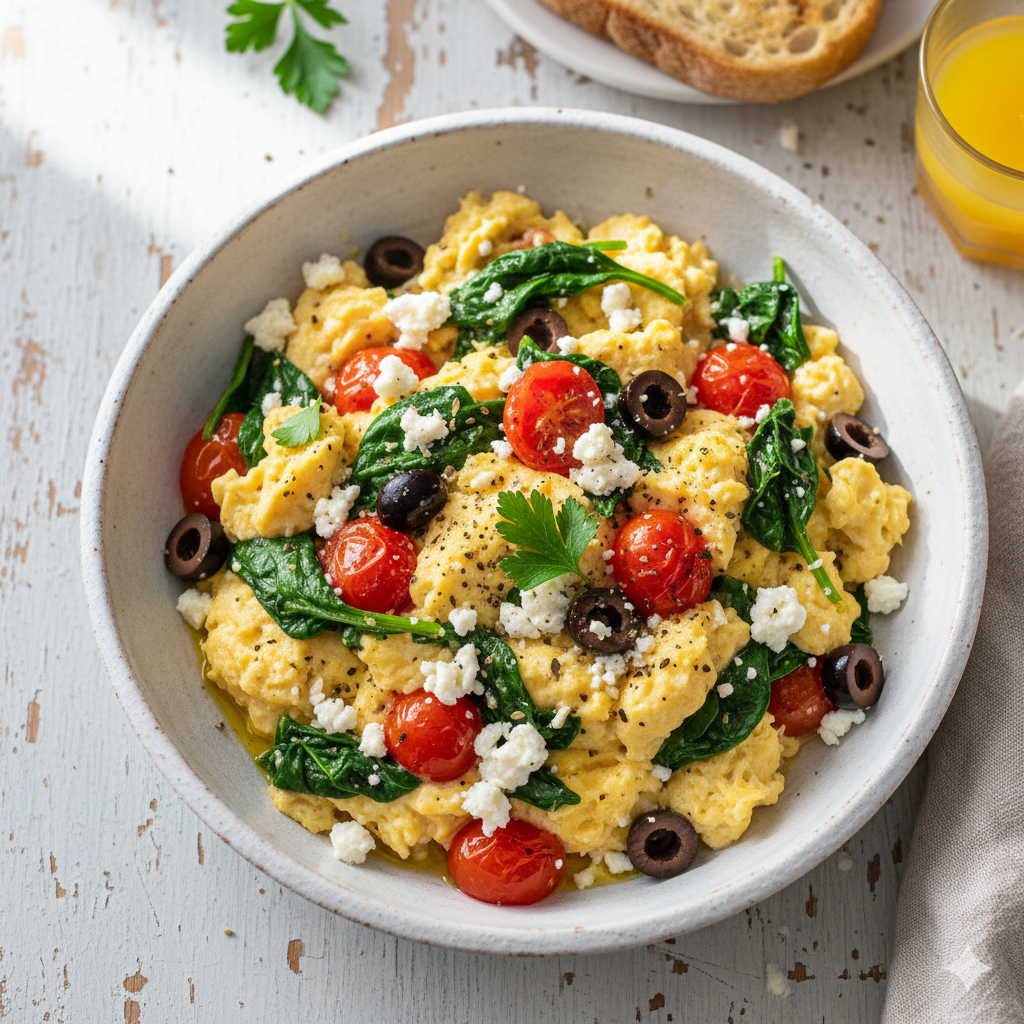
There is a specific kind of magic that happens in a kitchen when the sun begins to stream through the window. It is the time for a breakfast that doesn’t just nourish, but inspires. The Mediterranean Veggie Scrambled Egg is more than a dish; it is a culinary homage to the sun-drenched coastlines of Greece and Italy, where the morning meal is treated with as much reverence as a feast.
Growing up, the concept of a “Mediterranean breakfast” was synonymous with vibrant color and bold textures. While many Western cultures focus on heavy, carb-laden starts, the Mediterranean table invites you to wake up your palate with the acidity of tomatoes, the earthiness of leafy greens, and the creamy, briny depth of high-quality feta. This recipe captures that essence, transforming the humble scrambled egg into a sophisticated, nutrient-dense masterpiece. Whether you are fueling up for a busy day or enjoying a slow, weekend brunch, this dish offers a perfect balance of protein, healthy fats, and fresh produce.
2. Recipe Overview
- Cuisine Type:Mediterranean
- Difficulty Level:Easy
- Total Preparation & Cooking Time:12 minutes
- Dietary Classifications:Vegetarian, Gluten-Free, Keto-friendly
3. Equipment and Tools
To create the perfect, cloud-like texture, your equipment choices matter.
- 10-inch Non-Stick Skillet:Ideally with sloped sides to allow for easy folding and movement of the eggs.
- Heat-Resistant Silicone Spatula:Essential for folding the eggs without scratching the non-stick coating.
- Whisk:A medium-sized stainless steel balloon whisk.
- Glass Mixing Bowl:A 1-liter capacity bowl is perfect for whisking 4-6 eggs without splatter.
- Sharp Chef’s Knife:For precise, uniform dicing of vegetables.
4. Serving Suggestions
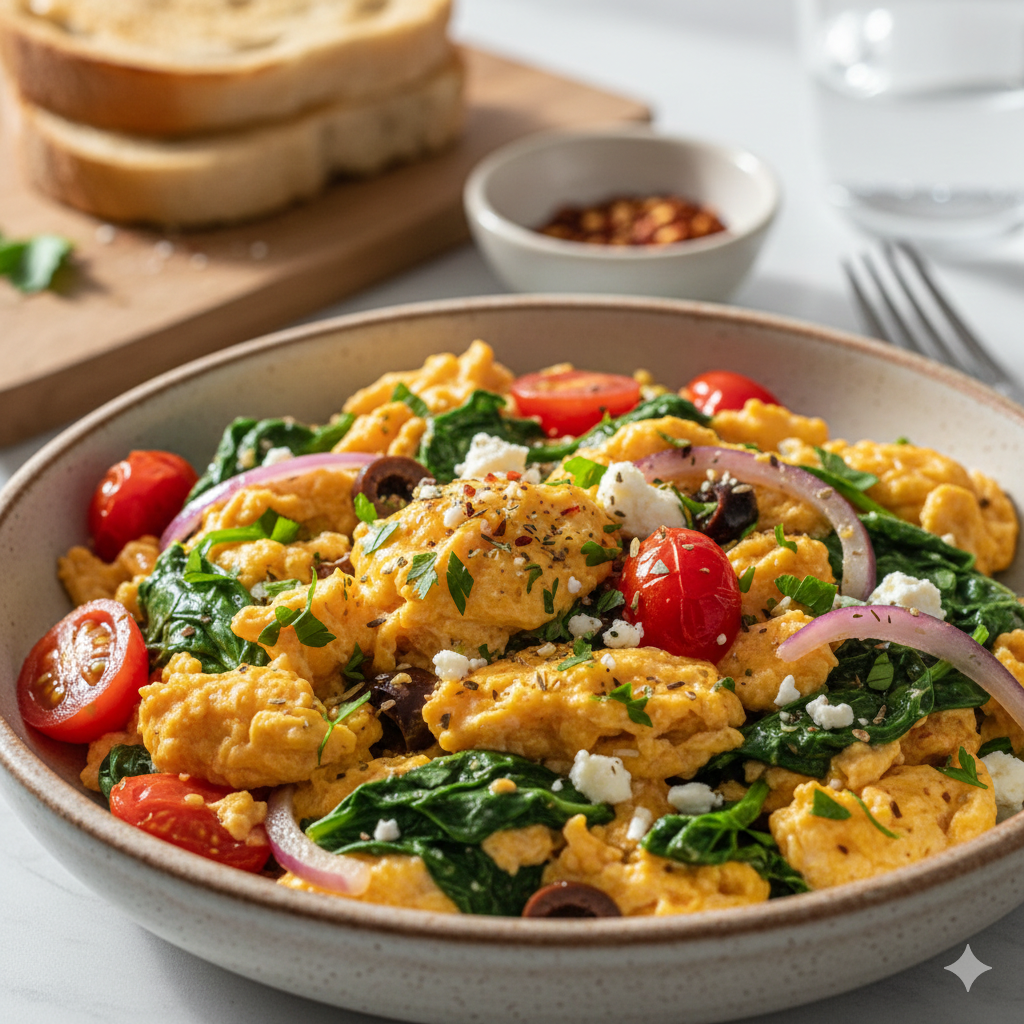
- Plating:Serve immediately on warm, wide-rimmed stoneware plates to maintain temperature.
- Garnish:A pinch of freshly torn flat-leaf parsley or micro-basil.
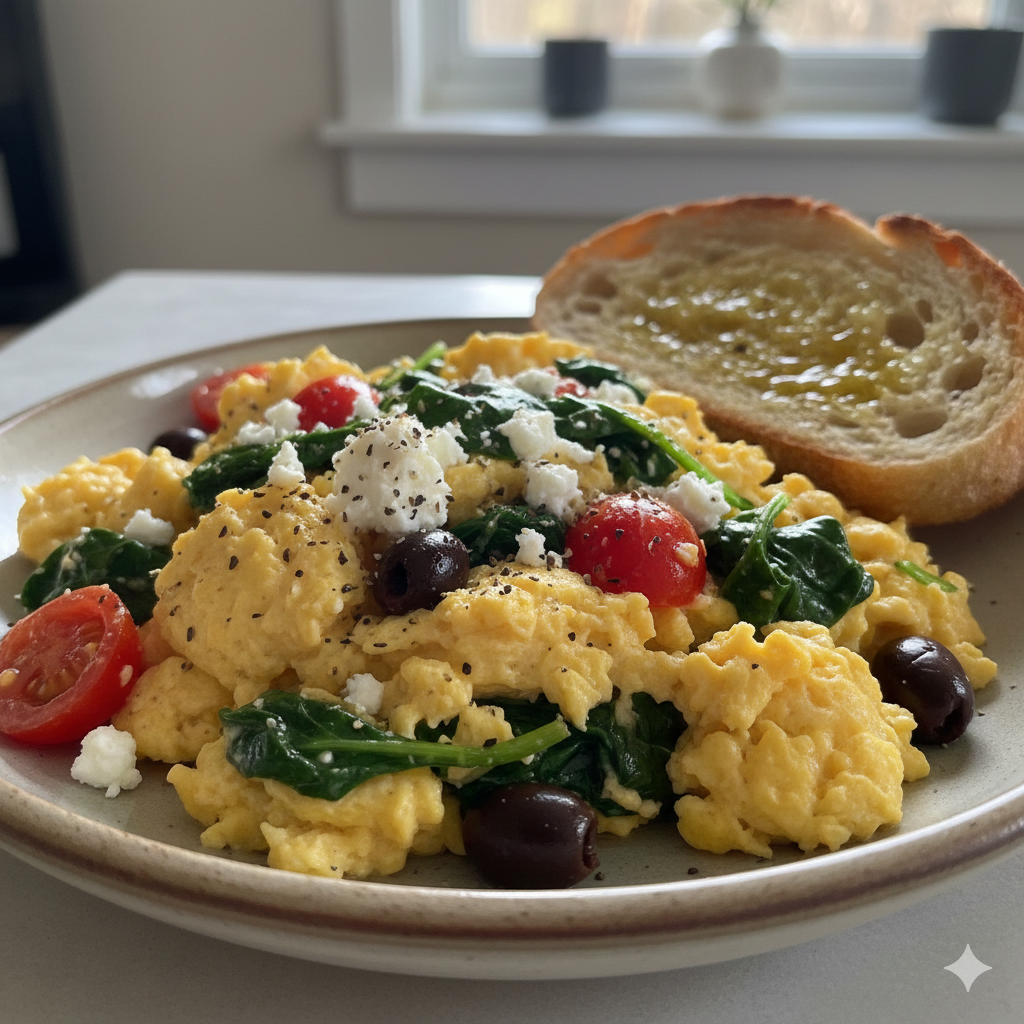
- Sides:A side of toasted sourdough brushed with garlic, or grilled halloumi slices.
- Pairing:A chilled glass of freshly squeezed orange juice or an iced green tea with a sprig of mint.
5. Nutritional Information (Per Serving)
- Calories:265 kcal
- Protein:18g
- Fat:19g (Heart-healthy monounsaturated fats from olive oil)
- Carbs:6g
- Benefits:Excellent source of Vitamin A, Vitamin K, and Choline. The addition of spinach provides essential iron, while eggs offer a complete amino acid profile.
6. Storage and Reheating
- Storage:Keep in an airtight glass container in the refrigerator for up to 24 hours.
- Reheating:Avoid the microwave if possible, as it can cause the eggs to become rubbery. Instead, place the eggs in a cold non-stick skillet over the lowest heat setting. Add a splash of water, cover, and steam gently for 1-2 minutes until warmed through.
7. Expert Tips and Variations
- The “Slow-Scramble” Technique:Keep your heat on medium-low. Pushing the eggs constantly creates large, soft curds rather than tiny, dry ones.
- Seasonal Adaptations:In the spring, swap spinach for sautéed asparagus tips. In the autumn, fold in some roasted red peppers.
- Common Mistake:Avoid adding the feta too early; it can melt entirely into the eggs, making them salty. Fold it in during the final 30 seconds of cooking for those distinct, creamy pockets.
8. Ingredients Section
| Ingredient | Metric | Imperial |
| Large Eggs | 4 units | 4 units |
| Baby Spinach | 60g | 2 cups |
| Cherry Tomatoes | 150g | 1 cup |
| Feta Cheese | 50g | 1/3 cup |
| Olive Oil | 15ml | 1 tbsp |
| Dried Oregano | 2g | 1/2 tsp |
- Sourcing:Always use eggs from pasture-raised hens for a richer flavor. For the feta, look for blocks stored in brine rather than pre-crumbled varieties, as they provide superior texture and moisture.
9. Step-by-Step Instructions
- Whisking:Break the eggs into a bowl. Whisk vigorously for 30 seconds until completely uniform in color.
- Sauté:Heat the olive oil in the skillet. Add tomatoes; cook until the skins begin to wrinkle (approx. 2 mins).
- Wilt:Add the spinach and oregano. Cook until the spinach is just wilted.
- The Fold:Lower heat to medium-low. Pour in the eggs. Let them set for 10 seconds, then use your spatula to pull the edges toward the center.
- Finish:When the eggs are 90% set, fold in the feta. Remove from heat while they still appear slightly wet—they will finish cooking on the plate.
10. Frequently Asked Questions (FAQ)
- Can I use egg whites only?Yes, though you will need to add a teaspoon of extra olive oil to compensate for the lack of fat.
- Why did my eggs turn grey?This is a reaction between the iron in the eggs and the sulfur—it means the eggs were likely cooked at too high a temperature for too long.
- Is this a low-carb meal?Yes, it is naturally low in carbohydrates and fits perfectly into a ketogenic lifestyle.
- Can I add meat?While vegetarian, adding thin strips of prosciutto works beautifully with the feta.
- How do I prevent the eggs from sticking?Ensure your skillet is truly non-stick and always pre-heat the oil before adding the eggs.