1. Introduction: A Journey in Every Grain
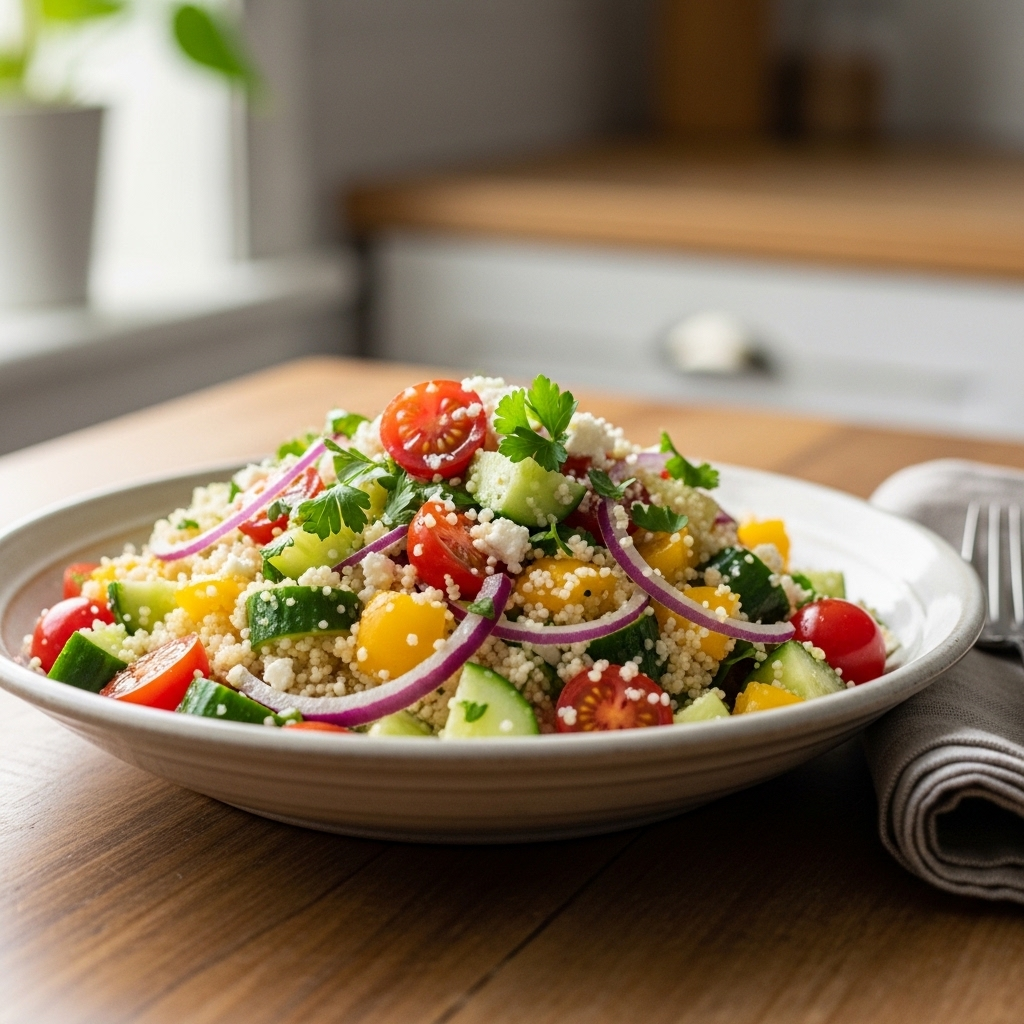
There is a specific kind of magic that happens when sun-ripened vegetables meet the delicate, airy texture of semolina pearls. TheMediterranean Couscous Veggie Saladis more than just a side dish; it is a celebration of the “Sunshine Diet.” Originating from the Maghreb region of North Africa, couscous has traveled across the Mediterranean, evolving into a versatile canvas for the vibrant produce of coastal Europe and the Levant.
My first encounter with this dish wasn’t in a high-end bistro, but at a bustling seaside market in Marseille. The air smelled of salt and roasting peppers. A local vendor served a version of this salad that was so bright, so herbaceous, and so perfectly balanced that it redefined “health food” for me. It wasn’t about deprivation; it was about the abundance of the earth.
What makes this recipe significant is its adaptability. It bridges the gap between a light lunch and a sophisticated dinner party starter. In a world of heavy processed meals, this salad stands as a testament to the power of fresh ingredients—crunchy cucumbers, juicy cherry tomatoes, and the briny punch of Kalamata olives—all tied together by a zesty lemon-herb vinaigrette.
2. Recipe Overview
- Cuisine Type:Mediterranean / North African Fusion
- Difficulty Level:Easy
- Total Time:20 Minutes (10 mins prep, 10 mins assembly)
- Dietary Classifications:Vegetarian, Vegan (if honey is swapped for maple syrup), Dairy-Free, Nut-Free, Plant-Based.
3. Equipment and Tools
To achieve the perfect “fluff” in your couscous and the precise dice in your vegetables, you’ll need:
- Medium Saucepan (2-quart):For boiling water/broth and steaming the couscous.
- Large Mixing Bowl (4-6 quart):Deep enough to toss the salad vigorously without spilling.
- Fine-Mesh Strainer:Essential for rinsing vegetables.
- Chef’s Knife:A sharp 8-inch blade for uniform vegetable dicing.
- Wooden Spoon or Fork:A fork is specifically recommended for “fluffing” the couscous to prevent clumping.
- Small Glass Jar:For emulsifying the lemon vinaigrette.
- Measuring Cups and Spoons:For precision in grain-to-liquid ratios.
4. Serving Suggestions
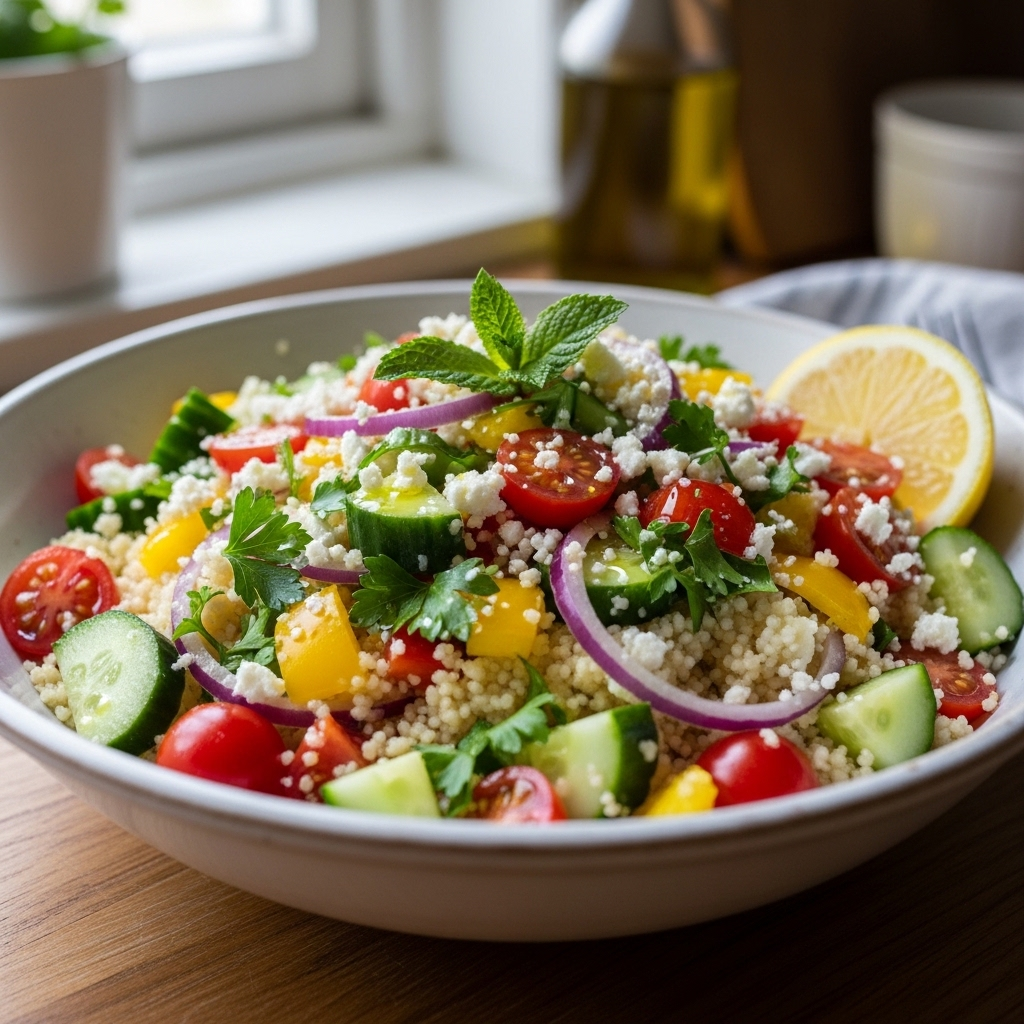
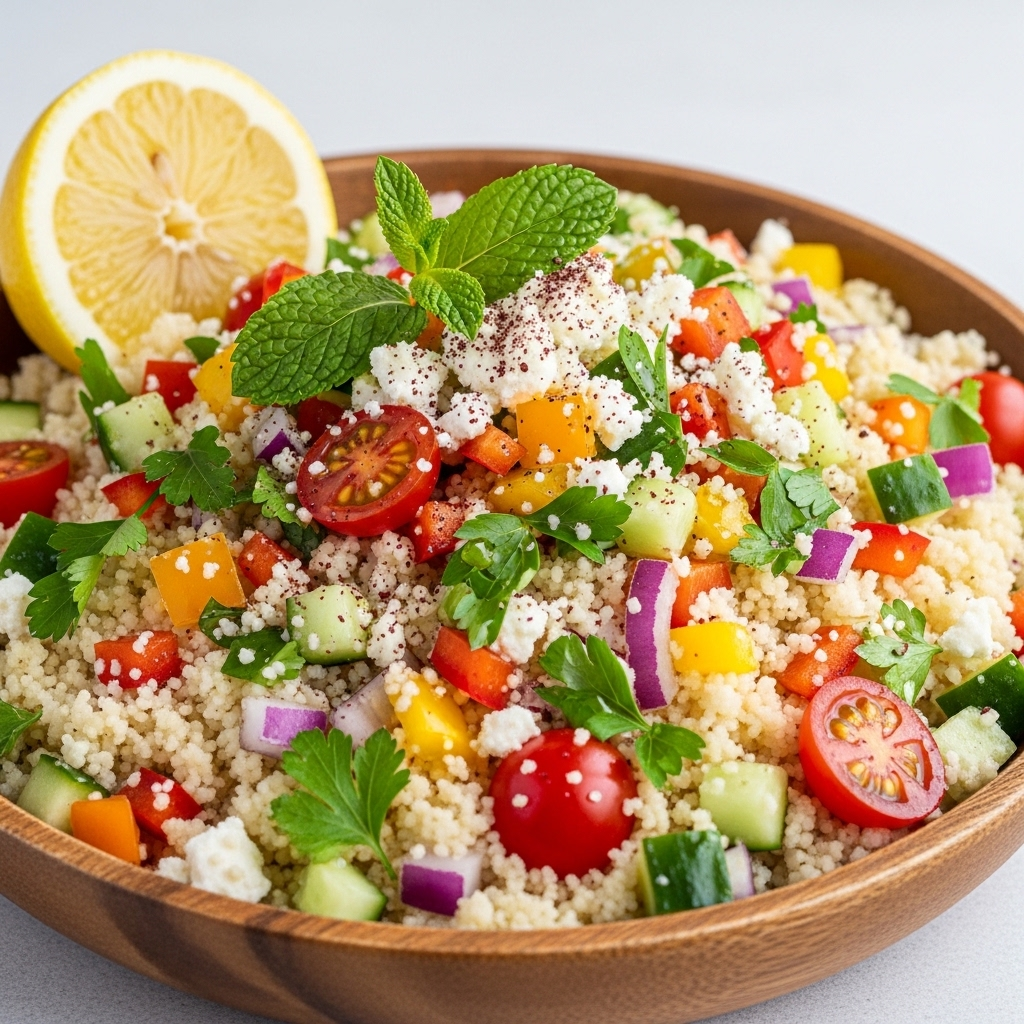
Plating RecommendationsServe this salad in a wide, shallow wooden bowl to highlight the colors. For individual servings, use white porcelain bowls to make the greens and reds pop.
Garnish Ideas
- Fresh Mint Leaves:Provides a cooling finish.
- Toasted Pine Nuts:Adds a buttery crunch.
- Crumbled Feta (Optional):For those who enjoy a creamy, salty contrast.
Pairings
- Side Dish:Charred pita bread with roasted garlic hummus.
- Protein:Grilled lemon-oregano chicken skewers or pan-seared halloumi.
- Beverage:A crisp Sauvignon Blanc or a chilled hibiscus iced tea.
5. Nutritional Information (Per Serving)
- Calories:285 kcal
- Carbohydrates:42g
- Protein:8g
- Fat:11g (primarily healthy monounsaturated fats from olive oil)
- Fiber:6g
- Sodium:320mg
Health Benefits:This dish is a powerhouse ofVitamin Cfrom the bell peppers andLycopenefrom the tomatoes. The complex carbohydrates in couscous provide sustained energy without the “crash” associated with refined sugars.
6. Storage and Reheating
- Refrigeration:Store in an airtight glass container for up to4 days. The flavors actually improve on day two as the couscous absorbs the dressing.
- Freezing:Not recommended. The fresh cucumbers and tomatoes will lose their structural integrity upon thawing.
- Reheating:This salad is best servedcold or at room temperature. If you prefer it warm, only heat the couscous base before adding the fresh vegetables.
7. Expert Tips and Variations
Professional Tips
- The “Fork” Rule:Never use a spoon to stir cooked couscous. A fork separates the grains, whereas a spoon mashes them into a paste.
- Toast the Grains:Before adding water, sauté the dry couscous in a teaspoon of olive oil for 2 minutes until it smells nutty.
Creative Variations
- The Autumn Swap:Replace cucumbers with roasted butternut squash and add dried cranberries.
- The Protein Boost:Fold in a can of rinsed chickpeas or cooked quinoa for a complete amino acid profile.
8. Ingredients Section
The Base
- 1 ½ cups (250g) Dry Couscous (Plain or Roasted Garlic variety)
- 1 ½ cups (350ml) Vegetable Broth (Low sodium)
- 1 tbsp Extra Virgin Olive Oil
The Garden
- 1 cup English Cucumber, diced (peel on for color)
- 1 cup Cherry Tomatoes, halved
- ½ cup Red Bell Pepper, finely diced
- ¼ cup Red Onion, minced (soak in cold water for 5 mins to remove “bite”)
- ½ cup Flat-leaf Italian Parsley, chopped
- ¼ cup Fresh Mint, chiffonade
The Zesty Vinaigrette
- 3 tbsp Extra Virgin Olive Oil
- 2 tbsp Fresh Lemon Juice
- 1 tsp Lemon Zest
- 1 clove Garlic, pressed
- ½ tsp Dried Oregano
- Sea Salt and Cracked Black Pepper to taste
9. Step-by-Step Instructions
- Prepare the Couscous:Bring the vegetable broth and 1 tbsp olive oil to a rolling boil in your saucepan.
- The Steam Method:Remove from heat. Stir in the dry couscous, cover immediately with a tight-fitting lid, and let it sit for5 minutes. Do not peek!
- The Fluff:Remove the lid and use a fork to gently scrape and fluff the grains. Spread them out on a baking sheet to cool to room temperature.
- Chop the Produce:While the couscous cools, dice your cucumber, tomatoes, peppers, and onions into uniform sizes (roughly ¼ inch).
- Emulsify the Dressing:In a small jar, combine olive oil, lemon juice, zest, garlic, and spices. Shake vigorously until the mixture is cloudy and combined.
- The Assembly:In your large mixing bowl, combine the cooled couscous, chopped vegetables, and herbs.
- The Toss:Pour the dressing over the salad. Use a folding motion to ensure every grain is coated without bruising the herbs.
- The Rest:Let the salad sit for 10 minutes before serving to allow the flavors to marry.
10. Frequently Asked Questions (FAQ)
Q: Can I use Pearl (Israeli) Couscous instead?A: Yes! However, Pearl couscous requires boiling in water (like pasta) for about 8-10 minutes rather than steaming.
Q: My couscous is mushy. What happened?A: You likely added too much liquid or let it sit too long. Stick to a 1:1 or 1:1.1 ratio of grain to liquid.
Q: Is this salad gluten-free?A: Traditional couscous is made from wheat. To make this gluten-free, substitute the couscous withQuinoaorMillet.
Q: How do I stop the red onion from overpowering the salad?A: After dicing, soak the onion pieces in ice water for 10 minutes. This preserves the crunch but washes away the harsh sulfurous compounds.