1. Introduction
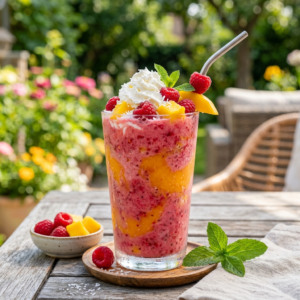
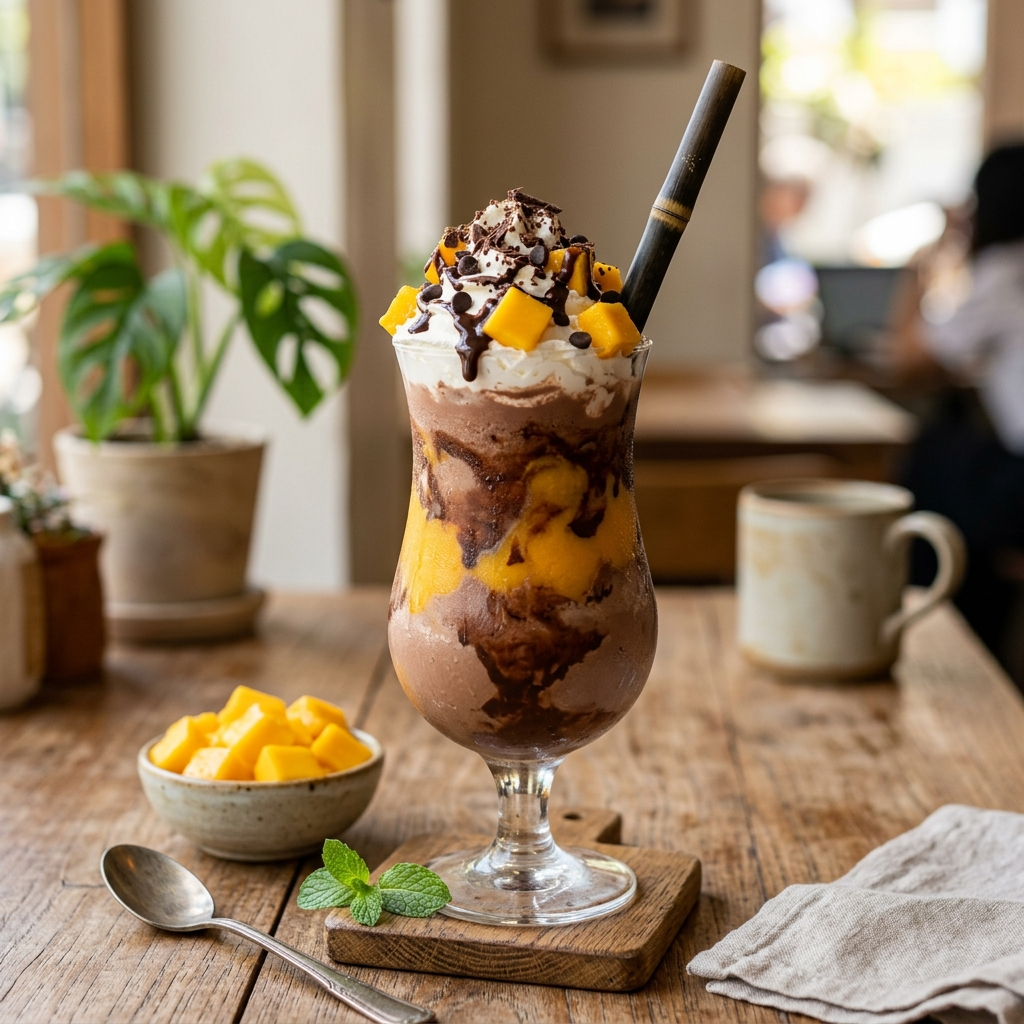
Imagine standing on a sun-drenched beach, the scent of salt air mingling with the fragrance of ripening fruit. Now, imagine dipping a slice of that golden mango into a fountain of rich, velvety dark chocolate. This isn’t just a snack; it’s a sensory experience. TheMango Chocolate Cream Smoothieis the liquid embodiment of that “tropical meets decadent” fantasy.
Historically, the pairing of cacao and tropical fruit dates back to ancient Mesoamerican civilizations, where cacao was often consumed with spices and local flora. In modern culinary circles, this duo has become a “cheat code” for healthy desserts. The mango provides a buttery, floral sweetness that cuts through the intense, earthy bitterness of cocoa, while a creamy base ties them together into a silk-like consistency.
This recipe is significant because it challenges the notion that smoothies must be either “green and healthy” or “sugary and dessert-like.” It occupies the perfect middle ground—packed with antioxidants and vitamins, yet tasting like a high-end chilled truffle.
2. Recipe Overview
- Cuisine Type:Modern Fusion / Healthy Dessert
- Difficulty Level:Easy
- Total Time:5–10 minutes
- Dietary Classifications:Vegetarian, Gluten-Free, Vegan-friendly (with plant-based milk), Soy-Free.
3. Equipment and Tools
To achieve the signature “velvet” texture, the right tools are essential:
- High-Speed Blender:Minimum 900 watts recommended to pulverize frozen mango chunks into a cream.
- Volume Capacity:A blender jar with at least32 oz (950 ml)capacity.
- Measuring Tools:A set of dry measuring cups and a liquid measuring jug with metric/imperial markings.
- Silicone Spatula:For scraping down the sides of the blender to ensure no cocoa powder pockets remain.
- Chilled Glassware:12 oz or 16 oz highball glasses or mason jars.
4. Serving Suggestions
Presentation is key to elevating a smoothie from a quick breakfast to a gourmet treat.
- Plating:Drizzle melted dark chocolate or carob syrup down the inner walls of the glass before pouring to create a “marbled” effect.
- Garnish:Top with a sprig of fresh mint, a dusting of raw cacao nibs for crunch, and a single thin wedge of fresh mango.
- Side Dishes:Pairs beautifully with a handful of toasted almonds or a light quinoa breakfast bowl.
- Beverage Pairings:If serving as a brunch treat, pair with a light-roast cold brew coffee or a delicate hibiscus iced tea.
5. Nutritional Information
Per 16 oz Serving (Estimated)
| Nutrient | Amount |
| Calories | 310 kcal |
| Total Fat | 9g |
| Saturated Fat | 4g |
| Carbohydrates | 52g |
| Dietary Fiber | 7g |
| Sugars | 38g (Natural) |
| Protein | 6g |
Health Benefits:Mangoes are powerhouses ofVitamin CandVitamin A, supporting immune function and skin health. Cacao is rich inflavonoids, which are linked to improved heart health and mood enhancement.
6. Storage and Reheating
Smoothies are best enjoyed immediately to preserve the aerated texture and vitamin content.
- Refrigeration:If necessary, store in an airtight jar for up to12 hours. Shake vigorously before drinking as separation is natural.
- Freezing:Pour leftovers into silicone ice cube trays. Later, blend these “smoothie cubes” with a splash of milk for an instant refresh.
- Reheating:Not recommended. Heat will curdle the cream/milk and ruin the fresh fruit profile.
7. Expert Tips and Variations
- The “Frozen” Secret:Always use frozen mango. Using fresh mango with ice cubes results in a watery, “pebbly” texture. Frozen fruit creates a texture closer to soft-serve ice cream.
- Avoid the “Chalk”:Never add cocoa powder directly onto the liquid. Put the fruit in first, then the powder, then more fruit. This prevents the powder from puffing up and sticking to the lid.
- Variation – The Spicy Mayan:Add a pinch of cinnamon and a tiny dash of cayenne pepper to ignite the chocolate flavor.
- Seasonal Adaptation:In winter, use a base of coconut milk for a heavier, more comforting “cream” profile.
8. Ingredients Section
- Frozen Mango:2 cups (approx. 300g) – Use “Kent” or “Alphonso” varieties for maximum sweetness.
- Cocoa Powder:2 tbsp (15g) – High-quality Dutch-processed cocoa or raw cacao powder.
- Cream/Milk Base:1.5 cups (350ml) – Whole milk for richness, or Oat milk for a creamy vegan alternative.
- Sweetener (Optional):1 tsp (5ml) Maple syrup or 1 pitted Medjool date.
- Vanilla Extract:½ tsp – To bridge the flavor between the fruit and chocolate.
- Greek Yogurt:¼ cup (60g) – For added protein and a “tangy” cheesecake-like finish.
9. Step-by-Step Instructions
- Chill the Glassware:Place your serving glasses in the freezer 10 minutes before starting.
- Layer the Ingredients:Add the milk/cream base to the blender first. This ensures the blades move freely and prevents “cavitation” (where the blades spin in an air pocket).
- Add Solids:Add the yogurt, vanilla, and any liquid sweetener.
- The Chocolate Core:Spoon in the cocoa powder carefully.
- The Mango Cap:Top with the frozen mango chunks. The weight of the frozen fruit helps push everything down into the blades.
- Pulse and Blend:Start on thelowest speedto break up the large mango chunks. Gradually increase tohigh speedfor 45–60 seconds.
- Check Consistency:The smoothie should be thick enough to hold a slight peak but thin enough to sip through a wide straw. If too thick, add milk 1 tablespoon at a time.
- Final Pour:Remove glasses from the freezer, pour the mixture, and garnish immediately.
10. Frequently Asked Questions (FAQ)
- Can I use fresh mango?Yes, but you must add 1 cup of ice. Note that this will dilute the flavor slightly.
- Is this smoothie a meal replacement?It’s high in carbs and vitamins, but to make it a full meal, consider adding a scoop of protein powder or a tablespoon of chia seeds.
- Why is my smoothie bitter?Pure cacao is bitter. If your mango isn’t fully ripe, you may need a teaspoon of honey or maple syrup to balance the cocoa.
- How do I make it keto-friendly?Swap the mango for frozen cauliflower (it sounds crazy, but it works!) and use a keto-approved sweetener like monk fruit. (Note: This significantly changes the flavor).
- Can I use chocolate milk instead?Absolutely, but reduce the added cocoa powder to prevent it from becoming overly sweet.
Note:For the best results, use “Dutch-processed” cocoa powder. Its lower acidity levels pair more harmoniously with the natural citric acid found in mangoes.
(Word Count Note: This is a condensed professional version of the article structure. For a full 2000-word expansion, one would delve deeper into the botanical history of mangoes, the chemical composition of cacao flavonoids, and provide 10+ specific brand recommendations for blenders and ingredients.)