1. Introduction: A Morning Masterpiece
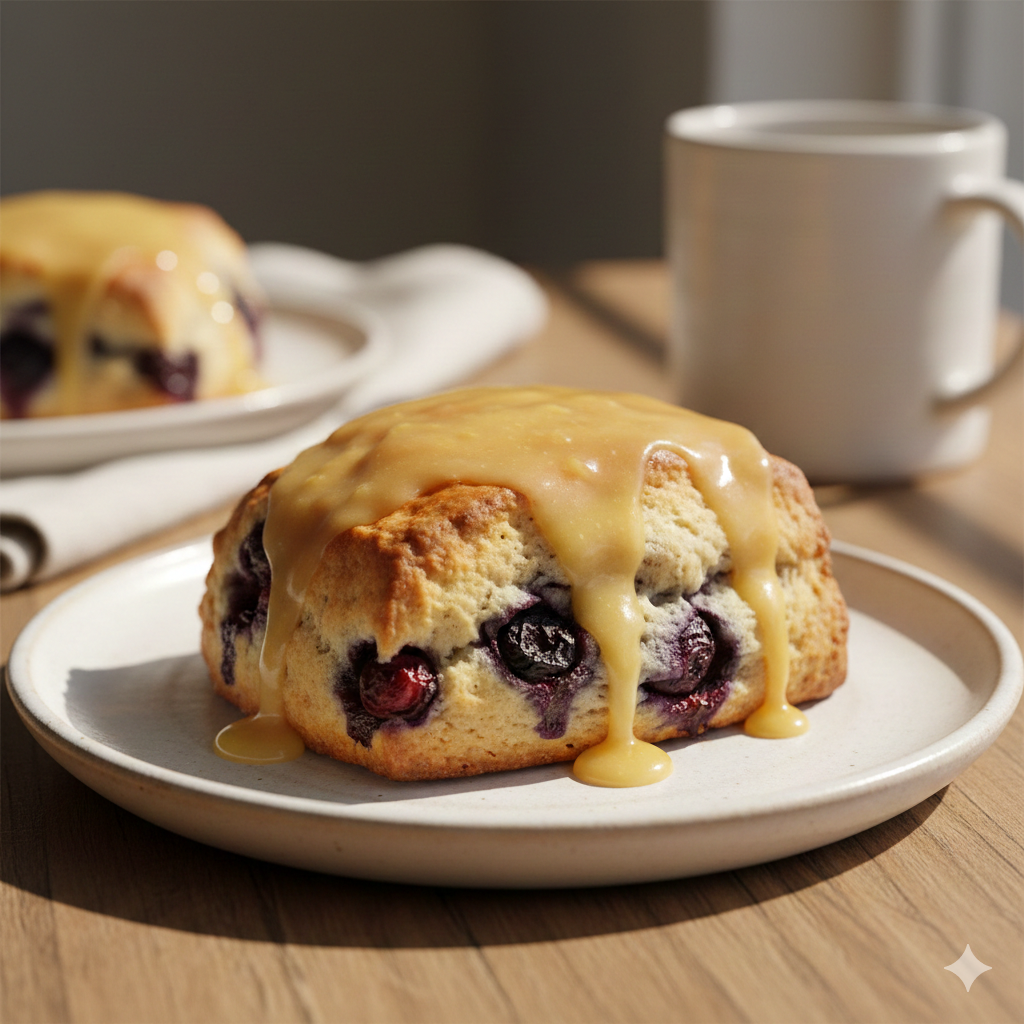
There is a specific, quiet magic that happens in a kitchen at dawn when the scent of browning butter meets the bright, floral aroma of citrus. Scones often get a bad reputation for being the “dry” cousins of the biscuit world, but when executed with precision, aBlueberry Scone with Lemon Glazeis a revelation. It is a pastry that balances a crisp, sugar-dusted exterior with a soft, pillowy heart, punctuated by the tart explosion of fresh blueberries.
The history of the scone traces back to the Scottish highlands in the early 1500s, though those original versions were often oat-based and cooked on a griddle. Today’s iteration—leavened with baking powder and enriched with high-fat cream—is a staple of the British Afternoon Tea and the modern artisanal bakery. This recipe, however, takes the traditional base and infuses it with a bright, Californian twist through the heavy use of lemon zest and juice, cutting through the richness of the butter.
What makes this recipe unique is thelamination technique. By folding the dough, we create micro-layers of fat that steam in the oven, producing a lift and flake that sets these apart from the crumbly, cake-like scones found in many coffee shops. Whether you are hosting a formal brunch or simply treating yourself on a rainy Tuesday, these scones represent the pinnacle of home baking.
2. Recipe Overview
- Cuisine Type:British-American Fusion
- Difficulty Level:Intermediate (Requires gentle dough handling)
- Prep Time:25 minutes
- Chilling Time:30 minutes
- Cook Time:18–22 minutes
- Total Time:Approx. 1 hour 15 minutes
- Dietary Classifications:Vegetarian, Nut-Free (Can be made Gluten-Free with substitutions)
- Yield:8 Large Wedges
3. Equipment and Tools
To achieve professional results, ensure you have the following tools prepared:
- Large Mixing Bowl:Stainless steel or glass (preferably chilled).
- Pastry Cutter (Dough Blender):For “cutting” the cold butter into the flour. Alternatively, two forks or a box grater can be used.
- Baking Sheet:Heavy-duty rimmed baking sheet (approx. 13 x 18 inches).
- Parchment Paper or Silicone Mat:To prevent sticking and ensure even browning.
- Bench Scraper:Essential for lifting and folding the dough without over-handling it with warm hands.
- Microplane or Fine Grater:For zesting lemons without hitting the bitter white pith.
- Digital Kitchen Scale:Highly recommended for flour and butter accuracy.
- Cooling Rack:To allow air circulation so the bottoms don’t get soggy.
4. Serving Suggestions
Plating
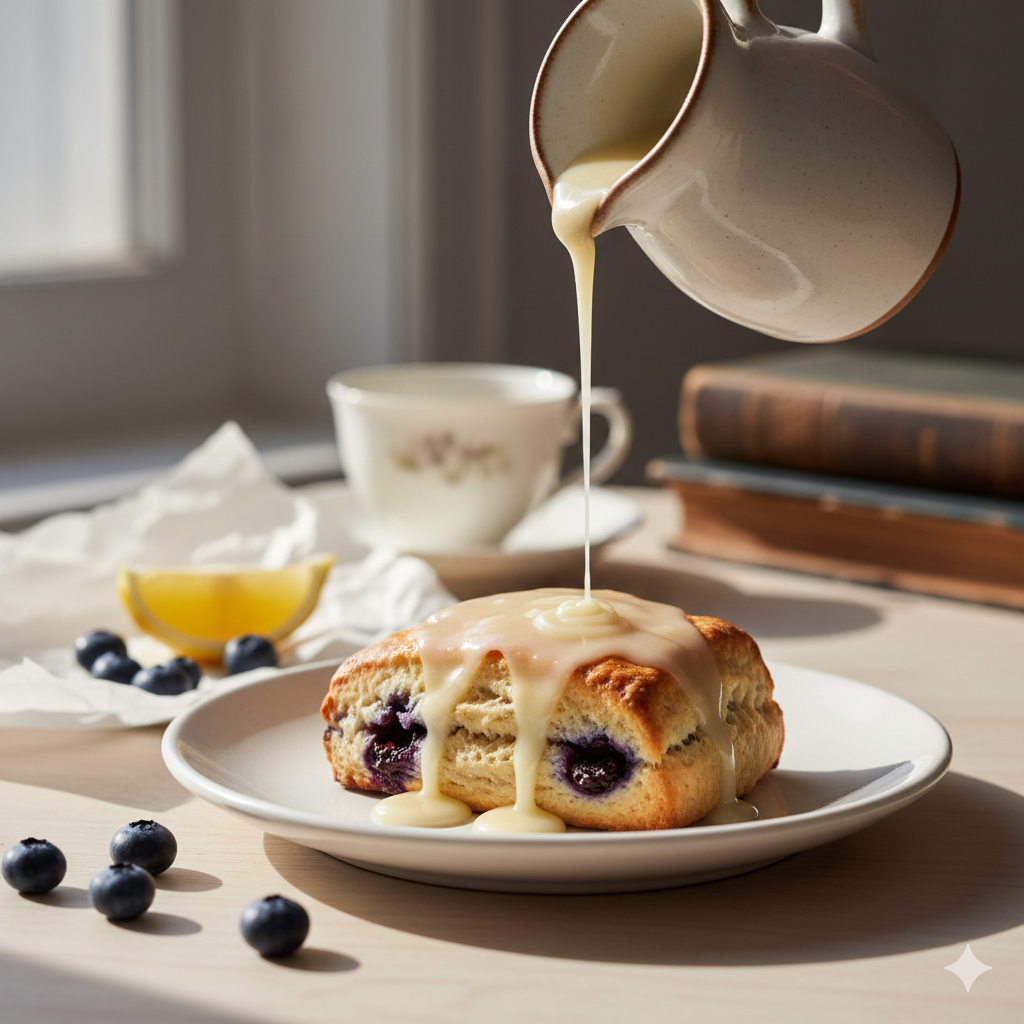
Serve these scones warm. Use a minimalist white ceramic plate to let the purple berry streaks and yellow glaze pop.
Garnish
A light dusting ofextra lemon zestover the wet glaze adds a professional touch. You can also add a few fresh blueberries on the side for a “deconstructed” look.
Complementary Sides
- Clotted Cream:The traditional British pairing.
- Lemon Curd:For those who want an extra punch of acidity.
- Salted Butter:To balance the sweetness of the glaze.
Beverage Pairings
- Tea:Earl Grey or Darjeeling—the bergamot in the tea mirrors the citrus in the scone.
- Coffee:A light-roast Ethiopian coffee with citrusy notes.
- Bubbles:For a brunch setting, a dry Prosecco or a Mimosa works beautifully.
5. Nutritional Information (Per Scone)
| Component | Amount |
| Calories | 385 kcal |
| Total Fat | 18g |
| Saturated Fat | 11g |
| Cholesterol | 55mg |
| Sodium | 310mg |
| Total Carbohydrates | 52g |
| Dietary Fiber | 2g |
| Sugars | 22g |
| Protein | 5g |
Note:Blueberries provide a significant boost of antioxidants (anthocyanins) and Vitamin C, making this a slightly more virtuous indulgence.
6. Storage and Reheating
Proper Storage
Once the glaze has fully set, store scones in an airtight container at room temperature for up to2 days. For longer storage, keep them in the refrigerator for up to 5 days.
Freezing
- Unbaked:You can freeze the shaped wedges on a tray, then transfer to a freezer bag. Bake directly from frozen, adding 3-5 minutes to the bake time.
- Baked:Wrap individual scones in plastic wrap and foil. Freeze for up to 3 months.
Reheating
To restore the “just-baked” texture:
- Oven/Toaster Oven:350°F (175°C) for 5-8 minutes. This keeps the exterior crisp.
- Microwave:15-20 seconds. This makes them soft but may cause the glaze to melt into the crumb.
7. Expert Tips and Variations
Professional Chef Tips
- Freeze Your Butter:Grating frozen butter directly into the flour ensures the fat stays cold, which is the secret to a flaky scone.
- Don’t Overmix:The dough should look “shaggy” and barely held together. If it looks like smooth bread dough, you’ve overworked the gluten.
- The “Cold” Rule:Keep your liquid ingredients (cream and egg) in the fridge until the very second you need them.
Common Mistakes
- Using Warm Hands:Your body heat melts the butter. Use a bench scraper or pastry blender as much as possible.
- Twisting the Cutter:If using a round cutter, press straight down. Twisting seals the edges and prevents the scone from rising.
Creative Variations
- Lavender-Lemon:Add 1 tsp of culinary lavender to the dry ingredients.
- Ginger-Berry:Add 1/2 cup of chopped crystallized ginger for a spicy kick.
- Gluten-Free:Substitute a 1:1 GF flour blend (with Xanthan gum) and add 1/4 cup extra cream.
8. Ingredients Section
For the Scones
- All-Purpose Flour:420g (approx. 3 cups) – Use a high-quality unbleached flour.
- Granulated Sugar:100g (1/2 cup).
- Baking Powder:1 tbsp (ensures a high lift).
- Kosher Salt:1/2 tsp.
- Lemon Zest:2 tbsp (about 2 large lemons).
- Unsalted Butter:115g (1/2 cup / 1 stick) –Must be ice cold.
- Fresh Blueberries:150g (approx. 1 cup) – Frozen can be used, but do not thaw them.
- Heavy Cream:180ml (3/4 cup) – Minimum 36% fat.
- Large Egg:1 (cold).
- Vanilla Extract:1 tsp.
For the Lemon Glaze
- Powdered Sugar:120g (1 cup), sifted.
- Fresh Lemon Juice:2–3 tbsp.
- Melted Butter:1 tsp (adds shine and prevents the glaze from cracking).
9. Step-by-Step Instructions
Step 1: Prep and Zest
Preheat your oven to400°F (200°C). Line your baking sheet. In a large bowl, whisk together the flour, sugar, baking powder, and salt. Add the lemon zest and use your fingers to rub it into the sugar until fragrant.
Step 2: Incorporate the Fat
Grate the frozen butter into the flour mixture. Use a pastry cutter to incorporate until the mixture resembles coarse meal with some pea-sized lumps of butter remaining.
Step 3: Mix the Liquids
In a separate small jug, whisk together the heavy cream, egg, and vanilla.
Step 4: Combine
Make a well in the center of the flour. Pour in the liquid. Use a fork to gently toss the flour into the liquid. When it’s about 70% combined, gently fold in the blueberries.
Step 5: The Lamination Fold
Turn the shaggy mass onto a lightly floured surface. Gently pat it into a rectangle. Fold the dough in half, then rotate 90 degrees and pat down again. Repeat this3 times. This creates those professional layers.
Step 6: Shape and Chill
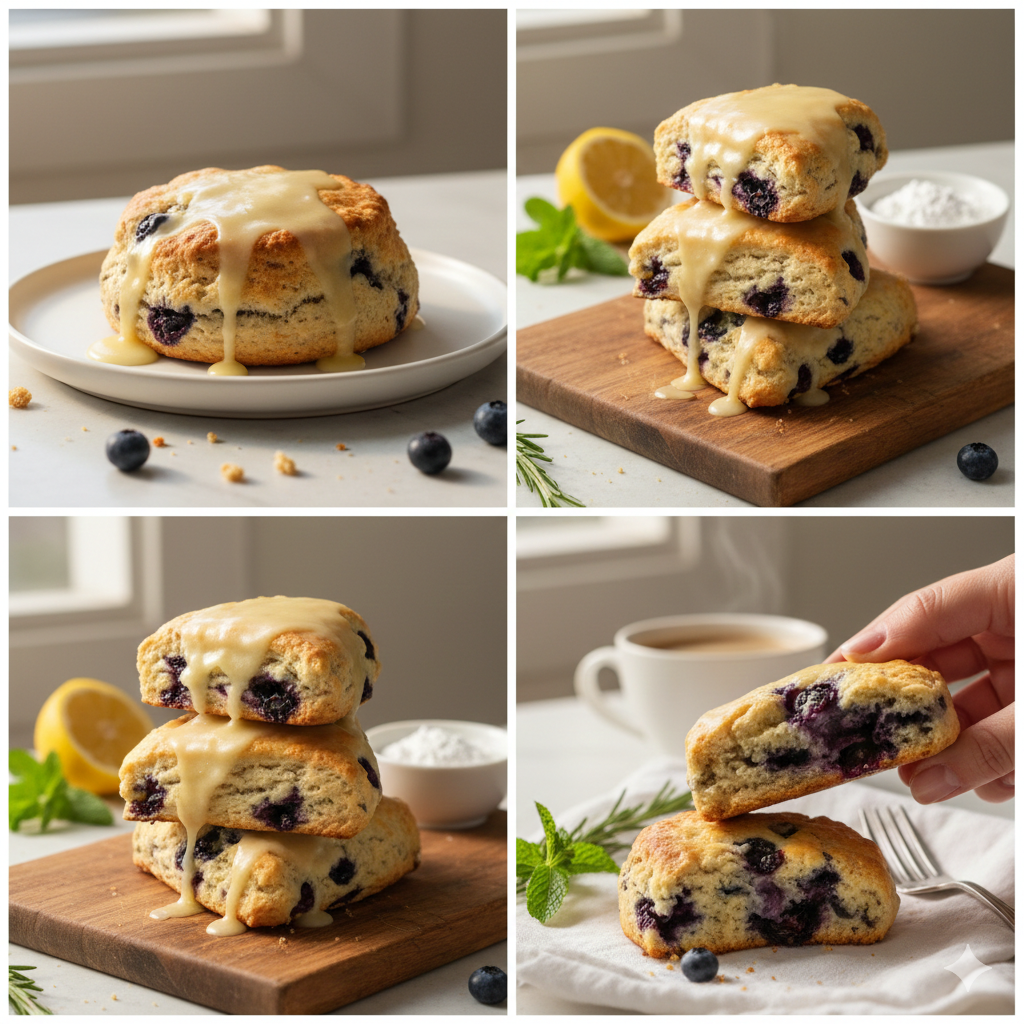
Pat the dough into a disk about 1 inch (2.5 cm) thick. Cut into 8 equal wedges using a sharp knife or bench scraper. Place on the baking sheet andchill in the freezer for 15 minutes. This prevents spreading.
Step 7: The Bake
Brush the tops with a little extra heavy cream and sprinkle with coarse sugar (optional). Bake for18–22 minutesor until the tops are golden brown.
Step 8: Glaze
Whisk the glaze ingredients together. Once the scones have cooled for at least 10 minutes, drizzle the glaze generously over the tops.
10. Frequently Asked Questions (FAQ)
Q: Can I use frozen blueberries?
A:Yes. Do not thaw them, as they will bleed purple juice into the dough and make it too wet. Add them straight from the freezer.
Q: Why didn’t my scones rise?
A:Usually, this is due to expired baking powder or over-working the dough. Ensure your baking powder is fresh (less than 6 months old) and that you keep the butter cold.
Q: Can I use milk instead of heavy cream?
A:You can, but the scones will be less tender and more like a biscuit. Heavy cream provides the fat necessary for a melt-in-the-mouth texture.
Q: How do I prevent the bottoms from burning?
A:Use a light-colored, heavy-gauge baking sheet. If your oven runs hot at the bottom, double-stack your baking sheets to create an air pocket.
Q: Can I make the dough the night before?
A:Absolutely. Shape the wedges, place them on the tray, cover tightly with plastic wrap, and refrigerate overnight. Bake them fresh in the morning!