1. Introduction
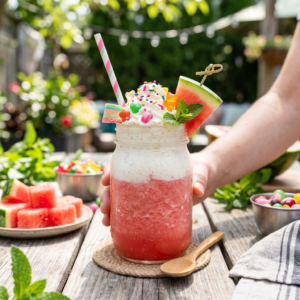
There is a specific kind of magic that happens when the peak of summer hits and the produce aisles turn into a sea of deep greens and vibrant reds. Among the titans of the season, two fruits stand undisputed: thewatermelonand thestrawberry. Individually, they are the hallmarks of picnics and sun-drenched afternoons. Together, they form a botanical symphony that is as hydrating as it is delicious.
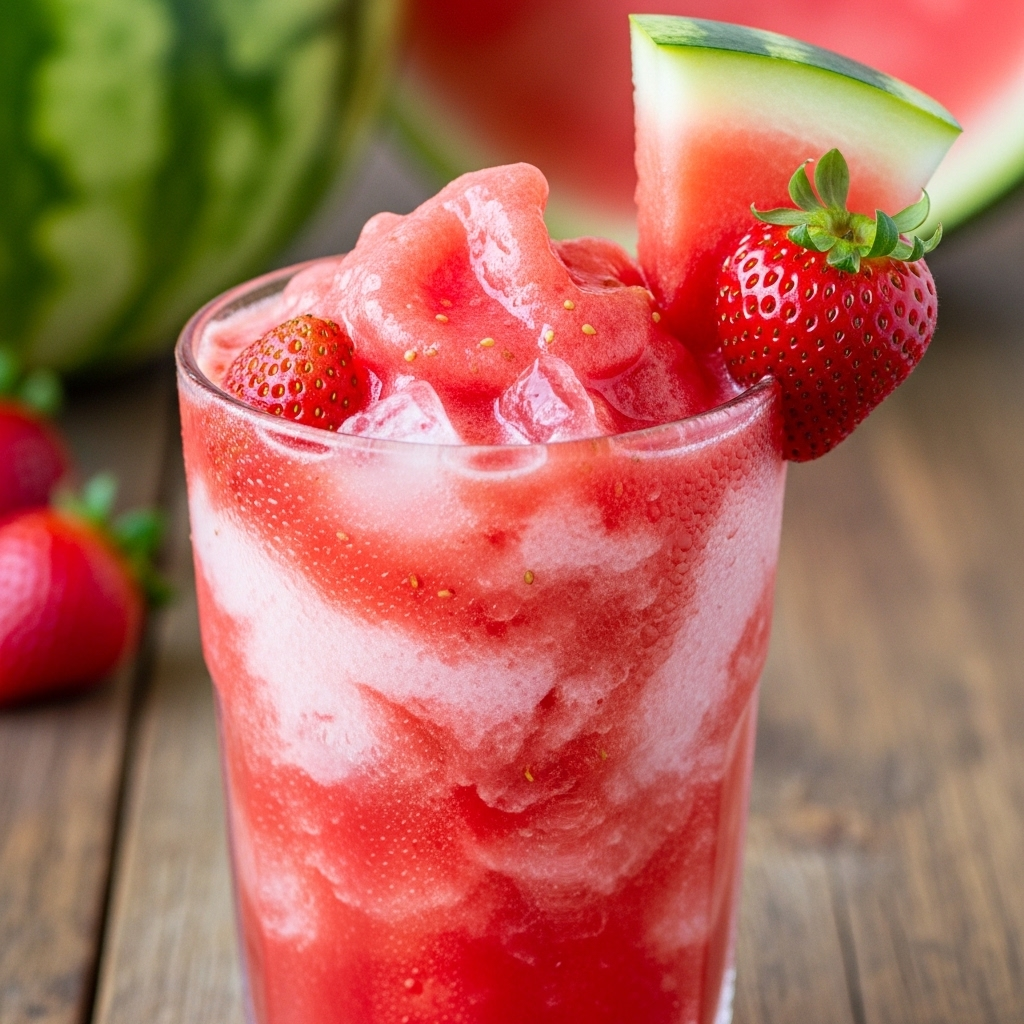
ThisWatermelon Strawberry Smoothieisn’t just a drink; it’s a bottled version of a July breeze. The origins of blending fruit with ice date back centuries to Mediterranean and Middle Easternsharbatand Latin Americanaguas frescas. However, the modern smoothie—creamy, chilled, and nutritionally dense—became a staple of the wellness movement in the late 20th century.
The beauty of this specific pairing lies in the contrast. Watermelon provides a crisp, thin sweetness and an incredible amount of hydration, while strawberries offer a jammy, floral depth and a hit of tartness. Whether you’re looking for a quick breakfast to jumpstart a humid morning or a kid-friendly snack that replaces sugary sodas, this recipe is your new gold standard.
2. Recipe Overview
- Cuisine Type:American / Contemporary Health
- Difficulty Level:Beginner
- Total Time:5–8 minutes
- Dietary Classifications:Vegan, Vegetarian, Gluten-Free, Dairy-Free, Paleo-friendly, No Added Sugar.
3. Equipment and Tools
To achieve the perfect “velvet” consistency, the right tools are essential.
- High-Speed Blender:A motor with at least 1000 watts is recommended to pulverize strawberry seeds and frozen fruit chunks effectively.
- Volume Capacity:A blender jar with a minimum capacity of1.5 liters (approx. 6 cups)to allow for proper aeration and movement of ingredients.
- Measuring Tools:A standard set of dry measuring cups and a liquid measuring jug.
- Chef’s Knife and Cutting Board:For cubing the fresh watermelon.
- Fine-Mesh Strainer (Optional):If you prefer a juice-like consistency without any pulp or seeds.
- Glassware:Highball glasses or Mason jars (16 oz / 475 ml capacity).
4. Serving Suggestions
A great smoothie is a feast for the eyes as much as the palate.
- Plating:Serve in a chilled glass. To chill, place your glassware in the freezer for 10 minutes prior to serving.
- Garnish:* A sprig offresh mintadds an aromatic element that cuts through the sweetness.
- A thinwedge of limeon the rim provides a zesty contrast.
- A fewheirloom strawberry slicesfloating on top.
- Complementary Sides:Pair with a light quinoa salad or avocado toast for a full brunch experience.
- Beverage Pairings:If serving at a brunch party, this smoothie can be used as a “mocktail” base. Alternatively, a splash of sparkling coconut water can add a refreshing fizz.
5. Nutritional Information
Per 16 oz Serving (Estimated)
| Nutrient | Amount |
| Calories | 145 kcal |
| Total Fat | 0.8g |
| Sodium | 5mg |
| Total Carbohydrates | 36g |
| Dietary Fiber | 5g |
| Sugars (Natural) | 28g |
| Protein | 2g |
| Vitamin C | 120% DV |
| Vitamin A | 18% DV |
Health Benefits:This smoothie is a powerhouse ofLycopene(from the watermelon), which supports heart health and skin protection, andAntioxidants(from strawberries) that combat oxidative stress.
6. Storage and Reheating
Smoothies are best enjoyed immediately, but if you have leftovers:
- Refrigeration:Store in an airtight container (like a glass jar filled to the brim to minimize oxidation) for up to12 hours. Shake vigorously before drinking as separation is natural.
- Freezing:Pour leftovers intosilicone ice cube trays. These “smoothie cubes” can be popped back into the blender later with a splash of liquid for a quick refresh.
- Note:Do not “reheat” this product; heat will destroy the fresh flavor profile and nutritional enzymes.
7. Expert Tips and Variations
- The “Freeze One” Rule:For a thick, frosty texture without watering it down with ice, ensure at least one of your fruits is frozen. We recommend usingfrozen strawberriesandfresh watermelon.
- Avoid the “Foam”:Watermelon is high in water and can sometimes create a foamy head. To fix this, blend on the lowest speed for the final 10 seconds to break up air bubbles.
- The Zest Factor:Adding a teaspoon of lime zest or a pinch of sea salt can “brighten” the flavor of a dull watermelon.
- Variations:
- The Creamy Version:Add 1/4 cup of Greek yogurt or coconut cream.
- The Protein Boost:Add one scoop of unflavored or vanilla plant-based protein powder.
- The Green Variant:Toss in a handful of baby spinach. The red of the fruit will turn a muddy brown, but the nutrition will skyrocket!
8. Ingredients Section
The Core Components
- 3 cups (approx. 450g)Fresh Watermelon, cubed and deseeded.
- 2 cups (approx. 300g)Frozen Strawberries (hulls removed).
- 1/2 cup (120ml)Coconut Water or Plain Water (only if needed for blending).
- 1 tbspFreshly squeezed Lime Juice.
- Optional:1 tsp Honey or Agave nectar (if fruit is not at peak sweetness).
Quality and Sourcing
- Watermelon:Look for a “field spot” (a yellow patch where it sat on the ground). This indicates the melon ripened on the vine.
- Strawberries:Organic is preferred as strawberries are often high on the “dirty dozen” list for pesticides.
- Substitutions:If you don’t have lime, lemon works. If you don’t have watermelon, cantaloupe offers a different but delicious melon profile.
9. Step-by-Step Instructions
- Prep the Watermelon:Slice the watermelon into manageable cubes. Ensure all black seeds are removed. If you use a “seedless” variety, the tiny white seeds are perfectly safe to blend.
- Layering the Blender:Always place yourliquid (lime juice and coconut water)at the bottom first. This creates a vortex that pulls the solids down. Follow with thefresh watermelon, then top with thefrozen strawberries.
- The Initial Pulse:Start by pulsing 5–6 times. This breaks down the large frozen strawberries so they don’t get stuck under the blades.
- High-Speed Blend:Increase the speed to high. Blend for45 to 60 seconds.
- Check Consistency:Stop the blender. If the mixture is too thick, add an extra splash of coconut water. If it’s too thin, add more frozen strawberries or a handful of ice.
- The Final Emulsion:Blend on the highest setting for another 10 seconds to ensure a completely smooth, silk-like texture.
- Taste Test:Sip a small amount. Adjust sweetness with honey or acidity with more lime if necessary.
- Serve:Pour immediately into chilled glasses and garnish.
10. Frequently Asked Questions (FAQ)
Q: Can I use a food processor if I don’t have a blender?
A: Yes, but the texture will be more “slushy” and less “smoothie.” You may need to stop and scrape down the sides more frequently.
Q: Is it okay to eat watermelon seeds?
A: The white “seeds” in seedless watermelons are actually empty seed coats and are fine to blend. Avoid blending large amounts of mature black seeds as they can add a bitter flavor.
Q: How do I make this a meal replacement?
A: To make this a balanced meal, you need healthy fats and protein. Add 1 tablespoon of chia seeds, a scoop of protein powder, and 1/4 cup of oats.
Q: My smoothie is too foamy, what happened?
A: Watermelon has a high water content and can aerate easily. Try blending at a lower speed or stirring the smoothie with a spoon for 30 seconds after blending to let the air escape.
Q: Can I use canned fruit?
A: It is not recommended. Canned fruit is often stored in heavy syrup and lacks the structural integrity and fresh enzymes needed for a refreshing smoothie.
Q: Does this smoothie help with hydration?
A: Absolutely. Watermelon is approximately 92% water and contains essential electrolytes like potassium, making this an excellent post-exercise recovery drink.