
1. Introduction
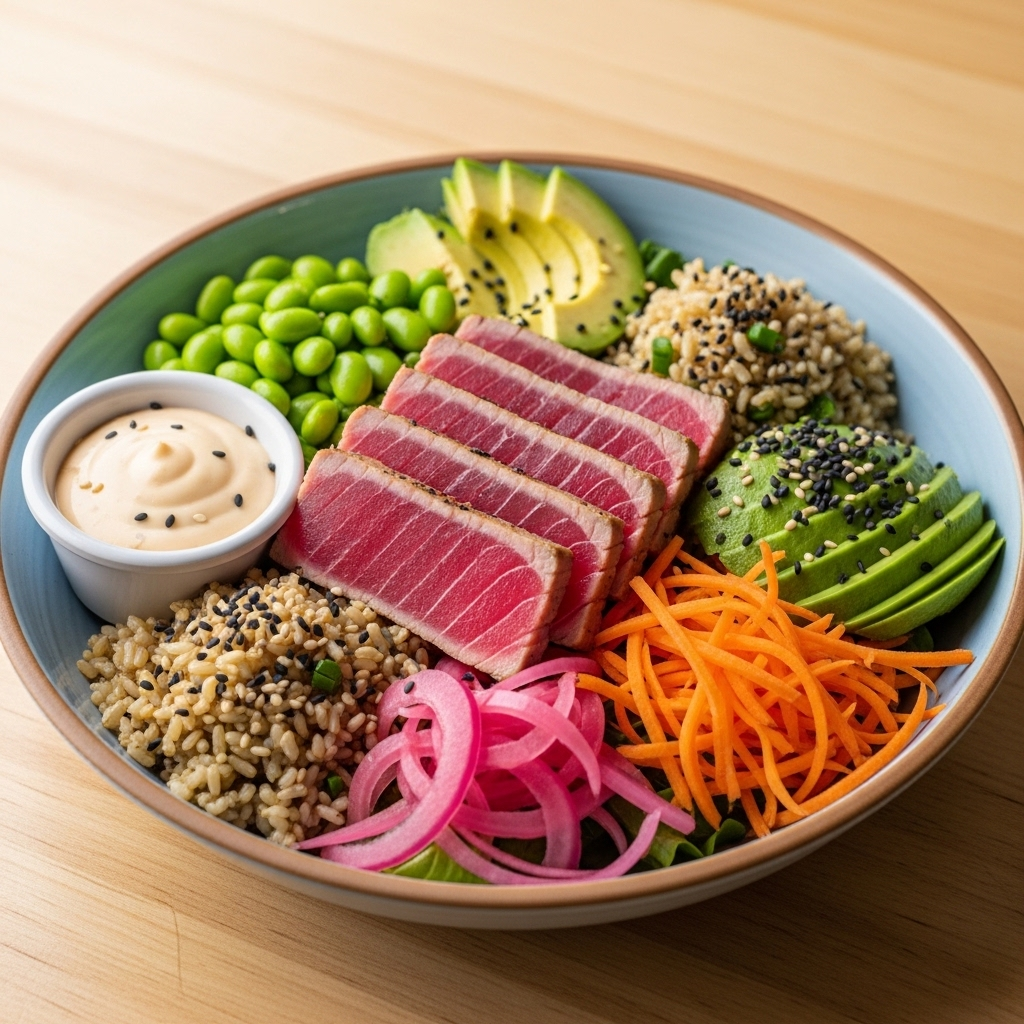
In the fast-paced world of modern nutrition, the “Bowl” has become more than just a vessel; it is a philosophy. TheTuna Protein Bowlrepresents the intersection of convenience and high-performance fuel. Whether you are a fitness enthusiast looking for a post-workout recovery meal or a busy professional needing a brain-boosting lunch that won’t lead to a mid-afternoon sugar crash, this dish is your new best friend.
Historically, tuna has been a staple of Mediterranean and Japanese diets, prized for its lean protein and heart-healthy Omega-3 fatty acids. This specific recipe draws inspiration from the HawaiianPoketradition while incorporating modern “macro-friendly” elements popularized by the West Coast wellness movement. It moves beyond the soggy tuna sandwiches of the past, elevating the humble tin of fish into a gourmet, textured, and vibrant experience.
The magic of this bowl lies in the contrast: the richness of the tuna, the creaminess of avocado, the crunch of fresh cucumbers, and the earthy base of complex carbohydrates. It is a dish that proves “healthy” never has to mean “boring.”
2. Recipe Overview
- Cuisine Type:Modern Fusion / Healthy American
- Difficulty Level:Easy (Beginner-friendly)
- Total Time:15 Minutes (10 mins prep, 5 mins assembly)
- Dietary Classifications:Gluten-Free, Dairy-Free, Pescatarian, Low-Carb (if using cauliflower rice).
3. Equipment and Tools
To achieve professional-grade results, ensure you have the following:
- Large Mixing Bowl:For tossing the tuna and dressing.
- Chef’s Knife:A sharp 8-inch blade for precision vegetable slicing.
- Cutting Board:Preferably wood or high-quality plastic.
- Fine-Mesh Sieve:To drain the tuna or rinse the rice/quinoa thoroughly.
- Serving Bowls:Deep, wide-rimmed bowls (at least 20oz/600ml volume) to allow for beautiful layering.
- Small Glass Jar:For emulsifying the dressing.
4. Serving Suggestions
Plating:Start with your base in the center. Arrange the toppings in “clocks” or wedges around the tuna to create a rainbow effect.
Garnish:Finish with a sprinkle offurikake(Japanese seasoning), toasted sesame seeds, or micro-greens.
Pairings:
- Beverage:A crisp, sparkling water with lime or an iced green tea.
- Wine:If enjoying for dinner, a dry Riesling or a chilled Rosé complements the acidity of the dressing.
5. Nutritional Information
(Estimated per serving)
| Nutrient | Amount |
| Calories | 485 kcal |
| Protein | 34g |
| Total Fat | 18g |
| Carbohydrates | 42g |
| Fiber | 7g |
Health Benefits:High in Vitamin B12 for energy, Selenium for thyroid health, and Omega-3s for cardiovascular support.
6. Storage and Reheating
- Refrigeration:Store components separately if possible. The assembled bowl stays fresh for up to24 hours.
- Freezing:Not recommended due to the high water content of the fresh vegetables.
- Reheating:This is best served cold or at room temperature. If using a warm base like rice, reheat only the rice before adding cold toppings.
7. Expert Tips and Variations
- Chef’s Secret:Always pat your tuna dry with a paper towel after draining. This allows the dressing to “stick” to the fish rather than sliding off.
- The “Keto” Flip:Replace the rice with shredded kale or cauliflower rice to drop the carb count significantly.
- Spice it Up:Add a teaspoon of Sriracha or diced jalapeños for a thermogenic kick.
- Common Mistake:Over-mixing. Be gentle when folding in the avocado to prevent it from turning into mush.
8. Ingredients Section
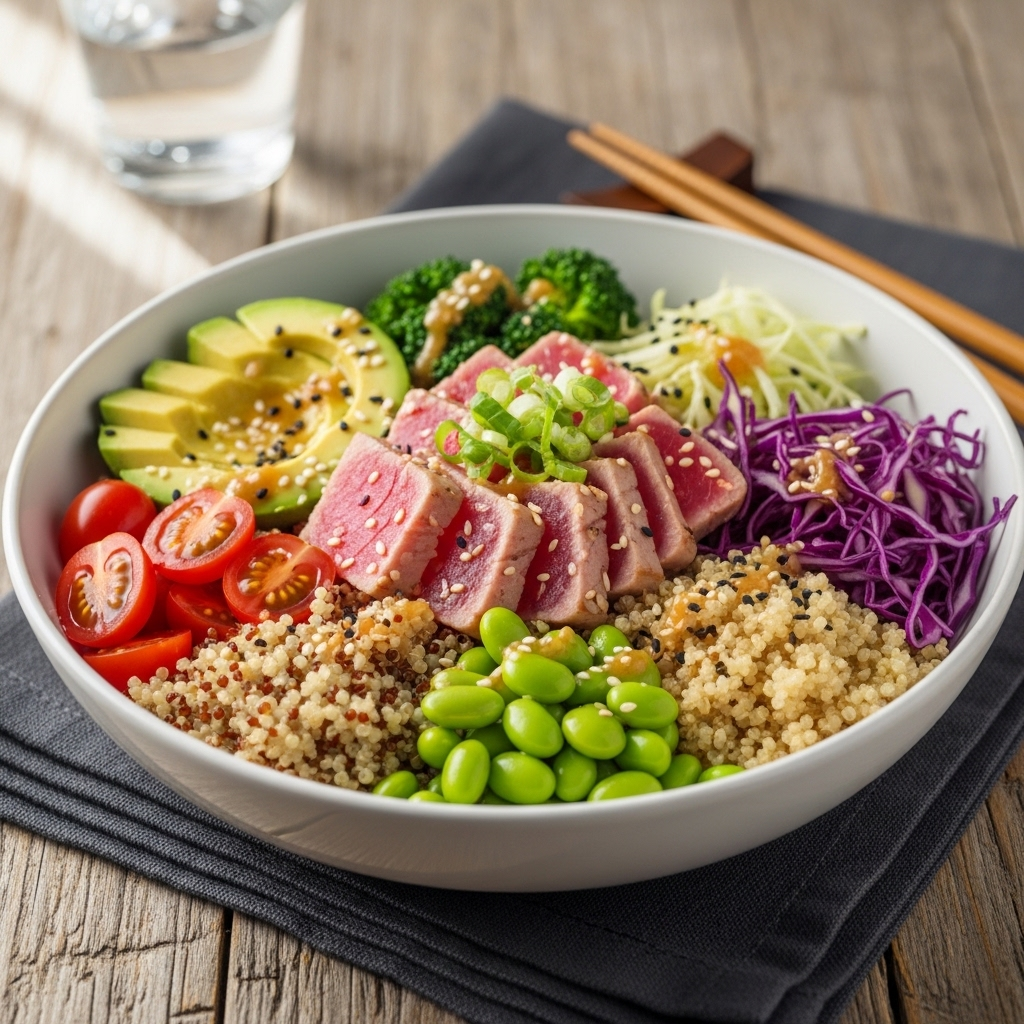
The Base (Choose one):
- 1 cup (150g) Cooked Brown Rice or Quinoa
- 2 cups (100g) Mixed Salad Greens
The Protein:
- 2 cans (5oz/142g each) High-quality Solid White Albacore Tuna in water.
The Fresh Mix-ins:
- 1/2 English Cucumber, sliced into half-moons.
- 1/2 Medium Avocado, sliced.
- 1/4 cup (40g) Edamame, shelled.
- 2 Radishes, thinly sliced.
- 1 Green Onion, finely chopped.
The Signature Dressing:
- 1 tbsp Soy Sauce (or Coconut Aminos for GF).
- 1 tsp Toasted Sesame Oil.
- 1 tsp Rice Vinegar.
- 1/2 tsp Fresh Grated Ginger.
9. Step-by-Step Instructions
- Prepare the Base:If using rice or quinoa, ensure it is cooked according to package instructions. Let it cool slightly so it doesn’t “cook” the fresh vegetables.
- Drain and Flake:Open the tuna cans. Drain thoroughly using a sieve. Move to a small bowl and flake gently with a fork—leave some larger chunks for better texture.
- Whisk the Dressing:In your glass jar, combine the soy sauce, sesame oil, vinegar, and ginger. Shake vigorously until emulsified.
- Marinate the Protein:Pour half of the dressing over the tuna. Let it sit for 2 minutes while you prep the veggies.
- Assembly:Place your base at the bottom of the serving bowl.
- Layering:Place the marinated tuna in the center. Arrange the cucumber, radishes, edamame, and avocado around the perimeter.
- Final Touch:Drizzle the remaining dressing over the entire bowl. Garnish with green onions and sesame seeds.
10. Frequently Asked Questions (FAQ)
Q: Can I use fresh tuna instead of canned?
A: Absolutely. Use sushi-grade Ahi tuna, sear it briefly for 30 seconds per side, and slice it into strips for a more “gourmet” feel.
Q: Is canned tuna safe to eat every day?
A: Due to mercury levels, it is generally recommended to limit Albacore tuna to 1-2 times per week. For daily consumption, “Light Tuna” (Skipjack) is a lower-mercury alternative.
Q: How do I keep the avocado from browning?
A: Toss the avocado slices in a little bit of lime juice or the rice vinegar from the dressing recipe to prevent oxidation.
Q: Can I make this meal-prep friendly?
A: Yes! Use a “Mason Jar” method. Put the dressing at the bottom, followed by the tuna, then the grains, and the hardy veggies on top. Add the avocado only on the day you plan to eat it.
Q: What if I don’t like ginger?
A: You can swap the ginger for a pinch of garlic powder or a dash of honey for a sweeter profile.