1. Introduction: The Soul of the Bowl
There is a specific kind of magic found in the humble “bowl” meal. It’s a culinary hug—a self-contained universe of texture, temperature, and flavor. Among the pantheon of quick, nutritious dinners, theEgg Chicken Bowlstands as a champion of versatility. Whether you know it as a variation of the JapaneseOyakodon(literally “mother and child” bowl) or a modern “macro-friendly” fitness staple, this dish bridges the gap between gourmet satisfaction and weeknight practicality.
The beauty of this recipe lies in the interplay of textures. You have the structural integrity of perfectly steamed grain, the savory chew of seasoned chicken, and the luxurious, velvet finish of a softly scrambled or poached egg. Historically, combining poultry and eggs has been a symbol of resourcefulness in farm kitchens across Asia and Europe. Today, it’s the ultimate solution for the busy professional, the student, and the home cook looking to fuel their body without sacrificing their soul.
This isn’t just fuel; it’s a canvas. From the sizzle of the pan to the final drizzle of toasted sesame oil, the Egg Chicken Bowl tells a story of balance. It’s salty, slightly sweet, earthy, and infinitely customizable.
2. Recipe Overview
- Cuisine Type:Asian-Fusion / Contemporary Healthy
- Difficulty Level:Easy to Intermediate
- Total Time:30 minutes (10 mins prep, 20 mins cook)
- Dietary Classifications:High-Protein, Dairy-Free (optional), Gluten-Free (if using Tamari).
3. Equipment and Tools
To achieve professional results, ensure you have the following tools prepared:
- 12-inch Non-Stick Skillet or Carbon Steel Wok:Essential for even heat distribution and preventing the eggs from sticking.
- 3-Quart Saucepan with Tight-Fitting Lid:Specifically for the rice or grain base.
- Chef’s Knife:A sharp 8-inch blade for precise dicing of the chicken.
- Liquid Measuring Cup:For measuring broth and sauces.
- Whisk or Fork:To aerate the eggs before cooking.
- Fine-Mesh Strainer:For rinsing rice to remove excess starch.
- Silicone Spatula:To gently fold the eggs without tearing them.
4. Serving Suggestions
Presentation is half the meal. Here is how to elevate your bowl:
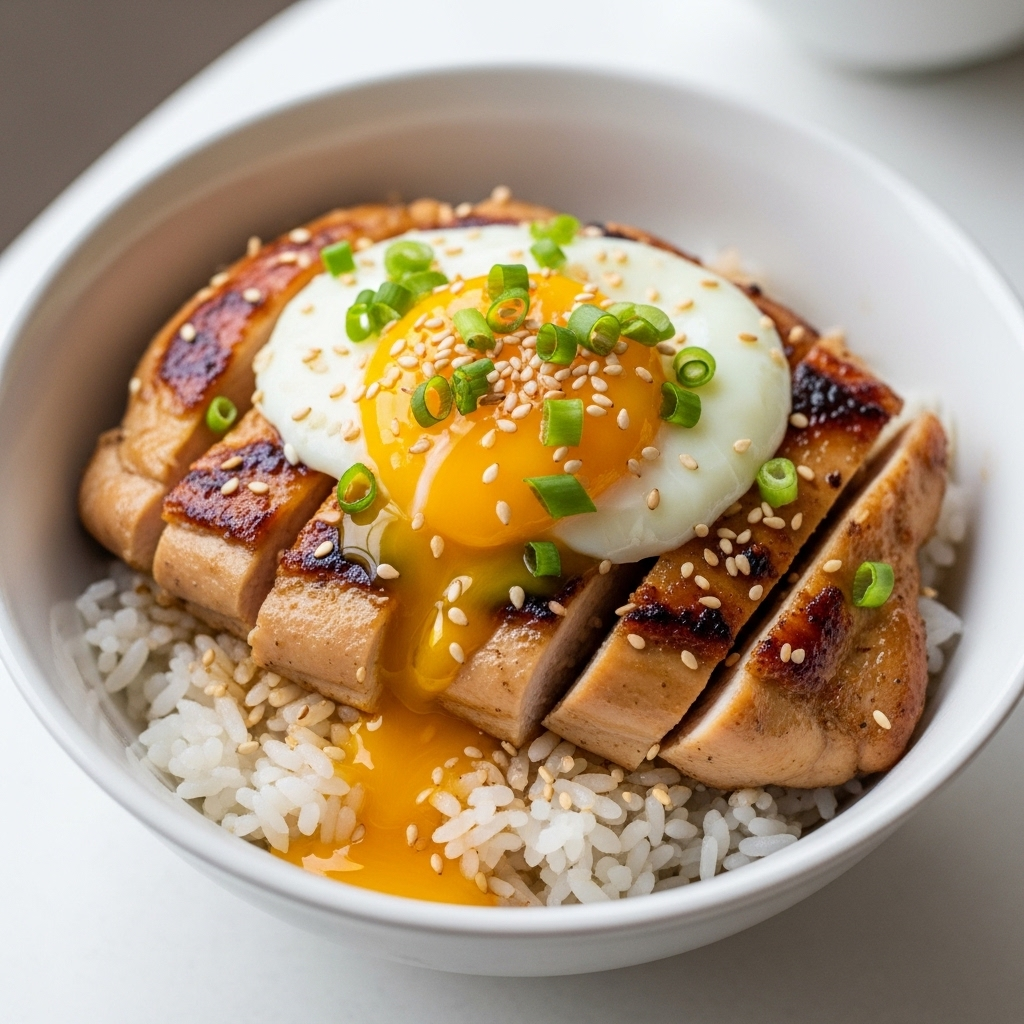
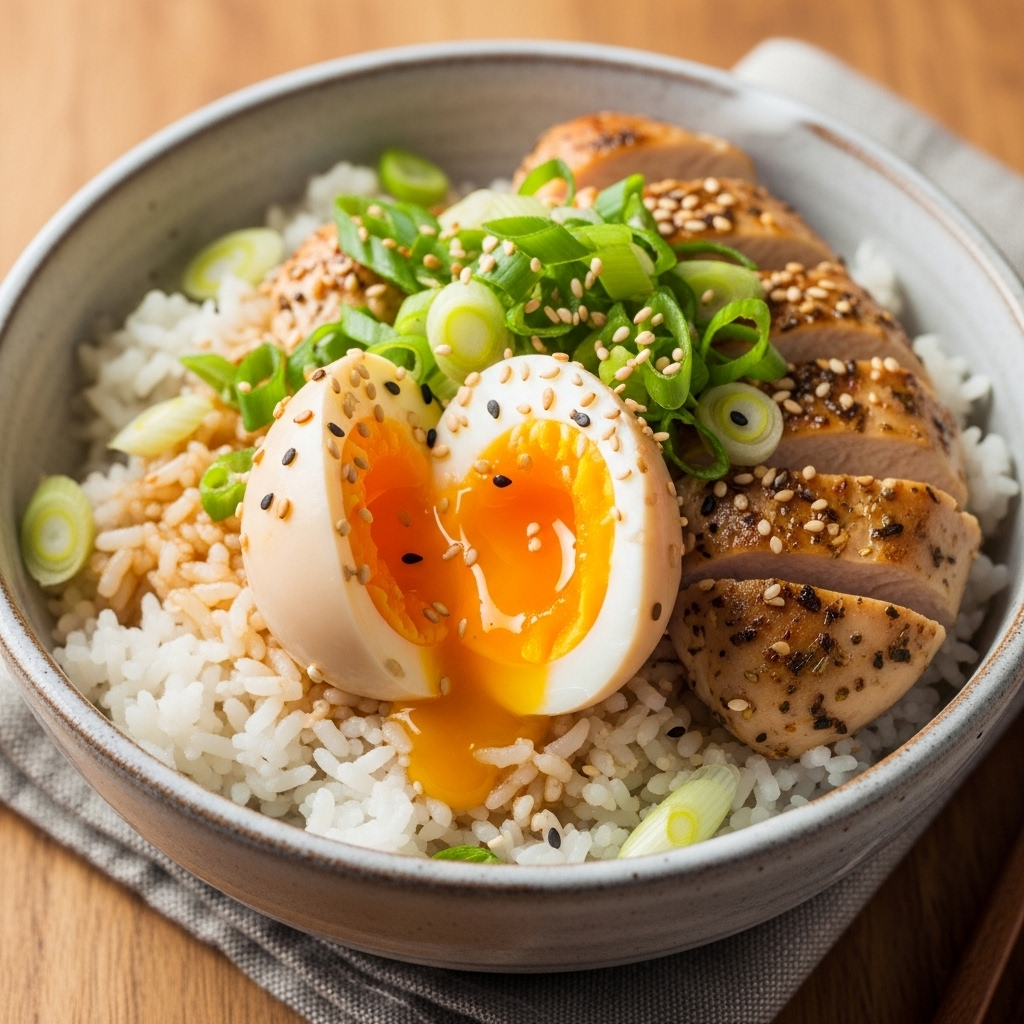
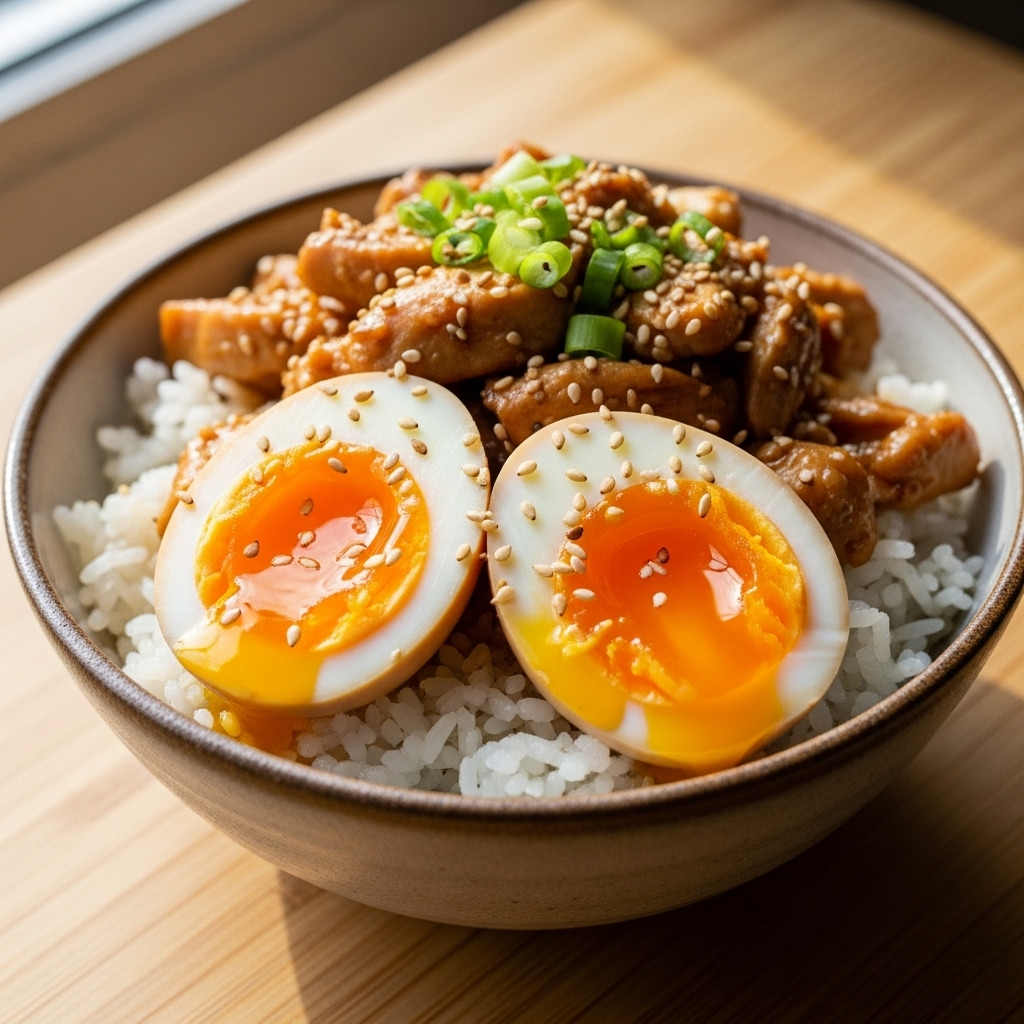
- Plating:Use a deep, wide-rimmed ceramic bowl. Start with a fluffy bed of rice, create a slight well in the center for the chicken, and drape the eggs over the top.
- Garnishes:Freshly sliced scallions (cut on a bias), toasted sesame seeds, and a pinch ofshichimi togarashi(Japanese seven-spice) or red pepper flakes.
- Sides:A crisp cucumber salad with rice vinegar or a side of steamed bok choy provides a refreshing crunch to balance the richness.
- Beverage Pairing:A crisp Sapporo beer, a chilled Sauvignon Blanc, or a hot cup of Genmaicha (brown rice green tea).
5. Nutritional Information (Per Serving)
| Metric | Amount |
| Calories | 520 kcal |
| Protein | 42g |
| Carbohydrates | 45g |
| Fats | 18g |
| Fiber | 2g |
Health Benefits:This bowl is an amino acid powerhouse. The chicken provides lean protein for muscle repair, while the eggs offer choline for brain health and Vitamin D.
6. Storage and Reheating
- Refrigeration:Store in an airtight container for up to 3 days.
- Freezing:Not recommended for the cooked egg portion, as the texture becomes rubbery. However, the cooked chicken and rice freeze well for up to 2 months.
- Reheating:Microwave on medium power for 2 minutes, adding a teaspoon of water to keep the rice moist. For best results, reheat the chicken and rice first, then add a fresh egg on top.
7. Expert Tips and Variations
Professional Tips
- The “Velveting” Technique:Toss your raw chicken in a teaspoon of cornstarch before searing. This creates a protective barrier that keeps the meat incredibly juicy.
- Egg Temperature:Use room-temperature eggs. They incorporate better and cook more evenly than cold eggs straight from the fridge.
Variations
- The Spicy Kick:Add 1 tablespoon of Gochujang (Korean chili paste) to the sauce.
- The Low-Carb Swap:Replace white rice with cauliflower rice or a bed of sautéed kale.
- The “Luxury” Bowl:Drizzle with truffle oil and add sautéed shiitake mushrooms.
8. Ingredients Section
The Base
- 1.5 cups Long-grain white rice or Jasmine rice (approx. 270g)
- 2.25 cups Water or Chicken Bone Broth ($540ml$)
The Protein
- 1 lb (450g) Boneless, skinless chicken thighs or breast, cut into 1-inch cubes.
- 4 Large organic eggs.
The Sauce & Aromatics
- 3 tbsp Low-sodium soy sauce (or Tamari for GF)
- 1 tbsp Mirin (Japanese sweet rice wine)
- 1 tsp Freshly grated ginger
- 2 cloves Garlic, minced
- 1 tbsp Neutral oil (avocado or grapeseed)
9. Step-by-Step Instructions
- Prepare the Grain:Rinse rice under cold water until the water runs clear. Combine with water/broth in a saucepan. Bring to a boil, then reduce to a low simmer, cover, and cook for 15 minutes. Let it sit covered for 5 minutes before fluffing.
- Sear the Chicken:Heat oil in the skillet over medium-high heat. Add chicken cubes in a single layer. Let them sear undisturbed for 3 minutes to develop a golden-brown crust.
- Infuse Aromatics:Add garlic and ginger to the chicken. Stir-fry for 60 seconds until fragrant.
- Deglaze:Pour in the soy sauce and mirin. Reduce heat to medium and let the sauce simmer and coat the chicken (about 3-4 minutes).
- The Egg Finale:Whisk eggs lightly in a bowl. Pour them directly over the chicken. For a “ribbon” effect, let them sit for 20 seconds, then gently push the cooked edges toward the center with your spatula. Remove from heat while eggs still look slightly “wet”—residual heat will finish the job.
- Assemble:Divide rice into bowls, top with the chicken and egg mixture, and add your desired garnishes.
10. Frequently Asked Questions (FAQ)
Q: Can I use chicken breast instead of thighs?
A: Yes, but be careful not to overcook them, as breast meat dries out faster. Use the “velveting” tip mentioned in Section 7!
Q: How do I make this vegetarian?
A: Replace the chicken with firm pressed tofu or tempeh and use vegetable broth for the rice.
Q: Is Mirin necessary?
A: Mirin adds a distinct sweetness and shine. If you don’t have it, use 1 tablespoon of water mixed with 1 teaspoon of sugar or honey.
Q: Why did my eggs turn out rubbery?
A: You likely cooked them too long over high heat. Always pull the pan off the burner while the eggs still look a bit underdone.
Q: What is the best rice to use?
A: Short-grain or Jasmine rice works best as they have a slight stickiness that holds the sauce well.