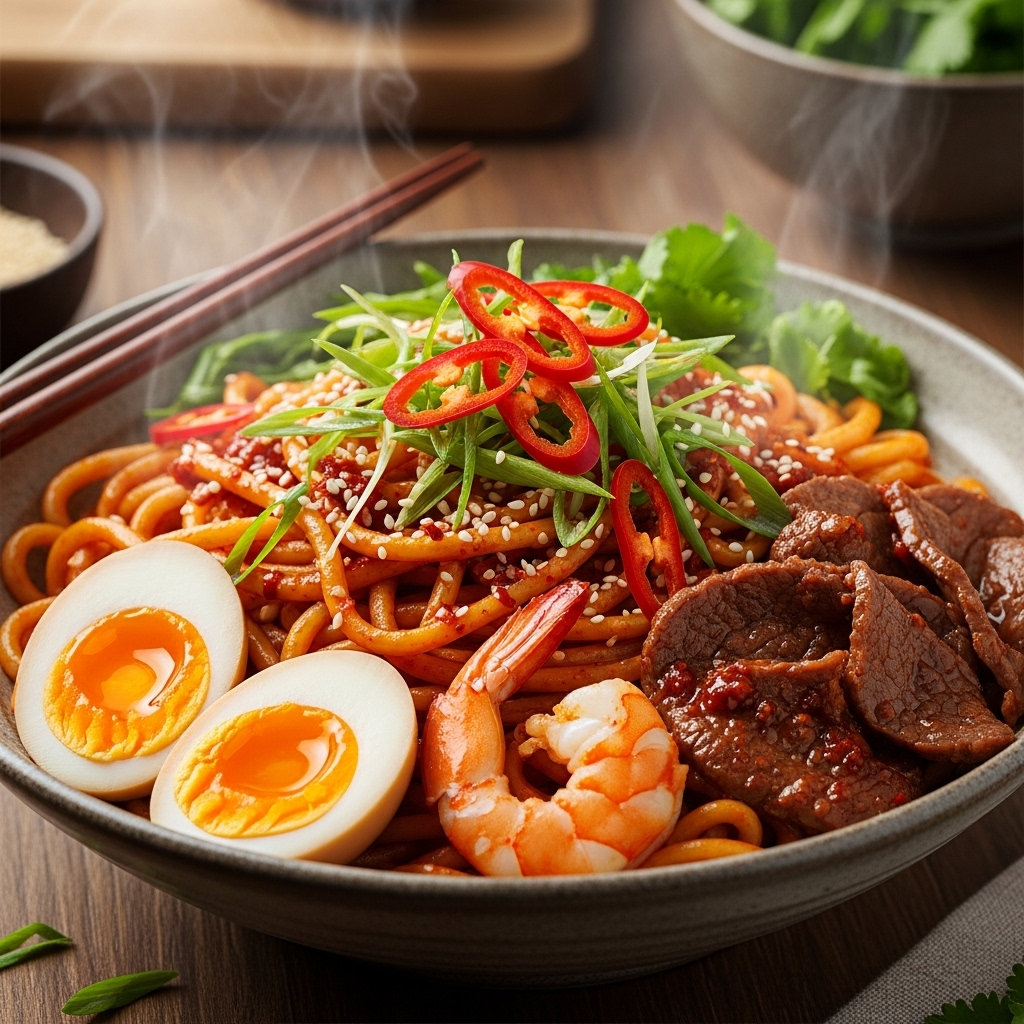
1. Introduction: The Soul of the Spice
There is a specific kind of magic that happens when hot oil hits a pile of raw aromatics. The instant sizzle, the fragrant cloud of toasted garlic, and the deep, crimson bloom of chili flakes create a sensory experience that defines comfort food for millions.Spicy Noodles, specifically those inspired by the “Youpo Mian” (oil-sprinkled noodles) of Shaanxi province, represent the perfect marriage of simplicity and intensity.
This dish isn’t just about heat; it’s about the balance ofmǎ(numbing) andlà(spicy). Originating from the bustling street stalls of Northwest China, these noodles were designed to be fast, filling, and invigorating. Whether you are a student looking for a midnight snack or a seasoned home cook craving a punchy lunch, this recipe delivers a restaurant-quality “noodle pull” in less time than it takes to order takeout. The beauty lies in the customization—it’s a canvas for your favorite greens, proteins, and levels of capsaicin.
2. Recipe Overview
- Cuisine Type:Chinese (Shaanxi-inspired)
- Difficulty Level:Easy
- Prep Time:5 Minutes
- Cook Time:5 Minutes
- Total Time:10 Minutes
- Dietary Classifications:Vegetarian (can be made Vegan), Dairy-Free.
3. Equipment and Tools
To achieve the perfect sizzle without burning your aromatics, quality tools are essential.
- Large Pasta Pot:Minimum 5-quart capacity to allow noodles to move freely.
- Small Saucier or Milk Pan:A 1-cup capacity stainless steel or cast iron pot for heating the oil.
- Heat-Proof Mixing Bowls:Large ceramic or stainless steel bowls (plastic may melt or stain).
- Spider Strainer or Tongs:For transferring noodles directly from water to bowl.
- Chef’s Knife:For fine-mincing garlic and ginger.
4. Serving Suggestions
Plating:Serve in deep, wide bowls to allow for aggressive tossing. The noodles should be coated thoroughly until they glisten.
Garnishes:* Toasted sesame seeds for crunch.
- Fresh cilantro and julienned scallions (white and green parts).
- A side of crushed peanuts or fried shallots.
Pairings:
- Side Dish:Smashed cucumber salad with black vinegar to cut through the oil.
- Beverage:A crisp Lager, a cold glass of soy milk, or iced Oolong tea.
5. Nutritional Information (Per Serving)
- Calories:450 kcal
- Carbohydrates:65g
- Protein:12g
- Fat:18g
- Fiber:3g
- Health Benefits:Garlic and ginger provide anti-inflammatory properties, while capsaicin in chili flakes can boost metabolism.
6. Storage and Reheating
- Refrigeration:Store leftovers in an airtight container for up to 3 days.
- Freezing:Not recommended, as the noodles lose their structural integrity.
- Reheating:Microwave with a teaspoon of water covered with a damp paper towel, or flash-fry in a wok with a splash of soy sauce to revive the texture.
7. Expert Tips and Variations
- The Oil Temperature:The oil should be shimmering and just starting to smoke ($190°C$ or $375°F$). If it’s too cold, the spices won’t bloom; if it’s too hot, the chili will burn and turn bitter.
- Noodle Choice:Use wide, flat wheat noodles for maximum surface area.
- Variation (The Protein Punch):Add a fried egg or ground pork sautéed with fermented bean paste.
- Variation (Gluten-Free):Substitute wheat noodles with wide rice noodles and use Tamari instead of soy sauce.
8. Ingredients Section
Measurements provided in Metric and Imperial.
The Base:
- Noodles:200g (7oz) Fresh wide wheat noodles or dried “Knife-cut” noodles.
- Greens:1 cup Bok choy or Yu Choy, halved.
The “Aromatic Pile”:
- Garlic:3 cloves, finely minced.
- Ginger:1 tsp, grated.
- Green Onions:2 stalks, finely chopped.
- Chili Flakes:1–2 tbsp Szechuan Chili Flakes (Goergeogaru works as a milder sub).
- Szechuan Peppercorn Powder:1/2 tsp (optional, for the “numbing” effect).
The Sauce & Oil:
- Light Soy Sauce:1 tbsp (15ml).
- Chinkiang Black Vinegar:1 tbsp (15ml) —Crucial for authenticity.
- Sugar:1/2 tsp (to balance acidity).
- Neutral Oil:3 tbsp (45ml) Vegetable, Grapeseed, or Canola oil.
9. Step-by-Step Instructions
- Boil the Noodles:Bring a large pot of salted water to a rolling boil. Add noodles and cook according to package instructions. In the last 60 seconds, drop in your leafy greens to blanch them.
- Prepare the Bowl:While the noodles cook, place the soy sauce, black vinegar, and sugar in the bottom of your serving bowl.
- The Aromatic Stack:Drain the noodles and greens. Place them directly into the serving bowl on top of the sauce. On top of the noodles, create a small mound containing the minced garlic, ginger, chopped scallions, chili flakes, and peppercorn powder.Do not stir yet.
- Heat the Oil:In a small pan, heat the neutral oil until it reaches a faint smoke point.
- The Sizzle:Carefully pour the hot oil directly over the pile of garlic and chili flakes. You should hear a loud, satisfying sizzle. This “blooms” the spices instantly.
- The Toss:Using chopsticks or tongs, toss the noodles vigorously until every strand is coated in the red, aromatic oil and the sauce from the bottom.
- Finish:Garnish with sesame seeds and serve immediately while steaming.
10. Frequently Asked Questions (FAQ)
Q: Can I use standard spaghetti?
A: Yes, in a pinch! Use a thicker spaghetti and add a pinch of baking soda to the boiling water to give them a more “alkaline,” chewy Asian-noodle texture.
Q: My chili flakes turned black. What happened?
A: Your oil was too hot. Let the oil sit for 30 seconds after it starts smoking before pouring, or ensure you have enough fresh aromatics (like green onions) to act as a heat buffer.
Q: What if I can’t find Chinkiang Black Vinegar?
A: You can substitute with Balsamic vinegar (though it’s sweeter) or a mix of Rice Vinegar and a drop of Worcestershire sauce.
Q: Is this dish very spicy?
A: It depends on the chili flakes. Szechuan flakes are medium-heat but high-flavor. You can reduce the amount to 1/2 tablespoon for a milder experience.
Q: Should I rinse the noodles after boiling?
A: No! You want the natural starch on the noodles to help the oil and sauce emulsify and stick to the surface.