1. Introduction
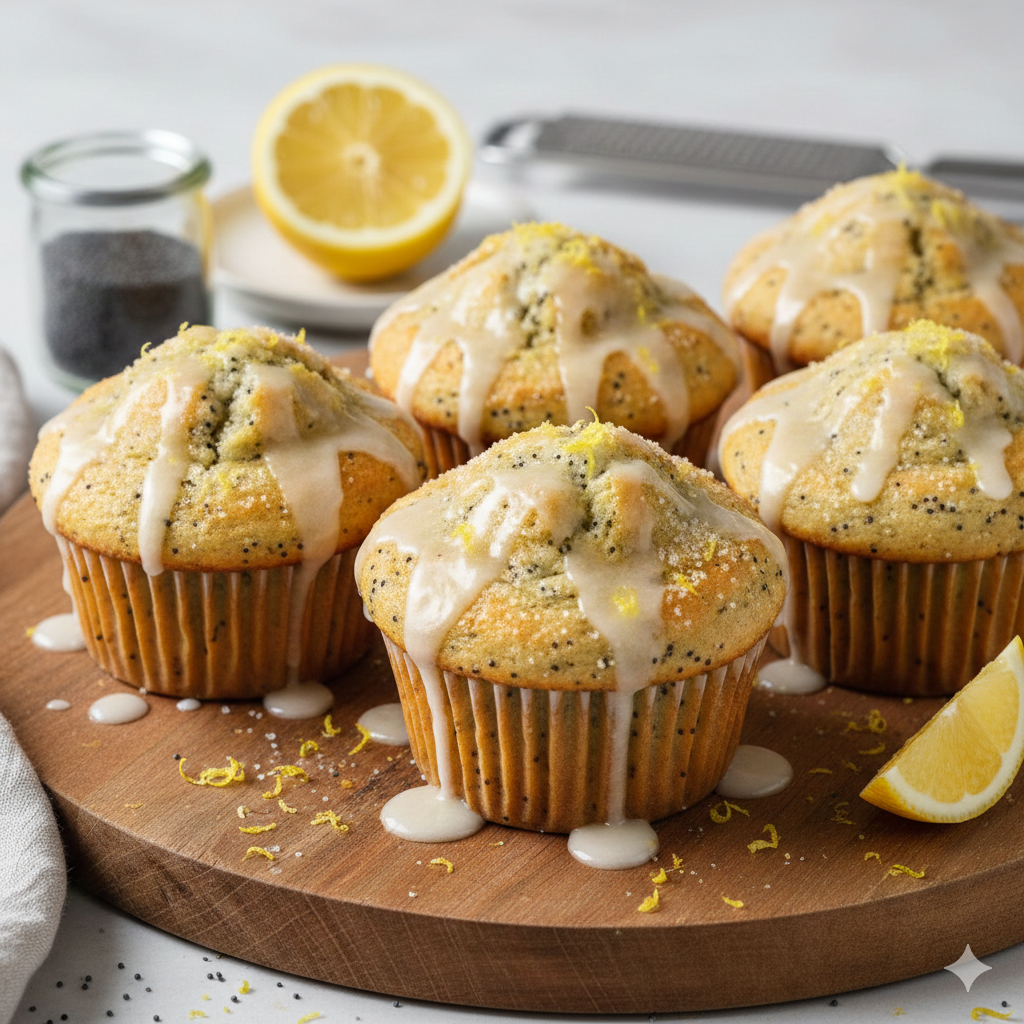
There is something inherently cheerful about the scent of fresh lemon zest hitting a warm oven. For many, theLemon Poppy Seed Muffinis the quintessential “cafe” pastry—the one you reach for when you want something that feels lighter than a double-chocolate muffin but more indulgent than a piece of toast.
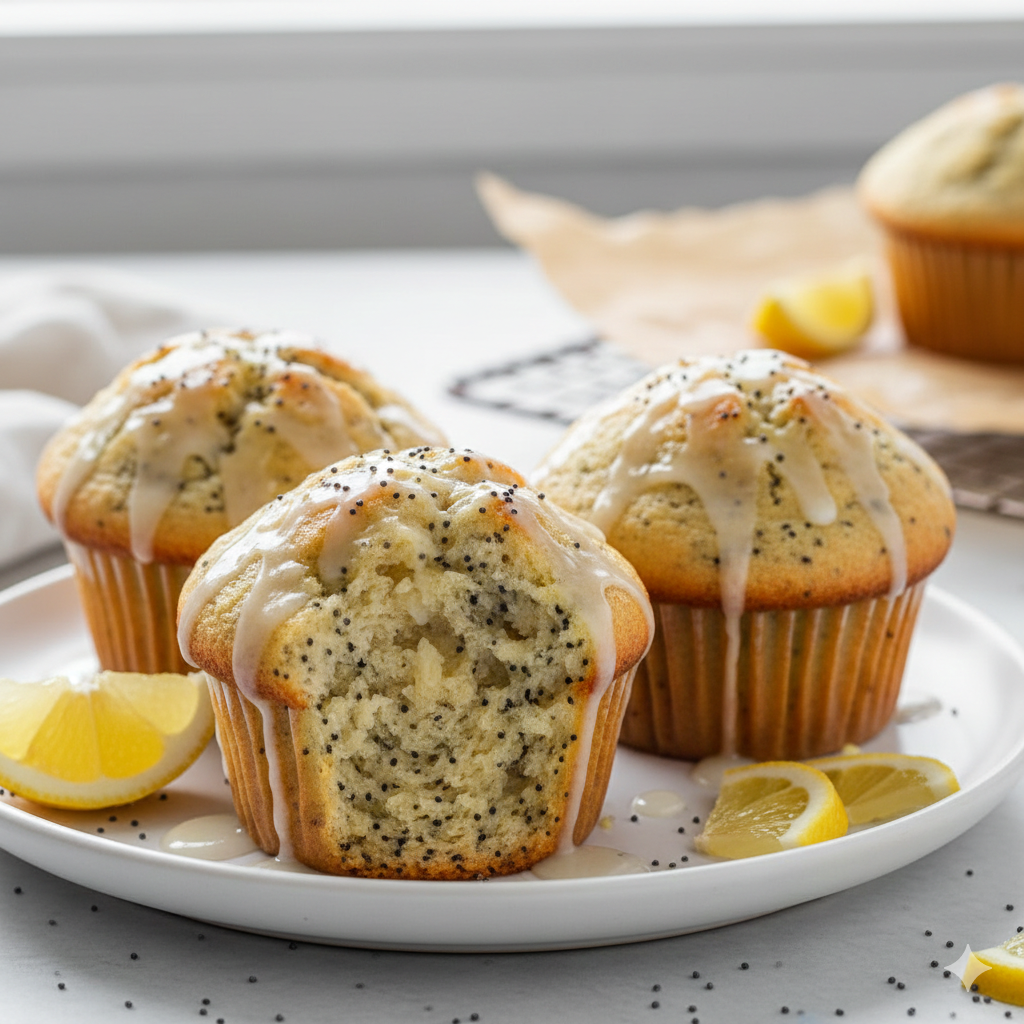
The marriage of lemon and poppy seeds isn’t just about aesthetics; it’s a masterclass in textural contrast. The tiny, slate-colored seeds provide a subtle, nutty “pop” that offsets the tender, buttery crumb of the cake. This recipe traces its roots back to the European tradition of using oilseeds in baking, a practice common in Central and Eastern Europe that eventually found its way into the high-domed American muffin culture of the 20th century.
In this guide, we aren’t just making a quick breakfast; we are engineering the perfect muffin. We’re talking about that elusive “high dome” top, a moist interior that doesn’t turn to sawdust the next day, and a glaze that delivers a sharp, sophisticated citrus punch.
2. Recipe Overview
- Cuisine Type:American Bakery
- Difficulty Level:Intermediate (requires attention to mixing technique)
- Prep Time:20 minutes
- Cook Time:18–22 minutes
- Total Time:Approx. 45 minutes
- Dietary Classifications:Vegetarian (contains dairy and eggs)
3. Equipment and Tools
To achieve professional results, specific tools are non-negotiable.
- Muffin Tin:Standard 12-cup capacity. Heavy-gauge aluminum is preferred for even heat distribution.
- Mixing Bowls:One large bowl for dry ingredients, one medium for wet.
- Whisk & Rubber Spatula:For aerating dry goods and folding the batter without overworking it.
- Microplane/Zester:Essential for removing the yellow flavedo (zest) without hitting the bitter white pith.
- Digital Kitchen Scale:Highly recommended for flour accuracy.
- Scoop:A 3-ounce (large) spring-loaded cookie scoop for uniform portioning.
- Cooling Rack:To prevent the bottom of the muffins from steaming and becoming soggy.
4. Serving Suggestions
These muffins are versatile enough for a brunch spread or a sophisticated afternoon tea.
- Plating:Serve warm with a small ramekin of salted honey butter or lemon curd for extra decadence.
- Garnish:A thin slice of candied lemon or a sprig of fresh mint adds a professional touch.
- Pairings:
- Beverage:Pair with Earl Grey tea (the bergamot complements the lemon) or a cold-brew coffee.
- Wine:If serving at brunch, a crisp Prosecco or a late-harvest Riesling balances the acidity.
5. Nutritional Information
(Per serving, based on 12 muffins)
| Nutrient | Amount |
| Calories | 310 kcal |
| Total Fat | 14g |
| Saturated Fat | 8g |
| Cholesterol | 55mg |
| Sodium | 210mg |
| Total Carbohydrates | 42g |
| Dietary Fiber | 1g |
| Sugars | 22g |
| Protein | 5g |
Health Note:Lemons provide Vitamin C, and poppy seeds offer trace amounts of calcium and magnesium. To reduce sugar, the glaze can be omitted.
6. Storage and Reheating
- Room Temperature:Store in an airtight container for up to 3 days. Tip: Line the container with a paper towel to absorb excess moisture and keep the tops from getting “sticky.”
- Refrigeration:Not recommended, as it can dry out the crumb.
- Freezing:Wrap individual muffins in plastic wrap and place in a freezer bag. They stay fresh for up to 3 months.
- Reheating:Microwave for 15 seconds or place in a 300°F (150°C) oven for 5 minutes to restore the “just-baked” texture.
7. Expert Tips and Variations
Professional Chef Tips
- Rub the Zest:Before adding liquid, rub the lemon zest into the granulated sugar with your fingertips. This releases the essential oils and perfumes the entire muffin.
- The “High-Heat” Hack:Start baking at 425°F for 5 minutes, then drop to 350°F. This initial blast of heat triggers a rapid steam release, creating that beautiful domed top.
Creative Variations
- Blueberry Lemon:Add 1 cup of fresh blueberries tossed in a teaspoon of flour.
- Almond Twist:Replace half of the vanilla extract with almond extract.
- Gluten-Free:Swap the flour for a 1:1 gluten-free baking blend containing xanthan gum.
8. Ingredients Section
The Dry Base
- All-Purpose Flour:375g (approx. 3 cups)
- Granulated Sugar:200g (1 cup)
- Poppy Seeds:2 tablespoons
- Baking Powder:1 tablespoon
- Baking Soda:1/2 teaspoon
- Kosher Salt:1/2 teaspoon
The Wet Aromatics
- Unsalted Butter (Melted and cooled):115g (1/2 cup)
- Sour Cream or Greek Yogurt:240g (1 cup) –Provides acidity for lift and moisture.
- Eggs (Large, room temperature):2
- Fresh Lemon Juice:60ml (1/4 cup)
- Lemon Zest:2 tablespoons (approx. 2 large lemons)
- Vanilla Extract:1 teaspoon
The Lemon Glaze
- Powdered Sugar:120g (1 cup)
- Lemon Juice:2-3 tablespoons

9. Step-by-Step Instructions
- Prep the Environment:Preheat your oven to 425°F (218°C). Line a 12-cup muffin tin with paper liners or grease heavily with butter.
- Infuse the Sugar:In a small bowl, combine the granulated sugar and lemon zest. Rub them together until the sugar is moist and fragrant.
- Mix Dry Ingredients:In a large bowl, whisk together the lemon-sugar, flour, poppy seeds, baking powder, baking soda, and salt. Ensure the poppy seeds are evenly distributed.
- Emulsify the Wet:In a separate bowl, whisk the melted butter, sour cream, eggs, lemon juice, and vanilla until smooth.
- The “Fold” Technique:Pour the wet ingredients into the dry. Using a rubber spatula, gently fold the mixture.Stopas soon as no streaks of dry flour remain. The batter should be thick and slightly lumpy.
- Rest the Batter (Optional but Recommended):Let the batter sit for 10 minutes. This allows the starch granules to hydrate, leading to a better rise.
- Portion:Divide the batter evenly among the 12 muffin cups. They should be nearly full.
- Bake:Place in the oven. Bake at 425°F for 5 minutes, then, without opening the door, reduce the heat to 350°F (175°C). Bake for another 13–15 minutes.
- Test for Doneness:Insert a toothpick into the center. It should come out clean or with a few moist crumbs.
- Glaze:Whisk the glaze ingredients. Drizzle over the muffins while they are still slightly warm so the glaze sets into a thin, crackly shell.
10. Frequently Asked Questions (FAQ)
Q: Why are my muffins tough?
A: You likely overmixed the batter. Overworking the flour develops gluten, which is great for bread but makes muffins rubbery.
Q: Can I use bottled lemon juice?
A: Avoid it if possible. Bottled juice lacks the bright, floral notes of fresh lemons and often has a metallic aftertaste.
Q: My poppy seeds all sank to the bottom. Why?
A: This usually happens if the batter is too thin. Ensure you are using the full amount of sour cream/yogurt to maintain a thick consistency that suspends the seeds.
Q: Can I substitute the sour cream?
A: Yes, full-fat Greek yogurt is an excellent 1:1 substitute. It provides the same acidity needed to react with the baking soda.
Q: How do I get the “Bakery Style” sparkle on top?
A: Sprinkle the tops withTurbinado(raw) sugar right before putting them in the oven for a crunchy, professional finish.