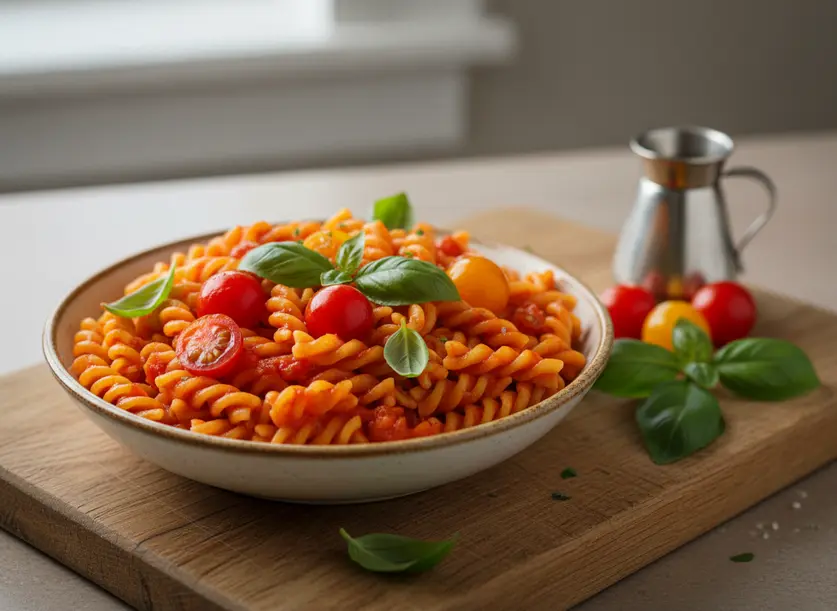
Ingredients
Method
- Fill a large pot with plenty of water and add a generous pinch of salt. Bring it to a rolling boil, then add your pasta. Cook according to package directions until it's al dente, which means it's firm to the bite but not hard.
- While the pasta cooks, heat a glug of olive oil in a large skillet or pan over medium heat. Add finely chopped garlic and onion, cooking until softened and fragrant, about 3-5 minutes. Be careful not to burn the garlic.
- Pour in your canned tomatoes, along with some vegetable or chicken broth. Bring the sauce to a gentle simmer. If you like, add dried herbs like oregano or a pinch of red pepper flakes for a little kick at this stage.
- Before draining your pasta, scoop out about a cup of the starchy cooking water. This magic ingredient helps emulsify your sauce and makes it super silky.
- Drain the cooked pasta and immediately add it directly to your skillet with the simmering sauce. Toss everything together vigorously, allowing the pasta to absorb some of the sauce's flavor.
- Add reserved pasta water, a tablespoon at a time, if the sauce seems too thick or needs to cling better to the pasta. Keep tossing until the sauce coats every strand beautifully.
- Remove the pan from the heat. Stir in a pat of butter if you want extra richness, and then add fresh basil or parsley. Finish with a generous grating of Parmesan cheese. A squeeze of lemon juice can brighten everything up too!
Notes
Always cook your pasta in generously salted water; it should taste like the sea. Never overcook your pasta – al dente is key. Always reserve pasta water, it's liquid gold for emulsifying the sauce. Taste and adjust your seasoning as you go. Leftover pasta keeps well in the fridge for 3-4 days; reheat gently on the stovetop with a splash of water or broth. To prevent sticky pasta, use a large pot with plenty of water, salt generously, stir frequently, and do not overcook.