
1. Introduction
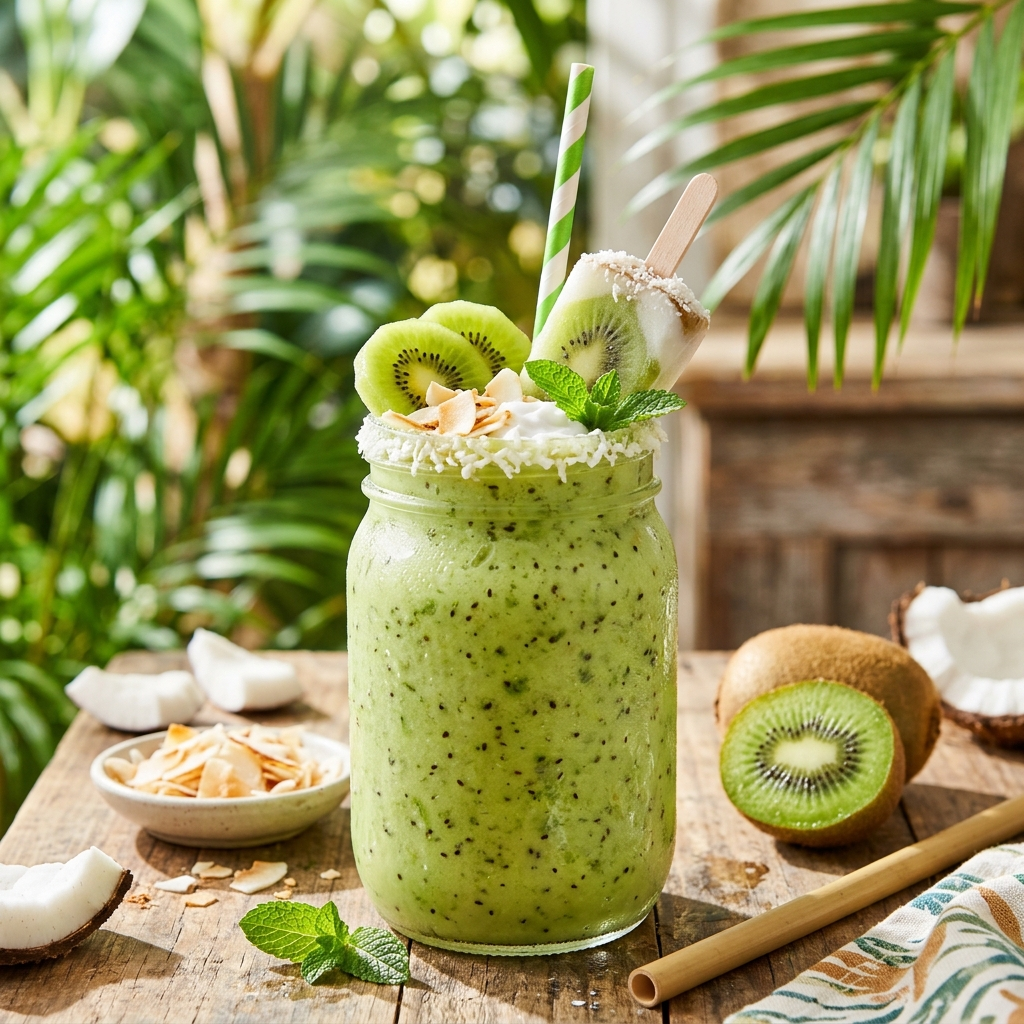
Imagine stepping onto a sun-drenched tropical beach, where the ocean breeze carries the scent of sweet coconut and the rustle of palm leaves provides a soothing rhythm. You can capture that exact sensory escape in a single glass. TheKiwi Coconut Pop Smoothieis more than just a quick breakfast option; it is a vibrant, multi-layered experience designed to awaken your palate and revitalize your body.
The Flavor Symphony
At its core, this smoothie plays on the brilliant contrast between the sharp, refreshing tang of ripe kiwifruit and the deep, velvety richness of coconut cream. Kiwifruit, with its emerald-green flesh and tiny, crunchy black seeds, offers an assertive acidity and brightness. When blended with the sweet, tropical undertones of coconut, that sharp bite softens into a perfectly balanced culinary melody. To elevate it from a standard blended drink to a “pop” smoothie, we incorporate a playful element: a visually striking swirl of dark chia seeds and frozen kiwi chunks that mimic the nostalgic texture of a frozen ice pop.
A Modern Twist on Tropical Classics
While tropical smoothie blends often rely heavily on bananas or heavy dairy bases, this recipe carves out its own modern identity. It pays homage to classic South Pacific flavor combinations—where coconut milk is a dietary staple used to balance bright citrus and tropical fruits—but adapts them for the contemporary wellness enthusiast. This smoothie is naturally plant-based, dairy-free, and refined sugar-free, proving that indulgent comfort food can seamlessly align with a health-conscious lifestyle. Whether you are rushing out the door on a busy Monday morning or looking for a guilt-free afternoon pick-me-way, this drink provides a moment of pure, refreshing sanctuary.
2. Recipe Overview
Before diving into the kitchen, it helps to understand the foundational profile of the dish. This overview outlines exactly what to expect from this quick, nutrient-dense beverage.
- Cuisine Type: Modern American / Tropical Fusion
- Difficulty Level: Easy (Beginner-friendly)
- Prep Time: 10 minutes
- Total Time: 10 minutes
- Yield: 2 generous servings (approx. 16 ounces each)
- Dietary Classifications: Vegan, Vegetarian, Gluten-Free, Dairy-Free, Refined Sugar-Free, Paleo-friendly
3. Equipment and Tools
Having the right tools ensures your smoothie achieves that coveted, ultra-smooth, velvety texture without leaving behind unpleasant unblended chunks of frozen fruit.
- High-Speed Blender: A blender with a motor rated at1200 watts or higher(such as a Vitamix, Blendtec, or Ninja) is highly recommended. High-speed blenders easily pulverize kiwi seeds and fibrous frozen coconut meat, ensuring a completely uniform texture.
- Liquid Measuring Cup: A standard glass or plastic2-cup (500 ml) liquid measuring cupto accurately gauge your coconut water and milk.
- Dry Measuring Cups and Spoons: A complete set ranging from1 tablespoon down to 1/4 teaspoon, and1/4 cup to 1 cupfor precise scaling of the solid ingredients.
- Chef’s Knife and Cutting Board: A sharp6- to 8-inch chef’s knifeis essential for cleanly peeling and slicing the fresh kiwis without bruising the delicate fruit.
- Silicone Spatula: A flexible, long-handled silicone spatula is indispensable for scraping down the sides of the blender jar to ensure every bit of ingredient is incorporated.
- Wide-Mouth Glass Jars or Tumblers: Two16-ounce (approx. 475 ml) glass jarsor highball tumblers for serving.
- Eco-Friendly Straws: Wide-gauge bamboo, stainless steel, or glass straws to accommodate the thick texture and the fun “pop” of chia seeds.
4. Serving Suggestions
Presentation transforms a simple beverage into a cafe-worthy luxury. By focusing on visual contrast and texture, you can turn this smoothie into a stunning centerpiece for brunch or a personal reward.
Plating and Visual Presentation
To showcase the beautiful green hues of the kiwi and the stark, creamy white of the coconut, use clear glassware. To create a “guerilla swirl” effect, take a tablespoon of chia seeds hydrated in coconut water and smear it along the inside walls of your glass before pouring the smoothie. As you pour the vibrant green liquid, the seeds stay pinned to the glass, creating a striking aesthetic reminiscent of an artisanal ice pop.
+-------------------------------------------------------------+
|                     GARNISH IDEAS TO TRY                    |
+-------------------------------------------------------------+
| 1. Fresh Kiwi Wheels: Slide a thin slice onto the rim.     |
| 2. Toasted Coconut Flakes: Sprinkle on top for crunch.     |
| 3. Edible Flowers: Add a micro-marigold for pops of color.  |
| 4. Chia Seed Dust: A light dusting for a textured finish.   |
+-------------------------------------------------------------+
Complementary Accompaniments
If you are serving this smoothie as part of a larger breakfast spread or weekend brunch, pair it with light, clean flavors that won’t compete with the tropical profile:
- Food Pairings: Lemon-blueberry almond flour muffins, a savory avocado toast drizzled with chili oil, or a warm bowl of gluten-free steel-cut oats topped with fresh raspberries.
- Beverage Pairings: If hosting a brunch, serve this alongside a chilled, sparkling hibiscus herbal tea or a crisp, dry Prosecco for guests who want to indulge in a tropical mimosa alternative.
5. Nutritional Information
This smoothie is a nutritional powerhouse, carefully balanced with healthy fats, complex carbohydrates, and essential micronutrients to fuel your day without causing a dramatic blood sugar crash.
Detailed Macro and Micronutrient Breakdown
The following values are estimations based on standard ingredient profiles per single 16-ounce serving:
| Nutrient | Amount Per Serving | % Daily Value (DV) |
| Calories | 310 kcal | 15% |
| Total Fat | 14 g | 18% |
| ↳Saturated Fat | 11 g | 55% |
| Cholesterol | 0 mg | 0% |
| Sodium | 45 mg | 2% |
| Total Carbohydrates | 42 g | 15% |
| ↳Dietary Fiber | 9 g | 32% |
| ↳Sugars (Natural) | 26 g | N/A |
| Protein | 5 g | 10% |
| Vitamin C | 160 mg | 178% |
| Calcium | 120 mg | 9% |
| Iron | 2.4 mg | 13% |
| Potassium | 680 mg | 14% |
Key Health Benefits Explained
- Immune Support Supercharge: Kiwifruit contains an exceptionally high concentration of Vitamin C—surpassing even oranges per weight. This potent antioxidant helps combat oxidative stress and supports robust immune function.
- Digestive Health and Regularity: With 9 grams of dietary fiber per serving (derived from both the kiwi and the chia seeds), this smoothie aids in healthy digestion. Kiwi contains an enzyme calledactinidin, which naturally helps break down proteins, reducing that heavy, bloated feeling.
- Sustained Energy from Healthy Fats: The medium-chain triglycerides (MCTs) found in coconut milk are rapidly absorbed by the liver and converted into clean, usable energy, preventing the mid-morning slump often triggered by high-sugar, fruit-only smoothies.
6. Storage and Reheating
While smoothies are undeniably best enjoyed fresh from the blender blade, you can absolutely prep this ahead or store leftovers using the correct methods to preserve taste and color.
Refrigeration Guidelines (Short-Term)
- Storage Time: Up to 24 hours.
- Method: Pour the leftover smoothie into an airtight glass jar, filling it all the way to the brim to minimize the amount of trapped oxygen (which accelerates oxidation and causes the kiwi to turn an unappetizing brown). Seal tightly and store in the coldest part of your refrigerator.
- Serving: Separation is completely natural as the dense fibers separate from the liquid. Give the jar a vigorous shake for 30 seconds, or pour it back into the blender with a couple of ice cubes and pulse for 5 seconds before enjoying.
Freezing Guidelines (Long-Term)
- Storage Time: Up to 1 month.
- Method: Do not freeze the smoothie in a glass jar, as the liquid will expand and crack the glass. Instead, pour the mixture into silicone ice pop molds or a silicone ice cube tray.
- Re-serving: If frozen in ice pop molds, enjoy them directly as an authenticKiwi Coconut Pop! If frozen into cubes, simply drop 6–8 cubes back into your blender with a splash of fresh coconut water and blend to instantly recreate the creamy smoothie texture.
7. Expert Tips and Variations
Culinary excellence lies in the details. Use these professional secrets to troubleshoot texture issues and customize the recipe to your exact preferences.
Professional Chef Secrets
- The Ripeness Check: The secret to avoiding an overly sour smoothie is using perfectly ripe kiwis. Press gently on the fruit; it should give slightly under your thumb, similar to a ripe avocado. If it feels hard as a rock, it will be highly acidic and astringent.
- Chill Your Glassware: For an incredibly refreshing experience, place your serving glasses in the freezer for 10 minutes before pouring. This keeps the smoothie perfectly frosty down to the very last sip.
- Control the Blend Order: Always place your liquids and soft, fresh fruits at the bottom of the blender jar, followed by your greens, seeds, and finally the hard, frozen ingredients on top. This creates a vortex that pulls the heavy frozen items down into the blades smoothly, preventing the motor from stalling.
Common Pitfalls to Avoid
- Avoid Over-Blending: Blending for more than 60–90 seconds creates friction from the spinning blades, generating heat. This subtle warmth will dull the bright green color of the kiwi and melt the frozen ingredients, turning your thick smoothie into a lukewarm, runny liquid.
- Skimping on Fat Content: Using purely carton-style, watered-down coconut milk will result in an icy, watery smoothie. Do not be afraid of canned coconut milk; that fat content is crucial for achieving a luxurious, premium mouthfeel.
Creative Variations
- The Protein Boost: Add 1 scoop of unflavored or vanilla plant-based pea protein powder, or 1/4 cup of hemp hearts, to transform this drink into a comprehensive post-workout recovery meal.
- The Green Machine Variation: Toss in a handful of baby spinach or destemmed dinosaur kale. The bright green color of the kiwi hides the vegetables perfectly, making it an excellent way to sneak extra greens into your diet without altering the tropical flavor profile.
- The Spicy Tropical Kick: Add 1/4 teaspoon of freshly grated ginger or a tiny pinch of cayenne pepper to the blender. The heat contrasts beautifully with the cooling coconut cream.
8. Ingredients Section
To achieve the ultimate balance of flavor and texture, source high-quality ingredients. Organic fruits yield the cleanest, sweetest flavor profiles.
Ingredient List and Measurements
+-----------------------------------+-----------------------------------+
| IMPERIAL MEASUREMENTS             | METRIC MEASUREMENTS               |
+-----------------------------------+-----------------------------------+
| 3 large ripe Kiwifruits           | 3 large ripe Kiwifruits           |
| 1 cup Frozen Pineapple Chunks     | 150 grams Frozen Pineapple Chunks |
| 1/2 cup Premium Canned Coconut    | 120 milliliters Coconut Milk      |
|     Milk (stirred well)           |                                   |
| 1/2 cup Pure Coconut Water        | 120 milliliters Pure Coconut Water|
| 1 tbsp Organic Chia Seeds         | 12 grams Organic Chia Seeds       |
| 1 tbsp Pure Maple Syrup or Agave  | 15 milliliters Maple/Agave Syrup  |
|     (Optional, based on ripeness) |                                   |
| 1/2 cup Crushed Ice               | 60 grams Crushed Ice              |
+-----------------------------------+-----------------------------------+
Ingredient Quality, Sourcing, and Substitutions
- Kiwifruit: Look for organic Hayward kiwis (the classic fuzzy variety) or SunGold kiwis. SunGold kiwis have a smoother skin, a sweeter, less acidic yellow flesh, and work beautifully if you want a sweeter profile.
- Coconut Milk: Choose unsweetened, canned coconut milk (guar gum-free if possible). Brand favorites include Native Forest or Chaokoh. If you want a lighter option, you can substitute this with refrigerated carton coconut milk, though it will lose some creaminess.
- Pineapple Chunks: Frozen pineapple acts as both a natural sweetener and our freezing agent. You can substitute this with frozen mango chunks or frozen bananas if you prefer a less acidic undertone.
- Chia Seeds: Black or white chia seeds work equally well. They provide thickness and simulate the “pop” texture. If you do not have chia seeds, flax seeds or basil seeds (sabja) offer a similar nutritional and structural benefit.
Ingredient Preparation Notes
- Peeling the Kiwi: Cut off both ends of the kiwifruit. Insert a small spoon between the flesh and the skin, then rotate the spoon completely around the circumference of the fruit to cleanly slide the skin right off. Rough-chop into quarters.
- Homogenizing Coconut Milk: Canned coconut milk naturally separates in the pantry, with the thick fat rising to the top. Pour the entire contents of the can into a bowl and whisk vigorously before measuring out your 1/2 cup to ensure an even distribution of fats and liquids.
9. Step-by-Step Instructions
Follow these exact steps to achieve a perfectly layered, wonderfully textured, and Instagram-worthy Kiwi Coconut Pop Smoothie.
Step 1: Prepare the “Pop” Element
In a small bowl, combine the1 tablespoon of chia seedswith2 tablespoons of the measured coconut water. Stir well and let it sit for 3 minutes. The chia seeds will form a gel-like consistency. Take half of this mixture and set it aside; you will use it later to coat your glasses for that authentic “pop” texture and look.
Step 2: Layer the Blender
Open your high-speed blender jar. Add the ingredients in the following strict order to ensure an efficient blend:
- Pour in the remainingcoconut waterand thecanned coconut milk.
- Add themaple syrupor agave (if using).
- Drop in the fresh, quarteredkiwifruitpieces and the remainingchia seed gel.
- Top with thefrozen pineapple chunksand thecrushed ice.
Step 3: The Blending Process
Secure the lid tightly onto your blender. Start the machine on itslowest speed settingto break up the large pieces of frozen pineapple. Slowly accelerate the speed over a period of 15 seconds until it reachesmaximum velocity. Blend on high for exactly35 to 45 seconds.
Visual Cue for Doneness: Watch for a uniform, vibrant lime-green color and a smooth vortex forming in the center of the liquid. There should be no visible chunks of pineapple or large fragments of kiwi flesh remaining. The black chia seeds should look like tiny speckled dots throughout the green field.
Step 4: Taste and Adjust
Turn off the machine. Dip a clean spoon into the mixture to test both the flavor and consistency.
- If it is too tart: Add an extra teaspoon of maple syrup and pulse for 3 seconds.
- If it is too thick: Add an extra splash of coconut water (1–2 tablespoons) and pulse briefly.
- If it is too thin: Add 2–3 more chunks of frozen pineapple or ice and blend on high for 5 seconds.
Step 5: Assemble and Serve
Take your two chilled glasses. Using a long spoon, smear the reserved chia seed gel along the inside walls of each glass. Slowly pour the creamy smoothie mixture into the center of the glasses, allowing the liquid to push up against the seeded walls.
Garnish the top with a sprinkle of toasted coconut flakes and slide a fresh kiwi wheel onto the rim. Insert your wide-gauge straw and serve immediately while frosty cold.
10. Frequently Asked Questions (FAQ)
Can I blend the kiwi with the skin on?
Yes, you can! Kiwi skin is entirely edible and packed with extra fiber and vitamin E. However, if you leave the skin on, ensure you wash the fruit thoroughly to remove the fuzz. Note that blending the skin will slightly alter the texture, making it more fibrous, and will result in a darker, more muted green color.
Why does my smoothie taste bitter or metallic after sitting for a while?
This is a common reaction when kiwi is blended and left to sit. Kiwis contain a proteolytic enzyme calledactinidin, which breaks down proteins. When mixed with the proteins found in certain milks or even when the tiny kiwi seeds are overly crushed and oxidized by long blending cycles, it can release a slightly bitter compound. To avoid this, drink the smoothie within 20–30 minutes of blending, and do not over-blend the seeds.
Can I use light coconut milk instead of full-fat canned coconut milk?
Absolutely. You can use light canned coconut milk or carton coconut milk to reduce the overall calorie and fat content. Keep in mind that your smoothie will lose its rich, ice-cream-like creaminess and will take on a lighter, icier consistency closer to a juice blend.
How can I make this smoothie completely sugar-free?
The sugars in this recipe are overwhelmingly natural, coming directly from the whole fruits. To minimize the sugar content further, eliminate the optional maple syrup entirely and swap the frozen pineapple chunks for frozen avocado slices or frozen cauliflower rice. This will maintain the thick, creamy structure while dropping the glycemic index significantly.
My blender is struggling to process the frozen fruit. What should I do?
If your blender stalls or spins in place without catching the fruit, you have an air pocket (cavitation). Stop the blender completely. Use a long spatula to stir the ingredients and break up the air pocket, or add 2–3 extra tablespoons of coconut water to help push the ingredients down toward the blades, then resume blending on low speed.