1. Introduction
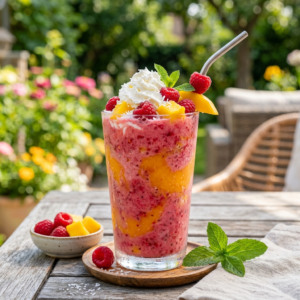
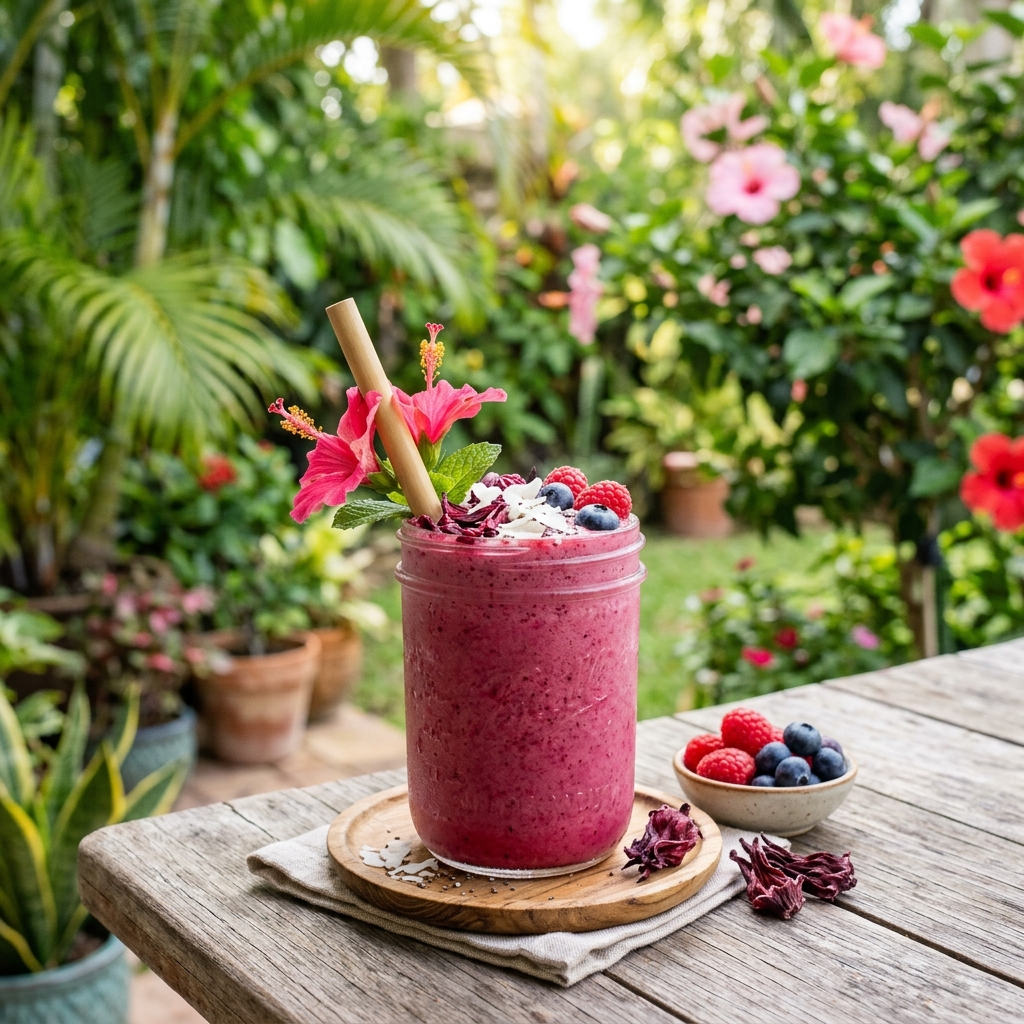
Imagine standing on a sun-drenched terrace in a tropical paradise, the air thick with the scent of blooming flora. In your hand is a glass filled with a deep, magenta elixir that looks more like a sunset than a breakfast drink. This is the magic of theHibiscus Smoothie.
While hibiscus is world-renowned as a herbal tea (Agua de Jamaicain Mexico orBissapin West Africa), its transition into the world of blended smoothies is a relatively modern culinary evolution. Historically, theHibiscus sabdariffaflower has been celebrated for centuries across Africa, Asia, and the Caribbean, not just for its striking color, but for its tart, cranberry-like flavor profile and cooling properties.
This recipe takes those ancient floral notes and marries them with the creamy textures of modern “superfood” blending. It’s a dish that bridges the gap between a refreshing botanical infusion and a satiating meal replacement. Whether you are looking for a post-yoga refresher or a stunning centerpiece for a brunch spread, this smoothie offers a unique sophisticated tartness that cuts through the cloying sweetness often found in traditional fruit blends.
2. Recipe Overview
- Cuisine Type:Tropical / Fusion
- Difficulty Level:Easy
- Total Time:15 minutes (plus cooling time for hibiscus concentrate)
- Dietary Classifications:Vegan, Gluten-Free, Dairy-Free, Plant-Based, Refined Sugar-Free.
3. Equipment and Tools
To achieve the velvety texture required for a professional-grade smoothie, the right tools are essential.
- High-Speed Blender:A motor capable of at least 1200 watts is recommended to pulverize hibiscus fibers and frozen fruit.
- Small Saucepan:For steeping the dried hibiscus flowers into a concentrated “tea base.”
- Fine-Mesh Strainer:To ensure no grit or flower particles remain in your liquid base.
- Measuring Tools:
- Volume:Standard US Cups and Metric Milliliters.
- Weight:A digital scale for precise fruit measurements.
- Glassware:A chilled 16 oz (475 ml) hurricane or highball glass.
4. Serving Suggestions
Plating & Garnish:
- The Floral Rim:Dip the rim of the glass in agave syrup and then into crushed dried hibiscus petals or lime zest.
- The Topping:Add a sprig of fresh mint and a single dehydrated lime wheel.
- Texture Contrast:Sprinkle a teaspoon of hemp hearts or chia seeds on top just before serving.
Pairings:
- Food:Pairs beautifully with avocado toast topped with dukkah or a light quinoa salad.
- Beverage:If serving at a party, a side shot of sparkling mineral water helps cleanse the palate between sips.
5. Nutritional Information
(Per 16 oz serving)
| Nutrient | Amount |
|---|---|
| Calories | 245 kcal |
| Total Fat | 3g |
| Carbohydrates | 52g |
| Dietary Fiber | 8g |
| Protein | 4g |
| Vitamin C | 85% DV |
Health Benefits:Hibiscus is famously packed withanthocyanins, the antioxidants responsible for its red hue, which support heart health and help manage blood pressure. The addition of fruit provides a significant dose of Vitamin C and dietary fiber for gut health.
6. Storage and Reheating
- Refrigeration:This smoothie is best enjoyed immediately. However, it can be stored in an airtight mason jar for up to12 hours. Shake vigorously before drinking as separation is natural.
- Freezing:Pour leftovers into silicone ice cube trays. These “smoothie cubes” can be tossed into a blender later for a quick refresh.
- Reheating:N/A (This is a cold preparation).
7. Expert Tips and Variations
- The “Chill” Factor:Always use at least one frozen component (frozen bananas or berries) to achieve a thick, soft-serve consistency without diluting the flavor with ice.
- Avoid the “Bitter Trap”:Do not over-steep the hibiscus leaves. More than 10 minutes of steeping can release tannins that make the smoothie overly astringent.
- Variations:
- The Creamy Classic:Add 1/4 cup of full-fat coconut milk for a “Hibiscus Colada” vibe.
- The Protein Powerhouse:Incorporate a scoop of vanilla pea protein or Greek yogurt (if not vegan).
- Zesty Kick:Add a 1/2 inch knob of fresh ginger during the blending process.
8. Ingredients Section
The Hibiscus Base
- Dried Hibiscus Petals (Flor de Jamaica):1/4 cup (approx. 10g).
- Filtered Water:1 cup (240ml).
- Natural Sweetener:1 tbsp Agave nectar or 2 pitted Medjool dates.
The Smoothie Body
- Frozen Raspberries or Strawberries:1.5 cups (approx. 200g).
- Frozen Banana:1 medium (peeled and sliced before freezing).
- Lime Juice:1 tbsp (freshly squeezed).
- Plant Milk (Almond or Oat):1/2 cup (120ml) as needed for consistency.
Substitutions:
- Hibiscus:If dried flowers are unavailable, use 2 high-quality hibiscus tea bags.
- Sweetener:Honey (if not vegan) or Monkfruit for a low-carb option.
9. Step-by-Step Instructions
Step 1: Create the Hibiscus Concentrate
In your small saucepan, bring 1 cup of water to a gentle boil. Remove from heat and add the dried hibiscus petals. Let steep for7 to 10 minutes. Strain the liquid through a fine-mesh sieve into a jar and stir in your sweetener while the liquid is still warm.Crucial:Let this cool to room temperature or chill in the fridge for 20 minutes before blending.
Step 2: Prepare the Fruit
Ensure your bananas and berries are fully frozen. This creates the “micro-crystal” structure that gives the smoothie its professional, creamy mouthfeel.
Step 3: The Blend
Add the chilled hibiscus concentrate, lime juice, and plant milk to the blender base first. Then, layer in the frozen fruit. This “liquid-first” method prevents the blades from stalling.
Step 4: Emulsify
Start the blender on its lowest speed, gradually increasing to high. Blend for45–60 seconds. If the mixture is too thick, add extra plant milk one tablespoon at a time.
Step 5: The Taste Test
Hibiscus acidity varies by batch. Taste a small spoonful. If it’s too tart, add a touch more agave. If too sweet, a squeeze more lime juice will balance it perfectly.
Step 6: Serve
Pour into your prepared glass, add your garnishes, and serve with a wide-mouth straw.
10. Frequently Asked Questions (FAQ)
Q: Can I use fresh hibiscus flowers from my garden?A:Only if they are theHibiscus sabdariffavariety and have not been treated with pesticides. Most ornamental hibiscus found in gardens are not used for culinary purposes. It is safer to buy food-grade dried petals.
Q: Why is my smoothie brown instead of pink?A:This usually happens if you add greens (like spinach) or blueberries. The red of the hibiscus and the green/blue of other ingredients create a muddy color. Stick to red/white fruits (raspberries, bananas, lychees) to keep the color vibrant.
Q: Is hibiscus safe for everyone?A:Generally yes, but pregnant women or individuals with very low blood pressure should consult a doctor, as hibiscus is known to have mild emmenagogue effects and blood-pressure-lowering properties.
Q: Can I make the tea base in bulk?A:Absolutely! The hibiscus concentrate stays fresh in the fridge for up to 5 days.
Q: How do I make it more filling?A:Add a tablespoon of almond butter or 1/4 cup of rolled oats before blending. The fats and complex carbs will keep you full for hours.