
1. Introduction
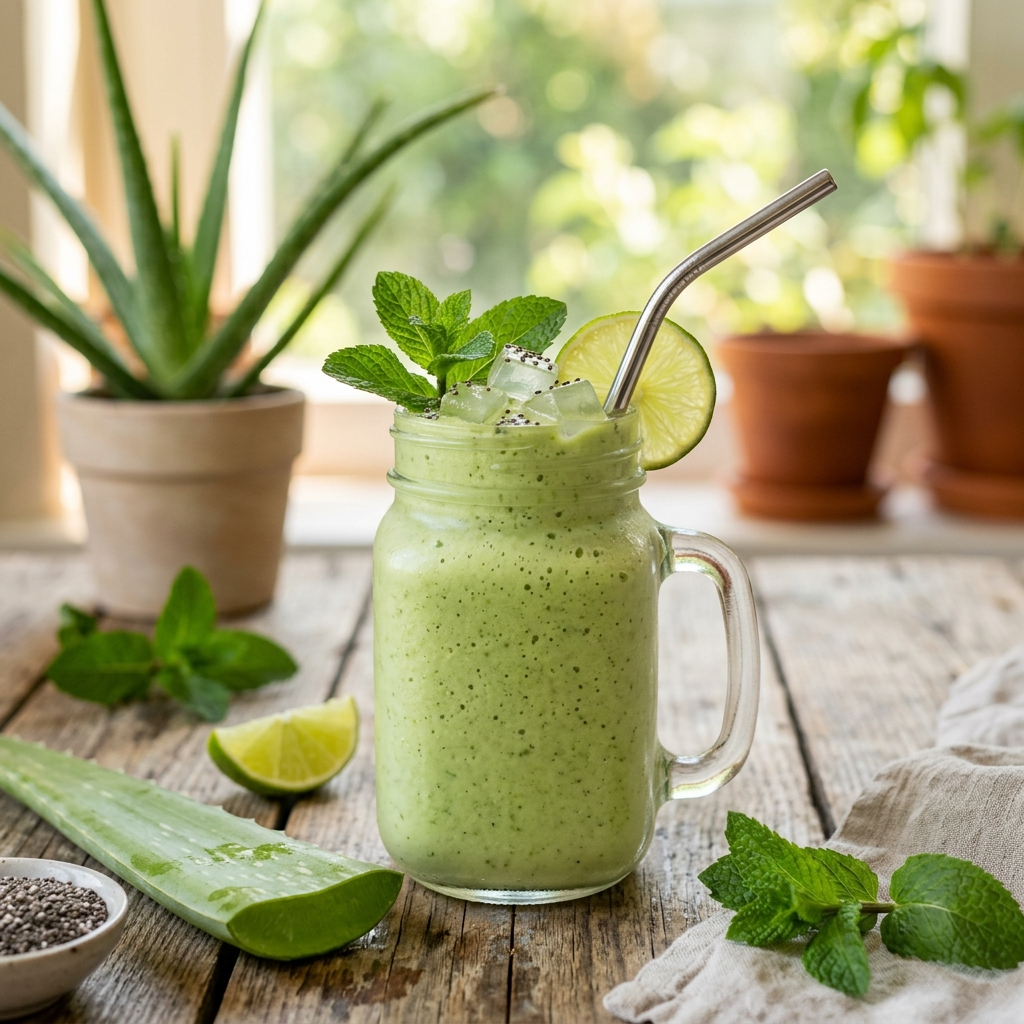
Imagine standing in a sun-drenched garden, the air thick with the scent of blooming flora. You reach for a succulent leaf, thick and cool to the touch. This isn’t just a plant for soothing sunburns; it is a “fountain of youth” tucked inside a green rind. TheAloe Vera Smoothieis more than a trend; it is a revitalizing ritual that dates back centuries, used by ancient civilizations from Egypt to India for its cooling and digestive properties.
In this guide, we dive deep into the art of crafting the perfect Aloe Vera smoothie. Many people are intimidated by the thick, gelatinous texture of raw aloe, but when paired with the right tropical fruits and citrus notes, it transforms into a silky, refreshing beverage that tastes like a vacation in a glass. Whether you are looking to boost your morning hydration or seeking a post-yoga recovery drink, this recipe is your blueprint for liquid wellness.
2. Recipe Overview
- Cuisine Type:Modern Wellness / Tropical
- Difficulty Level:Easy (Requires careful knife work for the aloe)
- Prep Time:10 minutes
- Total Time:10 minutes
- Dietary Classifications:Vegan, Gluten-Free, Dairy-Free, Raw, Paleo-friendly.
3. Equipment and Tools
To achieve the signature silky consistency of a professional-grade smoothie, the right tools are essential.
- High-Speed Blender:A motor with at least 1200 watts is recommended to fully emulsify the aloe gel.
- Sharp Chef’s Knife:Necessary for precise trimming of the aloe leaf spines.
- Cutting Board:A non-slip wooden or plastic surface.
- Fine-Mesh Strainer:(Optional) If you prefer an ultra-thin consistency.
- Measuring Tools:
- Volume:Standard measuring cups (1 cup, 1/2 cup) and spoons.
- Scale:For those who prefer metric precision in grams.
- Glassware:A chilled 16 oz (approx. 475 ml) tall glass.
4. Serving Suggestions
A smoothie should be a feast for the eyes as well as the palate.
- Plating:Serve in a chilled glass to maintain the crisp temperature.
- Garnish Ideas:A thin slice of lime on the rim, a sprig of fresh mint, or a sprinkle of chia seeds for added texture.
- Complementary Sides:Pairs beautifully with a light quinoa salad or a bowl of fresh seasonal berries.
- Beverage Pairings:If serving at a brunch, follow this smoothie with a hot ginger tea to balance the cooling nature of the aloe.
5. Nutritional Information
Note: Values are estimates based on a single serving.
| Nutrient | Amount |
| Calories | 185 kcal |
| Carbohydrates | 42g |
| Fiber | 6g |
| Protein | 2g |
| Fat | 0.5g |
| Vitamin C | 85% DV |
Potential Health Benefits:
Aloe Vera is rich in antioxidants and polyphenols. It is widely celebrated for supporting digestive regularity and skin hydration from the inside out. When combined with citrus, the Vitamin C helps in the absorption of plant-based nutrients.
6. Storage and Reheating
Fresh is best.Because Aloe Vera can oxidize and lose its nutritional potency when exposed to air, we recommend consuming this smoothie within 20 minutes of blending.
- Refrigeration:If you must store it, keep it in an airtight mason jar for up to 12 hours. Shake vigorously before drinking as separation is natural.
- Freezing:You can freeze the blended mixture into ice cube trays. These “Aloe Cubes” are perfect for adding to future smoothies.
- Note:Do not reheat. This is a raw, cold-processed beverage.
7. Expert Tips and Variations
Professional Chef Tips
- The Soak:After scooping the clear gel from the leaf, soak it in cold water for 2-3 minutes. This removes thealoin(the yellow sap), which has a bitter taste and laxative effect.
- Temperature Control:Use frozen fruit instead of ice cubes to avoid diluting the flavor.
Creative Variations
- The Green Machine:Add a handful of baby spinach and a slice of green apple.
- The Tropical Glow:Swap the base liquid for coconut water and add a tablespoon of shredded coconut.
- The Anti-Inflammatory:Add 1/2 inch of fresh turmeric root and a pinch of black pepper.
8. Ingredients Section
The Core Components
- Fresh Aloe Vera Gel:2 tablespoons (approx. 30g) of clear inner gel.
- Liquid Base:1 cup (240ml) of Coconut Water or filtered water.
- Frozen Fruit:1 cup (150g) of Pineapple chunks or Mango.
- Citrus:1 tablespoon (15ml) of fresh Lime or Lemon juice.
- Sweetener (Optional):1 teaspoon of Agave nectar or 1 pitted Medjool date.
- Freshness:3-4 fresh Mint leaves.
Sourcing & Substitutions
- Sourcing:Look for “Aloe Barbadensis Miller” leaves in the produce section. They should be firm, thick, and vibrant green.
- Substitutions:If fresh aloe is unavailable, use 1/4 cup of 100% pure edible Aloe Vera juice (ensure it is food-grade).
9. Step-by-Step Instructions
Step 1: Prep the Aloe Vera
Using your chef’s knife, cut a 2-inch section from a large aloe leaf. Trim off the jagged “teeth” on the sides. Carefully slide the knife just under the skin to peel off the green outer layer, leaving only the clear, translucent gel.Visual Cue:The gel should look like a block of clear ice.
Step 2: Rinse the Gel
Rinse the clear gel under cold running water to remove any yellow latex (aloin). Pat dry.
Step 3: Layer the Blender
Add the liquid base (coconut water) first. This ensures the blades move freely. Follow with the aloe gel, lime juice, and any sweeteners.
Step 4: Add the Frozen Elements
Add your frozen pineapple or mango on top. The weight of the frozen fruit helps push the other ingredients toward the blades.
Step 5: The High-Speed Blend
Start the blender on the lowest setting and gradually increase to the highest speed. Blend for 45–60 seconds.Visual Cue:The mixture should look completely smooth with no visible bits of aloe or mint.
Step 6: The Taste Test
Taste a small spoonful. If it’s too tart, add another drop of agave. If it’s too thick, add a splash more coconut water.
10. Frequently Asked Questions (FAQ)
Q: Can I eat the green skin of the Aloe leaf?
A:While technically edible, it is very tough and bitter. Most culinary applications use only the inner clear gel for its texture and neutral flavor.
Q: Does it taste like medicine?
A:Not at all! When properly rinsed, aloe is virtually tasteless. It takes on the flavor of the pineapple and lime, providing a refreshing, clean finish.
Q: How often can I drink an Aloe Vera smoothie?
A:For most people, once a day is a wonderful addition to a balanced diet. However, since aloe can have a mild laxative effect, it’s best to start with small amounts.
Q: Can I use the aloe plant from my windowsill?
A:Yes, provided it is theAloe Barbadensis Millervariety and has not been treated with chemical fertilizers or pesticides.
Q: Why did my smoothie turn out bitter?
A:This usually happens if the yellow sap (latex) wasn’t thoroughly rinsed off the gel. Ensure you only use the clear part of the leaf.