1. Introduction
Few fruits deliver the same vibrant punch as kiwi. With its bright green flesh, tiny black seeds, and refreshing tangy flavor, kiwi has become a symbol of freshness and vitality in modern cuisine. TheKiwi Smoothietransforms this humble fruit into a creamy, energizing beverage that feels both exotic and comforting.
Originally native to China and later popularized in New Zealand, kiwi fruit—often referred to as “Chinese gooseberry”—has traveled across continents to become a staple in healthy diets worldwide. Its naturally balanced flavor, combining sweetness with a slight tartness, makes it ideal for smoothies.
This recipe is particularly beloved in warm regions, where cooling beverages are essential. In places like Morocco, where fresh fruit is abundant, kiwi smoothies offer a refreshing alternative to heavier drinks. Whether enjoyed at breakfast, post-workout, or as a midday refreshment, this smoothie stands out for its simplicity, nutritional density, and striking color.
2. Recipe Overview
- Cuisine Type:International / Fusion
- Difficulty Level:Easy
- Total Preparation Time:8–10 minutes
- Cooking Time:None
- Dietary Classification:
- Vegetarian
- Gluten-Free
- Can be Vegan and Dairy-Free
3. Equipment and Tools
A smooth, well-emulsified texture depends on proper equipment.
Essential Tools:
- High-speed blender (minimum 500–700W recommended)
- Measuring cups (250 ml / 1 cup standard)
- Measuring spoons
- Knife and cutting board
- Spoon for scooping kiwi flesh
Equipment Specifications:
- Blender capacity:1–1.5 liters
- Blade system:Multi-directional stainless steel blades
- Jar depth:Minimum 15 cm for optimal blending vortex
Optional Tools:
- Fine mesh strainer (for smoother texture if seeds are undesired)
- Citrus juicer (if adding lemon juice)
- Chilled serving glasses (300–400 ml capacity)
4. Serving Suggestions
Presentation plays a key role in enhancing the smoothie experience.
Plating Recommendations:
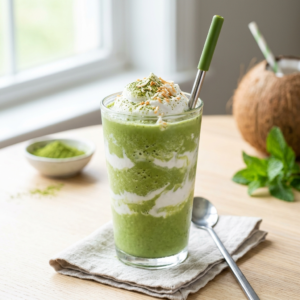
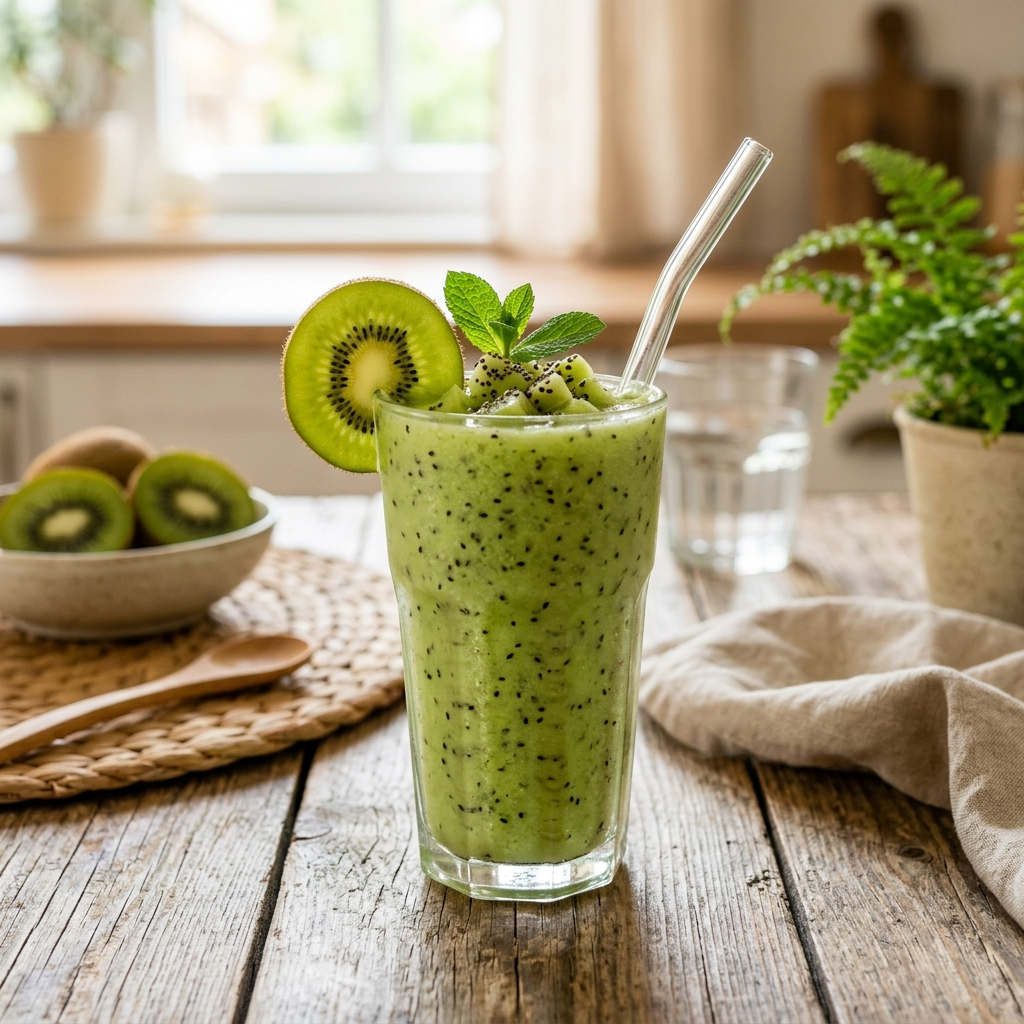
- Serve in tall, transparent glasses to highlight the vivid green color
- Use frosted or chilled glasses for added freshness
Garnish Ideas:
- Kiwi slices on the rim
- Fresh mint leaves
- Chia or flax seeds sprinkled on top
- A drizzle of honey or yogurt swirl
Complementary Side Dishes:
- Whole-grain toast with avocado
- Oatmeal with nuts and seeds
- Fresh fruit salad
Beverage Pairings:
- Herbal teas (mint or green tea)
- Coconut water for hydration
- Sparkling water for a light pairing
5. Nutritional Information
(Per serving – approx. 300 ml)
- Calories:120–160 kcal
- Carbohydrates:25–30 g
- Protein:2–3 g
- Fat:1–2 g
- Fiber:4–6 g
- Vitamin C:150–200% daily value
Health Benefits:
- Boosts immune system with high vitamin C
- Supports digestion due to natural enzymes (actinidin)
- Promotes skin health with antioxidants
- Helps maintain hydration
- Low in calories, making it suitable for weight management
6. Storage and Reheating
Storage:
- Store in an airtight glass container
- Keep refrigerated for up to24 hours
Refrigeration Guidelines:
- Maintain temperature below 4°C
- Shake or stir before serving
Freezing Recommendations:
- Freeze in ice cube trays for up to1 month
- Re-blend frozen cubes for a quick smoothie
Reheating:
- Not applicable; smoothies are best served cold
7. Expert Tips and Variations
Professional Tips:
- Useripe kiwis(slightly soft to the touch) for natural sweetness
- Blend liquids first to improve consistency
- Add frozen fruit instead of ice for richer texture
Common Mistakes to Avoid:
- Using unripe kiwis (too sour)
- Over-blending, which may create excessive foam
- Adding too much liquid, resulting in a thin smoothie
Creative Variations:
- Kiwi Banana Smoothie:Adds creaminess and natural sweetness
- Tropical Kiwi Blend:Combine with pineapple and mango
- Green Detox Smoothie:Add spinach or kale
- Protein Kiwi Smoothie:Include Greek yogurt or protein powder
Seasonal Adaptations:
- Summer: Add ice and mint for extra refreshment
- Winter: Blend with ginger and citrus for immunity
8. Ingredients Section
Core Ingredients:
- 3 ripe kiwis (approx. 225 g / 8 oz)
- 1 banana (120 g / 4 oz)
- 150 ml (½ cup + 2 tbsp) milk or plant-based milk
- 1 tablespoon honey or maple syrup (15 ml) – optional
- 4–5 ice cubes
Optional Add-ons:
- 1 tablespoon chia seeds
- ½ teaspoon fresh ginger
- 1 tablespoon yogurt
Substitutions:
- Replace milk with almond, oat, or coconut milk
- Use agave syrup instead of honey for vegan option
- Substitute banana with avocado or mango
Preparation Notes:
- Peel kiwis thoroughly
- Slice fruits for easier blending
- Use chilled ingredients for best texture
9. Step-by-Step Instructions
Step 1: Prepare Ingredients
Peel the kiwis and cut them into chunks. Slice the banana into smaller pieces.
Step 2: Add Liquid Base
Pour milk into the blender first. This ensures smoother blending.
Step 3: Add Fruits
Place kiwi chunks and banana slices into the blender.
Step 4: Add Sweetener
Add honey or your preferred sweetener if desired.
Step 5: Add Ice
Include ice cubes for a refreshing, chilled texture.
Step 6: Blend
Blend on high speed for 30–45 seconds.
Visual Cue:The mixture should be smooth, vibrant green, and slightly thick.
Step 7: Adjust Consistency
Add more milk if too thick, or more fruit if too thin.
Step 8: Serve Immediately
Pour into glasses and garnish as desired.
10. Frequently Asked Questions (FAQ)
1. Can I make a kiwi smoothie without banana?
Yes. You can replace banana with mango, avocado, or yogurt for creaminess.
2. Why does my smoothie taste too sour?
This usually happens when kiwis are underripe. Add sweetener or ripe fruit to balance.
3. Can I drink this smoothie daily?
Yes, it’s rich in nutrients and suitable for daily consumption in balanced portions.
4. How do I make it thicker?
Use frozen fruits or reduce the amount of liquid.
5. Can I use water instead of milk?
Yes, but milk adds creaminess. Coconut water is a great alternative.
6. Is kiwi smoothie good for digestion?
Absolutely. Kiwi contains enzymes that aid digestion.
7. Can I add protein powder?
Yes, it transforms the smoothie into a great post-workout drink.