1. Introduction
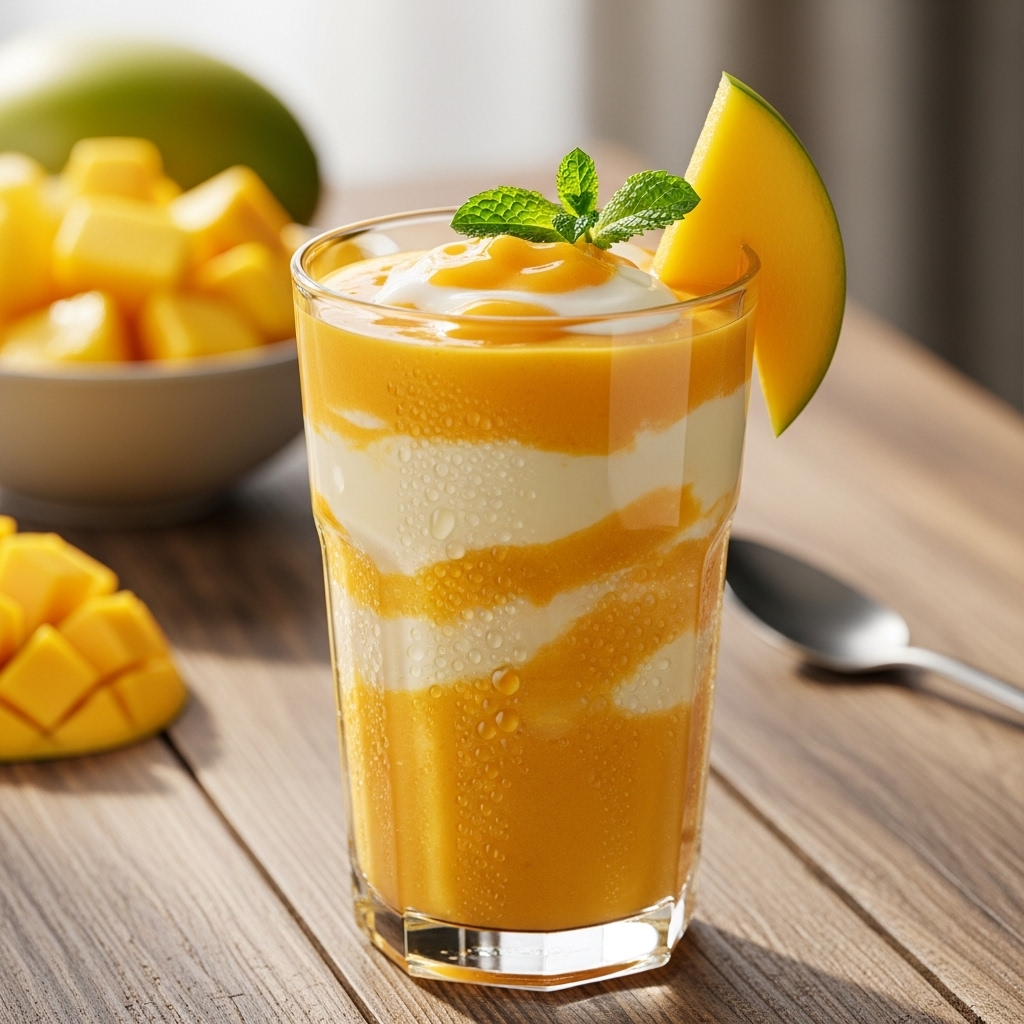
Imagine standing in a sun-drenched orchard where the air is heavy with the scent of ripening fruit. In tropical cultures across South Asia and Southeast Asia, the mango is not just a fruit; it is the “King of Fruits,” a symbol of prosperity and the herald of summer. TheMango Yogurt Smoothieis a modern, velvety evolution of the traditional IndianLassi, a drink that has been quenching thirst for centuries.
While a classic Lassi often leans into floral notes like cardamom or rosewater, this smoothie adaptation focuses on a thicker, more luscious texture that fits perfectly into a fast-paced morning routine or a post-workout recovery session. The magic lies in the contrast between the vibrant, honey-like sweetness of the mango and the tangy, fermented brightness of the yogurt. It is a drink that feels like a dessert but fuels you like a meal.
2. Recipe Overview
- Cuisine Type:Fusion (Tropical / Indo-American)
- Difficulty Level:Beginner
- Total Time:5 minutes
- Dietary Classifications:Vegetarian, Gluten-Free, Nut-Free (Optional: Vegan-friendly with substitutions)
3. Equipment and Tools
To achieve that signature silkiness, the quality of your tools matters as much as the fruit.
- High-Speed Blender:A motor with at least 900 watts is recommended to pulverize frozen mango chunks into a smooth puree.
- Volume Measurements:Standard US Measuring Cups (1 cup, 1/2 cup) and Spoons (1 tsp).
- Glassware:16 oz (approx. 475 ml) tall highball glass or a mason jar.
- Silicone Spatula:Essential for scraping down the sides of the blender jar to ensure no golden drop is wasted.
4. Serving Suggestions
Plating & Garnish:
- The Classic Topping:A sprinkle of crushed pistachios or strands of saffron adds an artisanal touch.
- Freshness:A sprig of mint provides a cooling aromatic contrast to the dense fruit.
- Texture:Top with a tablespoon of hemp seeds or chia seeds for an added crunch.
Pairings:
- Breakfast:Pairs beautifully with avocado toast or a light omelet.
- Snack:Enjoy alongside a handful of spicy roasted chickpeas to balance the sweetness.
5. Nutritional Information
Per 16 oz serving (estimated):
| Nutrient | Amount |
| Calories | 280 kcal |
| Total Fat | 4g |
| Protein | 12g |
| Carbohydrates | 48g |
| Fiber | 5g |
| Sugars | 38g (Natural) |
Health Benefits:
Mangoes are packed withVitamin CandVitamin A, supporting immune function and skin health. The yogurt providesProbiotics, which are essential for maintaining a healthy gut microbiome and aiding digestion.
6. Storage and Reheating
- Refrigeration:Best consumed immediately. If necessary, store in an airtight jar for up to 12 hours. Shake vigorously before drinking as separation is natural.
- Freezing:Pour the mixture into silicone ice cube trays. These “smoothie cubes” can be tossed back into a blender later with a splash of milk for a quick fix.
- Note:Do not reheat. This is a cold-process beverage; heat will curdle the yogurt and destroy the fresh fruit enzymes.
7. Expert Tips and Variations
Professional Tips
- The Temperature Secret:Always use at least one frozen component (either frozen mango or ice). This creates a “frappe” texture rather than a watery juice.
- Balance the Tang:If your yogurt is particularly tart, add a tiny pinch of sea salt. Salt suppresses bitterness and enhances the perception of sweetness.
Variations
- The Tropical Powerhouse:Swap half the yogurt for coconut cream and add a squeeze of lime.
- The Green Goddess:Add a handful of baby spinach. The mango is sweet enough to mask the “green” flavor entirely.
- The Protein Pro:Add one scoop of unflavored or vanilla whey/plant protein powder.
8. Ingredients Section
The Base
- 1 ½ cups (225g)Mango Chunks (Fresh or Frozen)
- 1 cup (245g)Plain Greek Yogurt (Full-fat recommended for creaminess)
- ½ cup (120ml)Milk of choice (Dairy, Almond, or Oat)
Sweeteners & Flavor (Optional)
- 1 tbspHoney or Maple Syrup (Adjust based on mango ripeness)
- ¼ tspGround Cardamom or Vanilla Extract
- 3-4Ice Cubes (Only if using fresh mango)
9. Step-by-Step Instructions
- Layer the Liquids:Pour the milk and yogurt into the blender base first. Adding liquids first prevents the blades from getting stuck on frozen fruit.
- Add the Fruit:Add the mango chunks on top of the yogurt layer.
- Incorporate Aromatics:Drizzle in your sweetener and add the cardamom or vanilla.
- The Pulse Start:Pulse the blender 3-5 times to break up the large chunks.
- High-Speed Blend:Switch to high speed for 45-60 seconds.
- Visual Cue:Look for a “vortex” to form in the center. The mixture should look uniform with no visible fruit fibers.
- Adjust Consistency:If the smoothie is too thick, add milk 1 tablespoon at a time. If too thin, add more frozen mango or ice.
- Taste Test:Sip a small amount. If the mango was under-ripe, you may need an extra teaspoon of honey.
10. Frequently Asked Questions (FAQ)
Q: Can I use canned mango pulp?
A: Yes! Canned Alphonso mango pulp is delicious. However, it is often pre-sweetened, so omit the honey in the recipe.
Q: My smoothie is grainy. Why?
A: This usually happens with fibrous mango varieties (like Tommy Atkins). Using a high-speed blender or straining the smoothie through a fine-mesh sieve can fix this.
Q: How do I make this vegan?
A: Replace the Greek yogurt with dairy-free coconut or soy yogurt and use a plant-based milk like cashew milk for the best creamy texture.
Q: Is this a good pre-workout drink?
A: Absolutely. The simple carbohydrates in the mango provide quick energy, while the yogurt offers a steady release of protein.
Q: Can I add seeds like Chia or Flax?
A: Yes, but add them at the very end and pulse briefly, or stir them in by hand to avoid a “slimy” texture that can occur when seeds are fully pulverized.