1. Introduction
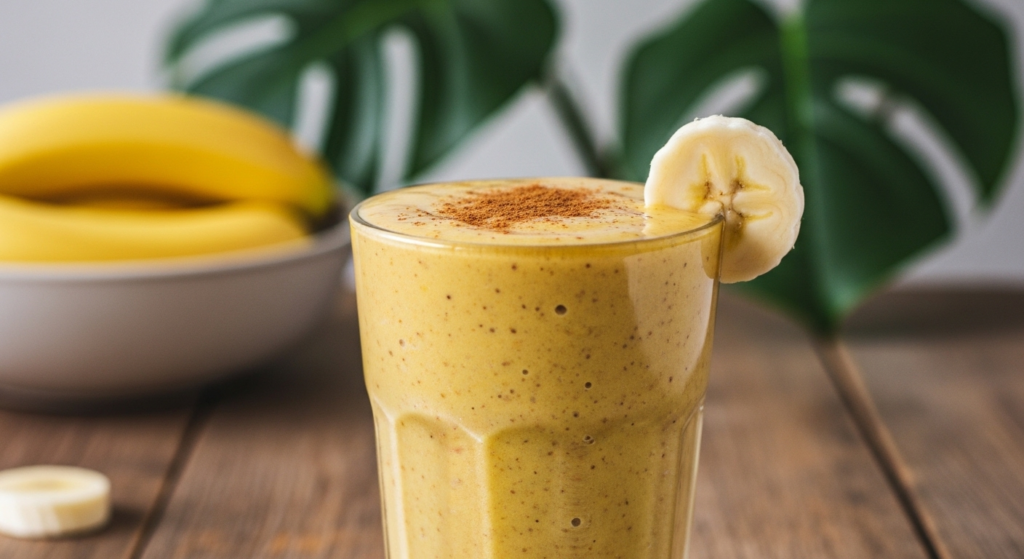
There is something fundamentally comforting about abanana smoothie. While the culinary world often chases complex trends and molecular gastronomy, the humble banana remains the undisputed heavyweight champion of the blender. It is the fruit that bridges the gap between a decadent milkshake and a high-performance wellness tonic.
The banana smoothie isn’t just a recipe; it’s a global staple with roots in the tropical regions of Southeast Asia and Central America, where the fruit has been a dietary backbone for millennia. However, the modern “smoothie” as we know it gained momentum in the 1930s with the invention of the electric blender. What started as a simple blend of fruit and ice has evolved into a customizable canvas for health enthusiasts and dessert lovers alike.
The magic of the banana lies in its starch-to-sugar transformation. As it ripens, the fruit develops a natural sweetness and a pectin-rich structure that creates an unparalleledvelvety emulsionwithout the need for heavy creams. In this guide, we aren’t just tossing ingredients into a jar; we are exploring the science of the perfect blend, ensuring every sip is a balance of temperature, texture, and taste.
2. Recipe Overview
- Cuisine Type:American / Contemporary Health
- Difficulty Level:Beginner
- Prep Time:5 minutes
- Total Time:5 minutes
- Dietary Classifications:Vegetarian, Gluten-Free (Vegan and Dairy-Free options included)
3. Equipment and Tools
To achieve that signature “whipped” consistency, the right gear is essential.
- High-Speed Blender:A motor with at least 1,000 watts is recommended to pulverize frozen fruit into a smooth liquid.
- Measuring Cups & Spoons:Standard US Imperial and Metric sets.
- Silicone Spatula:Essential for scraping down the sides of the blender jar.
- Glassware:Highball glasses or insulated tumblers (16 oz / 475 ml capacity).
- Reusable Straws:Wide-diameter straws are best for thicker smoothies.
4. Serving Suggestions
A smoothie should be a feast for the eyes as well as the palate.
- Plating:Serve in a chilled glass to maintain the thick consistency.
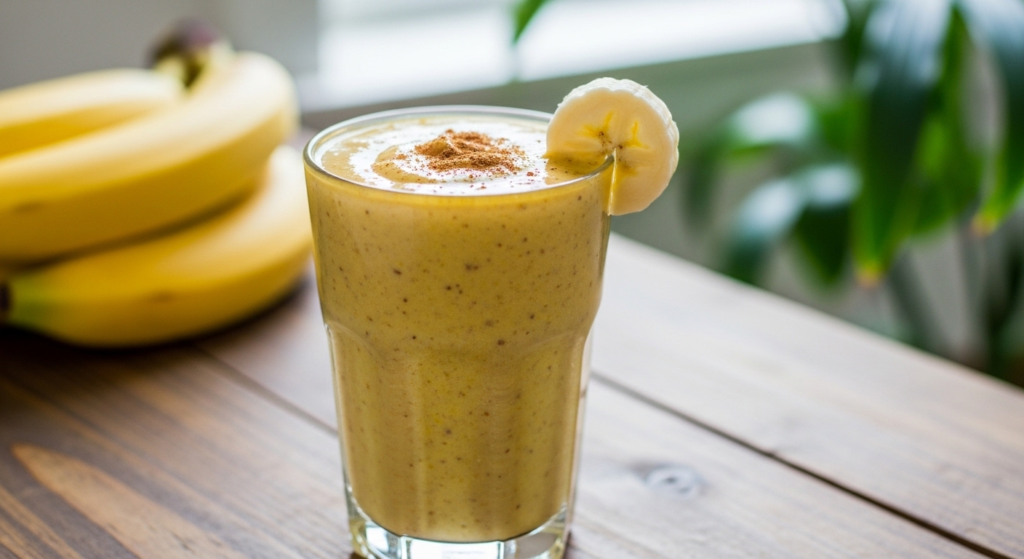
- Garnish:A light dusting ofground cinnamon, a few slices of fresh banana, or a sprig of mint.
- Side Dishes:Pairs beautifully with avocado toast, a handful of raw almonds, or a protein-rich egg white frittata.
- Beverage Pairings:If enjoying this as a snack, follow it with a clean green tea to cleanse the palate.
5. Nutritional Information
(Estimated per 16 oz serving)
| Nutrient | Amount |
| Calories | 280 kcal |
| Protein | 8g |
| Total Fat | 5g |
| Carbohydrates | 52g |
| Fiber | 6g |
| Sugars | 28g (Natural) |
Health Benefits:
- Potassium:Essential for heart health and muscle function.
- Vitamin B6:Supports brain development and immune health.
- Prebiotics:Bananas contain resistant starch that feeds healthy gut bacteria.
6. Storage and Reheating
- Refrigeration:Smoothies are best enjoyed immediately. If you must store it, keep it in an airtight mason jar for up to12 hours. Note: Oxidation will cause the color to darken.
- Freezing:Pour leftovers into silicone muffin tins or ice cube trays. These “smoothie cubes” can be tossed back into a blender later with a splash of milk.
- Pro Tip:Add a squeeze of lemon juice before storing to slow down the browning process.
7. Expert Tips and Variations
Professional Chef Tips
- The “Frozen is Best” Rule:Never use ice cubes if you can avoid it. Ice dilutes the flavor. Usefrozen bananasto act as both the thickener and the chilling agent.
- Order of Operations:Always add your liquid first. This creates a vortex that pulls the solid ingredients down into the blades, preventing “air pockets.”
Creative Variations
- The PB&J:Add 1 tablespoon of peanut butter and 1/2 cup of frozen strawberries.
- The Tropical Escape:Replace milk with coconut milk and add 1/2 cup of frozen mango.
- The Green Machine:Add a handful of baby spinach. The banana’s sweetness completely masks the flavor of the greens.
- The Mocha Wake-up:Add a shot of chilled espresso and a teaspoon of cocoa powder.
8. Ingredients Section
- 2 Large Bananas:Use “spotted” bananas for maximum sweetness. Peel, slice, and freeze for at least 4 hours.
- 1 ½ cups (355ml) Liquid Base:Choice of whole milk, unsweetened almond milk, or oat milk.
- ½ cup (125g) Greek Yogurt:Provides tanginess and protein. Use coconut yogurt for a vegan version.
- 1 tsp (5ml) Pure Vanilla Extract:Enhances the natural aromatics of the banana.
- 1 tbsp (15ml) Natural Sweetener (Optional):Honey, maple syrup, or 2 pitted Medjool dates.
- A Pinch of Sea Salt:A tiny amount of sodium balances the sugars and makes the flavors “pop.”
9. Step-by-Step Instructions
Step 1: Prep the Liquid Base
Pour your chosen liquid (milk or plant-based alternative) into the blender. Starting with liquid ensures the blades move freely and prevents motor strain.
Step 2: Add the Creamy Elements
Add the Greek yogurt and vanilla extract. If you are using sweeteners like honey or dates, add them now so they can be fully integrated into the base.
Step 3: Add the Frozen Fruit
Place the frozen banana chunks on top of the liquid/yogurt mixture. This weight helps push the ingredients toward the blade once the blender starts.
Step 4: The Initial Pulse
Pulse the blender 5-7 times. This breaks the large frozen chunks into manageable pieces before you commit to a continuous high-speed blend.
Step 5: High-Speed Emulsification
Switch to a medium-high setting. Blend for 45-60 seconds. You are looking for avortexto form in the center. If the mixture is too thick and won’t move, add liquid one tablespoon at a time.
Step 6: The Taste Test
Stop the blender and use your spatula to check the consistency. Taste for sweetness. If the bananas weren’t ripe enough, you might want to add a drop more maple syrup at this stage.
Step 7: Final Whip
Blend on the highest speed for a final 10 seconds to incorporate air, giving the smoothie a light, mousse-like texture. Pour into a glass and serve immediately.
10. Frequently Asked Questions (FAQ)
Q: Can I use fresh bananas instead of frozen?
A: Yes, but the texture will be thinner and less “creamy.” If using fresh bananas, you will need to add about 1 cup of ice, which may dilute the flavor slightly.
Q: How do I stop my smoothie from turning brown?
A: Browning is caused by oxidation. Adding an acid, such as a teaspoon of lemon or lime juice, or a few slices of vitamin C-rich pineapple, can help maintain a brighter color.
Q: Is a banana smoothie good for weight loss?
A: It can be! Bananas are filling due to their fiber content. To make it a weight-loss-friendly meal replacement, ensure you are using unsweetened milks and adding a scoop of protein powder to keep you full longer.
Q: My smoothie is too runny. How do I fix it?
A: Add more frozen fruit or a tablespoon of chia seeds/flax seeds. These seeds absorb liquid and act as a natural thickening agent.
Q: Can I make this without a blender?
A: It is difficult to get a smooth consistency without a blender. However, you can mash a very ripe banana until it’s a liquid puree, then whisk it vigorously with yogurt and milk for a “shaken” version.