1. Introduction
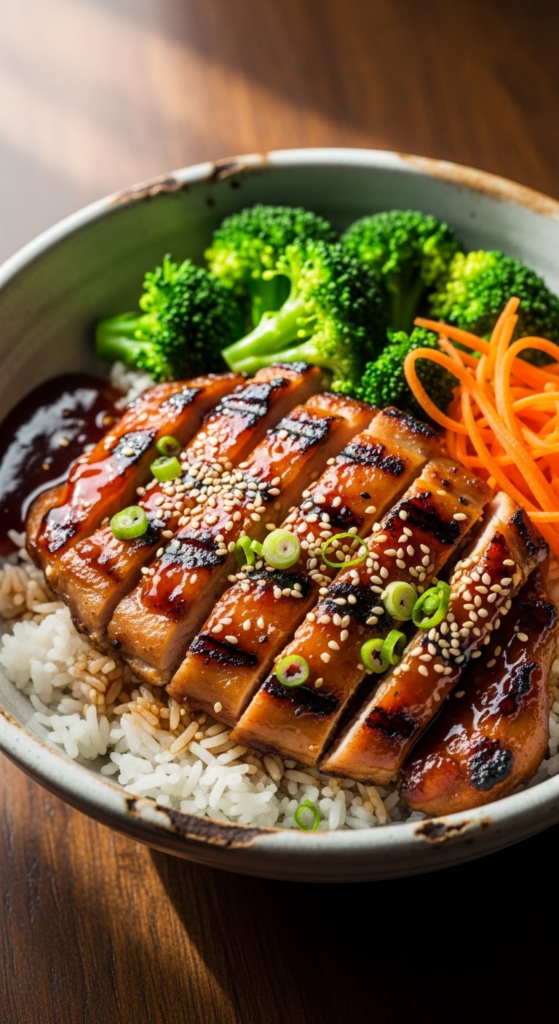
There is a specific kind of magic in the sizzle of a hot pan when a sweet, soy-based glaze hits the surface. TheTeriyaki Chicken Bowlis more than just a staple of Japanese-American “fast-casual” dining; it is a masterclass in the balance ofumami, sweetness, and acidity.
Originating from the Japanese cooking techniqueteriyaki—whereterirefers to the lacquer-like shine of the sauce andyakirefers to the grilling or broiling method—this dish has evolved into a global comfort food. My first encounter with a truly authentic version wasn’t in a shopping mall food court, but in a small, steam-filled kitchen in Seattle, where the “Seattle-style” teriyaki movement began. The secret wasn’t just the sugar; it was the ginger-garlic punch and the way the sauce clings to charred, juicy chicken thighs.
This recipe is designed to bridge the gap between high-end culinary technique and weeknight convenience. We aren’t just making dinner; we’re creating a bowl of vibrant colors, contrasting textures, and deep, soulful flavors.
2. Recipe Overview
- Cuisine Type:Japanese-Fusion
- Difficulty Level:Easy to Intermediate
- Prep Time:15 minutes
- Cook Time:15 minutes
- Total Time:30 minutes
- Dietary Classifications:Dairy-Free, High-Protein (Can be made Gluten-Free with Tamari)
3. Equipment and Tools
To achieve the perfect “glaze” without burning the sugars in the sauce, having the right gear is essential.
- Large Non-Stick Skillet or Carbon Steel Wok:Recommended size is12 inches (30 cm)in diameter with a depth of at least2 inches. This allows for even heat distribution and enough surface area to sear the chicken without crowding.
- Mixing Bowls:One medium bowl for marinating and one small whisking bowl for the sauce.
- Chef’s Knife:A sharp8-inch bladefor clean cuts of chicken and precise vegetable julienning.
- Rice Cooker or Heavy-Bottomed Pot:For perfectly fluffy jasmine or short-grain rice.
- Measuring Tools:Full set of dry measuring cups and liquid measuring spoons (Metric/Imperial).
- Meat Thermometer:To ensure chicken reaches an internal temperature of165°F (74°C).
4. Serving Suggestions
A bowl is only as good as its presentation. To make this feel like a restaurant-quality meal, consider the following:
Plating Recommendations
Start with a generous base of steamed rice. Arrange the chicken on one side, steamed broccoli on the other, and a pile of shredded carrots or pickled ginger in the center for a pop of color.
Garnish Ideas
- Toasted Sesame Seeds:Adds a nutty crunch.
- Thinly Sliced Scallions:Use both the white and green parts for sharp freshness.
- Red Chili Flakes:If you prefer a “Spicy Teriyaki” kick.
Beverage Pairings
- Non-Alcoholic:A cold Sparkling Yuzu juice or a hot Genmaicha (brown rice green tea).
- Alcoholic:A crisp, dry Riesling or a light Japanese Lager (like Asahi or Sapporo) to cut through the sweetness of the glaze.
5. Nutritional Information (Per Serving)
Estimate based on 4 servings.
| Metric | Amount |
|---|---|
| Calories | 540 kcal |
| Protein | 38g |
| Total Fat | 12g |
| Carbohydrates | 68g |
| Fiber | 4g |
| Sugars | 14g |
Health Benefits:This dish is packed with lean protein and cruciferous vegetables. Ginger and garlic provide anti-inflammatory properties, while the fermentation in soy sauce offers complex amino acids.
6. Storage and Reheating
This recipe is a “Meal Prep” champion.
- Refrigeration:Store in airtight containers for up to4 days. Keep the sauce-coated chicken and rice together so the rice absorbs the extra flavor.
- Freezing:You can freeze the cooked chicken and sauce for up to3 months. However, I recommend freezing the rice separately to maintain texture.
- Reheating:*Microwave:Add a teaspoon of water over the rice, cover with a damp paper towel, and heat for 2 minutes.
- Stovetop:Reheat in a skillet over medium-low heat with a splash of chicken broth to loosen the glaze.
7. Expert Tips and Variations
Professional Chef Tips
- The Cornstarch Slurry:Never add dry cornstarch to a hot pan; it will clump. Always mix it with cold water first.
- Don’t Crowd the Pan:If you put too much chicken in at once, it will steam rather than sear. Cook in batches if necessary to get those crispy, browned edges.
Variations
- The “Low-Carb” Bowl:Swap rice for cauliflower rice or a bed of sautéed cabbage.
- The “Tropical” Bowl:Add grilled pineapple chunks to the skillet during the last 2 minutes of cooking.
- The Vegan Swap:Use extra-firm pressed tofu or seitan instead of chicken. Use agave nectar instead of honey.
8. Ingredients Section
For the Chicken & Marinade
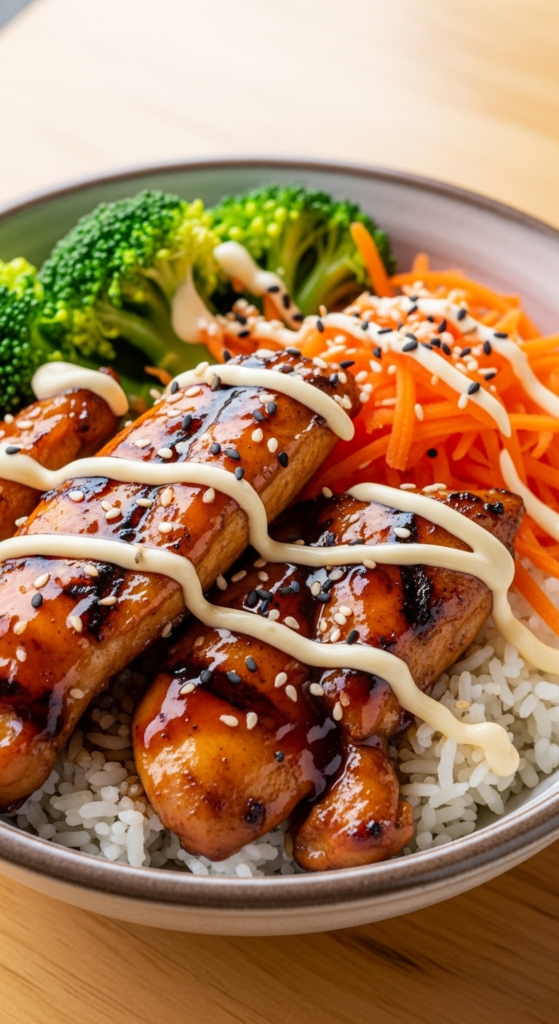
- Chicken:1.5 lbs (680g) Boneless, skinless chicken thighs (cut into 1-inch bite-sized pieces).Note: Thighs stay juicier than breasts.
- Salt & Pepper:To taste.
- Oil:2 tbsp Avocado or Grapeseed oil (high smoke point).
For the Homemade Teriyaki Sauce
- Soy Sauce:1/2 cup (120ml) Low-sodium preferred.
- Water:1/4 cup (60ml).
- Honey or Brown Sugar:1/4 cup (50g) for that essential stickiness.
- Rice Vinegar:1 tbsp for acidity.
- Fresh Ginger:1 tbsp, finely grated.
- Fresh Garlic:3 cloves, minced.
- Sesame Oil:1 tsp for aroma.
- Cornstarch Slurry:1 tbsp cornstarch dissolved in 1 tbsp cold water.
9. Step-by-Step Instructions
Step 1: Prepare the Base
Start your rice according to package instructions. Whether using a rice cooker or stovetop, ensure the rice is steaming hot when the chicken is finished.
Step 2: Whisk the Liquid Gold
In a small bowl, combine the soy sauce, water, honey, rice vinegar, ginger, garlic, and sesame oil. Whisk until the honey is fully incorporated. Set aside.
Step 3: The Sear
Pat the chicken pieces dry with paper towels (moisture is the enemy of a good sear). Season lightly with salt and pepper. Heat your skillet overmedium-high heatwith the oil. Once shimmering, add the chicken. Let it sit undisturbed for 3 minutes to develop a golden-brown crust, then toss and cook for another 4–5 minutes until nearly cooked through.
Step 4: The Glaze Transformation
Lower the heat to medium. Pour the sauce mixture into the skillet with the chicken. Let it come to a gentle simmer for 2 minutes.
Step 5: Thicken and Coat
Give your cornstarch slurry a quick stir and pour it into the bubbling sauce. Stir constantly. Within 30–60 seconds, the sauce will transform from a thin liquid into a thick, glossy glaze that coats every piece of chicken.
Step 6: Final Assembly
Steam your broccoli or snap peas (you can do this in the microwave or a separate pot). Scoop a generous portion of rice into a bowl, top with the glistening teriyaki chicken, add your greens, and finish with a heavy sprinkle of scallions and sesame seeds.
10. Frequently Asked Questions (FAQ)
Q: Can I use chicken breast instead of thighs?A:Yes! However, breasts dry out quickly. Reduce the searing time by 1-2 minutes and ensure you don’t overcook them before adding the sauce.
Q: Is Teriyaki sauce gluten-free?A:Traditional soy sauce contains wheat. To make this gluten-free, substitute the soy sauce withTamariorCoconut Aminos.
Q: How do I get my sauce extra shiny?A:The “gloss” comes from the sugar content and the cornstarch. If it’s not shiny enough, add a teaspoon more honey or mirin at the end.
Q: Can I make the sauce in advance?A:Absolutely. It stays fresh in the fridge for up to 2 weeks. Just whisk it well before adding it to the pan.
Q: My sauce is too thick, how do I fix it?A:Simply whisk in a tablespoon of water or chicken broth at a time until you reach your desired consistency.