1. Introduction
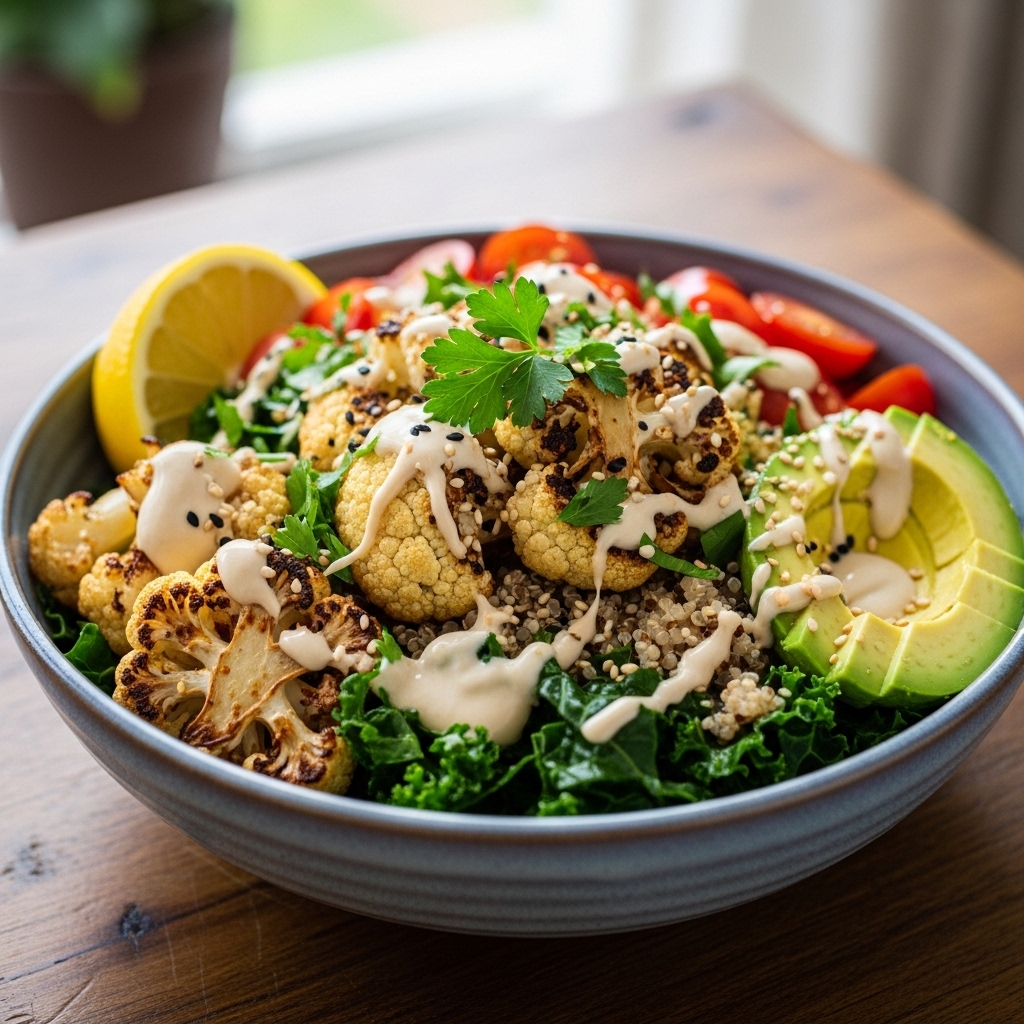
The humble cauliflower has undergone a dramatic transformation in the culinary world. Once relegated to the sidelines as a mushy, steamed side dish, it has emerged as the undisputed “chameleon” of the vegetable kingdom. TheRoasted Cauliflower Bowlis the pinnacle of this evolution—a dish that balances earthy sweetness, nutty undertones, and a satisfying crunch.
This recipe isn’t just about throwing vegetables into a bowl; it’s about a harmony of textures and temperatures. We draw inspiration from Levantine flavors, utilizing the Maillard reaction to caramelize the cauliflower florets until they develop deep, charred edges. Whether you are a dedicated vegan or a “meat-and-potatoes” enthusiast looking for a Meatless Monday win, this bowl offers a complexity of flavor that feels both indulgent and incredibly nourishing.
The beauty of the cauliflower bowl lies in its versatility. It is a canvas for seasonal produce, a vessel for high-quality fats, and a testament to the fact that plant-based eating can be profoundly satisfying.
2. Recipe Overview
- Cuisine Type:Mediterranean-Inspired Fusion
- Difficulty Level:Easy to Intermediate
- Prep Time:20 minutes
- Cook Time:30 minutes
- Total Time:50 minutes
- Dietary Classifications:Vegan, Gluten-Free, Dairy-Free, Grain-Free (optional)
3. Equipment and Tools
To achieve the perfect sear on your vegetables and a silky consistency in your dressing, ensure you have the following:
- Large Rimmed Baking Sheets (2):Standard half-sheet pans ($18 \times 13$ inches) are ideal to avoid overcrowding.
- Large Mixing Bowl:For tossing florets in oil and spices.
- High-Speed Blender or Small Food Processor:For the creamy lemon-tahini dressing.
- Chef’s Knife:A sharp 8-inch blade for precise cauliflower “steaks” or florets.
- Glass Jars:For storing leftover dressing.
- Fine-Mesh Strainer:To rinse and drain chickpeas effectively.
- Parchment Paper or Silicone Mats:To prevent sticking and ensure easy cleanup.
4. Serving Suggestions
Presentation is key to a satisfying bowl experience.
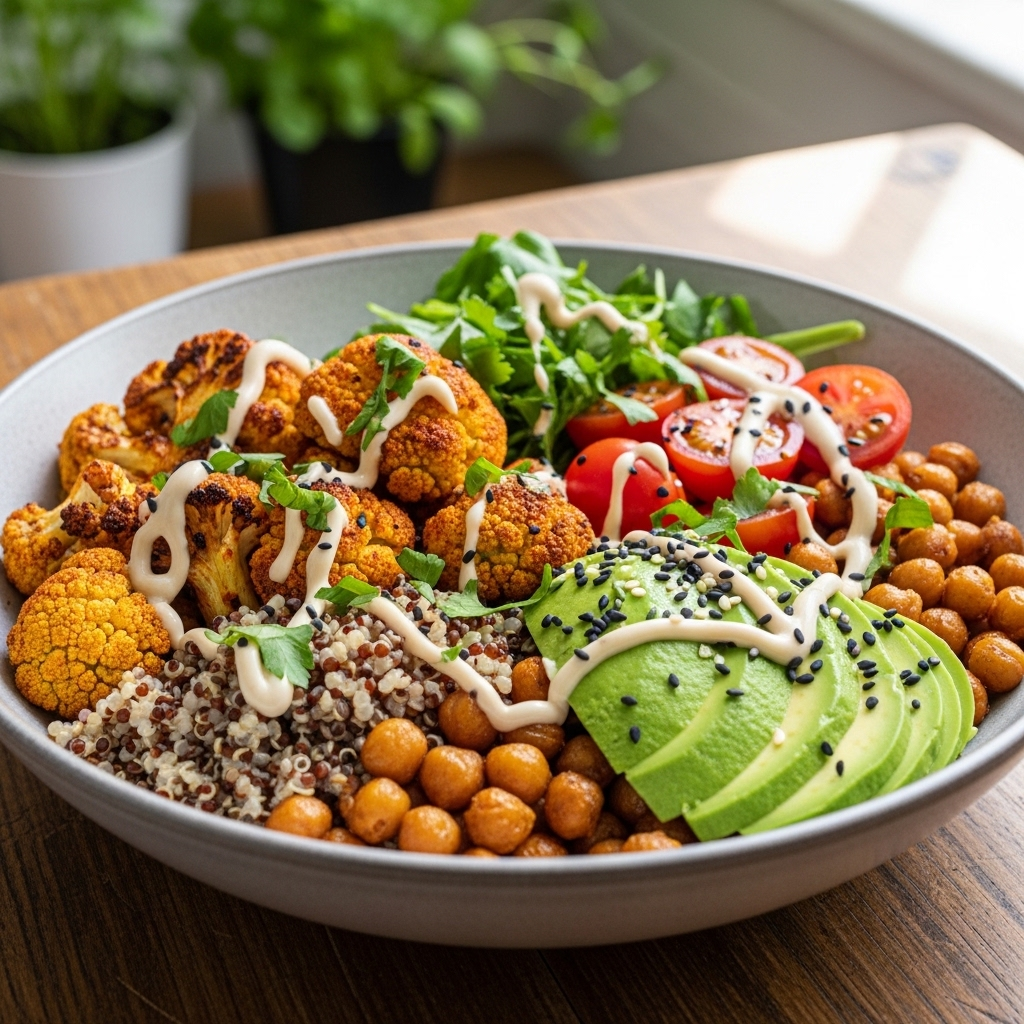
- Plating:Start with a base of warm quinoa or massaged kale. Arrange the roasted cauliflower in the center, flanked by pops of color from pickled red onions and sliced radishes.
- Garnish:Generous handfuls of fresh flat-leaf parsley, mint, and a sprinkle ofZa’ataror toasted sesame seeds.
- Sides:Serve alongside warm pita bread or a side of creamy hummus.
- Beverage Pairing:A crisp, high-acidity white wine like aSauvignon Blancor a chilled hibiscus iced tea.
5. Nutritional Information
(Per serving, based on 4 servings)
| Nutrient | Amount |
| Calories | 420 kcal |
| Total Fat | 22g |
| Saturated Fat | 3g |
| Carbohydrates | 45g |
| Fiber | 12g |
| Protein | 14g |
| Sodium | 480mg |
Health Benefits:Cauliflower is rich in sulforaphane, a plant compound that supports heart health. Combined with the healthy fats from tahini and the plant-based protein of chickpeas, this bowl provides sustained energy and supports digestive health.
6. Storage and Reheating
- Refrigeration:Store components separately in airtight containers for up to4 days.
- Freezing:Not recommended for the fresh greens or dressing, but roasted cauliflower and chickpeas can be frozen for up to1 month(though texture may soften).
- Reheating:For best results, reheat cauliflower in an oven or air fryer at350°F (175°C)for 5-7 minutes to regain crispness. Avoid microwaving if you want to maintain the texture.
7. Expert Tips and Variations
Professional Chef Tips
- The Dry Secret:Ensure your cauliflower is bone-dry after washing. Moisture creates steam, and steam prevents browning.
- Don’t Overcrowd:If the florets are touching, they will steam instead of roast. Use two pans if necessary.
Creative Variations
- The Spicy Buffalo:Toss roasted cauliflower in buffalo sauce and swap tahini for a vegan ranch.
- The Golden Bowl:Add 1 tsp of turmeric and a pinch of black pepper to the roasting oil for anti-inflammatory benefits and a vibrant yellow hue.
8. Ingredients Section
For the Roasted Base
- 1 Large Head of Cauliflower:(approx. 800g), cut into bite-sized florets.
- 1 can (15oz / 425g) Chickpeas:Drained, rinsed, and patted dry.
- 3 tbsp Extra Virgin Olive Oil:High-quality cold-pressed.
- 1 tsp Smoked Paprika & 1 tsp Cumin.
- Salt and Cracked Black Pepper:To taste.
For the Lemon-Tahini Dressing
- 1/2 cup (120ml) Hulled Tahini.
- 1/4 cup (60ml) Fresh Lemon Juice.
- 1-2 cloves Garlic:Minced or grated.
- 2-3 tbsp Ice Water:To thin the sauce to desired consistency.
9. Step-by-Step Instructions
- Preheat and Prep:Set your oven to425°F (220°C). Line your baking sheets with parchment paper.
- Season the Vegetables:In a large bowl, combine cauliflower florets and chickpeas. Drizzle with olive oil and sprinkle with paprika, cumin, salt, and pepper. Toss vigorously until every crevice is coated.
- The Roast:Spread the mixture in a single layer across the pans. Roast for25–30 minutes, tossing halfway through. You are looking for deep golden-brown edges.
- Emulsify the Dressing:While the oven works its magic, whisk together tahini, lemon juice, and garlic. It will seize up and thicken—this is normal. Add ice water one tablespoon at a time, whisking constantly until it turns pale and creamy.
- Assembly:Layer your base (greens or grains), add a massive heap of roasted cauliflower and chickpeas, and drizzle the tahini sauce generously.
10. Frequently Asked Questions (FAQ)
Q: Can I use frozen cauliflower?
A: Yes, but it won’t get as crispy as fresh. Roast directly from frozen at a higher temperature (450°F) and extend the time.
Q: My tahini dressing is bitter. How do I fix it?
A: Some brands are more bitter than others. Add a teaspoon of maple syrup or honey to balance the flavor.
Q: How do I make this “low-carb”?
A: Simply omit the chickpeas and serve the cauliflower over a bed of baby spinach or sautéed zucchini noodles instead of grains.