
1. Introduction
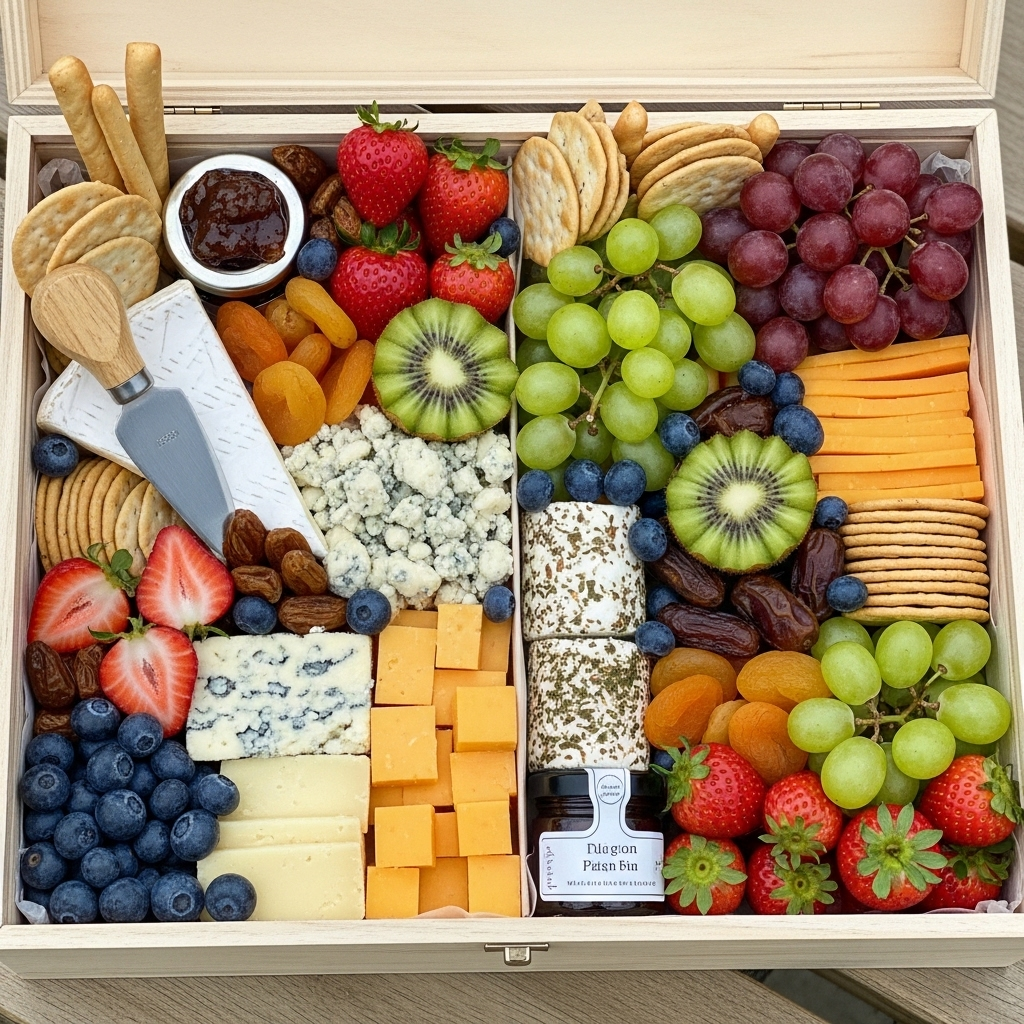
There is something inherently communal and comforting about aFruit Cheese Box. It is more than just a snack; it is a curated sensory experience that bridges the gap between a casual afternoon picnic and a high-end gala. In recent years, the “grazing culture” has transformed the traditional cheese platter into a portable, aesthetically pleasing box—often referred to as a “jarcouterie” or a “bento-style” grazing board.
The significance of the fruit and cheese pairing dates back centuries to European traditions where fruit was used as a natural palate cleanser between courses. Today, theFruit Cheese Boxrepresents a modern shift toward mindful, colorful, and nutrient-dense entertaining. Whether you are celebrating a milestone or simply elevating a Friday night in, the alchemy of a sharp cheddar against a honey-crisp apple or a creamy brie drizzled with balsamic-glazed berries is a testament to the beauty of simple, high-quality ingredients.
2. Recipe Overview
- Cuisine Type:Modern Continental / International
- Difficulty Level:Easy to Moderate (Focuses on assembly and pairing)
- Prep Time:30–45 minutes
- Cooking Time:0 minutes (No-cook recipe)
- Total Time:45 minutes
- Dietary Classifications:Vegetarian, Gluten-Free (ensure crackers are GF), High-Protein.
3. Equipment and Tools
To create a professional-grade Fruit Cheese Box, you need more than just a container. The presentation is as important as the taste.
- The Container:
- Disposable Option:10×10 inch kraft paper boxes with clear windows.
- Permanent Option:A wooden bento box or a partitioned bamboo tray.
- Cutting Tools:
- Chef’s Knife:For slicing large fruits and firm cheeses.
- Cheese Wire:For clean cuts through soft, sticky cheeses like Camembert.
- Small Paring Knife:For intricate fruit shapes (like strawberry fans).
- Preparation Essentials:
- Small Ramekins:2-ounce glass or ceramic jars for honey, jams, or olives.
- Bamboo Picks:For easy, hygienic serving.
- Mandoline Slicer:(Optional) For paper-thin apple or pear slices.
4. Serving Suggestions
A Fruit Cheese Box is designed to be a conversation starter. Here is how to make it shine:
Plating and Aesthetics
- The “S-Curve”:Arrange your crackers or fruit slices in an “S” shape across the box to create visual flow.
- Color Blocking:Place vibrant red strawberries next to white cheeses, and deep purple grapes next to golden honeycomb.
Pairings
- Beverages:*White Wine:A crisp Sauvignon Blanc or a buttery Chardonnay.
- Red Wine:A light Pinot Noir for soft cheeses or a bold Cabernet for aged cheddars.
- Non-Alcoholic:Sparkling apple cider or hibiscus-infused sparkling water.
- Garnish:Use fresh herbs like rosemary sprigs or edible flowers (pansies or nasturtiums) to add a professional touch.
5. Nutritional Information
Note: Estimates are based on a standard serving of 100g of mixed fruit and cheese.
Health Benefits:This box is rich in calcium for bone health, antioxidants from berries, and healthy fats from nuts. It provides a balanced ratio of macronutrients that keeps blood sugar stable compared to traditional dessert boxes.
6. Storage and Reheating
Storage
- Refrigeration:The box should be kept refrigerated until 30 minutes before serving. Store for up to 24 hours.
- Component Separation:If making ahead of time, keep crackers and nuts in separate airtight containers to prevent them from becoming soggy due to fruit moisture.
Tips
- Freezing:This recipe isnotrecommended for freezing, as the texture of fresh cheese and watery fruit will degrade significantly.
- Reviving:If the cheese looks “sweaty” after being out, gently pat it with a clean paper towel.
7. Expert Tips and Variations
Professional Secrets
- Temperature Matters:Serve cheese at room temperature to allow the fats to soften and the full flavor profile to emerge. Take the box out of the fridge 30–60 minutes before eating.
- The Rule of Three:Aim for three types of cheese (Soft, Semi-Hard, and Hard) and three colors of fruit.
Variations
- The Tropical Box:Replace apples and grapes with mango, kiwi, and dragonfruit. Pair with Havarti and coconut-encrusted goat cheese.
- The Savory Twist:Add Prosciutto (if not vegetarian), Marcona almonds, and spicy pepper jelly.
- The Seasonal Autumn Box:Focus on persimmons, figs, walnuts, and aged Gouda.
8. Ingredients Section
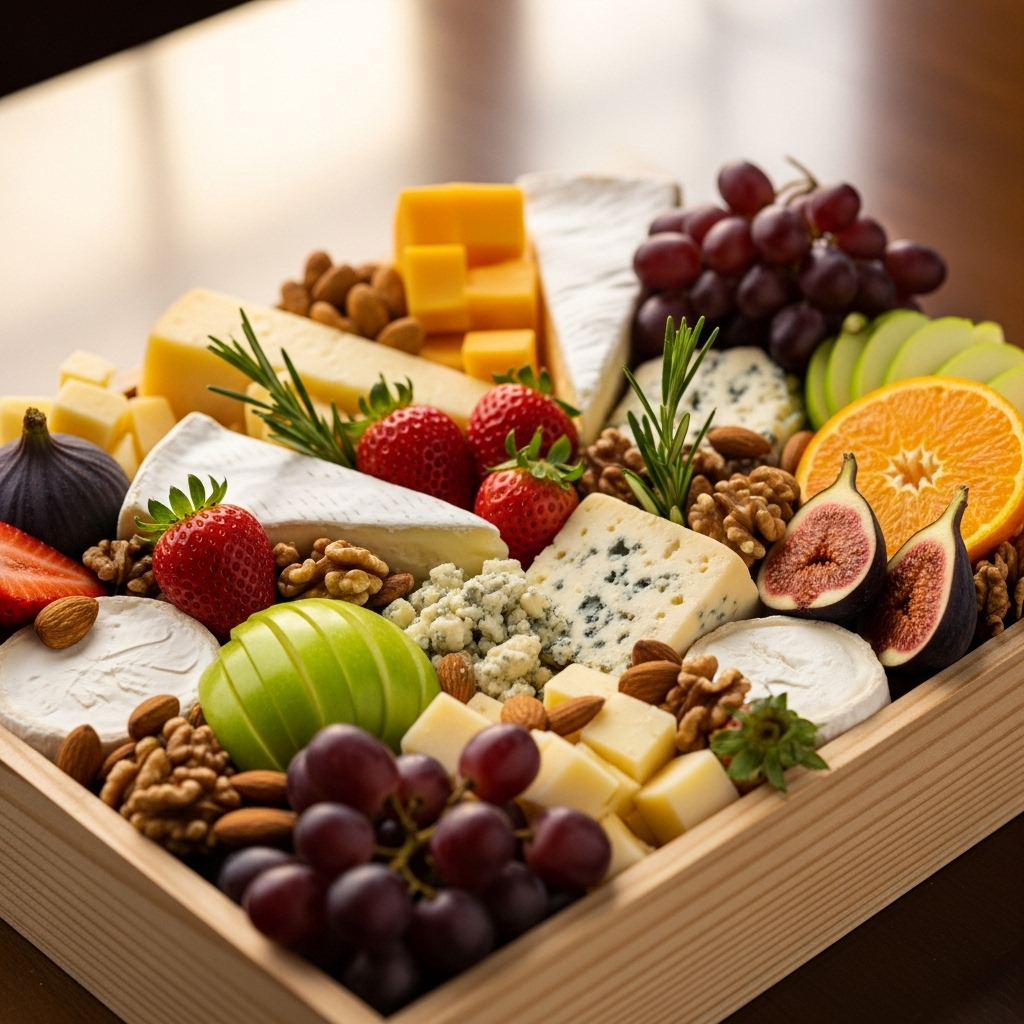
The Cheeses
- Soft (150g):Double Cream Brie or Chèvre (Goat Cheese).
- Semi-Hard (150g):Manchego or Gruyère.
- Hard/Aged (100g):12-month aged White Cheddar or Parmigiano-Reggiano chunks.
The Fruits
- Grapes (1 small bunch):Red or cotton candy grapes (stem-on for aesthetics).
- Berries (1 cup):Fresh raspberries and blueberries.
- Stone Fruit (2 units):Sliced apples (tossed in lemon juice) or fresh figs.
Accompaniments
- Crunch:1/2 cup raw walnuts or salted almonds.
- Sweet:2 tbsp high-quality honey or fig jam.
- Carbs:A handful of artisanal sourdough crackers or a sliced baguette.
9. Step-by-Step Instructions
- Prep the Canvas:Clean your box or board. If using a cardboard box, line the bottom with parchment paper to prevent grease spots from the cheese.
- Anchor the Box:Place your heaviest items first. Put your ramekins of honey or jam in opposite corners. Place the largest blocks of cheese (like the Brie wheel) next.
- Prepare the Fruit:Wash and thoroughly dry all fruit. Slice apples and pears just before assembly; toss them in a $5\%$ lemon juice to water solution to prevent oxidation (browning).
- Slice the Cheese:Leave the soft cheese whole. Slice the semi-hard cheese into triangles. Crumble or “shard” the hard cheese using the tip of a knife for a rustic look.
- Create the Flow:Arrange the crackers in a stack or fan leading away from the cheeses.
- Fill the Gaps:Use grapes and berries to fill any “dead space” in the box. This makes the box look lush and abundant.
- The Final Garnish:Tuck in a few sprigs of rosemary and sprinkle nuts over the cheese.
- Final Check:Ensure no wet fruit is touching the crackers.
10. Frequently Asked Questions (FAQ)
Q: How do I keep my apples from turning brown in the box?
A: The best method is a quick soak in lightly salted water or lemon water. Alternatively, choose “non-browning” varieties like Opal or Honeycrisp.
Q: Can I make this box 24 hours in advance?
A: You can prep the cheese and sturdy fruits (grapes, berries) early. However, add crackers, nuts, and sliced apples only right before serving to maintain texture.
Q: What is a good “beginner” cheese for people who don’t like “stinky” cheese?
A: Stick to a mild, creamy Brie, a sharp but familiar White Cheddar, and a nutty Manchego. These are generally crowd-pleasers.
Q: How much cheese should I calculate per person?
A: For an appetizer portion, aim for about 2 to 3 ounces ($60-90g$) of cheese per person.
Q: Are the rinds on Brie and Camembert edible?
A: Yes! The white bloomy rind is completely edible and adds a distinct earthy flavor to the cheese.