
1. Introduction
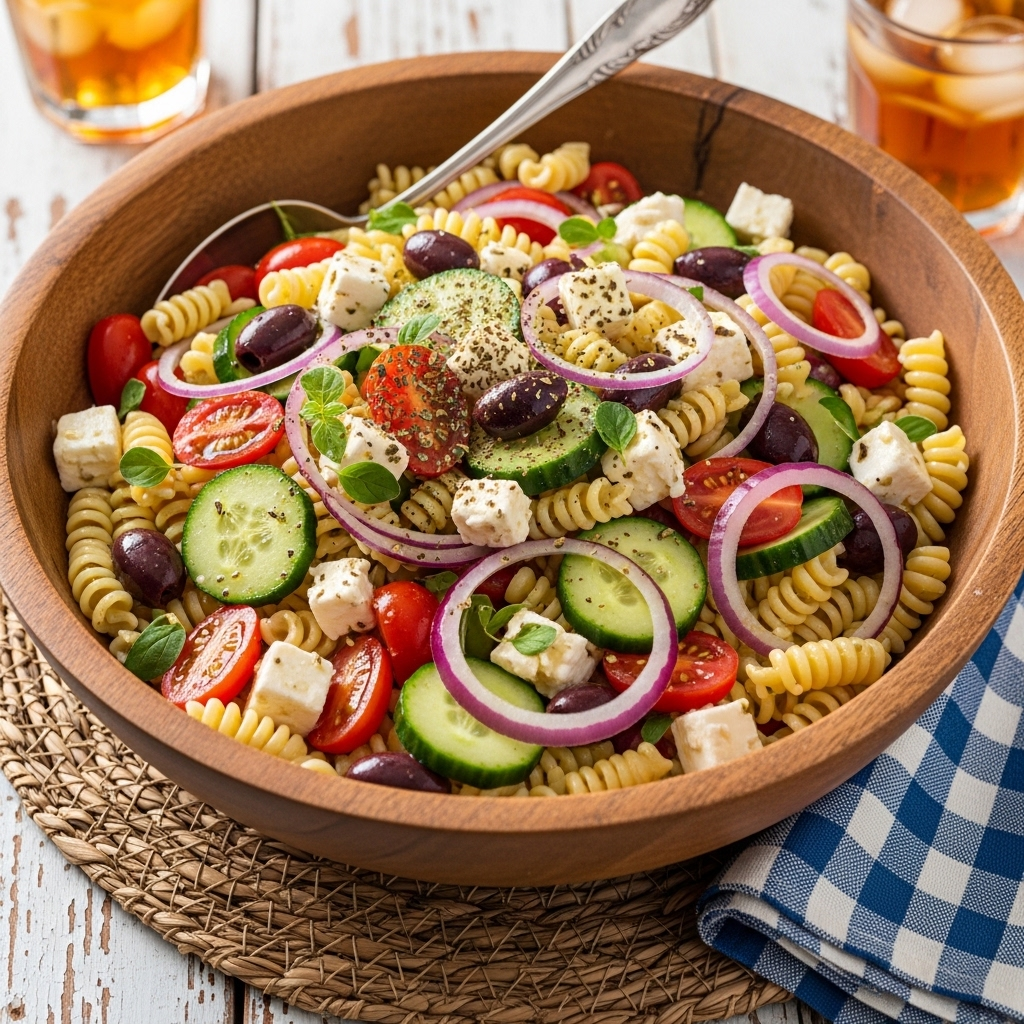
Imagine yourself seated at a sun-drenched taverna overlooking the azure waters of the Aegean Sea. The air is salty, the breeze is warm, and the food on your table is a testament to the beauty of simplicity. While traditional Greek cuisine often separates pasta from the iconicHoriatiki(peasant salad), theGreek Pasta Saladis a brilliant culinary bridge. It marries the satisfying heartiness of Italian pasta with the sharp, briney, and refreshing profiles of Hellenic ingredients.
This dish isn’t just a side; it’s a celebration of the Mediterranean lifestyle. Whether you’re hosting a summer backyard barbecue, preparing a week’s worth of healthy lunches, or bringing a dish to a neighborhood potluck, this salad stands out. Its beauty lies in the contrast: the creamy tang of sheep’s milk feta, the snap of Persian cucumbers, the earthy richness of Kalamata olives, and the zesty punch of a homemade oregano-infused vinaigrette. It is a dish that tastes like sunshine and keeps getting better the longer it sits.
2. Recipe Overview
- Cuisine Type:Mediterranean / Greek-American Fusion
- Difficulty Level:Easy (Beginner-friendly)
- Total Time:25 minutes (10 mins prep, 15 mins cooking/cooling)
- Dietary Classifications:Vegetarian, Nut-Free, Soy-Free (Can be made Gluten-Free with alternative pasta)
3. Equipment and Tools
To achieve professional results, ensure you have the following tools ready:
- Large Stockpot:Minimum 6-quart capacity to allow pasta to move freely and prevent sticking.
- Colander:Fine-mesh or standard stainless steel for draining and rinsing.
- Extra-Large Mixing Bowl:Stainless steel or glass (at least 5-quart) to allow for vigorous tossing without spilling.
- Chef’s Knife:A sharp 8-inch blade for precise vegetable dicing.
- Small Mason Jar or Whisk:For emulsifying the vinaigrette.
- Measuring Tools:Full set of dry measuring cups and liquid measuring spoons.
- Mandoline Slicer (Optional):For paper-thin red onion slices.
4. Serving Suggestions
Plating:Serve in a wide, shallow wooden bowl to highlight the vibrant colors. A final crumble of feta and a crack of black pepper should be added just before serving.
Garnish Ideas:
- Fresh sprigs of dill or mint.
- A sprinkle of Aleppo pepper for a subtle, smoky heat.
- Lemon wedges on the side for an extra acidic pop.
Pairings:
- Proteins:Grilled lemon-herb chicken skewers, garlic butter shrimp, or lamb chops.
- Sides:Toasted pita bread with a side of creamy hummus or tzatziki.
- Beverage:A crisp, dry Assyrtiko wine or a chilled sparkling water with cucumber and lime.
5. Nutritional Information
(Per 1.5-cup serving)
| Nutrient | Amount |
| Calories | 340 kcal |
| Total Fat | 16g |
| Saturated Fat | 5g |
| Carbohydrates | 38g |
| Fiber | 4g |
| Protein | 10g |
| Sodium | 580mg |
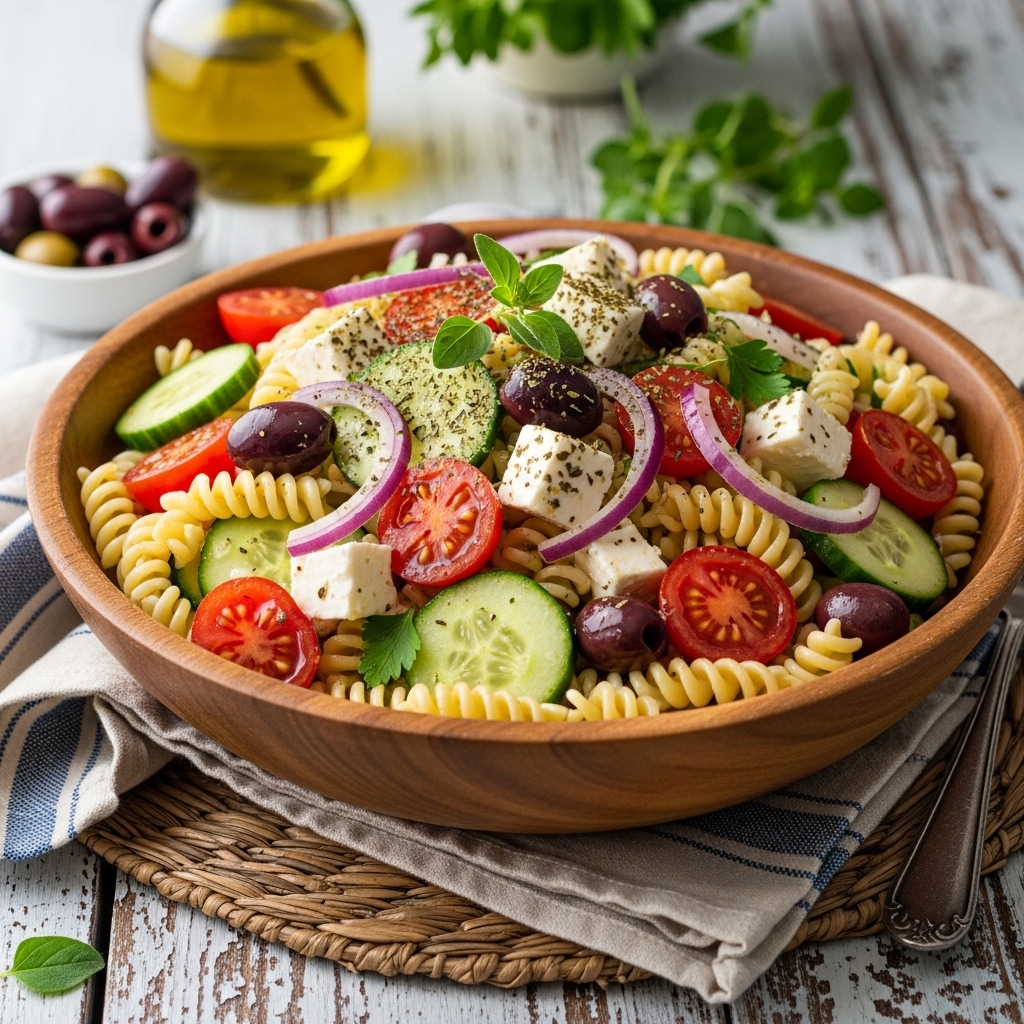
Health Benefits:This dish is rich in monounsaturated fats from olive oil, which supports heart health. The diverse array of vegetables provides a high dose of Vitamin C, Vitamin K, and essential antioxidants.
6. Storage and Reheating
- Refrigeration:Store in an airtight container for up to 4–5 days. The flavors actually deepen after 24 hours.
- Freezing:Not recommended. The cucumbers and tomatoes will lose their structural integrity and become mushy upon thawing.
- Pro-Tip:If the pasta seems dry the next day (as it absorbs the dressing), toss it with a teaspoon of olive oil and a squeeze of fresh lemon before eating.
7. Expert Tips and Variations
Professional Chef Tips
- Salt the Water:Your pasta water should taste like the sea. This is your only chance to season the pasta itself.
- The “Al Dente” Rule:Cook the pasta 1 minute less than the package instructions. The dressing will soften the pasta further as it marinates.
- Rinse the Pasta:Unlike hot pasta dishes where you want the starch, for cold salads, you must rinse the pasta under cold water to stop the cooking and remove excess starch.
Variations
- The Protein Boost:Add chickpeas or white kidney beans for a vegan protein source.
- The Grain Swap:Use farro or quinoa instead of pasta for a nuttier, whole-grain texture.
- Spicy Kick:Add sliced pepperoncini or a pinch of crushed red pepper flakes to the dressing.
8. Ingredients Section
The Pasta
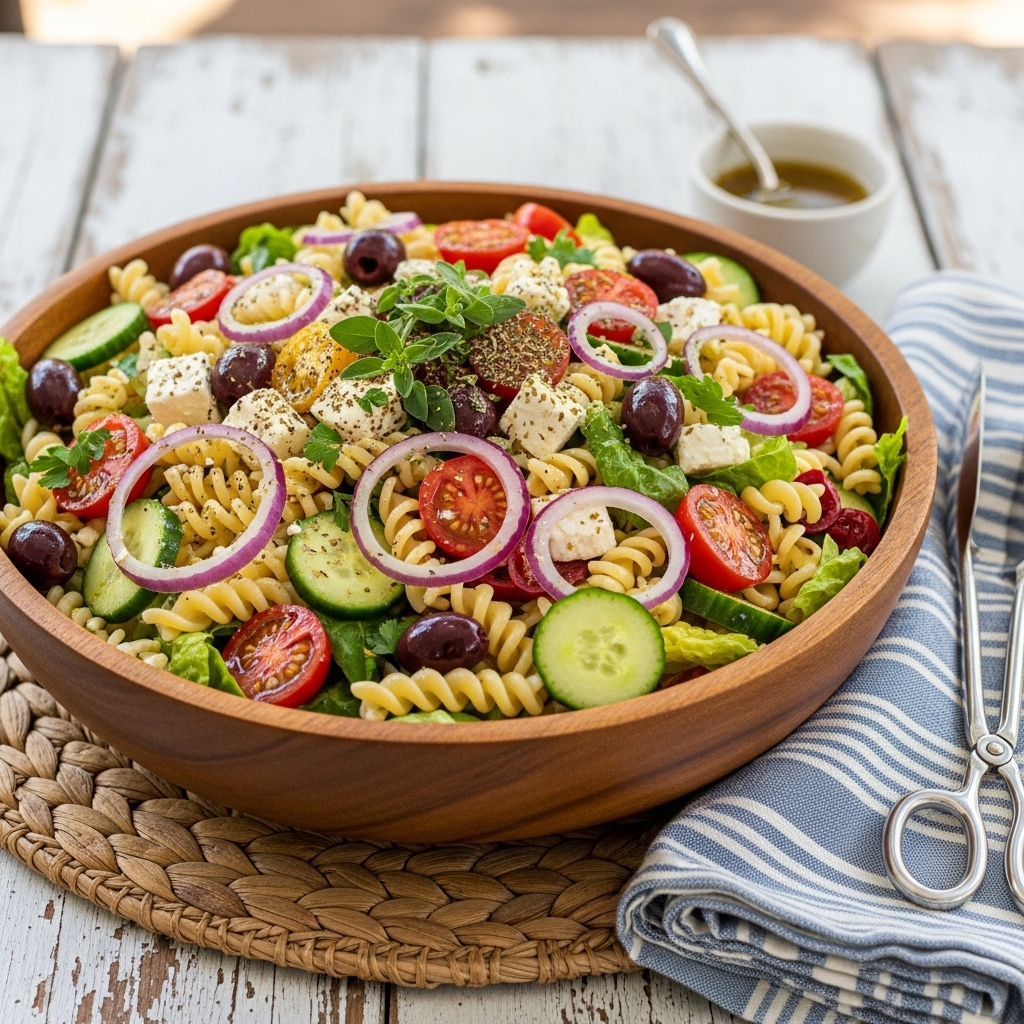
- 1 lb (450g) Rotini or Fusilli:These shapes have “nooks and crannies” that trap the vinaigrette.
The Vegetables & Toppings
- 1 pint (250g) Cherry Tomatoes:Halved.
- 2 Persian Cucumbers:Quartered and sliced (these are crunchier than English cucumbers).
- 1/2 Medium Red Onion:Finely diced or thinly sliced into half-moons.
- 1 cup (150g) Kalamata Olives:Pitted and sliced (do not use canned black olives!).
- 1 Green Bell Pepper:Chopped into 1/2-inch pieces.
- 6 oz (170g) High-Quality Feta Cheese:Crumbled (look for feta in brine for better flavor).
The Greek Vinaigrette
- 1/2 cup (120ml) Extra Virgin Olive Oil:Cold-pressed is best.
- 1/4 cup (60ml) Red Wine Vinegar.
- 1 tbsp Fresh Lemon Juice.
- 2 cloves Garlic:Minced or pressed.
- 2 tsp Dried Oregano.
- 1 tsp Dijon Mustard:Acts as an emulsifier.
- Salt & Black Pepper:To taste.
9. Step-by-Step Instructions
Step 1: Boil the Pasta
Bring a large pot of water to a rolling boil. Add 2 tablespoons of kosher salt. Add the pasta and cook according to the package until justal dente.
Visual Cue:The pasta should have a slight “bite” in the center.
Step 2: Prepare the Vinaigrette
In a small bowl or mason jar, combine the olive oil, red wine vinegar, lemon juice, minced garlic, oregano, and mustard. Whisk or shake vigorously until the oil and vinegar are fully integrated into a cloudy, golden dressing.
Step 3: Cool the Pasta
Drain the pasta in a colander. Immediately run cold water over it for 30 seconds. Shake well to remove all excess moisture.Note:Wet pasta will repel the dressing!
Step 4: The Big Chop
While the pasta cools, prep your vegetables. Ensure the onion is diced finely so its flavor doesn’t overwhelm individual bites.
Step 5: Assemble
Transfer the cooled pasta to your large mixing bowl. Add the tomatoes, cucumbers, onion, olives, and bell pepper. Pour about 3/4 of the dressing over the ingredients.
Step 6: Tossing and Cheese
Toss the salad gently using large spoons. Once coated, fold in the crumbled feta cheese. Tossing the feta last prevents it from breaking down too much and turning the salad “cloudy.”
Step 7: The Marinating Phase (Crucial)
Let the salad sit at room temperature for 15 minutes, or in the fridge for 1 hour. Just before serving, taste and add the remaining dressing if needed.
10. Frequently Asked Questions (FAQ)
Q: Can I use a different type of pasta?
A:Absolutely. Penne, Farfalle (bowtie), or Orzo work beautifully. Avoid long noodles like Spaghetti, as they are difficult to eat with chunky vegetables.
Q: How do I keep the onion from being too sharp?
A:After slicing the red onion, soak the pieces in a bowl of cold water for 10 minutes, then drain. This removes the “sulfuric” bite while keeping the crunch.
Q: Is this recipe gluten-free?
A:It can be! Simply swap the wheat pasta for a high-quality chickpea or brown rice pasta.
Q: Why is my pasta salad bland?
A:Usually, it’s a lack of salt or acid. Pasta absorbs salt, so you may need more than you think. Add an extra squeeze of lemon or a splash of vinegar just before serving.
Q: Can I make this ahead of time?
A:Yes, it’s best made 2–4 hours before serving. If making it the night before, keep the feta and the dressing separate and toss them in a few hours before the event.