
1. Introduction
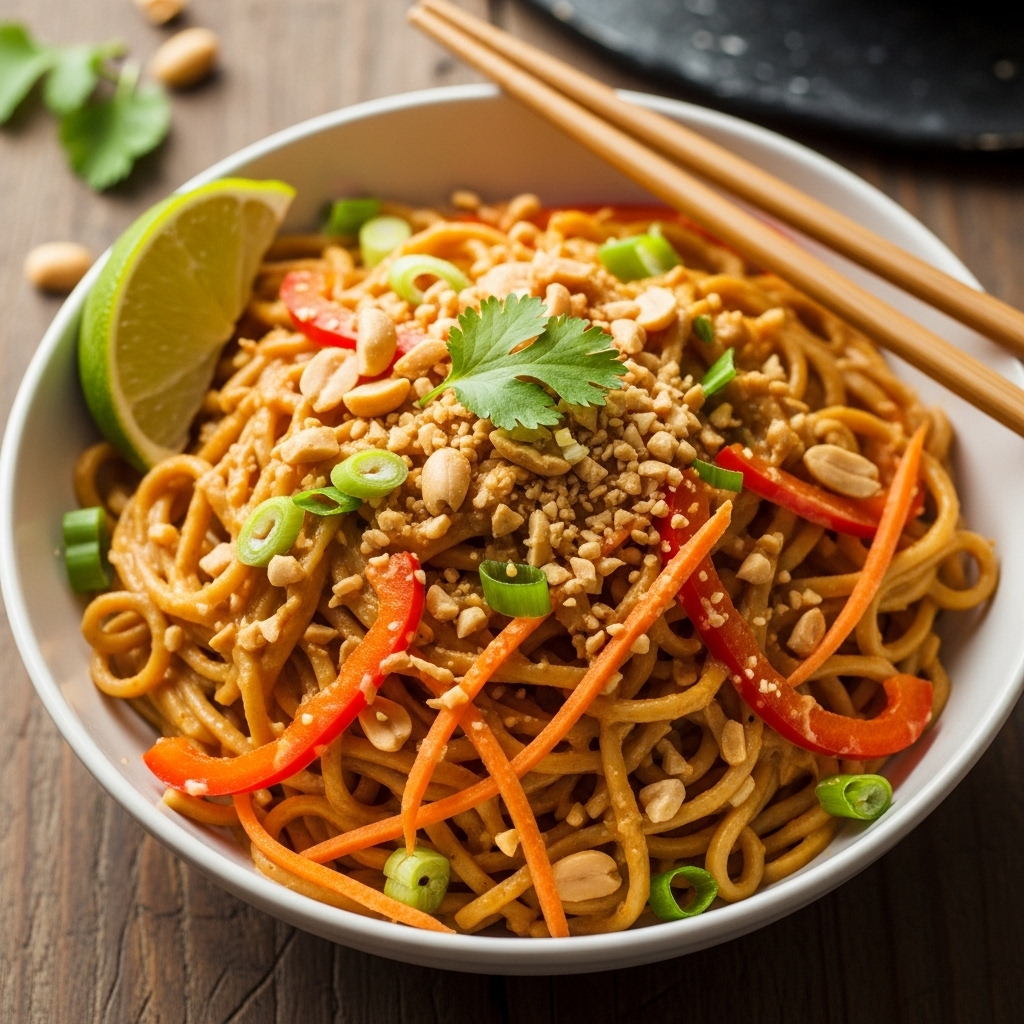
There is a specific kind of magic that happens when humble pantry staples transform into a dish that tastes like a high-end bistro favorite.Peanut Noodlesare the ultimate culinary “cheat code”—a dish that balances the creamy, earthy depth of roasted peanuts with the sharp brightness of lime and the rhythmic heat of chili.
While many associate peanut-based sauces exclusively with ThaiSatayor IndonesianGado-Gado, the concept of “nut noodles” spans across East and Southeast Asia. In China,Dan Dan Mianuses sesame paste to achieve a similar richness, while in the bustling night markets of Taipei, cold peanut noodles are a refreshing staple. This recipe draws inspiration from those traditions, focusing on the perfect emulsion: a sauce so velvety it clings to every strand of pasta without becoming heavy or clumping.
What makes this dish truly significant is its versatility. It is the answer to the “I have nothing in the fridge” dilemma, yet it’s sophisticated enough to serve at a dinner party. It’s a bridge between comfort food and vibrant, healthy eating. Whether you are slurping these noodles over a laptop during a busy workday or sharing a large platter with friends, they represent the best of modern home cooking: fast, flavorful, and deeply satisfying.
2. Recipe Overview
- Cuisine Type:Pan-Asian Fusion
- Difficulty Level:Easy (Beginner-friendly)
- Total Time:15 Minutes (Prep: 7 mins | Cook: 8 mins)
- Dietary Classifications:Vegetarian, Vegan-Adaptable, Dairy-Free, Gluten-Free (with substitutions)
3. Equipment and Tools
To achieve the perfect sauce consistency, having the right tools is essential.
- Large Pasta Pot:Minimum 5-quart (4.7L) capacity to allow noodles to move freely.
- Mixing Bowl (Medium):For whisking the peanut sauce.
- Fine-Mesh Whisk:To ensure a smooth, lump-free emulsion.
- Large Non-Stick Skillet or Wok:Recommended 12-inch diameter with at least 2-inch depth for tossing the noodles.
- Chef’s Knife:For precision slicing of aromatics and garnishes.
- Liquid Measuring Cup:2-cup capacity for measuring water and sauce bases.
- Tongs:Silicone-tipped tongs are best for tossing noodles without breaking them.
4. Serving Suggestions
Presentation is key to elevating this simple dish.
Plating Recommendations
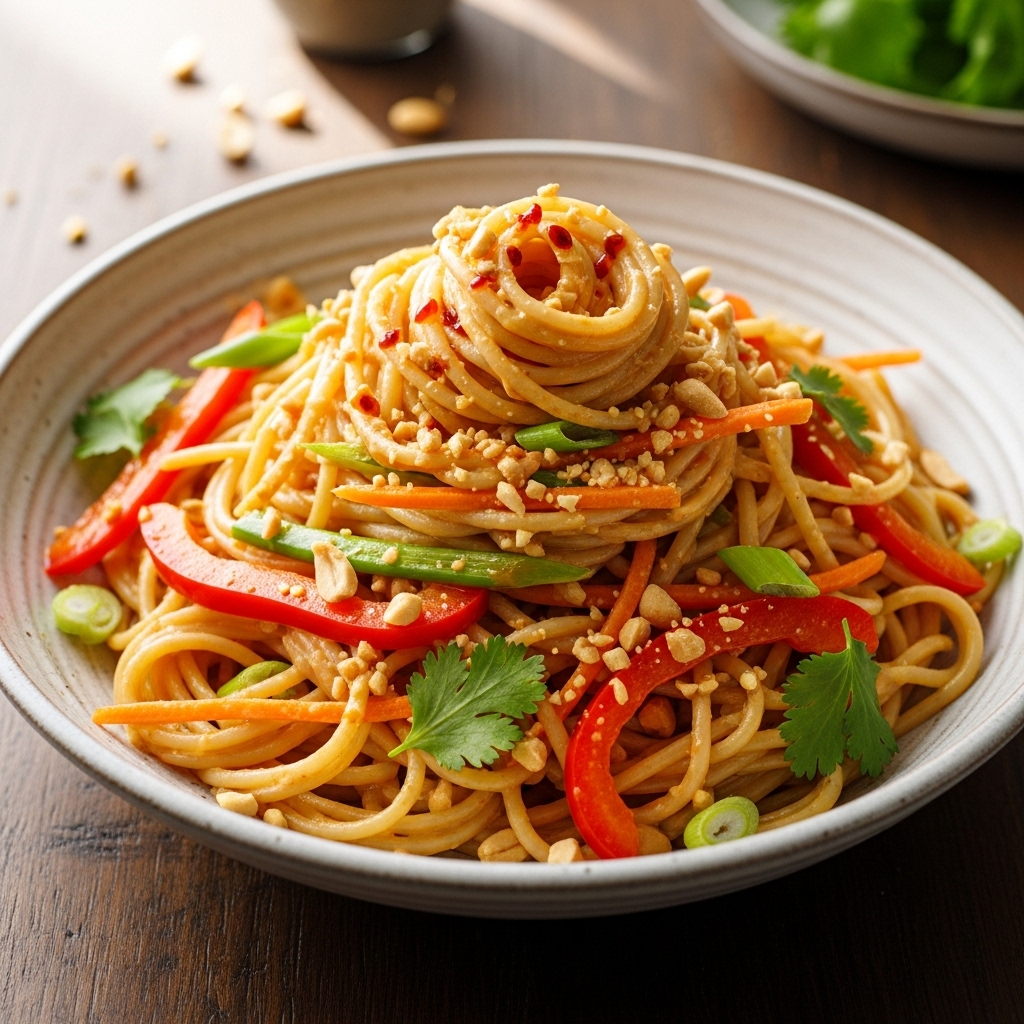
Serve in shallow, wide bowls. Use tongs to twirl the noodles into a high nest in the center of the bowl to create height.
Garnish Ideas
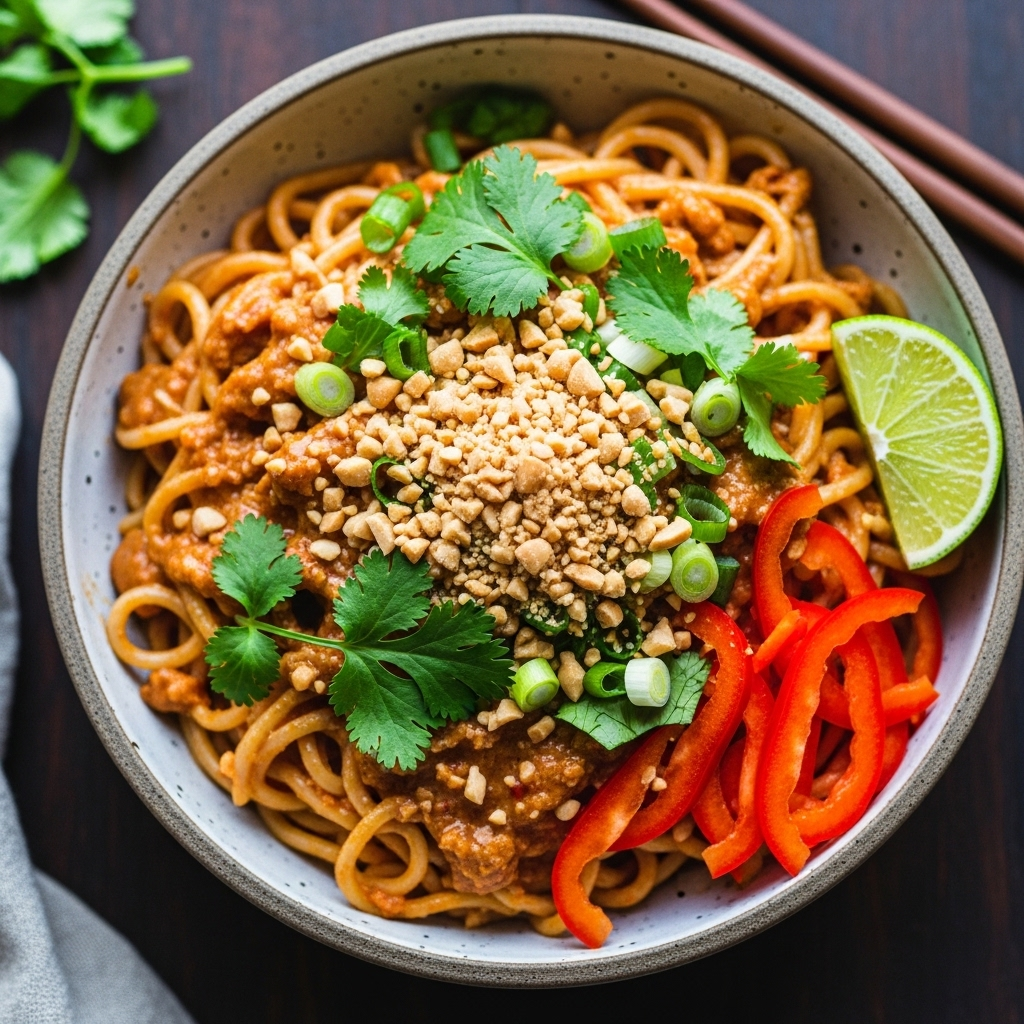
- Texture:A generous handful of crushed roasted peanuts.
- Freshness:Finely sliced scallions (on a bias) and fresh cilantro leaves.
- Heat:Red pepper flakes or a drizzle of chili oil.
- Acid:A fresh wedge of lime on the side to brighten the fats in the peanut butter.
Beverage Pairings
- Wine:A crisp, off-dryRieslingor aGewürztraminer. The slight sweetness of these wines cuts through the spice and complements the nuttiness.
- Non-Alcoholic:Thai iced tea (with coconut milk for a vegan twist) or a sparkling lime and ginger spritz.
5. Nutritional Information
(Values based on a single serving of approximately 350g)
| Nutrient | Amount |
| Calories | 480 kcal |
| Total Fat | 22g |
| Saturated Fat | 4g |
| Protein | 16g |
| Total Carbohydrates | 58g |
| Dietary Fiber | 5g |
| Sodium | 820mg |
Health Benefits:Peanuts are an excellent source of plant-based protein and heart-healthy monounsaturated fats. When paired with whole-grain noodles and fresh bell peppers, this dish provides a balanced profile of complex carbs and antioxidants.
6. Storage and Reheating
Peanut noodles are notorious for thickening as they sit because the starch in the noodles absorbs the moisture from the sauce.
- Refrigeration:Store in an airtight container for up to 4 days.
- Freezing:Not recommended, as the emulsion of the sauce may break and the noodles may become mushy upon thawing.
- Reheating:*Microwave:Add a splash of water or coconut milk before heating to loosen the sauce. Heat in 30-second intervals, stirring in between.
- Stovetop:Reheat in a skillet over low heat, adding a tablespoon of liquid at a time until the creamy consistency returns.
7. Expert Tips and Variations
Professional Chef Tips
- Emulsify with Pasta Water:Never throw away all your noodle water! The starchy, hot water is the secret to a glossy sauce that sticks to the noodles.
- The “Room Temp” Rule:If serving cold, rinse the noodles in cold water immediately after boiling to stop the cooking process and remove excess starch.
Creative Variations
- The Protein Boost:Add grilled shrimp, shredded rotisserie chicken, or crispy seared tofu.
- The Low-Carb Swap:Use spiralized zucchini (zoodles) or spaghetti squash instead of wheat noodles.
- The Spicy Kick:Whisk in a tablespoon ofGochujang(Korean chili paste) for a smoky, fermented heat.
8. Ingredients Section
The Noodle Base
- 8 oz (225g)Dried Noodles (Linguine, Spaghetti, or Rice Noodles for GF)
The Creamy Sauce
- 1/2 cup (125g)Creamy Peanut Butter (Natural, unsweetened preferred)
- 3 tbsp (45ml)Low-sodium Soy Sauce (or Tamari for GF)
- 1 tbsp (15ml)Toasted Sesame Oil
- 1 tbsp (15ml)Rice Vinegar
- 1 tbsp (15g)Honey or Maple Syrup
- 1 tsp (5g)Fresh Ginger, grated
- 2 clovesGarlic, minced
- 1/2 tspSriracha or Chili Garlic Sauce
- 1/4 – 1/2 cupHot Pasta Water (Reserved from the pot)
Fresh Components
- 1 cupRed Bell Pepper, thinly sliced
- 1 cupShredded Carrots
- 3Scallions, sliced
9. Step-by-Step Instructions
- Boil the Noodles:Bring a large pot of salted water to a boil. Add the noodles and cook according to package directions untilal dente.Pro Tip:Before draining, dip a measuring cup into the pot and reserve 1 cup of the starchy cooking water.
- Whisk the Aromatics:In a medium bowl, combine the peanut butter, soy sauce, sesame oil, rice vinegar, sweetener, ginger, garlic, and chili sauce. Whisk until a thick paste forms.
- Create the Emulsion:Slowly whisk in the hot pasta water, one tablespoon at a time, into the peanut mixture. The sauce will initially look curdled—keep whisking! It will transform into a smooth, pourable cream.
- Sauté (Optional):If you prefer softened vegetables, flash-fry the peppers and carrots in a skillet with a teaspoon of oil for 2 minutes. If you prefer a crunch, leave them raw.
- The Big Toss:Add the drained noodles to your large skillet or bowl. Pour the peanut sauce over the top. Add the vegetables.
- Incorporate:Using tongs, toss vigorously. The heat from the noodles will help the sauce penetrate the pasta. If it looks too thick, add another splash of pasta water.
- Final Garnish:Divide into bowls and top with crushed peanuts, scallions, and a squeeze of fresh lime juice.
10. Frequently Asked Questions (FAQ)
Q: Can I use crunchy peanut butter?
A:Absolutely! It adds a lovely texture. However, you may need a bit more liquid to keep the sauce smooth.
Q: What is the best noodle for this recipe?
A:While traditional wheat-based lo mein noodles are great, standard Italian Linguine is a fantastic substitute because its flat surface area holds onto the sauce perfectly.
Q: How do I make this gluten-free?
A:Swap the wheat noodles for wide rice noodles (Pad Thai style) and use Tamari or liquid aminos instead of soy sauce.
Q: My sauce is too thick and clumpy, what happened?
A:Peanut butter contains high amounts of fat and protein that “seize” when mixed with small amounts of liquid. The solution is always more heat and more liquid. Add hot water and whisk vigorously.
Q: Can I make this ahead of time for meal prep?
A:Yes, but keep the sauce and noodles separate if possible. If already mixed, be prepared to add a splash of water when reheating to restore the creamy texture.