1. Introduction: The Soul of the Sesame Noodle
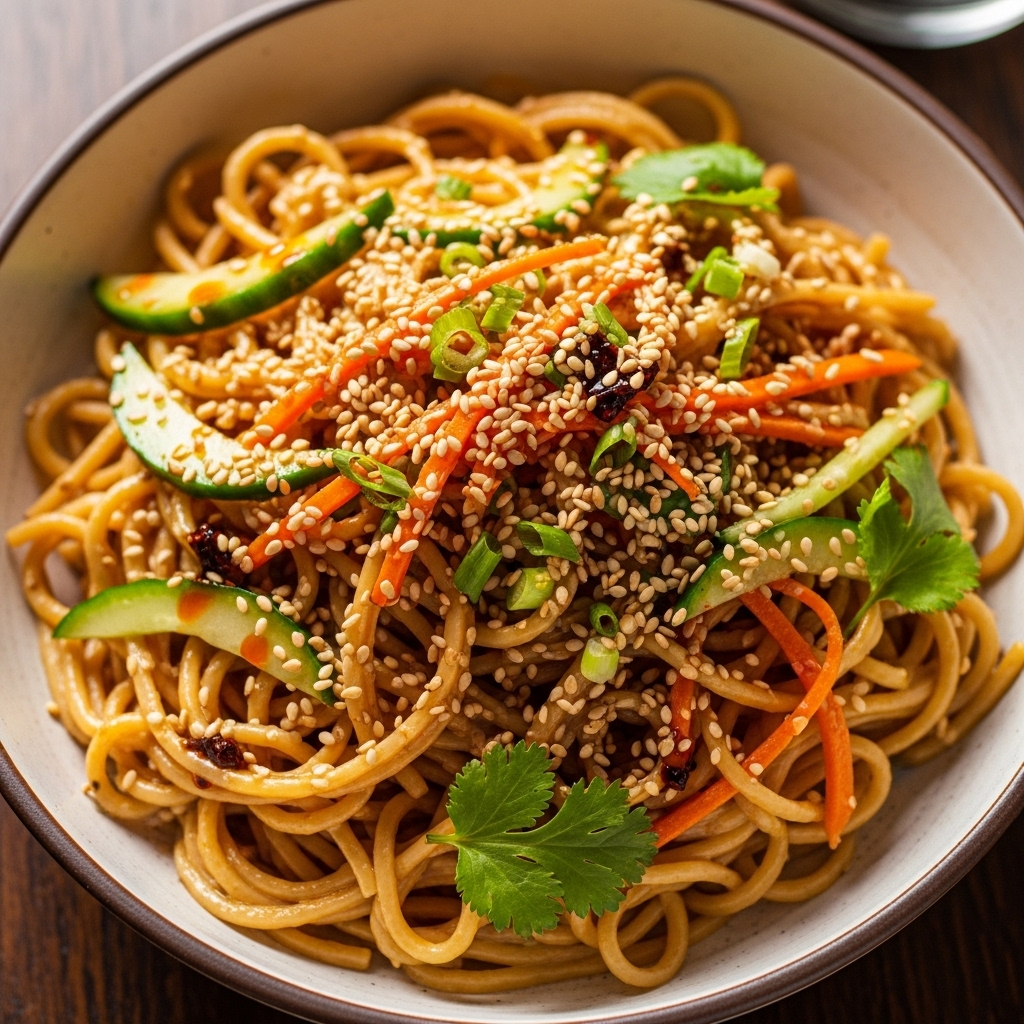
There is a specific kind of magic found in a bowl ofSesame Noodles. It is the ultimate “pantry meal”—that reliable, comforting dish that bridges the gap between a frantic weeknight and a gourmet experience. Rooted in the culinary traditions of China, specifically inspired by Sichuan’sDan Dan Mianand the chilled nut-paste noodles of Shanghai, this dish has evolved into a global favorite.
For many, the first encounter with sesame noodles happens in a white cardboard takeout box. However, the homemade version is a revelation. Unlike the often gloppy, overly sweet takeout versions, authentic sesame noodles should be a delicate balance ofcreamy, salty, acidic, and just a hint of spicy.
The beauty of this dish lies in its simplicity and its temperature. Often served cold or at room temperature, it is the perfect antidote to a humid summer afternoon, yet the richness of the toasted sesame oil and nutty paste makes it feel substantial enough for a winter evening. It’s a dish that tells a story of trade and adaptation—taking the humble sesame seed and transforming it into a luxurious, velvet-like coating for chewy wheat strands.
2. Recipe Overview
- Cuisine Type:Chinese-Inspired / Fusion
- Difficulty Level:Easy
- Prep Time:10 minutes
- Cook Time:5 minutes
- Total Time:15 minutes
- Dietary Classifications:Vegetarian, Vegan-friendly (if using agave/maple), Dairy-Free. Can be made Gluten-Free with substitutions.
3. Equipment and Tools
To achieve the perfect emulsion for your sauce and the ideal texture for your noodles, you will need the following:
- Large Stockpot:Minimum 5-quart capacity to allow noodles to move freely without sticking.
- Colander:Fine mesh or standard stainless steel for draining and rinsing.
- Whisk or Immersion Blender:A small balloon whisk works well for manual emulsification, but an immersion blender creates the smoothest texture.
- Mixing Bowls:* One small glass bowl for whisking the sauce.
- One large stainless steel or ceramic bowl for tossing the noodles.
- Microplane or Fine Grater:Essential for turning garlic and ginger into a paste-like consistency.
- Liquid Measuring Cup:2-cup capacity for precision.
- Tongs:Silicone-tipped tongs are best for tossing noodles without breaking the strands.
4. Serving Suggestions
Plating & Garnish
Presentation is key for a dish that is predominantly monochromatic.
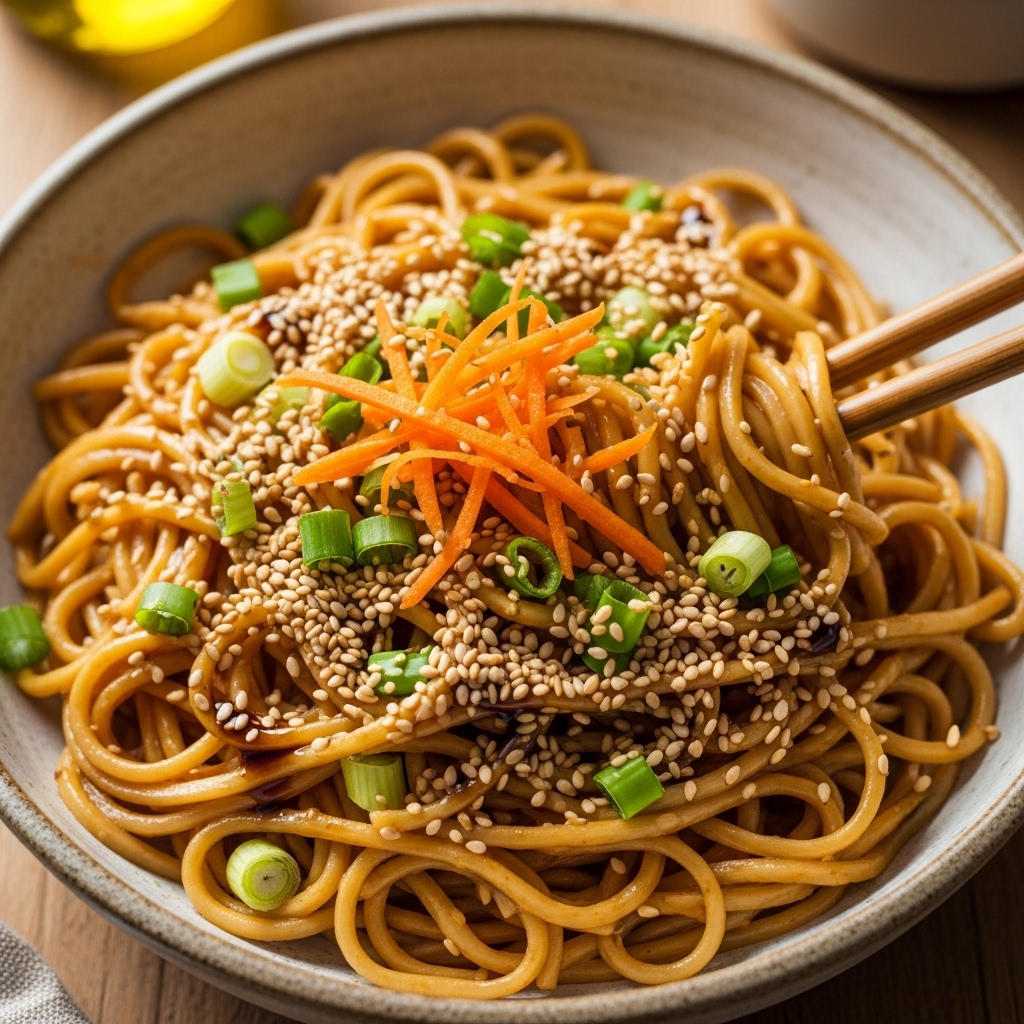
- The “Twirl”:Use long culinary tweezers or a carving fork to twirl the noodles into a high mound in the center of a shallow bowl.
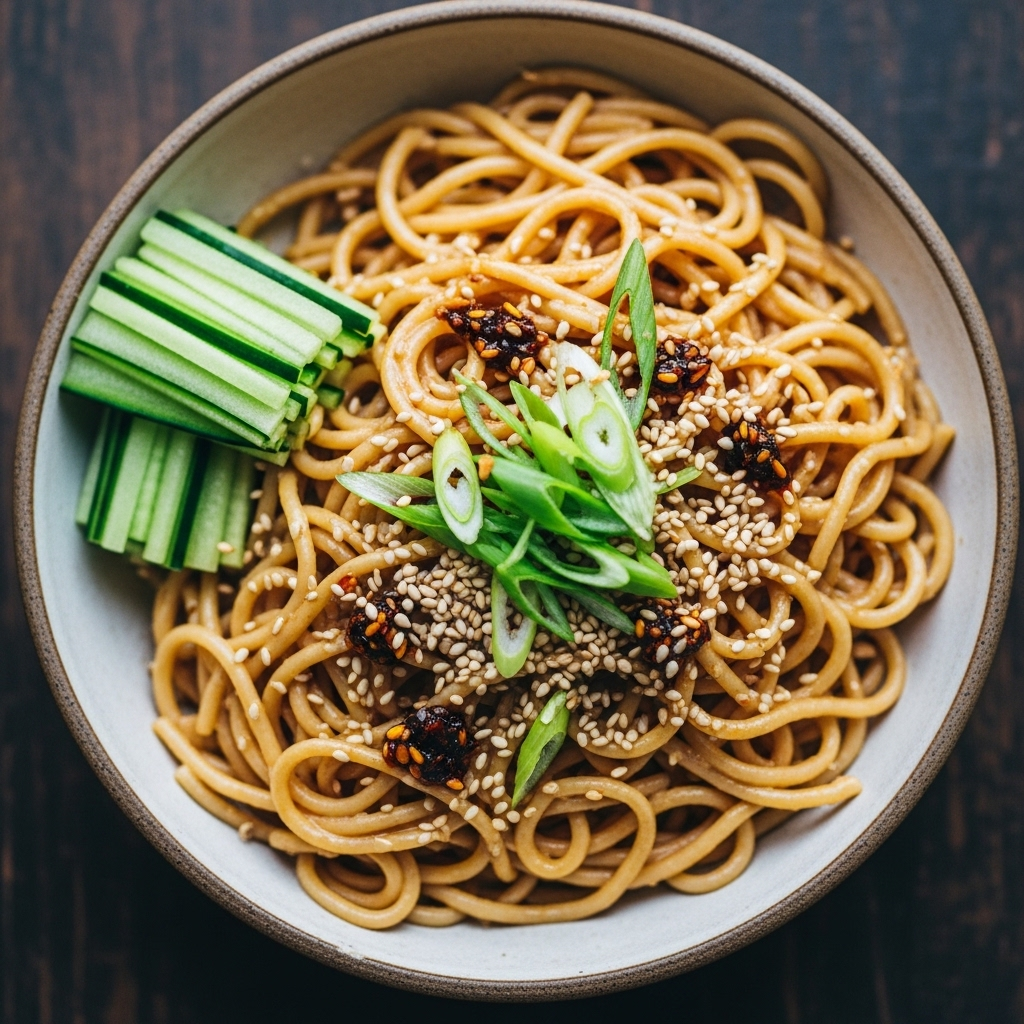
- Garnish:A heavy sprinkle of toasted black and white sesame seeds, thinly sliced scallions (cut on a sharp bias), and a drizzle of bright red chili oil.
Pairings
- Side Dishes:Serve alongside a smashed cucumber salad with rice vinegar or stir-fried bok choy with garlic.
- Proteins:Top with shredded rotisserie chicken, crispy seared tofu, or chilled poached shrimp.
- Beverages:Pair with a crisp, dryRieslingor a chilledJasmine Green Teato cut through the richness of the sesame paste.
5. Nutritional Information
(Per Serving – based on 4 servings)
| Nutrient | Amount |
| Calories | 420 kcal |
| Total Fat | 18g |
| Saturated Fat | 2.5g |
| Sodium | 850mg |
| Total Carbohydrates | 52g |
| Dietary Fiber | 4g |
| Sugars | 6g |
| Protein | 12g |
Health Benefits:Sesame seeds are an excellent source ofmanganese and calcium, supporting bone health. The inclusion of fresh ginger and garlic provides anti-inflammatory properties and boosts the immune system.
6. Storage and Reheating
- Refrigeration:Store in an airtight container for up to3 days. Note: The noodles will absorb the sauce as they sit.
- Freezing:Not recommended. The texture of the noodles and the emulsion of the sauce will degrade significantly upon thawing.
- Reheating:These are best enjoyed cold or at room temperature. If you prefer them warm, microwave in 30-second intervals with a teaspoon of water or additional soy sauce to loosen the starch.
7. Expert Tips and Variations
The Professional Secret
Rinse your noodles.Unlike Italian pasta where you want the starch to help the sauce stick, Asian wheat noodles for cold dishes should be rinsed under cold running water until the water runs clear. This stops the cooking process and prevents the noodles from becoming a gummy mass.
Common Mistakes
- Using cold tahini:If your sesame paste is straight from the fridge, it will be hard to emulsify. Use room-temperature ingredients.
- Overcooking the noodles:Always cook one minute less than the package directions for “al dente” as they continue to soften in the sauce.
Creative Variations
- The Nutty Swap:Substitute Chinese sesame paste with creamy peanut butter for a “Thai-style” peanut noodle profile.
- Spicy Kick:Add a tablespoon ofGochujangorSzechuan peppercorn oilfor a numbing heat.
- Zoodle Version:Use spiralized zucchini or cucumber for a low-carb, refreshing alternative.
8. Ingredients Section
Measurements are provided in Imperial and Metric.
The Noodles
- 12 oz (340g) Fresh or Dried Wheat Noodles:Lo mein, spaghetti, or chuka soba.
- 1 tsp (5ml) Toasted Sesame Oil:To prevent sticking after boiling.
The Sauce
- 1/4 cup (60g) Chinese Sesame Paste (or Tahini):Provides the creamy base.
- 3 tbsp (45ml) Soy Sauce:Use Tamari for a gluten-free option.
- 1 tbsp (15ml) Chinkiang Black Vinegar:Or balsamic/rice vinegar as a substitute.
- 1 tbsp (15ml) Honey or Agave:To balance the acidity.
- 1 tbsp (15g) Fresh Ginger:Grated finely.
- 2 cloves Garlic:Minced into a paste.
- 1-2 tbsp (15-30ml) Chili Oil:Adjust to your heat preference.
- 2 tbsp (30ml) Warm Water:To thin the sauce to the desired consistency.
9. Step-by-Step Instructions
Step 1: Boil the Noodles
Bring a large pot of salted water to a rolling boil. Add your noodles and cook according to package instructions.
- Visual Cue:Test a strand at the minimum time; it should be firm but have no floury center.
Step 2: Rinse and Chill
Drain the noodles into a colander. Immediately run cold water over them, tossing vigorously with your hands to remove excess starch. Once cool, drain thoroughly and toss with 1 tsp of toasted sesame oil.
Step 3: Create the Emulsion
In a medium bowl, combine the sesame paste, soy sauce, black vinegar, and honey. Use a whisk to blend.
- Technique:The sauce may look “broken” or curdled at first. Continue whisking while adding warm water one tablespoon at a time until it becomes smooth and glossy.
Step 4: Aromatics
Fold in the grated ginger, garlic, and chili oil. Let the sauce sit for 5 minutes to allow the flavors to marry.
Step 5: The Final Toss
Place the chilled noodles into a large mixing bowl. Pour the sauce over the noodles. Using tongs or clean hands, toss the noodles until every strand is evenly coated. If the sauce is too thick, add a splash of water or rice vinegar.
Step 6: Garnish and Serve
Divide into bowls and top with fresh scallions, sesame seeds, and extra chili oil if desired.
10. Frequently Asked Questions (FAQ)
Q: Can I use peanut butter instead of Chinese sesame paste?
A:Yes! While Chinese sesame paste is made from toasted seeds (making it darker and nuttier), creamy peanut butter is a great substitute. Just ensure it is a smooth variety.
Q: How do I make this gluten-free?
A:Substitute the wheat noodles with rice stick noodles or buckwheat soba (ensure it’s 100% buckwheat) and use Tamari instead of soy sauce.
Q: My sauce is too thick, what happened?
A:Sesame paste varies in thickness by brand. Simply whisk in warm water, one teaspoon at a time, until it reaches the consistency of heavy cream.
Q: Can I prepare this in advance?
A:You can make the sauce up to a week in advance. However, for the best texture, toss the noodles with the sauce no more than an hour before serving.
Q: What is Black Vinegar?
A:Chinkiang vinegar is a malty, complex rice vinegar. If you can’t find it, a mix of half balsamic vinegar and half rice vinegar works in a pinch.