
1. Introduction: The Evolution of the Power Bowl
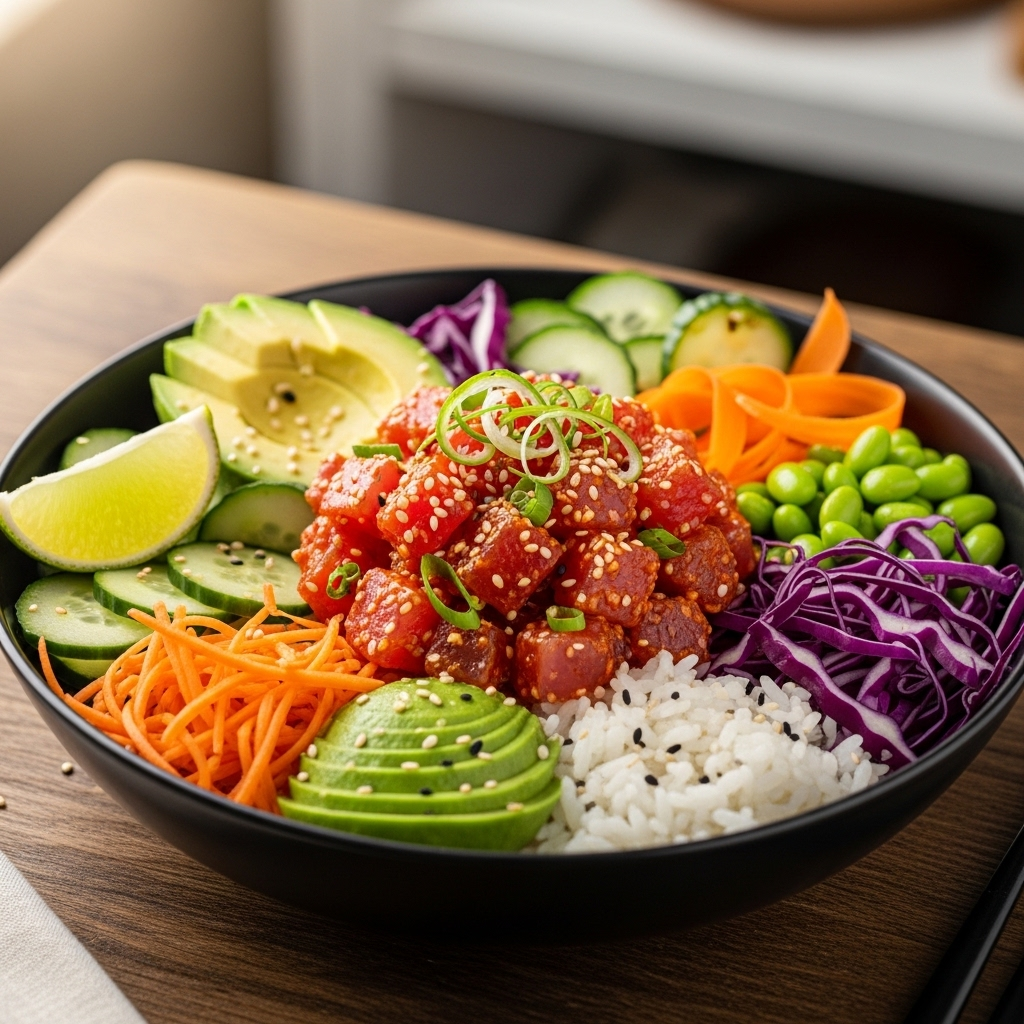
In the fast-paced world of modern nutrition, the “Power Bowl” has emerged not just as a trend, but as a culinary necessity. TheSpicy Tuna Protein Bowlis the crown jewel of this movement. Combining the clean, lean protein of Sashimi-grade tuna with the fiery kick of sriracha-infused aioli, this dish is a masterclass in balancing macronutrients without sacrificing flavor.
The origin of this bowl finds its roots in the traditional JapaneseTekkadon(tuna sashimi over rice) and the HawaiianPoke. However, the modern “Protein Bowl” adaptation strips away heavy sugars and excess carbohydrates, replacing them with fiber-rich greens, healthy fats from avocado, and complex grains like quinoa or cauliflower rice.
Whether you are an athlete looking for post-workout recovery or a busy professional seeking a lunch that won’t lead to a 3:00 PM sugar crash, this bowl is designed for you. It’s a vibrant, textured, and deeply satisfying meal that proves “healthy” doesn’t have to mean “bland.”
2. Recipe Overview
3. Equipment and Tools
To achieve the precision required for a professional-grade bowl, ensure you have the following:
- Chef’s Knife:A sharp 8-inch blade is essential for dicing the tuna without tearing the delicate fibers.
- Mixing Bowls:One large bowl for the base and a small whisking bowl for the spicy mayo.
- Rice Cooker or Medium Pot:If using a grain base (rice or quinoa).
- Mandoline Slicer (Optional):For achieving paper-thin slices of radish and cucumber.
- Measuring Tools:A set of dry measuring cups and liquid spoons for sauce consistency.
- Whisk:A small balloon whisk to emulsify the dressing.
4. Serving Suggestions
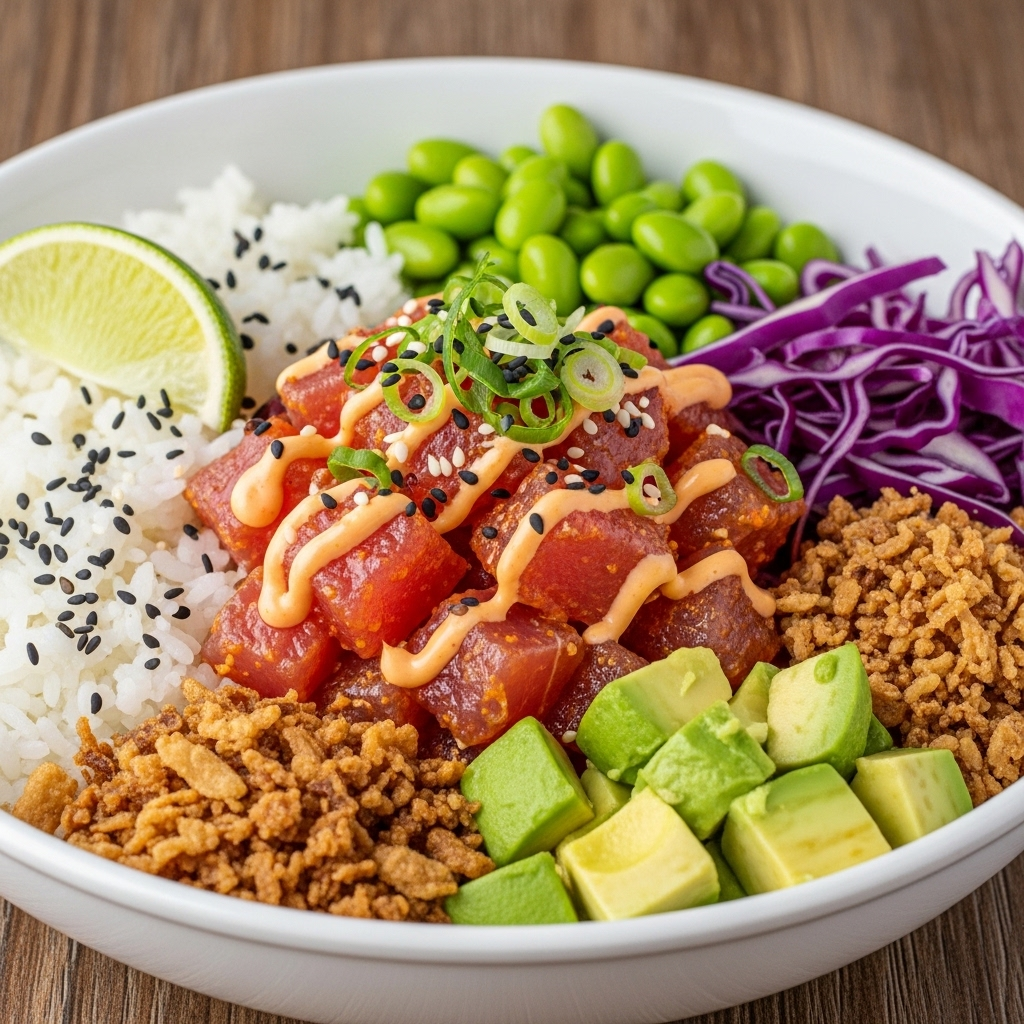
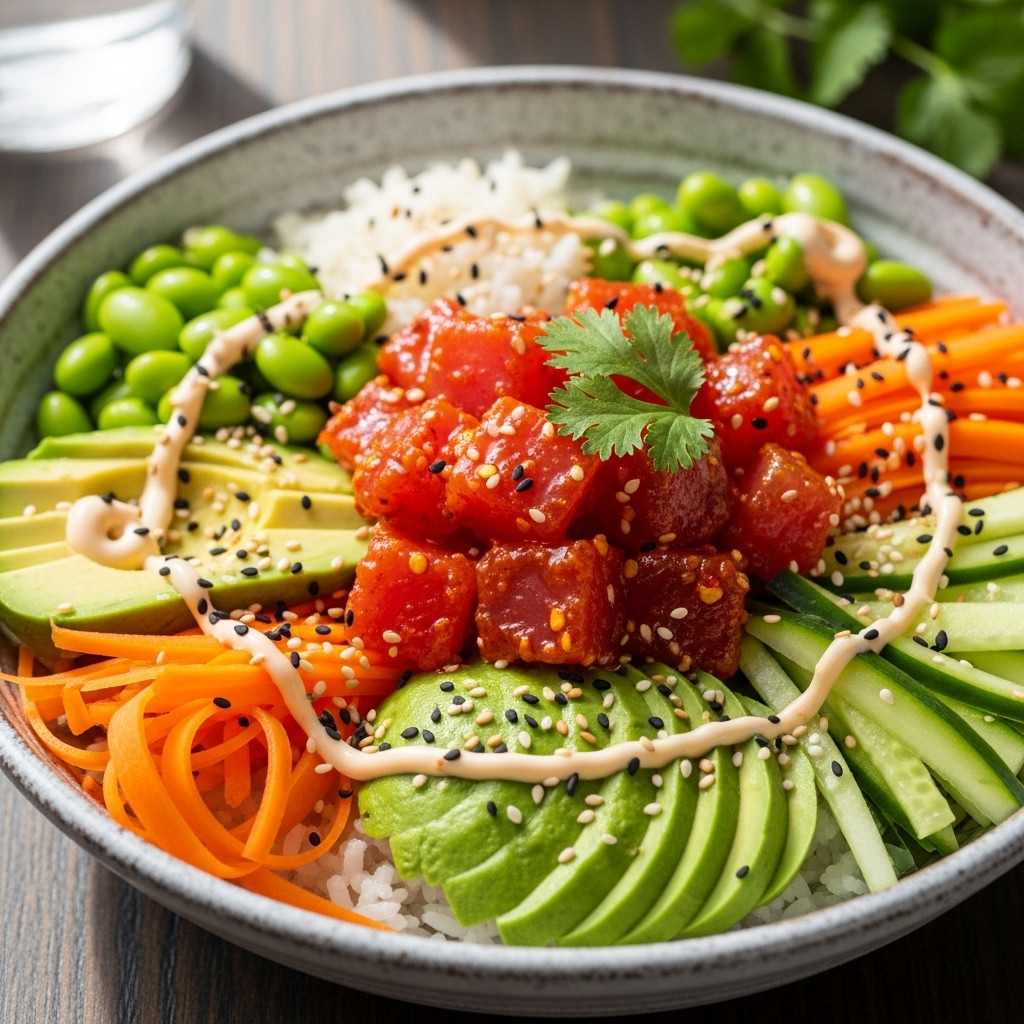
Plating Recommendations:Start with the base in a wide, shallow bowl. Arrange the toppings in distinct “sectors” rather than mixing them immediately; this creates a visual “rainbow” effect that is highly appetizing. Place the tuna in the center as the star of the show.
Garnish Ideas:
- Furikake:A Japanese seasoning with seaweed and sesame.
- Microgreens:For an upscale, peppery finish.
- Pickled Ginger:To cleanse the palate between bites.
Beverage Pairings:
- Non-Alcoholic:Iced Green Tea or sparkling water with a squeeze of lime.
- Alcoholic:A crisp Sauvignon Blanc or a light Japanese Lager.
5. Nutritional Information
Per Serving (Based on Quinoa base):
- Calories:480 kcal
- Protein:38g
- Carbohydrates:32g
- Fats:22g (primarily monounsaturated)
- Fiber:8g
Health Benefits:The tuna provides a massive dose ofOmega-3 fatty acids, which support heart health and reduce inflammation. The addition of avocado brings in potassium and Vitamin E, while the vegetables ensure a high volume of micronutrients and antioxidants.
6. Storage and Reheating
- Refrigeration:The tuna is best consumed immediately. If you must store it, keep the tuna in an airtight container for no more than 24 hours. Keep the vegetables and sauce in separate containers to prevent sogginess.
- Freezing:This recipe isnot suitable for freezingdue to the fresh nature of the raw fish and crisp vegetables.
- Reheating:Do not reheat the tuna. If you are using a warm base like rice, reheat the rice separately before adding the cold toppings.
7. Expert Tips and Variations
Professional Tips
- Pat the Tuna Dry:Before dicing, use a paper towel to remove excess moisture. This helps the sauce adhere better to the fish.
- The “Cold Bowl” Trick:Chill your serving bowls in the fridge for 10 minutes before plating to keep the raw fish at the perfect temperature.
Creative Variations
- The Keto Swap:Replace rice or quinoa with a bed of shredded kale or cauliflower rice to drop the carb count to nearly zero.
- The Tropical Twist:Add diced mango or pineapple for a sweet contrast to the spicy tuna.
- The Vegan Option:Swap tuna for cubed extra-firm tofu or “watermelon tuna.”
8. Ingredients Section
The Protein
- Ahi Tuna (Sashimi Grade):1 lb (450g), cubed into 1/2 inch pieces.
- Sourcing:Ensure it is labeled “Sashimi-Grade” or “Sushi-Grade” for raw consumption.
The Base
- Cooked Base:2 cups of Quinoa, Brown Rice, or Cauliflower Rice.
The Spicy Sauce
- Kewpie Mayo:1/4 cup (Available at Asian grocers; richer than standard mayo).
- Sriracha:1-2 tbsp (adjust for heat preference).
- Sesame Oil:1 tsp.
- Lime Juice:1/2 lime, freshly squeezed.
The Toppings
- Avocado:1 large, sliced.
- English Cucumber:1/2 cup, diced.
- Edamame:1/2 cup, shelled and steamed.
- Radishes:2-3, thinly sliced.
- Green Onions:2, finely chopped.
9. Step-by-Step Instructions
- Prepare the Base:Cook your chosen grain according to package instructions. Once cooked, fluff with a fork and let it cool to room temperature. A hot base will “cook” the raw tuna, which ruins the texture.
- Whisk the Sauce:In a small bowl, combine the mayo, sriracha, sesame oil, and lime juice. Whisk until completely smooth.
- Dress the Tuna:In a medium mixing bowl, toss the cubed tuna with half of the spicy sauce. Ensure every piece is evenly coated. Let it marinate for 5 minutes in the fridge.
- Assemble the Veggies:Slice your avocado, cucumber, and radishes. Having these ready ensures a quick assembly.
- Build the Bowl:Divide the base into two large bowls. Place the marinated tuna in the center.
- Arrange Toppings:Place the cucumber, edamame, avocado, and radishes in sections around the tuna.
- Final Flourish:Drizzle the remaining sauce over the entire bowl. Sprinkle with green onions and furikake or sesame seeds.
- Serve:Enjoy immediately while the fish is chilled and the vegetables are crisp.
10. Frequently Asked Questions (FAQ)
Q: Can I use canned tuna instead of fresh?A: While fresh sashimi-grade tuna is preferred for texture, you can use high-quality canned tuna (drained) as a budget-friendly, cooked alternative. The flavor profile will change, but it remains a great protein source.
Q: Is “Sashimi-Grade” a real regulation?A: In many countries, it is a marketing term used by fishmongers to indicate the fish was frozen rapidly to a temperature that kills parasites, making it safe for raw consumption. Always buy from a reputable source.
Q: How can I make the sauce less spicy?A: Reduce the Sriracha to 1 teaspoon and add a teaspoon of honey or maple syrup to balance the heat with sweetness.
Q: Is this bowl good for meal prep?A: Yes! You can prep the grains and vegetables up to 3 days in advance. However, wait to dice and dress the tuna until the day you plan to eat it.
Q: Can I use salmon instead?A: Absolutely. Sashimi-grade salmon works beautifully with these exact same ingredients.