1. Introduction
There is a specific kind of culinary magic that happens when semolina flour is transformed into tiny, sun-kissed pearls of couscous. Often mistaken for a grain, couscous is actually a traditional North African pasta that serves as the perfect canvas for a symphony of fresh vegetables, aromatic herbs, and zesty dressings.
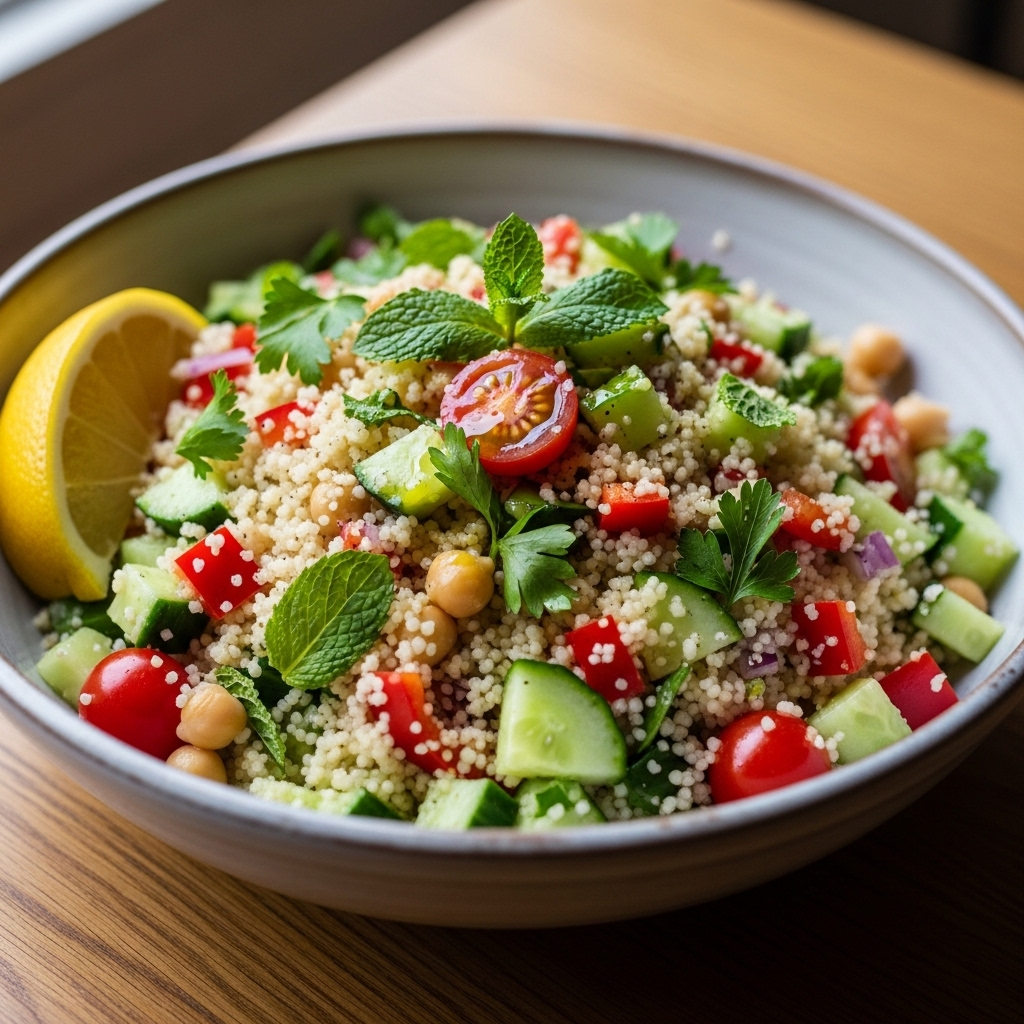
My journey with thisMediterranean Couscous Saladbegan in a small coastal town where the scent of wild mint and lemons filled the air. This dish isn’t just a side; it’s a celebration of the “Meze” culture—small plates designed for sharing, lingering over conversation, and enjoying the vibrance of fresh produce. Unlike heavy mayo-based salads, this version relies on the golden trinity of Mediterranean cooking: extra virgin olive oil, fresh lemon juice, and sea salt.
Whether you are looking for a reliable meal-prep staple that won’t get soggy by Tuesday or a stunning centerpiece for a backyard barbecue, this salad delivers. It bridges the gap between sophisticated gourmet dining and “I-only-have-ten-minutes” reality.
2. Recipe Overview
- Cuisine Type:Mediterranean / North African Fusion
- Difficulty Level:Easy (Beginner-friendly)
- Prep Time:10 minutes
- Cooking Time:5 minutes (for the couscous)
- Total Time:15 minutes
- Dietary Classifications:Vegetarian, Vegan (if honey is omitted from dressing), Dairy-Free, Nut-Free.
3. Equipment and Tools
To achieve the light, fluffy texture that defines a world-class couscous salad, you need the right tools. Avoid using heavy-bottomed cast iron for the couscous itself; we want quick heat and a tight seal.
- Medium Saucepan:(2-quart capacity) with a tight-fitting lid to steam the couscous.
- Large Mixing Bowl:Stainless steel or glass (minimum 4-quart volume) to allow room for tossing without bruising the herbs.
- Fine-Mesh Sieve:For rinsing vegetables.
- Sharp Chef’s Knife:Essential for “brunoise” (fine dicing) of the cucumbers and peppers.
- Whisk:Small balloon whisk for emulsifying the vinaigrette.
- Fork:Specifically for “fluffing”—never use a spoon to stir hot couscous, as it will cause clumping.
4. Serving Suggestions
This salad is incredibly versatile. Its bright acidity makes it the perfect foil for rich, charred proteins.
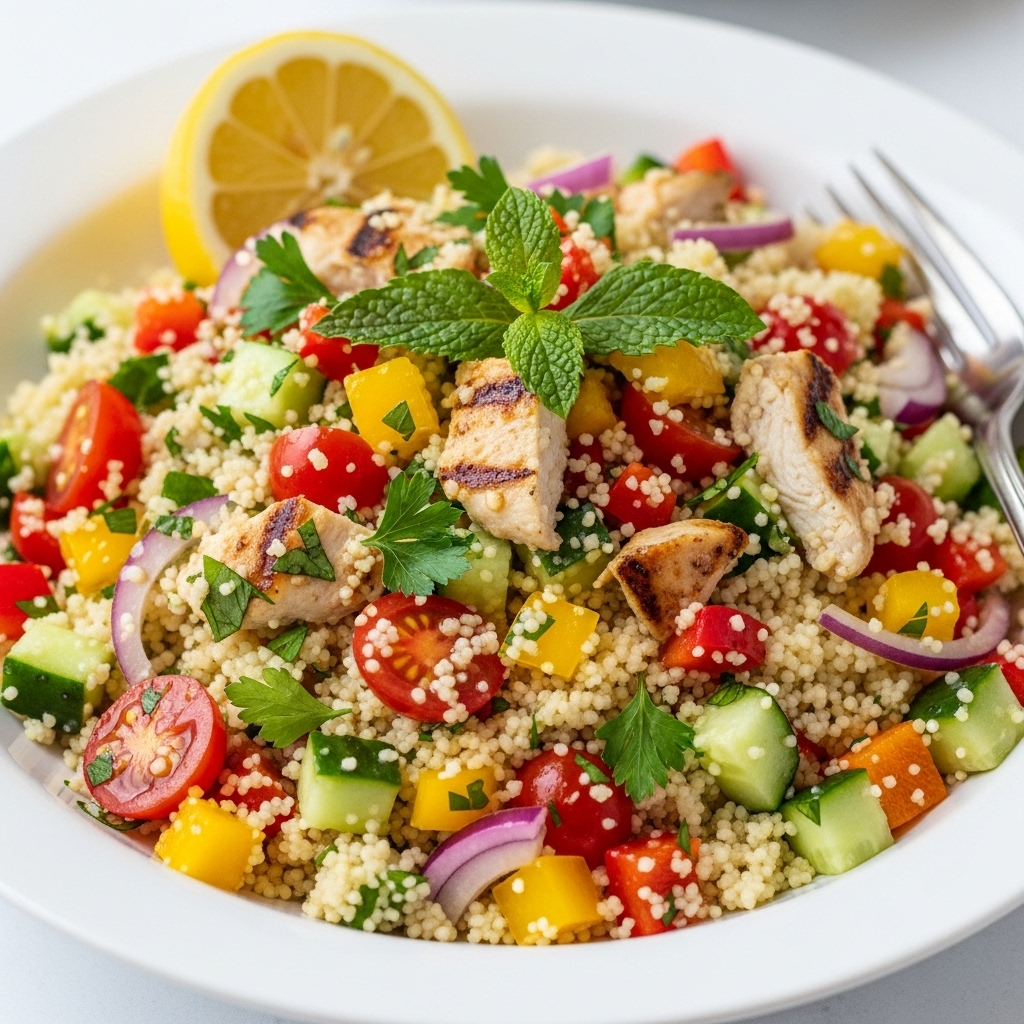
- Plating:Serve in a wide, shallow wooden bowl to highlight the vibrant colors of the bell peppers and parsley.
- Garnish:A final sprinkle of sumac for an earthy tang or a handful of toasted pine nuts for crunch.
- Pairings:*Protein:Grilled lemon-oregano chicken skewers or pan-seared Halloumi cheese.
- Dip:A dollop of creamy hummus or tzatziki on the side.
- Beverage:A crisp, chilled Sauvignon Blanc or a sparkling mineral water with a slice of cucumber and a sprig of mint.
5. Nutritional Information (Per Serving)
- Calories:285 kcal
- Total Fat:12g (Primarily heart-healthy monounsaturated fats)
- Carbohydrates:38g
- Fiber:5g
- Protein:7g
- Sodium:310mg
- Health Benefits:This dish is rich in Vitamin C from the bell peppers and parsley, providing an immune boost. The olive oil offers polyphenols, while the couscous provides a quick-burning, low-fat energy source.
6. Storage and Reheating
One of the best features of couscous is that it actually improves with age as the pasta pearls absorb the dressing.
- Refrigeration:Store in an airtight container for up to 4 days.
- Freezing:Not recommended. The fresh cucumbers and tomatoes will lose their structural integrity and become watery upon thawing.
- Serving Temperature:This dish is best served at room temperature or slightly chilled. If taking it out of the fridge, let it sit for 10 minutes to allow the olive oil to liquefy if it has thickened.
7. Expert Tips and Variations
Professional Chef Tips
- The Fluff Factor:After the couscous has sat in the hot water, add a teaspoon of olive oil before fluffing with a fork. This coats each pearl and prevents sticking.
- Toast the Pearls:For a nuttier flavor, toast the dry couscous in the saucepan with a little butter or oil for 2 minutes before adding the boiling water.
Creative Variations
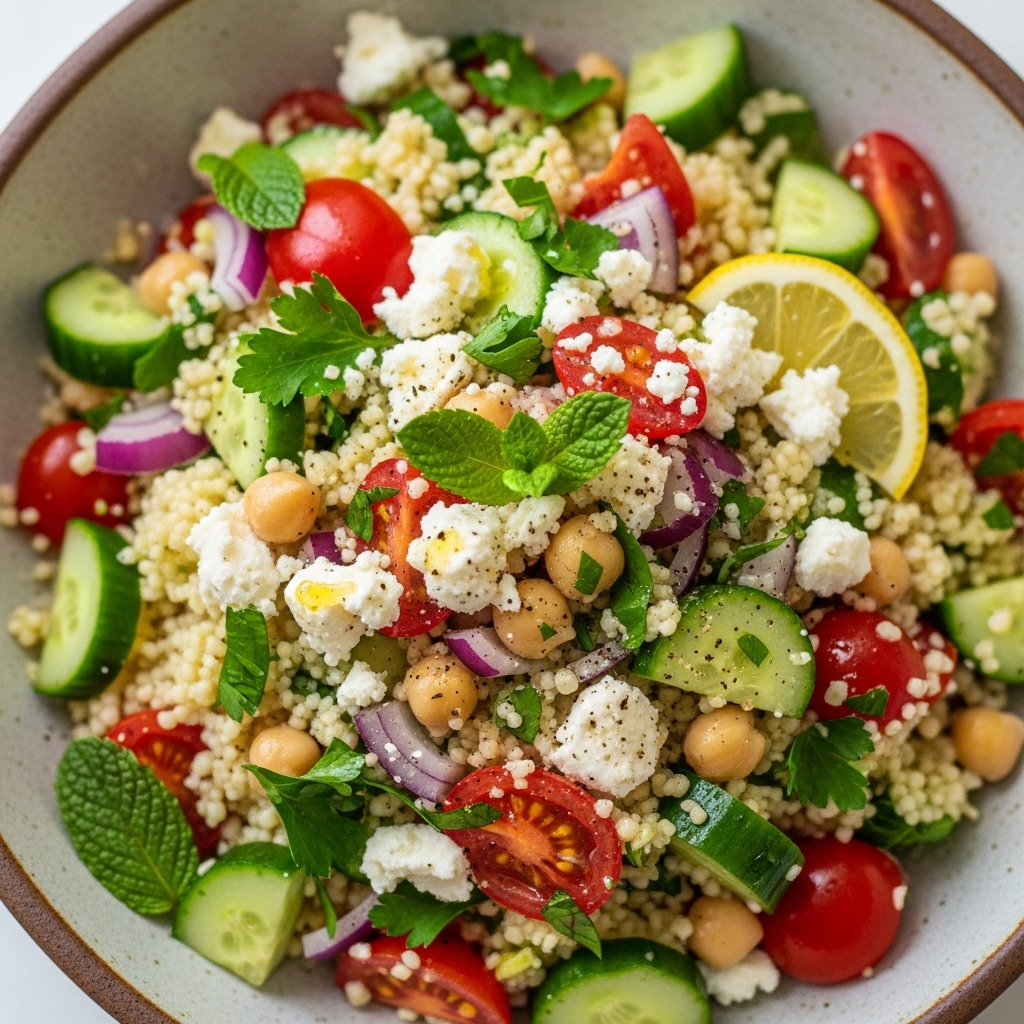
- The Sweet & Salty:Add dried cranberries or golden raisins and crumbled feta cheese.
- The Protein Powerhouse:Fold in a can of rinsed chickpeas or cooked quinoa for a gluten-free twist.
- Seasonal Adaptation:In winter, swap the cucumbers for roasted butternut squash and pomegranate arils.
8. Ingredients Section
For the Salad
| Ingredient | Metric | Imperial | Substitution |
| Dried Couscous | 250g | 1.5 cups | Quinoa or Orzo |
| Boiling Water/Broth | 350ml | 1.5 cups | Vegetable stock |
| English Cucumber | 1 large | 1 large | Persian cucumbers |
| Cherry Tomatoes | 200g | 1 cup | Grape tomatoes |
| Red Bell Pepper | 1 medium | 1 medium | Yellow bell pepper |
| Red Onion | 50g | 1/4 cup | Shallots or Scallions |
| Fresh Parsley | 1 bunch | 1 cup chopped | Cilantro or Dill |
| Fresh Mint | 15g | 1/4 cup chopped | Fresh Basil |
For the Lemon Vinaigrette
- Extra Virgin Olive Oil:60ml (1/4 cup)
- Fresh Lemon Juice:45ml (3 tbsp)
- Garlic:1 clove, minced
- Dried Oregano:1/2 tsp
- Sea Salt & Black Pepper:To taste
9. Step-by-Step Instructions
- Prepare the Couscous:Place the dry couscous in a heat-proof bowl or saucepan. Pour the boiling water or vegetable broth over the top. Cover tightly with a lid or plastic wrap and let it sit undisturbed for 5–7 minutes.
- The “Fluff” Technique:Remove the cover. Using a fork, gently rake the couscous to break up any clumps. Set aside to cool to room temperature.
- Prep the Vegetables:While the couscous cools, finely dice the cucumber, bell pepper, and red onion. Halve the cherry tomatoes. Chop the parsley and mint finely, removing any thick stems.
- Emulsify the Dressing:In a small jar or bowl, whisk together the olive oil, lemon juice, minced garlic, and oregano until the mixture is slightly thickened and opaque.
- The Assembly:In your large mixing bowl, combine the fluffed couscous and all the chopped vegetables and herbs.
- Marinate:Pour the dressing over the salad. Toss gently with large spoons until every pearl of couscous is glistening.
- Seasoning Check:Taste the salad. Add salt and pepper as needed. A final squeeze of lemon just before serving can “wake up” the flavors.
10. Frequently Asked Questions (FAQ)
Q: Can I use Pearl (Israeli) Couscous instead?
A: Yes, but the cooking method changes. Israeli couscous must be simmered in boiling water for about 8–10 minutes (like pasta) rather than just being steamed.
Q: My couscous is mushy. What went wrong?
A: You likely added too much liquid or let it sit for too long. Ensure a 1:1 ratio of liquid to couscous and fluff it as soon as the time is up.
Q: Is this salad gluten-free?
A: No, traditional couscous is made from wheat. To make this gluten-free, substitute the couscous with quinoa or millet.
Q: How do I stop the red onions from being too “sharp”?
A: After dicing the onions, soak them in cold water for 5 minutes, then drain. This removes the sulfurous bite while keeping the crunch.
Q: Can I make this in advance?
A: Absolutely. It’s actually better after 2 hours in the fridge. Just wait to add the fresh mint until right before serving to keep it from turning dark.