1. Introduction: A Journey to the Azure Coast
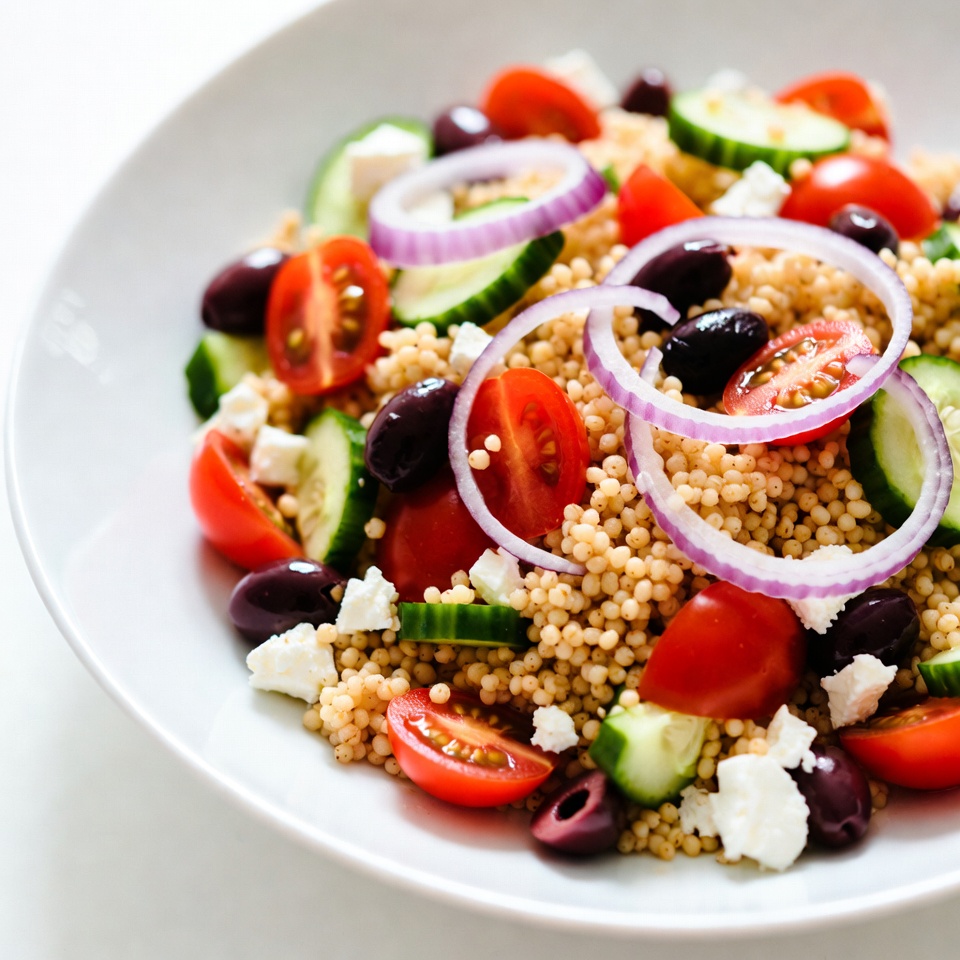
Close your eyes and imagine a sun-bleached terrace overlooking the sparkling Aegean Sea. The air is thick with the scent of wild oregano and the salt of the Mediterranean breeze. On the table sits a large, colorful bowl filled with tiny golden grains, vibrant red tomatoes, and deep green herbs. This is not just a side dish; it is theMediterranean Couscous Salad, a culinary mosaic that tells the story of centuries of trade, travel, and tradition.
Couscous itself is a marvel of ancient culinary engineering. Originating with the Berber people of North Africa, these tiny granules of semolina transitioned from a staple of the Maghreb to a beloved ingredient across Sicily, France, and the Levant. What makes the Mediterranean version unique is the marriage of North African texture with the “Cuisine of the Sun”—the olive oils of Greece, the lemons of Amalfi, and the garden-fresh produce of the Provence countryside.
This recipe is designed for the modern home cook who craves the complexity of global flavors without the exhaustion of hours in the kitchen. It is a dish that celebrates theintegrity of raw ingredients. There is no heavy mask of cream or fat; instead, each component is allowed to shine, held together by a zesty vinaigrette that awakens the palate. Whether you are hosting an elegant garden party or simply looking for a meal-prep solution that tastes even better the next day, this salad is your passport to a healthier, more vibrant lifestyle.
2. Recipe Overview
This recipe balances speed with nutritional density, making it a favorite for busy weeknights and sophisticated gatherings alike.
- Cuisine Type:Mediterranean / North African Fusion
- Difficulty Level:Beginner
- Total Preparation Time:15 minutes
- Total Cooking Time:5 minutes (Steaming/Hydrating)
- Dietary Classifications:*Vegetarian:Yes
- Vegan:Yes (ensure sweetener in dressing is maple syrup/agave)
- Dairy-Free:Yes
- Nut-Free:Yes
- Gluten-Free:No (Couscous is wheat-based; see variations for substitutes)
3. Equipment and Tools
To achieve the light, airy texture that defines a professional-grade couscous salad, you need the right tools for the job.
- Mixing Bowl (3-Quart / 2.8 Liters):A wide, heat-proof glass or stainless steel bowl. Depth is important (at least 4 inches) to allow room for the grains to expand.
- Tight-Fitting Lid or Plastic Wrap:Essential for trapping steam to hydrate the grains.
- Small Glass Mason Jar:Used for emulsifying the dressing through vigorous shaking.
- Chef’s Knife (8-inch):For precision dicing (brunoise style) of the vegetables.
- Large Fork or Bench Scraper:Never use a spoon to stir cooked couscous. A fork is necessary to “rake” and fluff the grains without mashing them.
- Fine-Mesh Strainer:For rinsing fresh herbs and removing excess moisture from canned ingredients like chickpeas or olives.
4. Serving Suggestions
Plating Recommendations
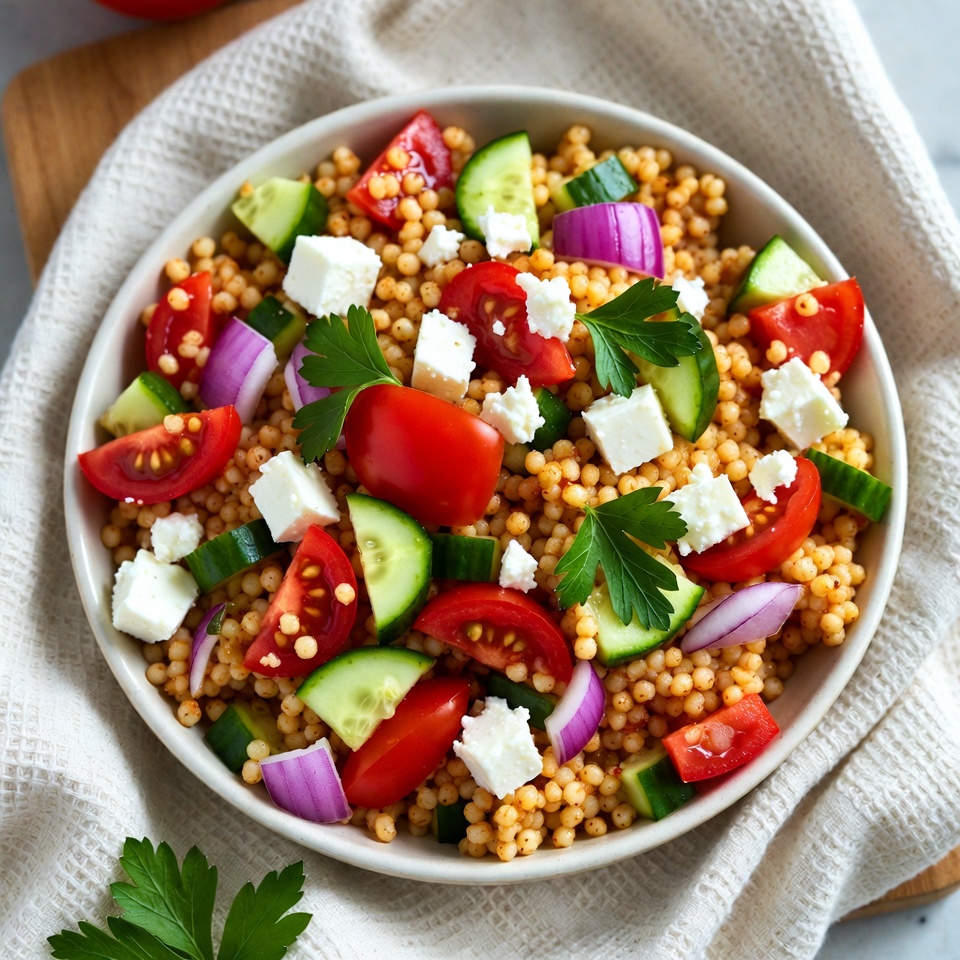
For a rustic, family-style look, serve the salad in a wide, shallow ceramic bowl. Avoid deep bowls where the weight of the ingredients might compress the delicate couscous at the bottom.
Garnish Ideas
- Fresh Microgreens:A handful of arugula or pea shoots on top adds a peppery bite.
- Sumac:A sprinkle of this deep red Middle Eastern spice adds a beautiful color and a dry, citrusy finish.
- Toasted Pine Nuts:For a buttery, crunch-filled contrast to the soft grains.
Beverage Pairings
- Wine:A crispSauvignon Blancor a chilledProvence Rosécomplements the acidity of the lemon and the freshness of the herbs perfectly.
- Non-Alcoholic:A sparkling mineral water with a splash of pomegranate juice and a sprig of slapped mint.
5. Nutritional Information
Note: Based on a standard serving size of 1.5 cups.
| Nutrient | Amount per Serving |
| Calories | 295 kcal |
| Total Fat | 13g |
| Saturated Fat | 1.5g |
| Total Carbohydrates | 42g |
| Dietary Fiber | 5g |
| Protein | 8g |
| Sodium | 320mg |
Health Benefits:This salad is a powerhouse ofmonounsaturated fats(from the olive oil) which support heart health. It is also rich inVitamin Kfrom the parsley andLycopenefrom the cherry tomatoes, providing a natural boost to your immune system and skin health.
6. Storage and Reheating
Proper Storage:Place the salad in an airtight glass container. It can be refrigerated for up to4 days. In fact, many find the flavor improves after 24 hours as the grains fully absorb the vinaigrette.
Freezing:Not recommended.Fresh vegetables like cucumbers and tomatoes have high water content; freezing and thawing will turn them mushy and ruin the salad’s texture.
Reheating:This dish is traditionally served cold or at room temperature. If you prefer it warm, do not “cook” it again. Simply microwave a portion for 20 seconds to take the chill off, adding a teaspoon of water or broth to ensure the grains don’t dry out.
7. Expert Tips and Variations
Professional Chef Tips
- The “Bloom” Secret:Before adding water to your dry couscous, toast it in a dry pan for 2 minutes until it smells nutty. This prevents the grains from sticking together.
- The Herb Ratio:Don’t treat parsley and mint as mere garnishes. In a true Mediterranean salad, they are treated as greens. Be generous.
Common Mistakes to Avoid
- Over-watering:Using too much liquid creates a porridge-like texture. Stick strictly to the1:1 ratio.
- Dressing Too Early:If you are making this for an event 2 days away, keep the dressing separate until 4 hours before serving to maintain the crunch of the cucumbers.
Creative Variations
- The Protein Boost:Add roasted chickpeas, grilled shrimp, or shredded rotisserie chicken.
- The Greek Twist:Add 1/2 cup of crumbled high-quality sheep’s milk feta cheese and sun-dried tomatoes.
- Gluten-Free Alternative:Replace the couscous withQuinoaorMillet. Follow the specific cooking instructions for those grains, then proceed with the rest of the recipe.
8. Ingredients Section
The Couscous Base
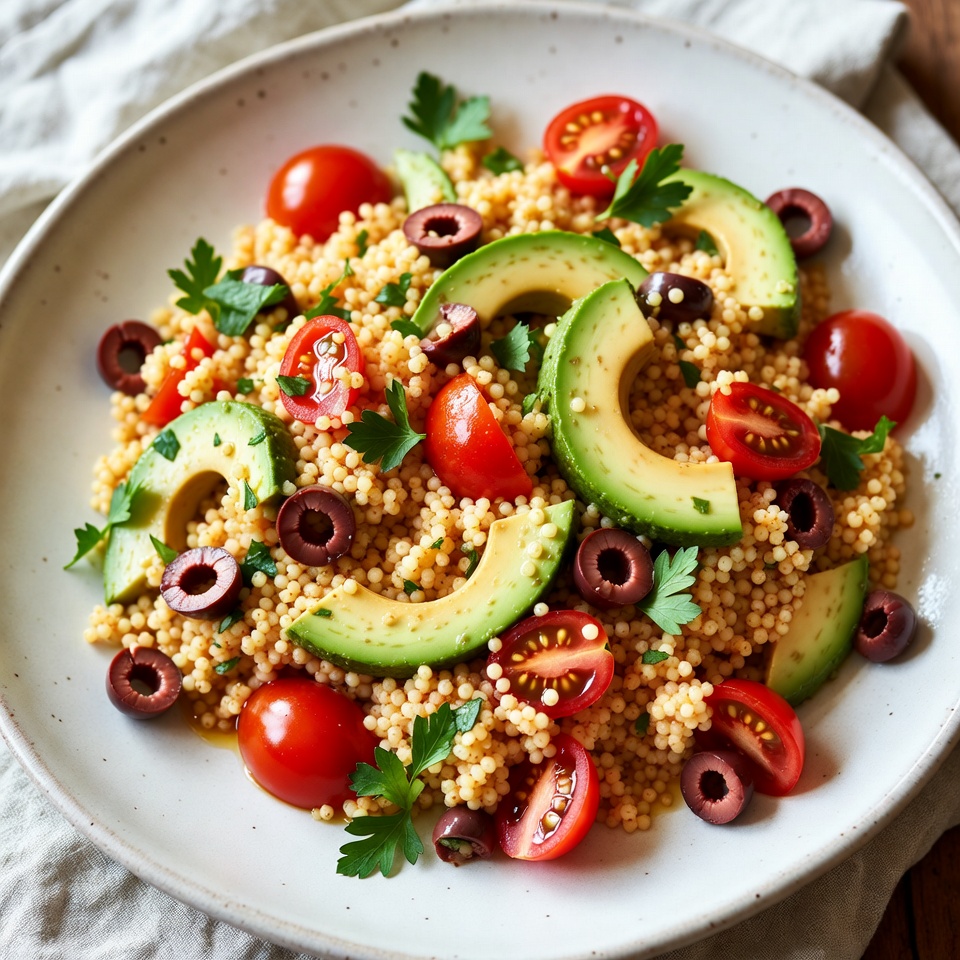
- 1 ½ cups (250g)Plain Moroccan Couscous (Fine grain)
- 1 ½ cups (350ml)Boiling Water or Low-Sodium Vegetable Broth
- 2 tbspExtra Virgin Olive Oil (First cold-pressed)
- ½ tspSea Salt
The Mediterranean Medley
- 1 cup (150g)Cherry Tomatoes, quartered
- 1 mediumEnglish Cucumber (hothouse), finely diced
- ½ cupRed Onion, finely minced
- ½ cupKalamata Olives, pitted and sliced
- 1 cupFresh Flat-Leaf Parsley, chopped
- ½ cupFresh Mint Leaves, chiffonade
The Lemon-Herb Vinaigrette
- 1/3 cupExtra Virgin Olive Oil
- 3 tbspFreshly Squeezed Lemon Juice (approx. 1 large lemon)
- 1 cloveGarlic, microplaned or grated
- 1 tspDried Oregano
- 1 tspMaple Syrup or Honey (to balance acidity)
- Salt and Freshly Cracked Black Pepperto taste
9. Step-by-Step Instructions
- Hydrate the Grains:In your 3-quart mixing bowl, combine the dry couscous and sea salt. Pour the boiling liquid over the grains and stir once. Immediately cover with a lid. Let it sit for5 minutes.
- Prepare the Vinaigrette:While the couscous steams, combine all dressing ingredients in a glass jar. Shake vigorously for 30 seconds until the oil and lemon juice have emulsified into a cloudy, golden liquid.
- The “Fluff” Phase:Remove the lid from the couscous. Drizzle with 2 tablespoons of olive oil. Using a fork, gently scrape the top of the grains and work your way down, breaking up any clumps until the texture is light and individual grains are visible.
- Chop the Produce:Dice the cucumber and onion into pieces roughly the size of a pea. This ensures you get a “perfect bite” containing every ingredient.
- The Mix:Add the tomatoes, cucumbers, onions, olives, and herbs into the bowl with the fluffed couscous.
- The Final Toss:Pour the vinaigrette over the salad. Use a large spoon or spatula to fold the ingredients together gently.
- Temper:Let the salad sit at room temperature for10 to 15 minutesbefore serving. This allows the dry centers of the couscous grains to soak up the dressing.
10. Frequently Asked Questions (FAQ)
1. Can I use Israeli (Pearl) Couscous instead?
Yes, but the preparation is different. Pearl couscous is larger and must be simmered in boiling water for about 8-10 minutes (like pasta) rather than just being steeped.
2. Why is my couscous clumpy?
This usually happens if you stirred it too much while it was steaming or used a spoon instead of a fork to fluff it. Always use a fork!
3. Is this salad good for weight loss?
Yes. It is high in fiber and healthy fats, which promote satiety (the feeling of being full). However, keep an eye on portion sizes as couscous is calorie-dense.
4. Can I use bottled lemon juice?
In a pinch, yes, but the flavor will be significantly flatter. Fresh lemon juice provides the essential oils and “bright” notes that define this dish.
5. How do I make the onions less pungent?
If you find raw red onions too sharp, soak the minced pieces in cold water for 5 minutes, then drain and dry them before adding to the salad.