1. Introduction: The Soul of the Table
TheHouse Saladis often the unsung hero of the culinary world. While a decadent steak or a complex pasta dish might claim the spotlight, the house salad is the reliable friend that brings balance, brightness, and a necessary crunch to the palate. It is a dish that transcends borders; whether you are in a high-end Italian bistro or a cozy American diner, the house salad is the universal “welcome” to the meal.
Historically, the concept of a “side salad” traces back to ancient Roman and Greek civilizations, who believed that raw vegetables dressed in vinegar and salt (hence the wordsalfor salt) aided digestion. In the modern kitchen, the house salad has evolved into a canvas for seasonal expression. It isn’t just “filler”—it is a showcase of texture, temperature, and the chef’s ability to balance acidity with fat.
For many of us, the house salad carries a personal weight. It’s the first dish many children learn to “help” with in the kitchen, tearing lettuce leaves into bite-sized pieces. It represents the transition from the frantic energy of cooking to the communal peace of dining. This recipe isn’t about reinventing the wheel; it’s about making the wheel spin perfectly. We are focusing on high-quality greens, a signature emulsified vinaigrette, and the specific techniques used by professional chefs to keep vegetables crisp and vibrant.
2. Recipe Overview
- Cuisine Type:American / Continental
- Difficulty Level:Easy (Beginner-friendly)
- Total Preparation Time:20 minutes
- Cooking Time:0 minutes (No-cook)
- Dietary Classifications:Vegetarian, Vegan-option (substitute honey), Gluten-Free, Dairy-Free, Keto-friendly.
3. Equipment and Tools
To achieve a restaurant-quality finish, the right tools make a significant difference.
- Salad Spinner:This is non-negotiable. Wet lettuce is the enemy of a good salad because water prevents the dressing from adhering to the leaves.
- Large Mixing Bowl:Preferably stainless steel or glass, with a volume of at least5 quarts (4.7 liters). You need enough “tossing room” to aerate the greens without crushing them.
- Mandoline Slicer:For achieving paper-thin, uniform slices of radishes and cucumbers. (Always use the safety guard!)
- Small Mason Jar or Whisk:For emulsifying the vinaigrette. A jar is often superior as it allows for vigorous shaking to combine the oil and acid.
- Chef’s Knife:A sharp 8-inch blade for clean, precise vegetable cuts.
- Vegetable Peeler:For creating elegant ribbons of carrot or cucumber.
4. Serving Suggestions
Plating
For a family-style presentation, use a chilled wooden or ceramic bowl. For individual servings, choose wide, shallow bowls. Deep, narrow bowls tend to trap moisture at the bottom and make the salad look smaller and less appetizing.
Garnish Ideas
- Herbs:Torn flat-leaf parsley or delicate sprigs of dill.
- Crunch:Toasted sunflower seeds or homemade sourdough croutons.
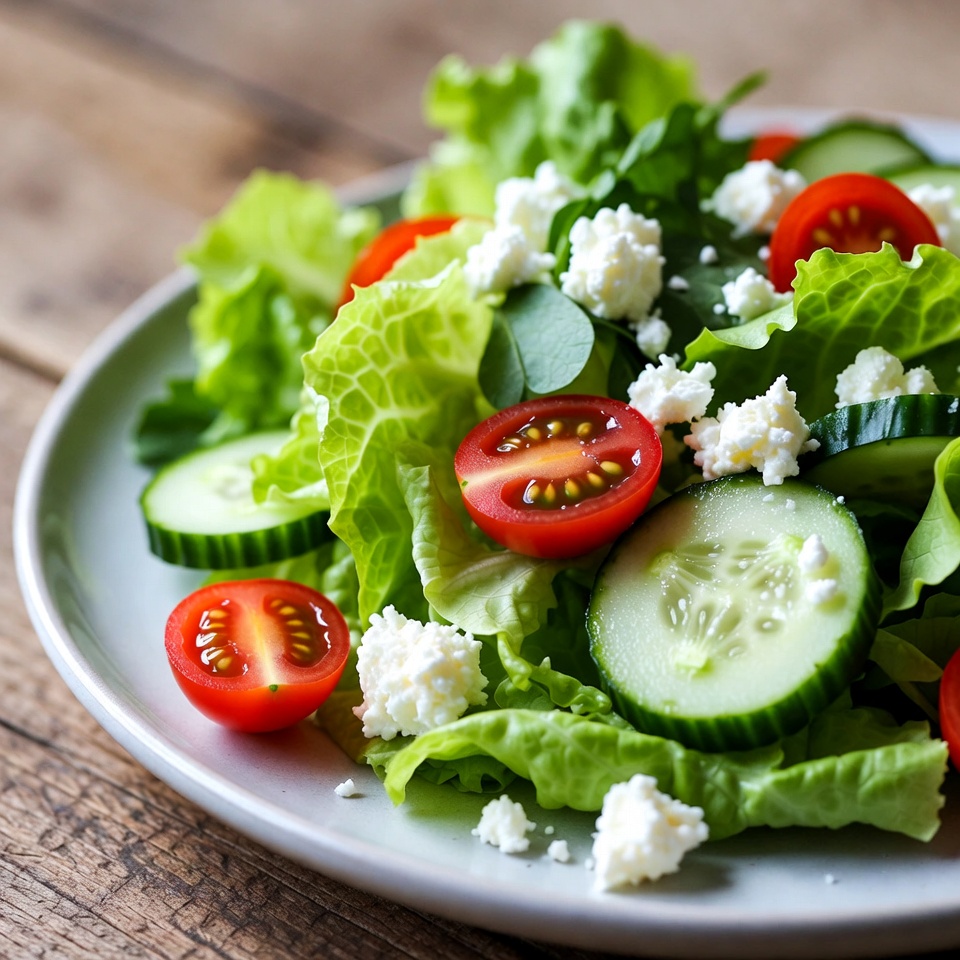
- Cheese:Shaved Pecorino Romano or crumbled goat cheese for a touch of creaminess.
Beverage Pairings
- Wine:A crisp, high-acidity white like aSauvignon Blancor a dryPinot Grigio.
- Non-Alcoholic:Sparkling mineral water with a squeeze of fresh lime and a sprig of mint.
5. Nutritional Information
Note: Based on a standard serving size including 2 tbsp of dressing.
| Nutrient | Amount per Serving |
| Calories | 185 kcal |
| Total Fat | 14g |
| Saturated Fat | 2g |
| Carbohydrates | 12g |
| Fiber | 4g |
| Sugars | 5g |
| Protein | 3g |
Health Benefits:This salad is a powerhouse of Vitamin K, Vitamin A, and folate. The inclusion of healthy monounsaturated fats from the olive oil helps your body absorb the fat-soluble vitamins found in the leafy greens.
6. Storage and Reheating
- Refrigeration:Store the dry, chopped vegetables in an airtight container lined with a damp paper towel. They will stay crisp for2–3 days.
- The Dressing:Keep the vinaigrette in a sealed jar in the fridge for up to1 week. If the olive oil solidifies, let it sit at room temperature for 10 minutes and shake before using.
- Pro-Tip:Never dress the salad in advance.Once the acid in the vinaigrette hits the greens, the cellular structure begins to break down, resulting in wilting within 20 minutes.
- Freezing:Do not freeze. The high water content in salad vegetables makes them mushy upon thawing.
7. Expert Tips and Variations
Professional Chef Tips
- Season the Greens:Most home cooks only season the dressing. Sprinkle a tiny pinch of sea salt directly onto the greens before adding the oil. It makes the flavors “pop.”
- The “Sheen” Test:A perfect salad should have a light sheen on every leaf, but there should be no puddle of dressing at the bottom of the bowl.
- Temperature:Chill your salad bowls in the freezer for 10 minutes before serving to keep the vegetables crisp until the very last bite.
Creative Variations
- The Mediterranean:Add Kalamata olives, feta cheese, and dried oregano.
- The Orchard:Add sliced Honeycrisp apples, candied walnuts, and a cider-based vinaigrette.
- The Protein Boost:Top with a warm grilled chicken breast or a hard-boiled egg for a complete meal.
8. Ingredients Section
The Produce
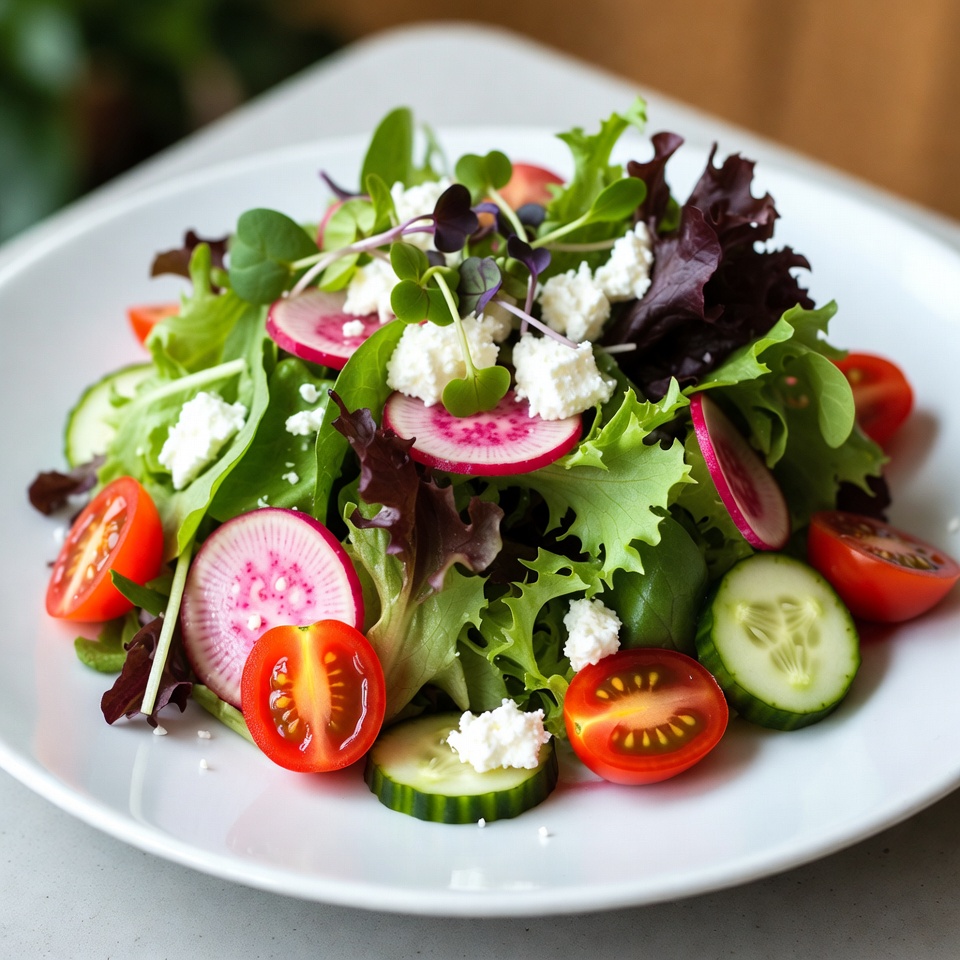
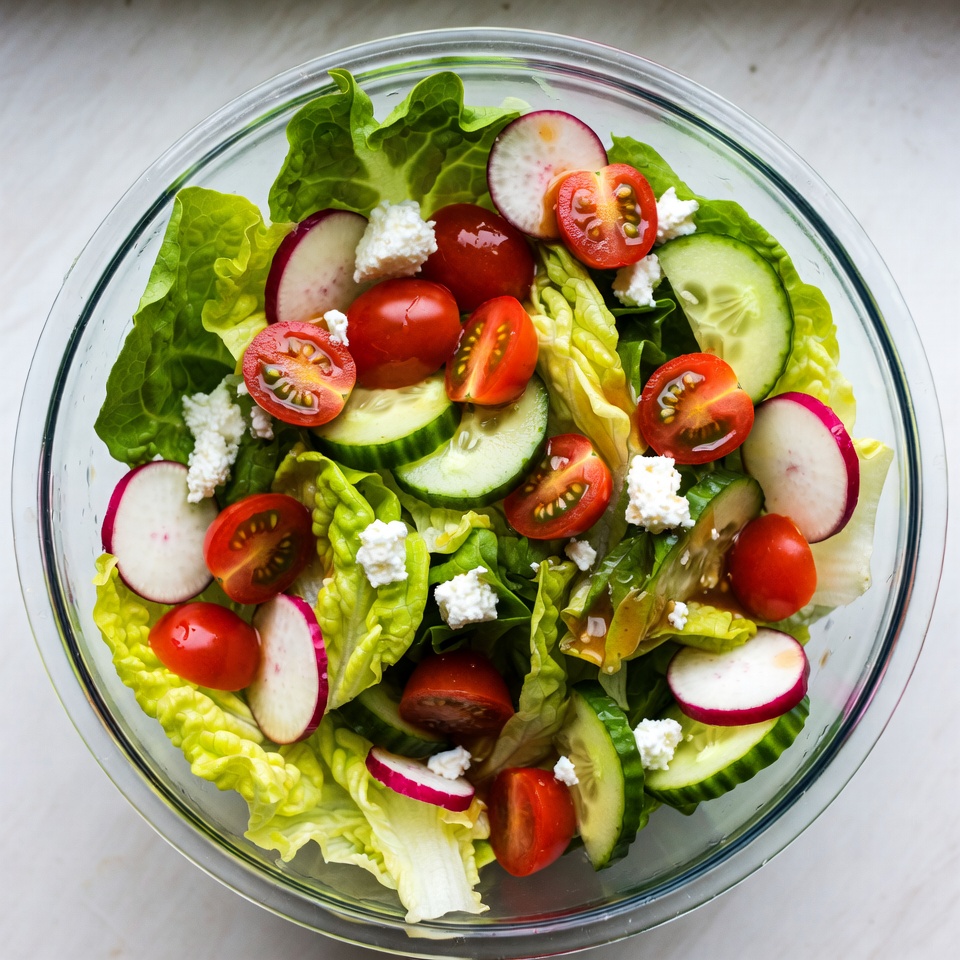
- 4 cups (approx. 200g) Mixed Greens:A blend of Romaine for crunch and Red Leaf or Bibb for tenderness.
- 1 cup (150g) Cherry Tomatoes:Halved lengthwise.
- 1 large Cucumber:Partially peeled (striped) and sliced into 1/4-inch rounds.
- 3 large Radishes:Paper-thin slices.
- 1/2 small Red Onion:Sliced into very thin rings.
- 1 large Carrot:Shaved into ribbons using a peeler.
The Signature Vinaigrette
- 1/2 cup (120ml) Extra Virgin Olive Oil:Use a high-quality “finishing” oil.
- 3 tbsp (45ml) Red Wine Vinegar:For a sharp, classic tang.
- 1 tsp (5g) Dijon Mustard:Essential as an emulsifier.
- 1 tsp (5ml) Honey or Maple Syrup:To balance the acidity.
- 1 clove Garlic:Grated or finely minced.
- Salt & Pepper:To taste (recommend 1/2 tsp sea salt and 1/4 tsp cracked black pepper).
9. Step-by-Step Instructions
- Prep the Vinaigrette:In your mason jar, combine the olive oil, red wine vinegar, Dijon, honey, garlic, salt, and pepper. Shake vigorously for 30 seconds until the mixture is thick and emulsified. Taste and adjust seasoning.
- Wash and Dry:Submerge your greens in cold water. Remove and place in thesalad spinner. Spin until completely dry. (Dry leaves = better dressing adhesion).
- The “Tame” Onion:Place the red onion slices in a small bowl of ice water for 10 minutes. This removes the harsh “sulfuric” bite while keeping them crunchy. Drain and pat dry before adding to the salad.
- Assemble the Base:In your large mixing bowl, add the dried greens. Toss them gently with your hands to aerate.
- Add the Texture:Add the cucumbers, halved tomatoes, radishes, and carrot ribbons.
- The First Toss:Drizzle about half of your dressing around theedgesof the bowl, not directly on top. Use your hands or tongs to gently lift and fold the greens.
- Final Adjustment:Check for “sheen.” Add more dressing one tablespoon at a time if the leaves look dry.
- Serve:Transfer to chilled bowls and serve immediately.
10. Frequently Asked Questions (FAQ)
1. Can I use bottled dressing instead?
While convenient, bottled dressings often contain stabilizers and excess sugar. A homemade vinaigrette takes 2 minutes and offers a much cleaner, brighter flavor profile.
2. How do I keep the avocado from browning if I add it?
If you choose to add avocado, toss the slices in a little lemon juice or a bit of the vinaigrette before adding them to the bowl.
3. What is the best way to cut the lettuce?
Tearing lettuce by hand is often preferred over chopping with a knife, as it prevents the edges from oxidizing (browning) as quickly.
4. My dressing is too tart. How do I fix it?
Add a tiny pinch more salt or another teaspoon of honey. Salt is excellent at neutralizing perceived acidity.
5. Can I make this a “meal” salad?
Absolutely. Adding a complex carbohydrate like quinoa or a protein like chickpeas or grilled shrimp turns this side dish into a balanced entree.