1. Introduction
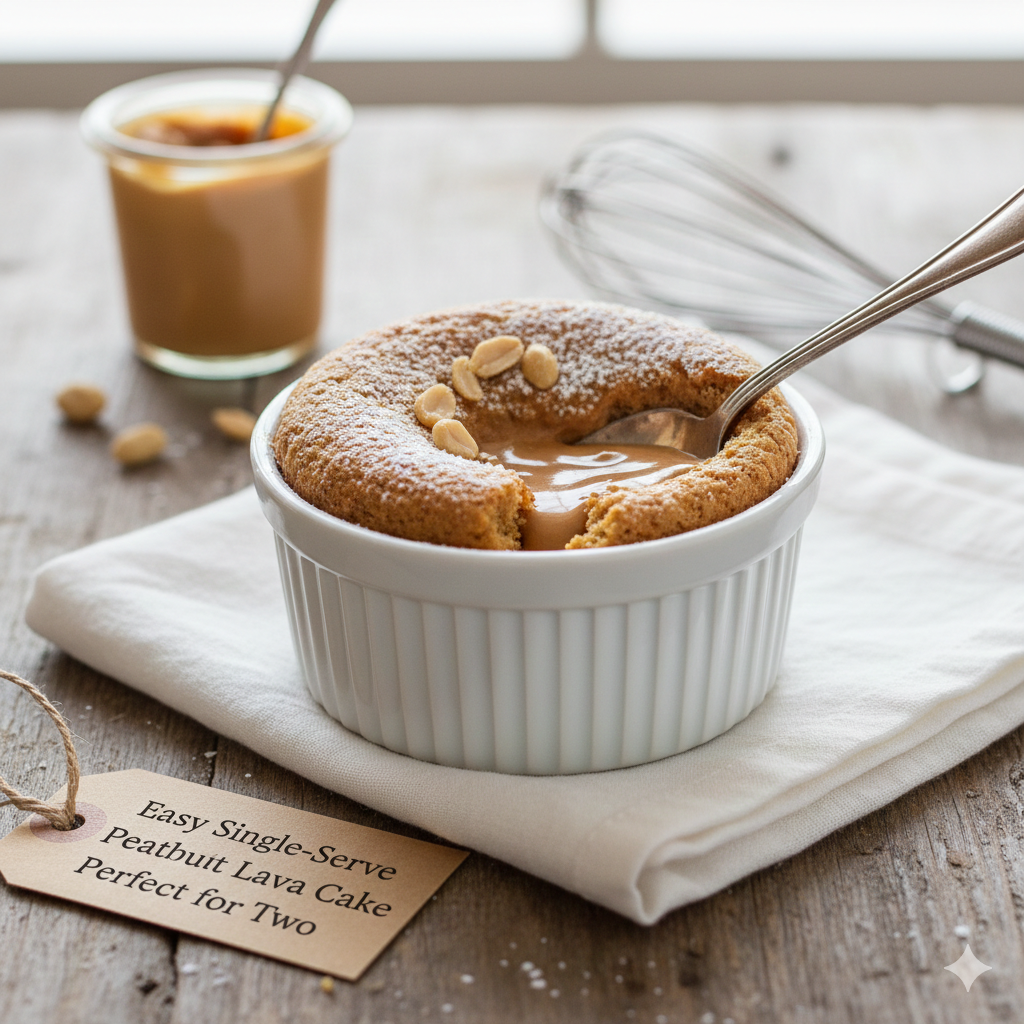
There is a specific kind of magic that happens in the quiet hours of the evening when the house is still, the chores are done, and a sudden, undeniable craving for something sweet and warm takes hold. In these moments, you don’t want a multi-tiered sponge or a dozen cooling cookies; you want an immediate, molten reward. Enter the Single-Serve Peanut Butter Lava Cake.
This dish is a modern evolution of the classic fondant au chocolat, a dessert made famous in New York kitchens in the late 1980s. While the traditional chocolate version is iconic, the peanut butter variation offers a nostalgic, salty-sweet profile that resonates deeply with the “comfort food” culture of North America. It is a dish that speaks to the child in us who loved peanut butter and jelly sandwiches, yet satisfies the adult palate looking for a sophisticated, hot-and-cold dessert experience.
What makes this recipe a masterpiece of minimalist baking is its engineering. By manipulating the ratio of fat to flour and utilizing a high-heat, short-duration cooking method, we create a structural outer “shell” while keeping the interior in a liquid, volcanic state. It is a feat of culinary physics that you can achieve in your own kitchen in less time than it takes to brew a pot of coffee.
2. Recipe Overview
- Cuisine Type: American Fusion
- Difficulty Level: Easy
- Total Time: 15 minutes (5 mins prep, 10 mins baking)
- Dietary Classifications: Vegetarian. Easily adaptable for Vegan or Gluten-Free diets.
3. Equipment and Tools
Precision in small-scale baking is vital. For this single-serve wonder, ensure you have:
- Ramekin: A 6-ounce (175ml) ceramic ramekin is the industry standard. It should be approximately 3.5 inches wide and 2 inches deep.
- Small Mixing Bowl: A glass or stainless steel bowl for whisking.
- Small Whisk or Fork: To ensure the batter is perfectly emulsified without lumps.
- Measuring Spoons: Accuracy is key when working with small volumes; a half-teaspoon error can change the cake’s chemistry.
- Baking Sheet: A small tray to place the ramekin on for easy removal from the oven.
4. Serving Suggestions
Plating Recommendations:
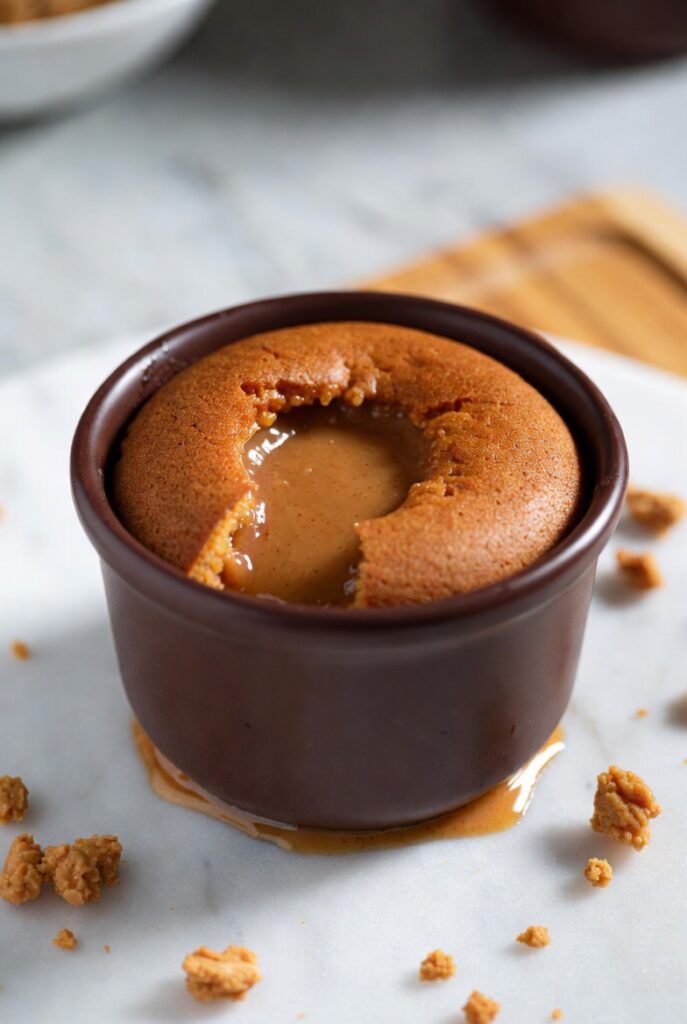
While you can eat this straight from the ramekin, the true “lava” experience comes from inverting it onto a small dessert plate. Run a thin knife around the edge and flip it quickly.
Garnish Ideas:
- A Dusting of Cocoa: Provides a bitter contrast to the sweet peanut butter.
- Sea Salt Flakes: Enhances the nuttiness of the lava.
- Crushed Roasted Peanuts: For a much-needed textural “crunch.”
Beverage Pairings:
- Cold Milk: The classic, nostalgic pairing.
- Espresso: The intensity of the coffee cuts through the richness of the peanut butter.
- Late-Harvest Riesling: If serving as a formal dessert, the high acidity and sweetness of this wine balance the cake perfectly.
5. Nutritional Information
Per serving (1 cake):
| Nutrient | Amount |
| Calories | 340 kcal |
| Total Fat | 18g |
| Saturated Fat | 9g |
| Carbohydrates | 38g |
| Fiber | 2g |
| Protein | 7g |
Health Insight: Peanut butter is a source of healthy monounsaturated fats and Vitamin E. By making this a single-serve portion, you are practicing built-in portion control!
6. Storage and Reheating
- Refrigeration: This cake is best enjoyed immediately. If you must store it, keep it in the ramekin, covered, for up to 24 hours.
- Freezing: Not recommended, as the “lava” center will solidify and lose its liquid properties.
- Reheating: Microwave on 50% power for 20 seconds. Be careful—overheating will turn your lava into a solid cake!
7. Expert Tips and Variations
- The “Cold Core” Trick: For a guaranteed liquid center, freeze a small dollop (1 tsp) of peanut butter for 10 minutes before dropping it into the center of the batter.
- Room Temp Egg: Ensure your egg is at room temperature so it incorporates smoothly into the melted butter.
- Variations:
- PB & J Lava: Place a teaspoon of raspberry jam in the center along with the peanut butter.
- Chocolate Chip: Fold in 1 tablespoon of mini chocolate chips into the batter.
- Vegan Version: Use a flax egg (1 tbsp flax meal + 3 tbsp water) and vegan butter/PB.
8. Ingredients Section
- Unsalted Butter: 2 tbsp (28g) — Melted.
- Creamy Peanut Butter: 3 tbsp (45g) — Divided (2 for batter, 1 for core).
- Powdered Sugar: 1/4 Cup (30g).
- Large Egg: 1 — Room temperature.
- All-Purpose Flour: 2 tbsp (16g).
- Vanilla Extract: 1/4 tsp.
- Salt: A tiny pinch.
9. Step-by-Step Instructions
- Prep: Preheat your oven to 200°C (400°F). Generously grease your ramekin with butter and a light dusting of flour or cocoa powder.
- The Base: In your small bowl, whisk together the melted butter and 2 tablespoons of peanut butter until smooth.
- Sweeten: Whisk in the powdered sugar until no lumps remain.
- Emulsify: Add the egg and vanilla extract. Whisk vigorously for about 30 seconds until the batter looks glossy.
- Fold: Gently stir in the flour and salt. Stop the moment the flour disappears.
- The Lava Core: Pour the batter into the ramekin. Drop the remaining 1 tablespoon of peanut butter directly into the center, pushing it down slightly so batter covers it.
- Bake: Place on a baking sheet and bake for 10–12 minutes.
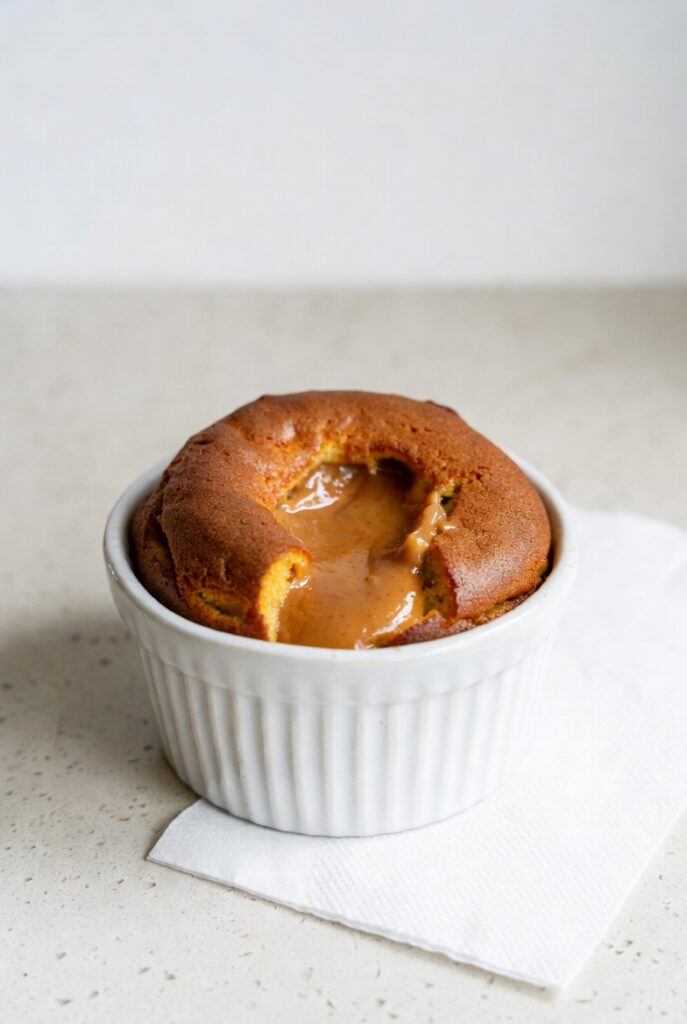
- Visual Cue: The edges should be firm and set, but the center should still have a slight “jiggle” when shaken.
- Rest: Let it sit for exactly 2 minutes. This allows the outer wall to strengthen so it doesn’t collapse upon plating.
10. Frequently Asked Questions (FAQ)
Q: Can I use crunchy peanut butter?
A: You can, but the “lava” won’t flow as smoothly. Creamy peanut butter provides that iconic molten texture.
Q: My cake came out solid. Why?
A: You likely overbaked it. Oven temperatures vary; next time, check the cake at the 9-minute mark.
Q: Can I make this in the microwave?
A: Yes! Cook on high for 60–90 seconds. The texture will be more “sponge-like” than an oven-baked version, but still delicious.
Q: Why do I need powdered sugar instead of granulated?
A: Powdered sugar contains a small amount of cornstarch and dissolves faster, contributing to a smoother, more tender crumb.
Q: Can I double the recipe?
A: Yes, but bake them in separate ramekins. Do not try to bake a “double” version in one large dish, as the outside will burn before the inside reaches the right temperature.