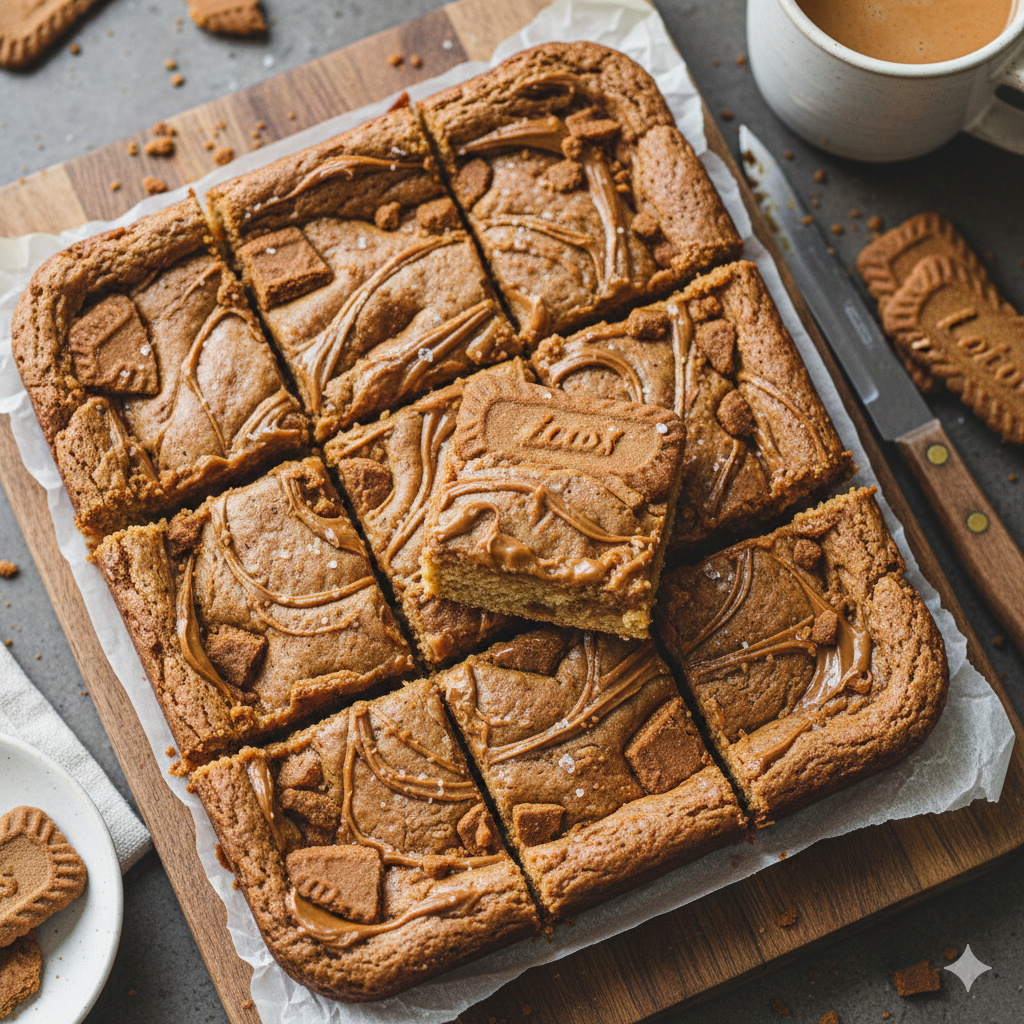
1. Introduction: A Love Letter to Speculoos
There is a specific kind of magic that happens when brown sugar, butter, and spices collide. While the brownie has long reigned supreme in the world of traybakes, its golden sibling—the Blondie—offers a sophisticated, caramel-forward alternative that is hard to resist. But when you infuse that chewy, butterscotch base with the iconic flavors of Lotus Biscoff, you aren’t just making a dessert; you’re creating a masterpiece of “Cookie Butter Bliss.”
Biscoff, or Speculoos, originated in Belgium and the Netherlands. Traditionally served as a spiced shortcrust biscuit to celebrate St. Nicholas’ Day, these cookies are defined by a deep caramelization and a warming blend of cinnamon, nutmeg, ginger, and cloves. In recent decades, the transformation of these cookies into a spreadable “butter” revolutionized modern baking.
These Biscoff Blondies pay homage to that heritage. They are dense, fudgy, and unapologetically rich. Every bite offers a contrast between the soft, melt-in-your-mouth blondie base and the crunch of crushed biscuits, tied together by thick, molten ribbons of cookie butter. Whether you’re a long-time fan of the “airplane cookie” or a newcomer to the cult of Biscoff, this recipe is designed to be your new gold standard.
2. Recipe Overview
- Cuisine Type: European-American Fusion
- Difficulty Level: Intermediate (Requires careful monitoring of bake time to ensure fudginess)
- Prep Time: 20 minutes
- Cook Time: 25–30 minutes
- Total Time: 50 minutes (plus cooling)
- Dietary Classifications: Vegetarian
3. Equipment and Tools
To achieve the perfect texture, using the correct tools is non-negotiable.
- Baking Pan: An 8×8 inch (20×20 cm) square metal baking pan. Metal conducts heat more evenly than glass or ceramic for this specific recipe.
- Pan Depth: Ensure the pan has at least a 2-inch depth to allow for the rise and the heavy layers of spread.
- Parchment Paper: Essential for “slinging” the blondies out of the pan for clean cuts.
- Mixing Bowls: One large heat-proof bowl for melting butter and one medium bowl for dry ingredients.
- Rubber Spatula: For gentle folding to avoid over-aerating the batter.
- Digital Kitchen Scale: For precision (highly recommended over cup measurements).
- Wire Cooling Rack: To prevent the bottom from becoming soggy during the cooling process.
4. Serving Suggestions
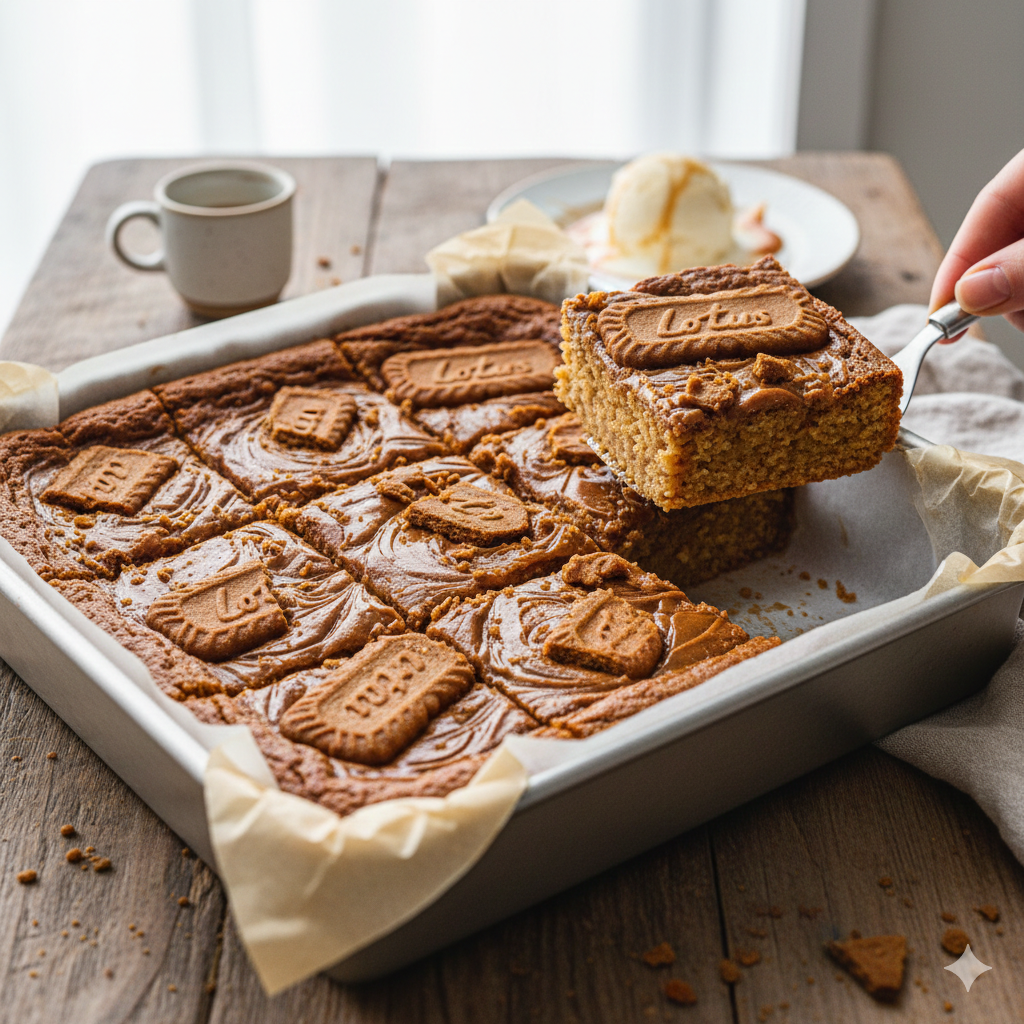
- The Classic: Serve slightly warm with a scoop of high-quality Madagascar vanilla bean ice cream.
- The Garnish: Drizzle extra melted Biscoff spread over the top and sprinkle with a pinch of Maldon sea salt to cut through the sweetness.
- Beverage Pairings: * Coffee: A dark roast espresso or a flat white complements the caramel notes perfectly.
- Wine: A late-harvest Riesling or a glass of Tawny Port provides a beautiful acidic or nutty balance.
- Milk: A cold glass of oat milk enhances the toasted grain flavors of the Biscoff.
5. Nutritional Information (Per Serving)
Note: Based on 16 servings per batch.
| Nutrient | Amount |
| Calories | 320 kcal |
| Total Fat | 18g |
| Saturated Fat | 9g |
| Carbohydrates | 38g |
| Fiber | 0.5g |
| Sugars | 24g |
| Protein | 3g |
Potential Health Benefits: While an indulgent treat, the inclusion of warming spices like cinnamon can aid in digestion, and the use of real butter provides fat-soluble vitamins.
6. Storage and Reheating
- Room Temperature: Store in an airtight container for up to 4 days. They actually become fudgier on day two!
- Refrigeration: Can be kept for up to 7 days. Note that the butter will firm up, making the blondie denser.
- Freezing: Wrap individual squares tightly in plastic wrap and then foil. Freeze for up to 3 months. Thaw at room temperature for 1 hour.
- Reheating: Microwave for 10–15 seconds to restore that “just-out-of-the-oven” molten center.
7. Expert Tips and Variations
- The “Underbake” Rule: Blondies continue to cook in the pan after being removed from the oven. Pull them out when the edges are set but the center still has a slight wobble.
- Brown the Butter: For an extra nutty depth, brown your butter ($Beurre \: Noisette$) before mixing it with the sugar.
- The Crunch Factor: Don’t pulverize the cookies. Leave them in chunky, nickel-sized pieces for texture.
- Variation – White Chocolate Chip: Add 100g of high-quality white chocolate chips to the batter to enhance the “milky” flavor profile.
- Variation – Salted Caramel: Add a layer of sea salt caramel sauce alongside the Biscoff swirl.
8. Ingredients Section
The Wet Ingredients
- Unsalted Butter: 175g (3/4 cup) – Melted and slightly cooled.
- Light Brown Sugar: 200g (1 cup, packed) – Provides the chew and molasses flavor.
- Granulated White Sugar: 50g (1/4 cup) – Helps create the crackly top.
- Egg: 1 large (room temperature).
- Egg Yolk: 1 large – Adding an extra yolk is the secret to a fudgy, non-cakey texture.
- Vanilla Bean Paste: 1 tbsp – Or high-quality extract.
- Biscoff Spread: 150g (approx. 1/2 cup) – Divided for the batter and the swirl.
The Dry Ingredients
- All-Purpose Flour: 225g (1 ¾ cups) – Spooned and leveled.
- Cornstarch: 1 tsp – Softens the flour proteins for a more tender crumb.
- Sea Salt: ½ tsp – To balance the sweetness.
- Lotus Biscoff Biscuits: 100g (about 10-12 cookies) – Roughly chopped.
9. Step-by-Step Instructions
- Preparation: Preheat your oven to 175°C (350°F). Grease your 8×8 inch pan and line it with parchment paper, leaving an overhang on two sides.
- Creaming the Sugars: In a large bowl, whisk together the melted butter, brown sugar, and white sugar. Whisk vigorously for 2 minutes until the sugar begins to dissolve and the mixture looks glossy.
- The Emulsion: Add the whole egg, the extra yolk, and the vanilla. Whisk until the mixture lightens in color. This incorporates just enough air for a lift without making it “cakey.”
- The Fold: Gently fold in the flour, cornstarch, and salt using a spatula. Stop when just a few streaks of flour remain.
- The Mix-ins: Add 100g of Biscoff spread (warmed slightly in the microwave for 10 seconds) and the chopped biscuits. Fold twice—do not overmix, or you will lose the distinct swirls.
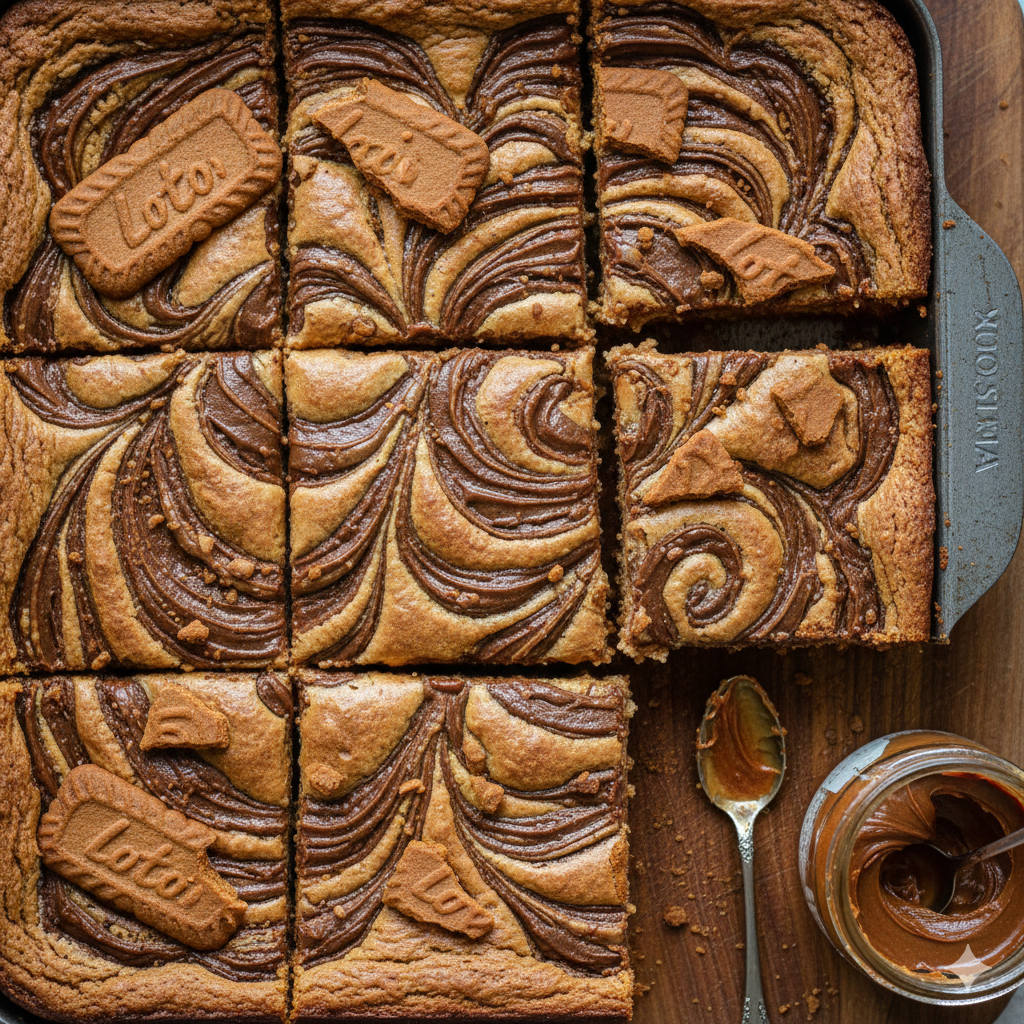
- The Assembly: Pour the batter into the prepared pan. Drop the remaining 50g of Biscoff spread in dollops over the top. Use a toothpick or knife to swirl it into patterns.
- The Bake: Bake for 25–30 minutes. The edges should be golden brown and pulling away from the sides, but the center should still be soft.
- The Cure: This is the hardest part. Let the blondies cool completely in the pan. If you cut them while hot, they will fall apart. For the cleanest lines, chill in the fridge for 30 minutes before slicing.
10. Frequently Asked Questions (FAQ)
Q: Can I use crunchy Biscoff spread instead of smooth?
A: Absolutely! It adds an extra layer of texture. Just ensure you warm it slightly so it’s easy to swirl.
Q: Why did my blondies turn out cakey?
A: This usually happens if you overbeat the eggs or use too much flour. Always use a scale for the flour and fold it in gently by hand.
Q: Can I make these gluten-free?
A: Yes, replace the flour with a 1:1 gluten-free baking blend. However, Biscoff cookies contain gluten, so you would need to find a gluten-free speculoos alternative.
Q: Why isn’t the top crackly?
A: The crackly top comes from the sugar dissolving into the egg. Make sure you whisk the sugars and eggs thoroughly before adding the dry ingredients.
Q: Can I double the recipe?
A: Yes, use a 9×13 inch pan and increase the bake time by 5–10 minutes.