
A butterfly spine tattoo can follow the back with a graceful vertical rhythm. Some designs center one butterfly between the shoulder blades; others build a longer composition using flowers, fine stems, or carefully spaced wings. A feminine look can be soft, sculptural, minimal, or romantic, depending on what feels right to you.
These 19 ideas use the spine as a guide without treating it as a line that every element has to touch. Each image is an original AI-generated concept mockup. Ask your artist to adapt the length and spacing to your back, and review the stencil while standing in a relaxed posture.
1. Three Butterflies Along the Spine
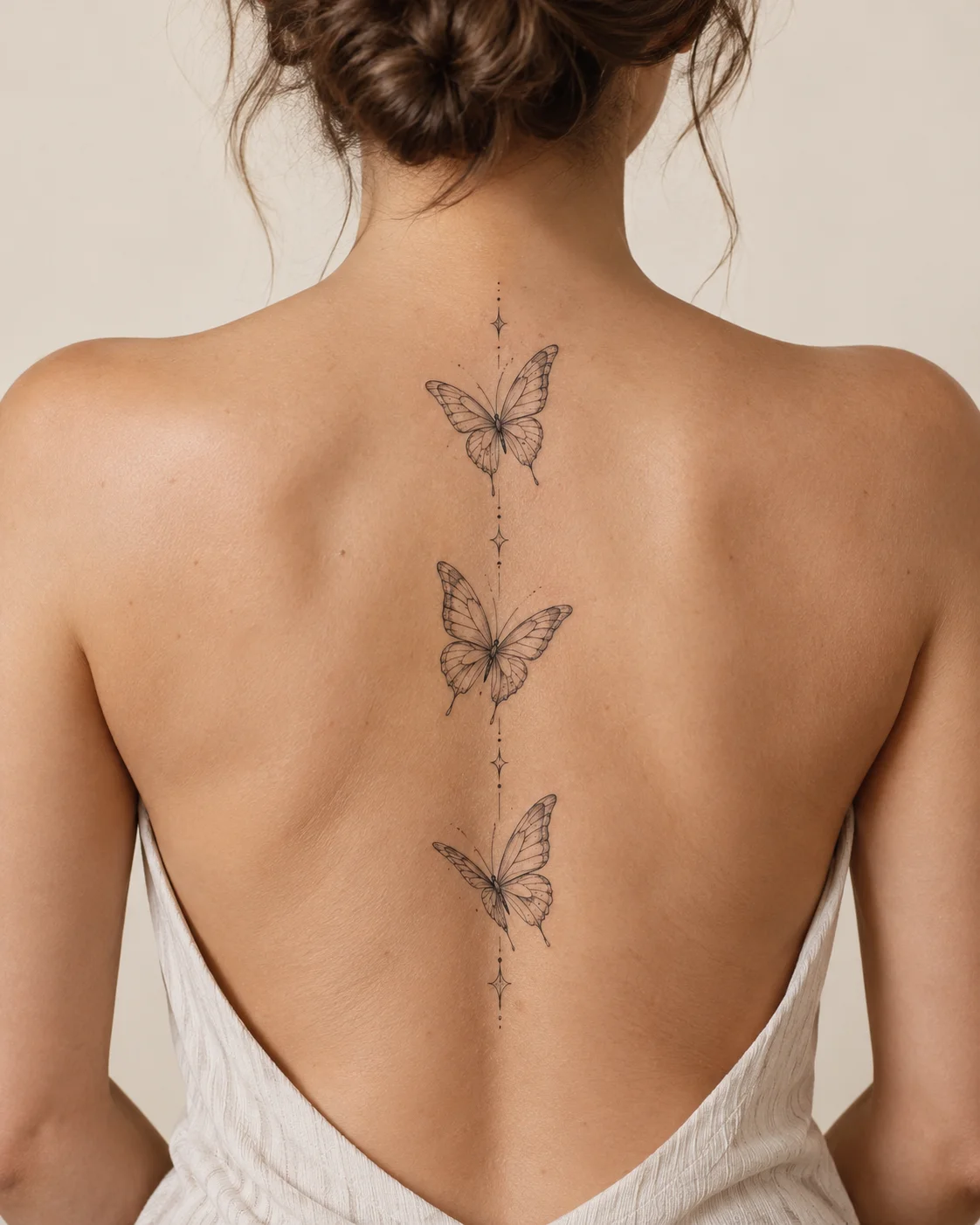
Three butterflies arranged vertically create a clear rhythm down the upper back. Vary their angles slightly while keeping their centers near the spine. Enough space between each butterfly lets the wings stand alone, so the composition reads as movement rather than a solid column.
2. Single Butterfly Between the Shoulder Blades
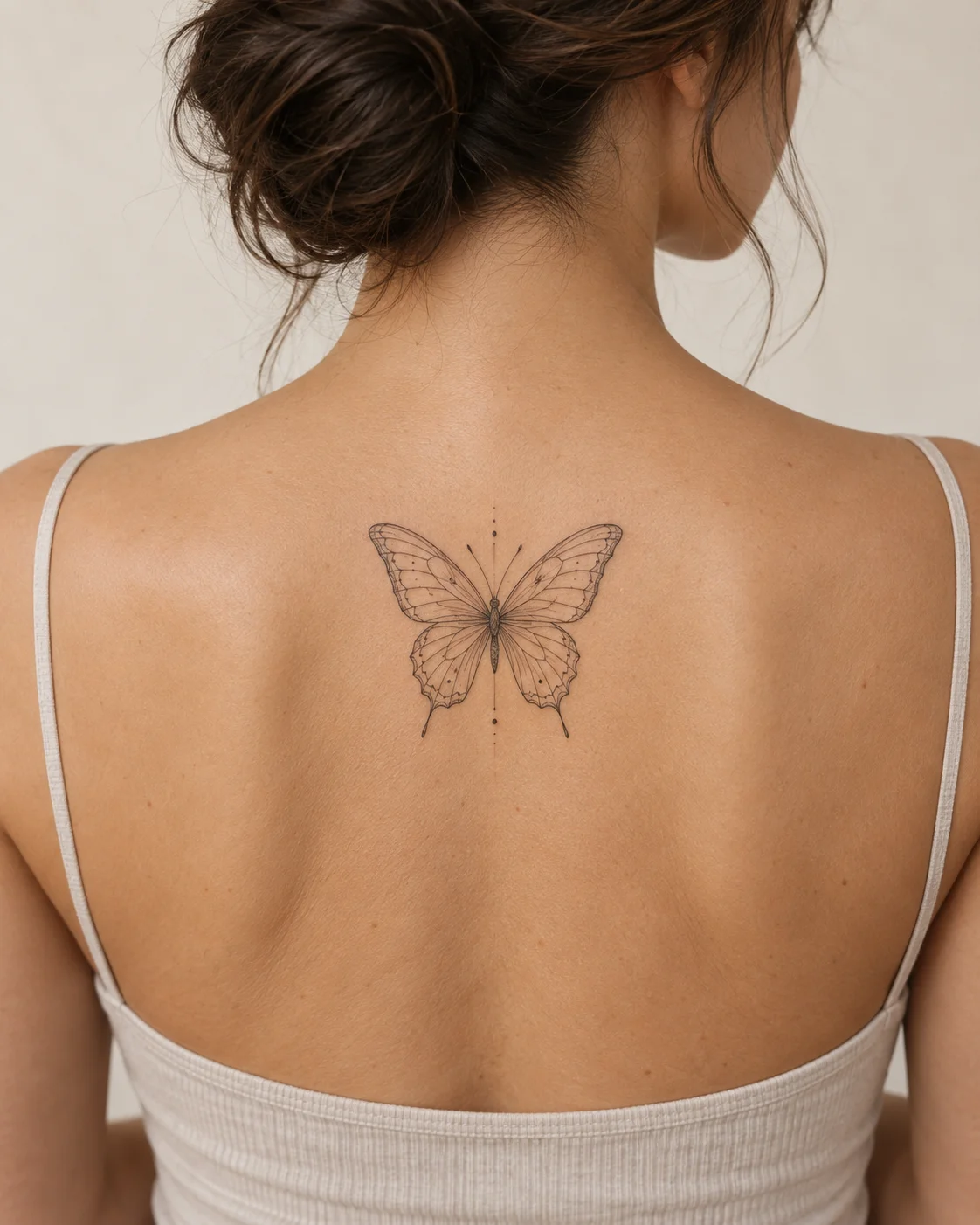
One balanced butterfly between the shoulder blades offers a focused, elegant design. Give it a clear wing shape and a little space above and below. This short composition suits someone who likes the spine placement but prefers a single centerpiece to a longer trail.
3. Butterfly and Long Fine Stem
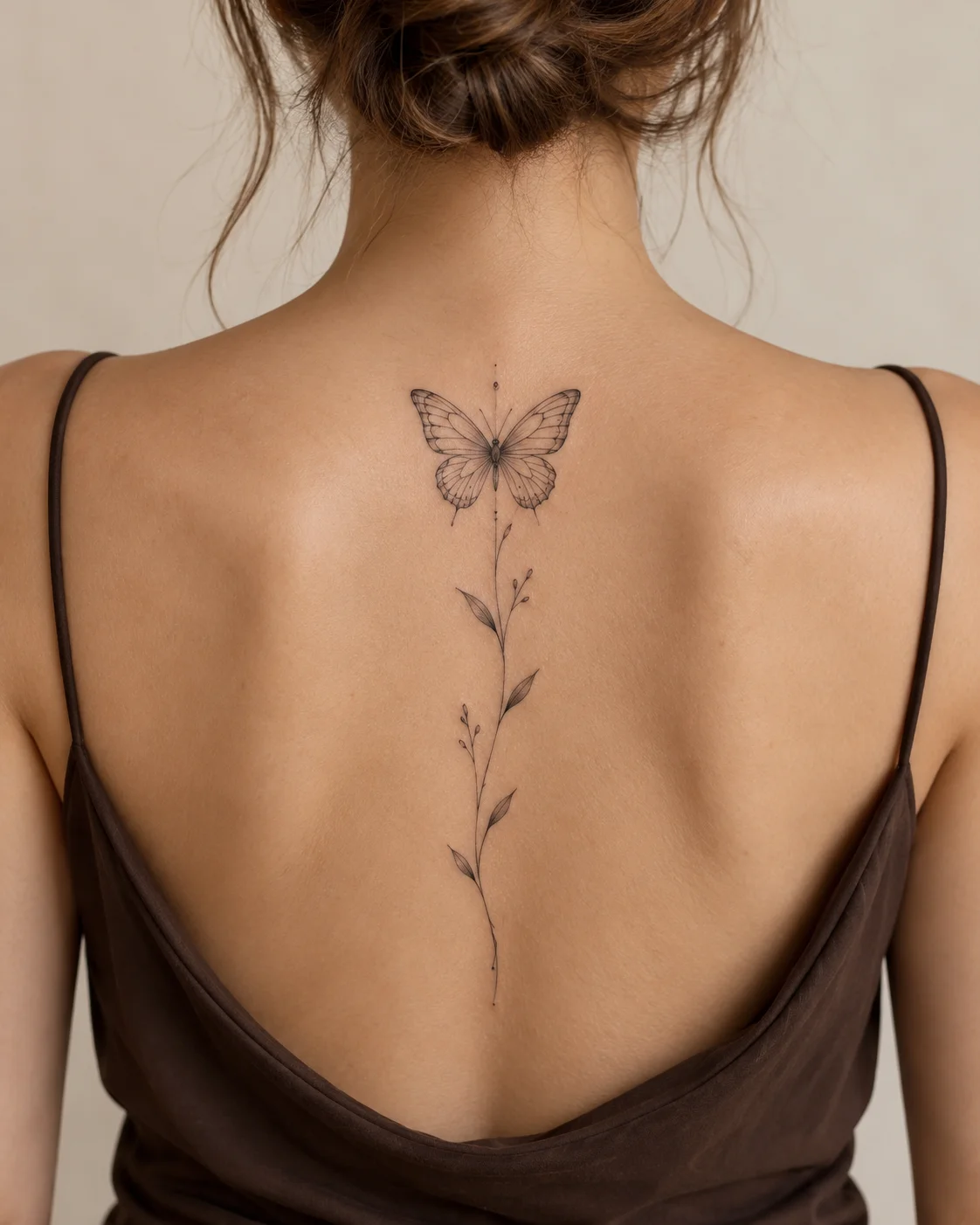
Place a butterfly above a slim, gently curving botanical stem. The stem extends the composition downward while the wings create a wider focal point near the top. Keep the leaves small and separated so the design stays light along the center of the back.
4. Butterfly with Crescent Above
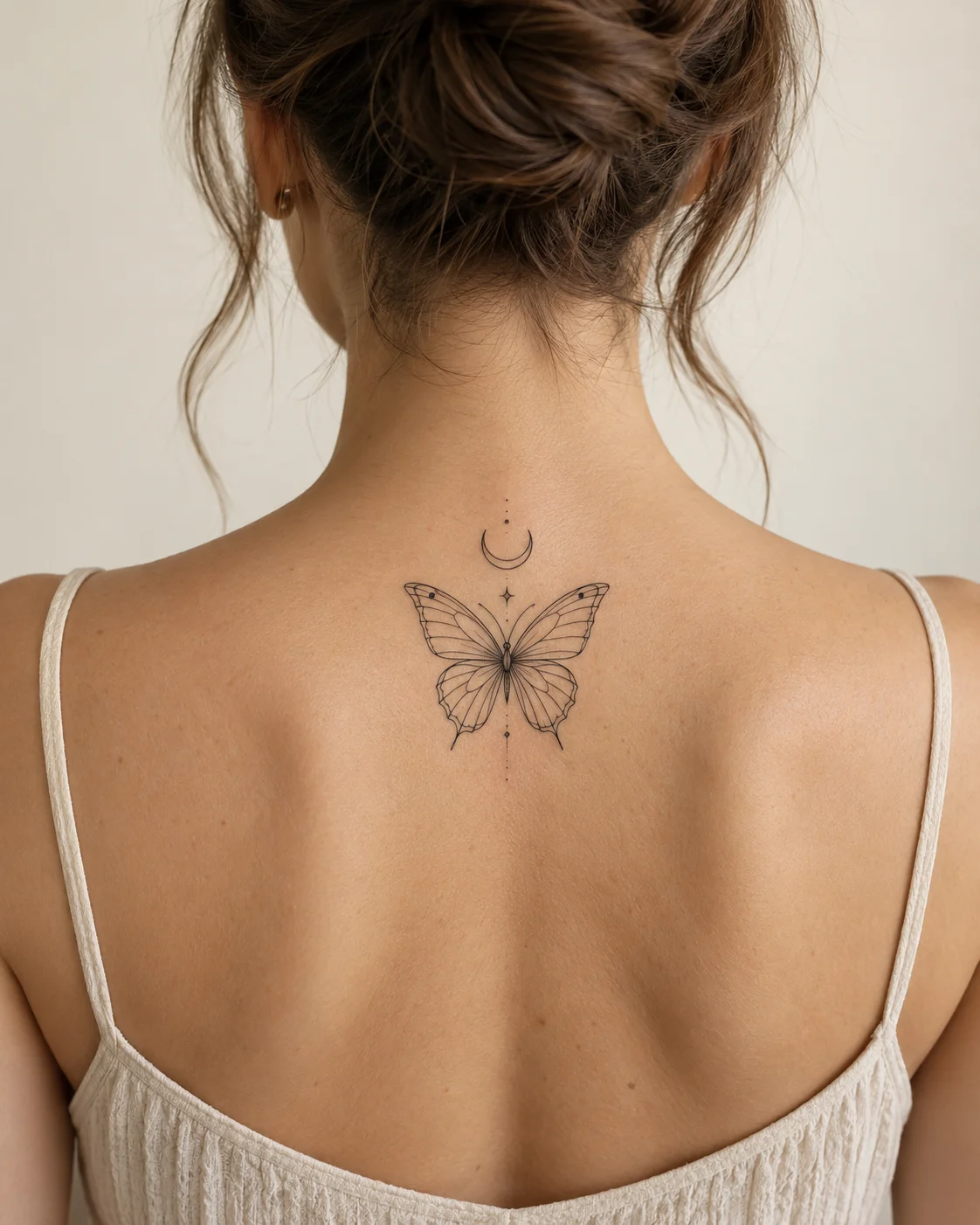
A crescent placed above a butterfly creates a soft celestial arrangement. A short gap between them prevents the moon from looking attached to the antennae. Let the butterfly be visibly wider than the crescent so the wings remain the central feature.
5. Butterfly and Fine Rose Stem
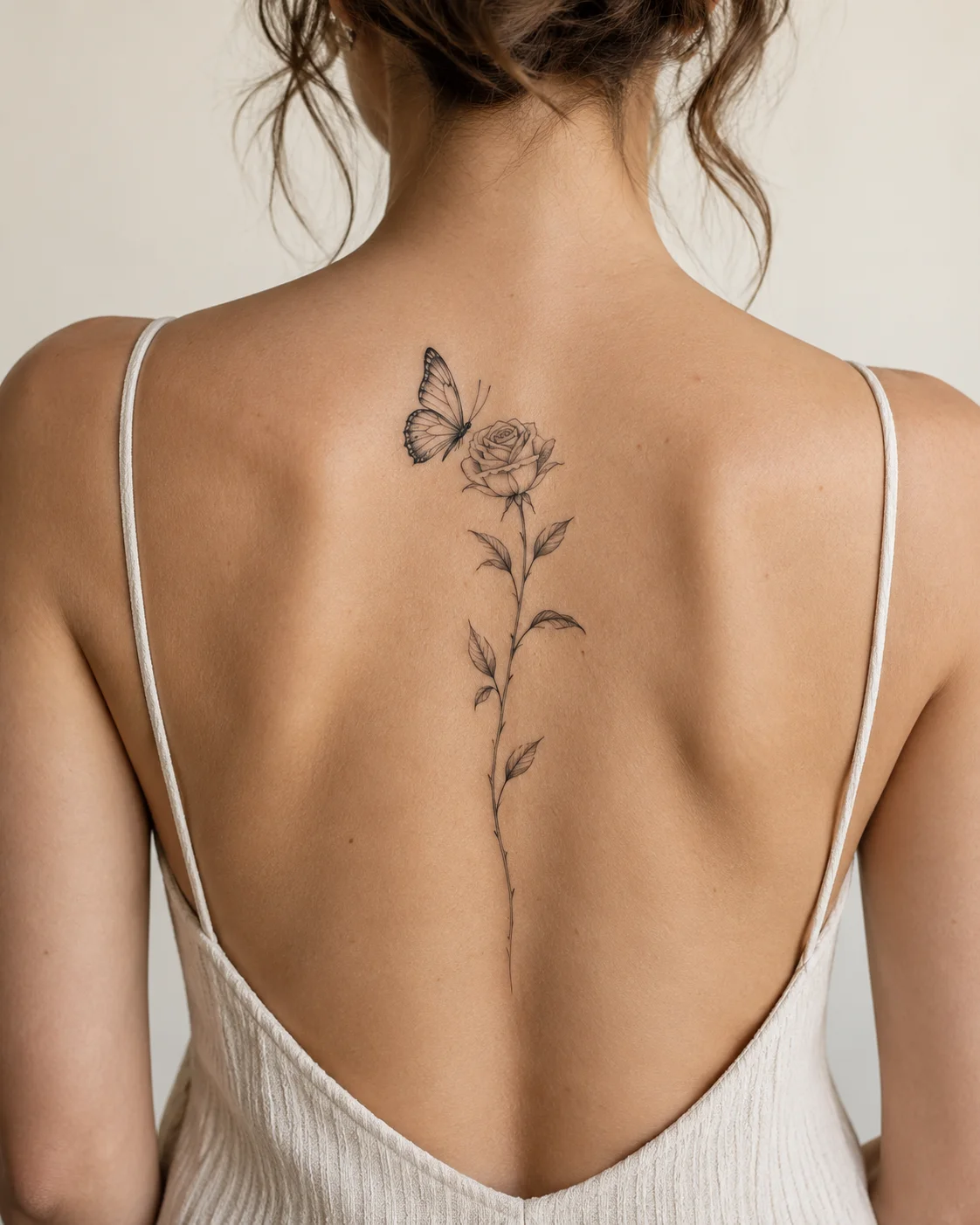
A butterfly beside the top of a fine rose stem combines romantic floral detail with a long vertical shape. Keep the rose head modest and simplify the petal folds. A slight bend in the stem helps the design feel natural rather than ruler-straight.
6. Graduated Butterfly Trail
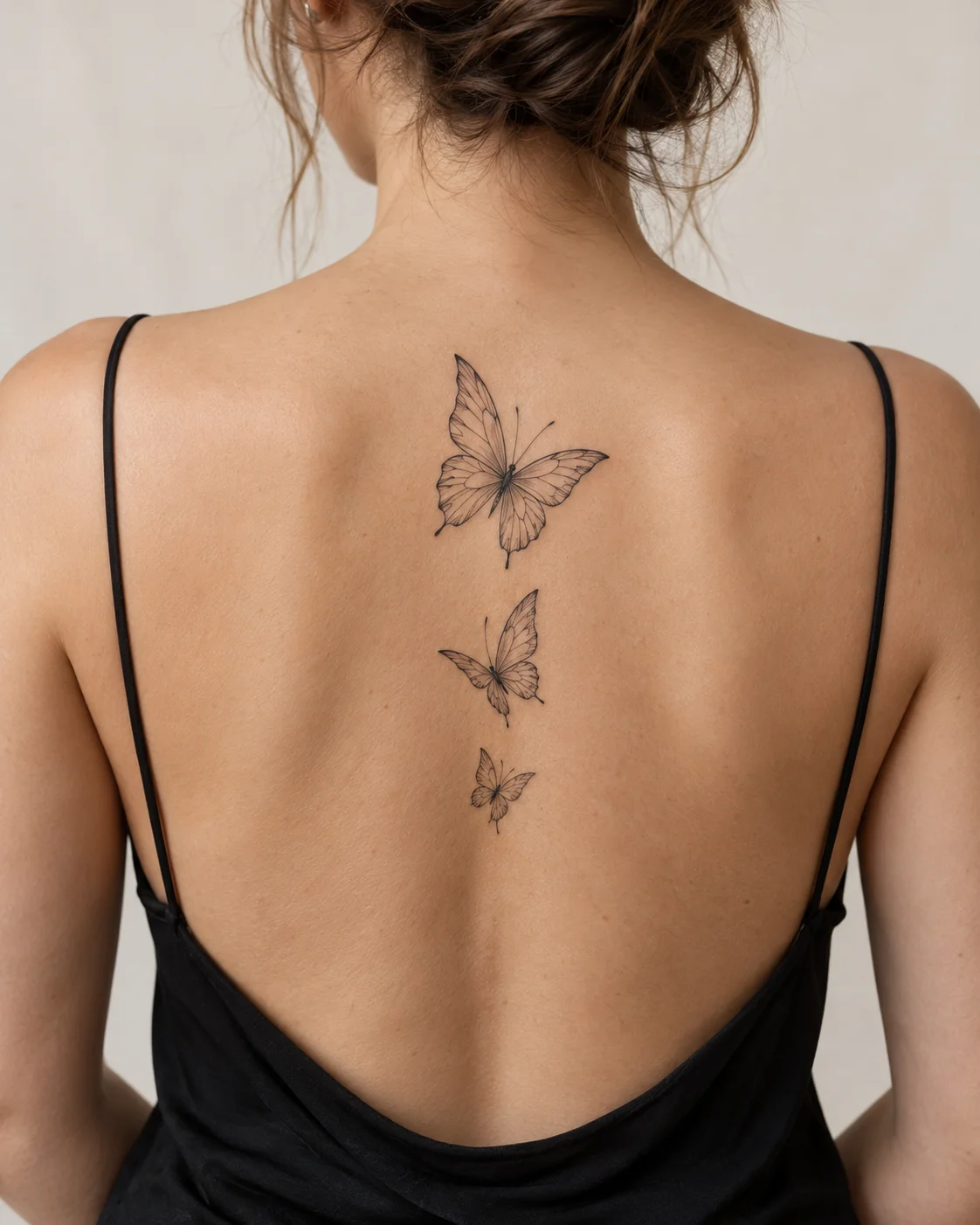
A larger butterfly near the top with two smaller butterflies below creates a gentle taper. The change in scale gives the composition direction without needing a flight path. Vary the wing poses enough that the three butterflies feel individual while still belonging together.
7. Butterfly with Dotted Vertical Accents
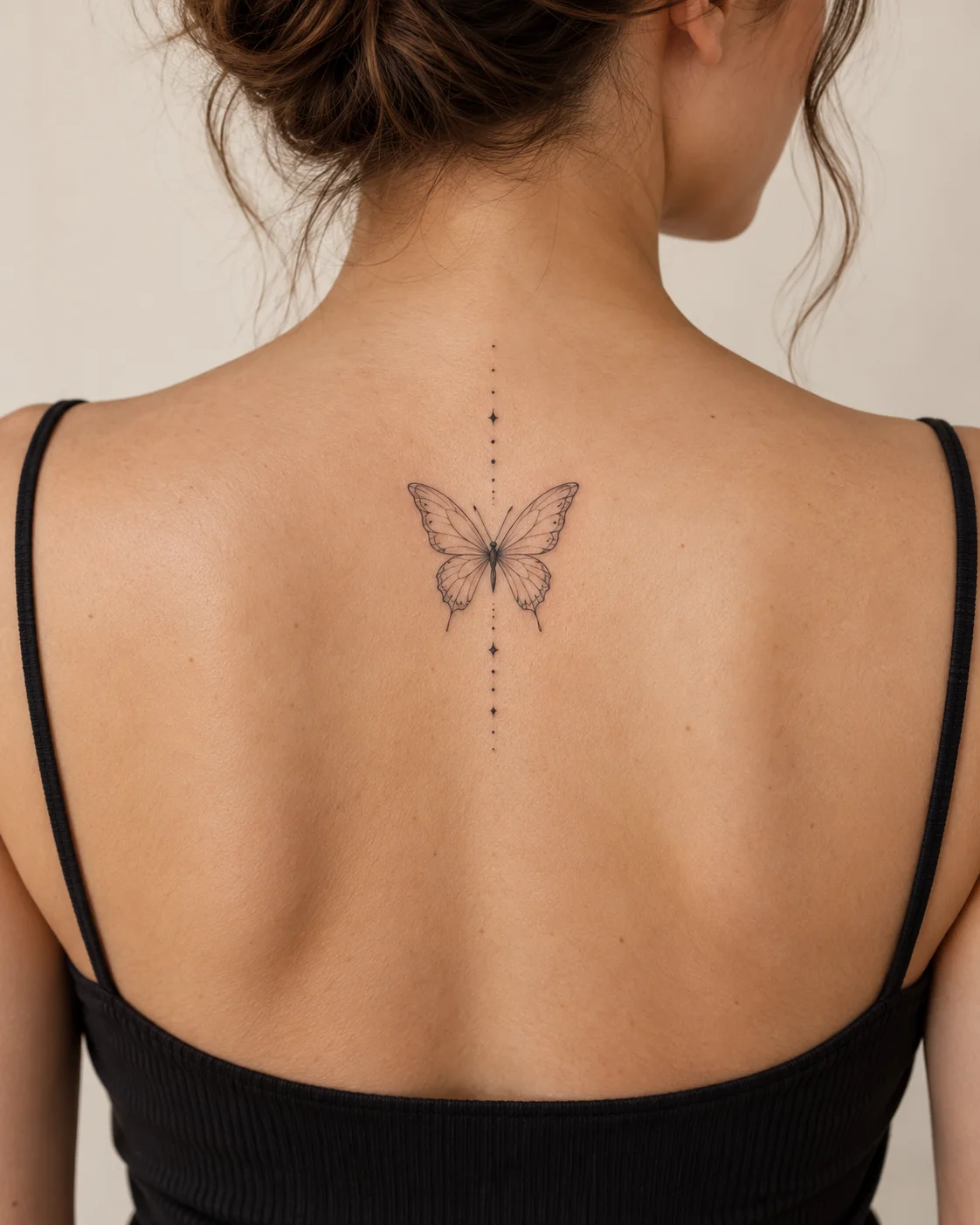
Short dotted accents above and below one butterfly can extend a minimal design along the spine. Keep the dots restrained and leave a break near the wings. This gives the piece a vertical framework while preserving plenty of untouched skin around the main shape.
8. Butterfly and Lavender Sprig
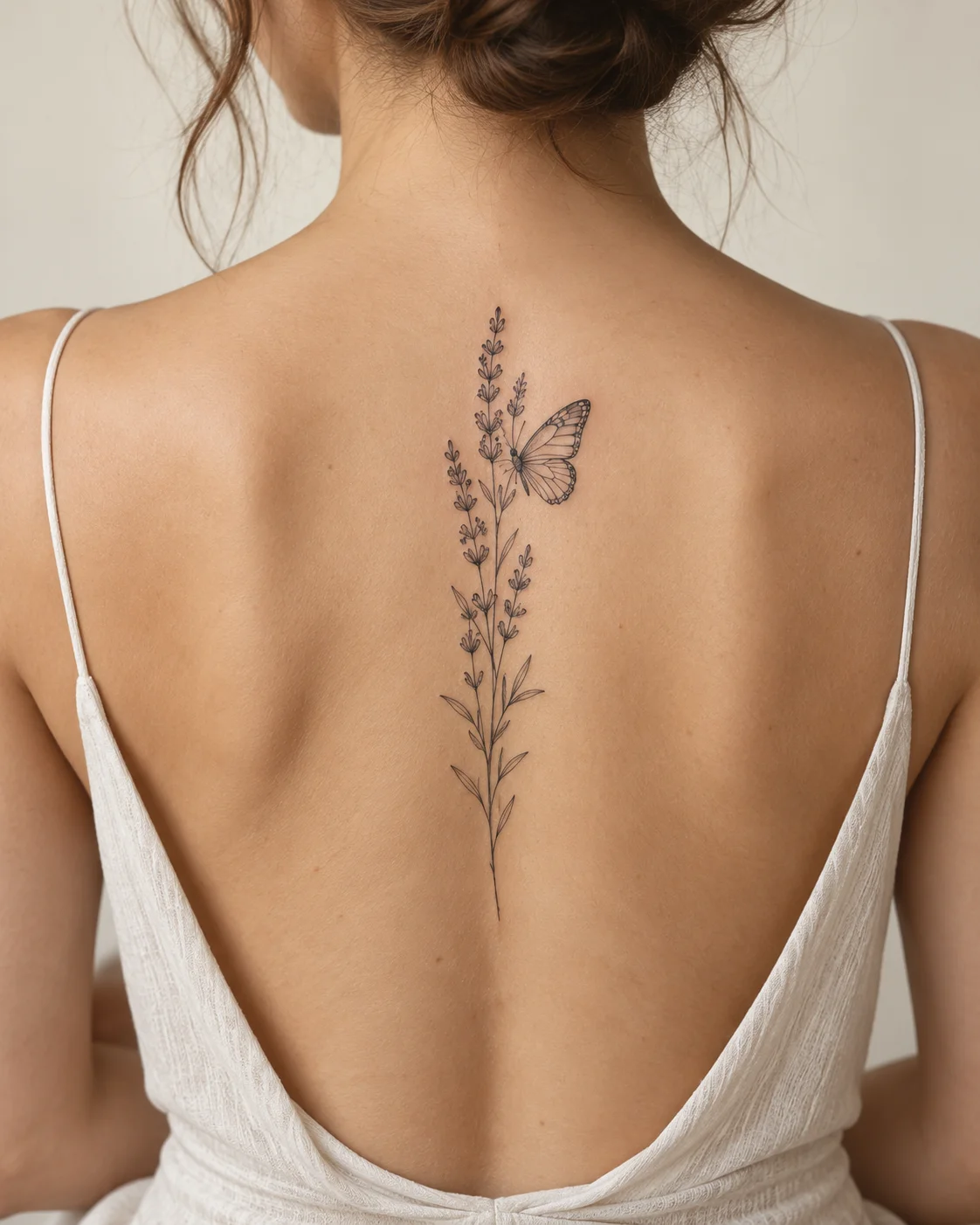
A narrow lavender sprig works well beneath a butterfly because it has a naturally upright shape. Separate the small buds instead of drawing one dense purple-looking cluster in black ink. A butterfly angled just off-center adds movement to the otherwise vertical composition.
9. Two Butterflies Facing Different Directions
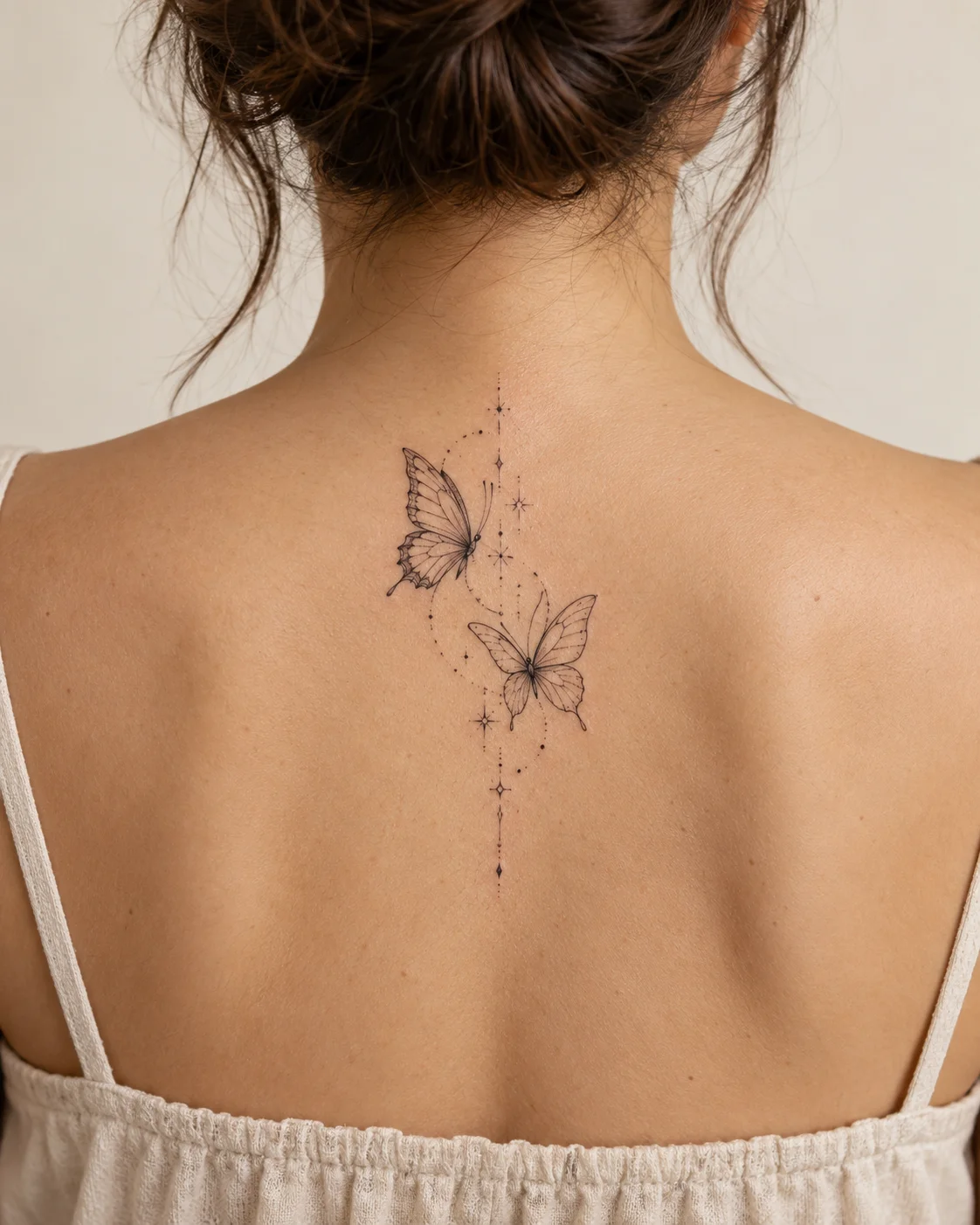
Two butterflies with different wing angles can make a compact spine design feel lively. Keep one near the center and let the second sit slightly to the side. The small shift prevents the arrangement from looking like two identical emblems stacked on top of each other.
10. Butterfly with Hanging Leaf Detail
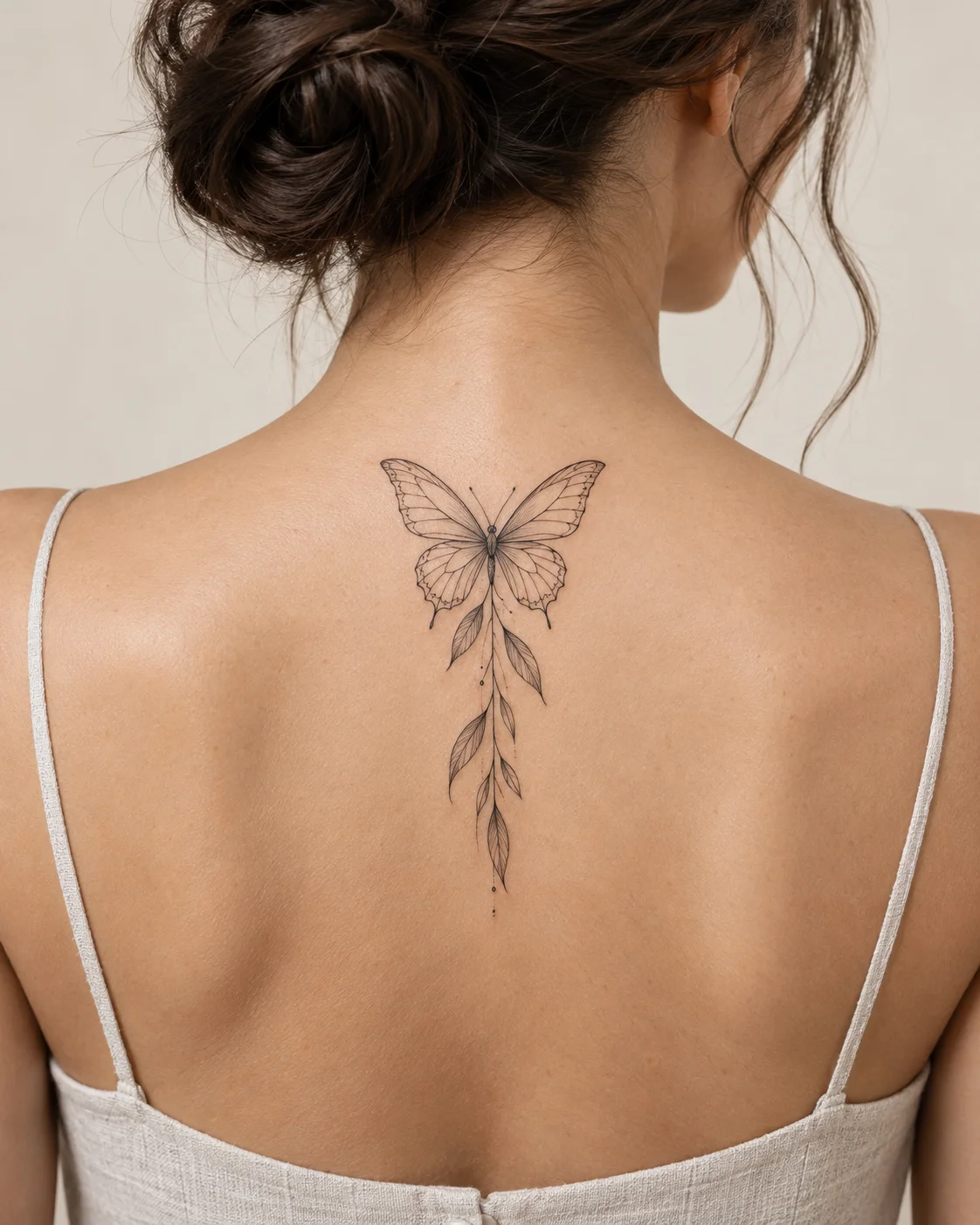
A few slender leaves hanging beneath a butterfly create a quiet downward flow. The leaf tips can echo the curves of the lower wings. Keep the stem short if you want the composition to remain an upper-back piece rather than extending far down the spine.
11. Butterfly Above an Open Circle
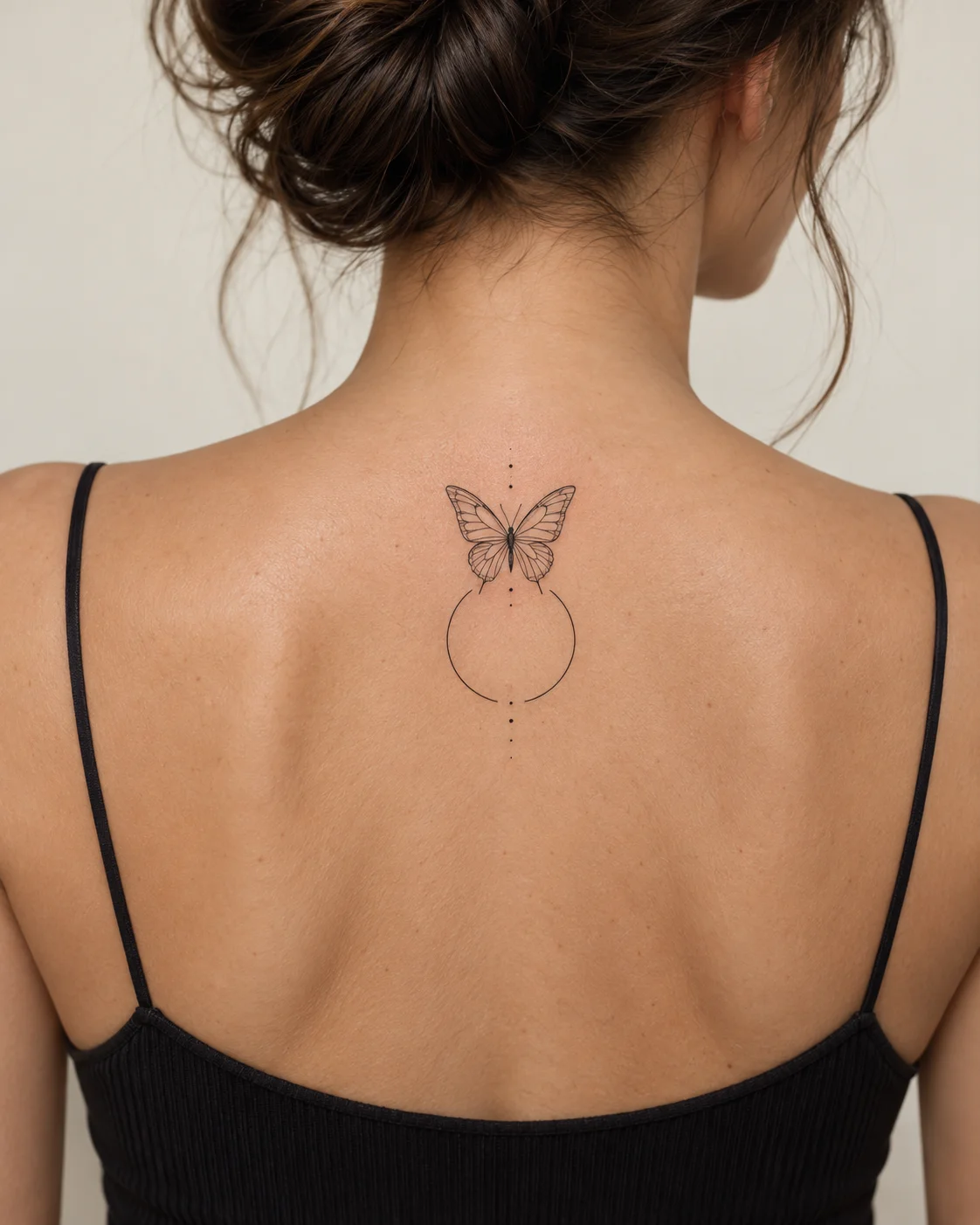
A butterfly placed above a fine incomplete circle gives the design a geometric foundation. Let the circle stay open at the top or side, with a gap before the wings. The rounded frame adds structure while the butterfly keeps the piece organic and light.
12. Butterfly and Single Lily-Inspired Bloom
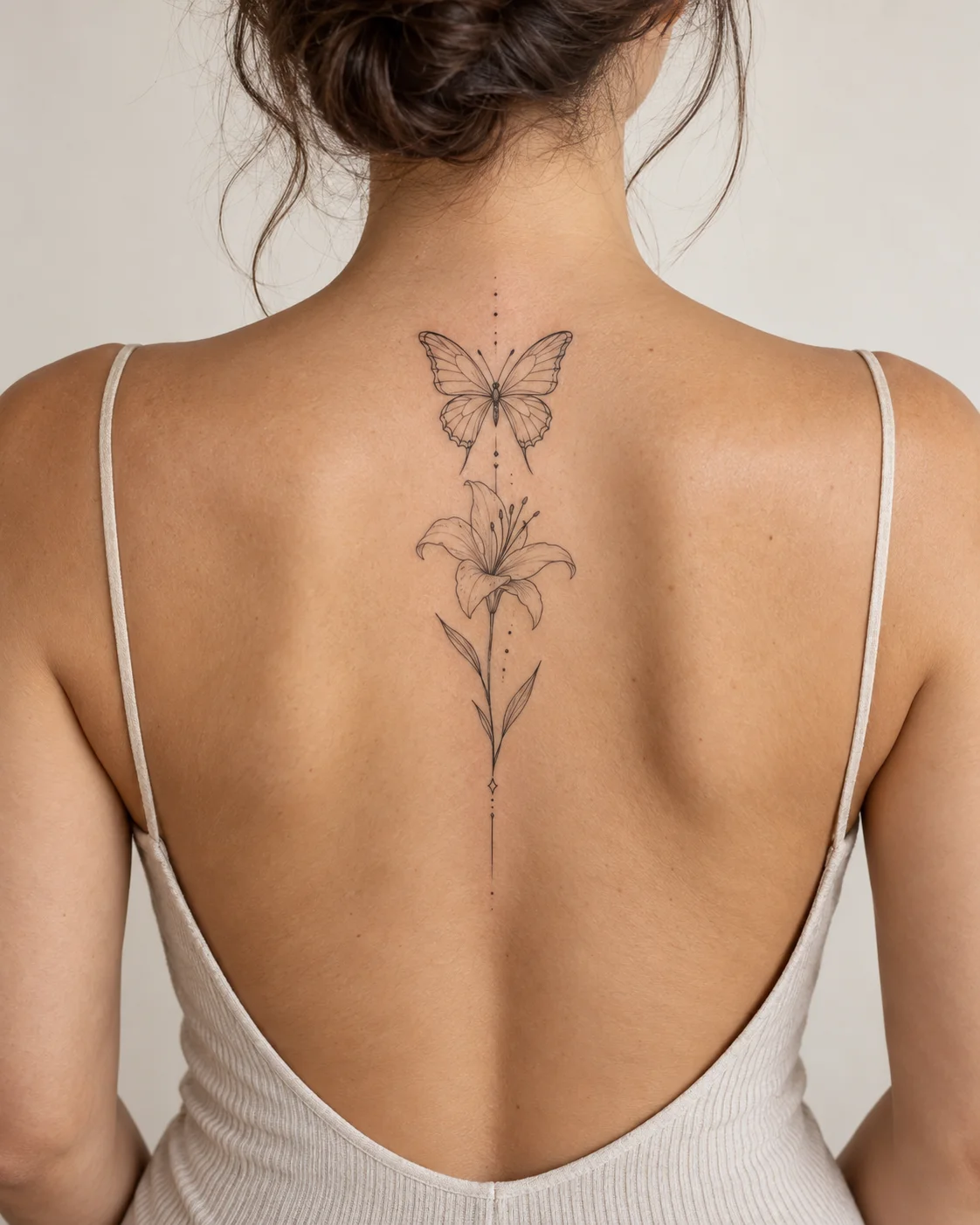
A narrow lily-inspired flower beneath a butterfly can create an elegant spine composition. Use a few clear petal contours instead of many fine overlapping folds. A slim stem connects the vertical flow without making the butterfly and flower appear to merge into one shape.
13. Swallowtail-Inspired Spine Butterfly
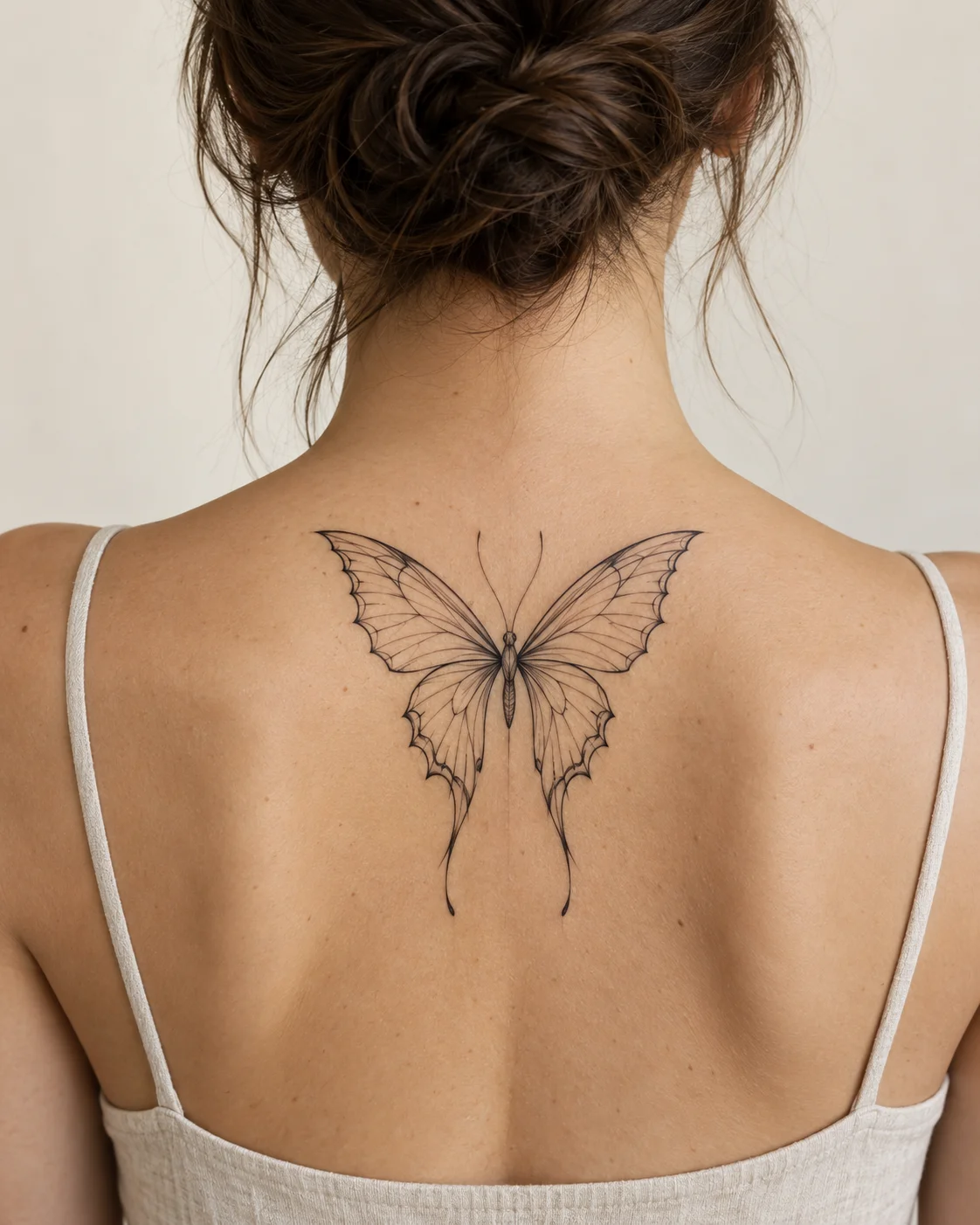
A butterfly with elongated lower wing tips creates a naturally tapered focal point. Those trailing details can echo the direction of the spine without extra decoration. Keep the space around each tail clear so the graceful shape remains visible from a normal viewing distance.
14. Butterfly and Three Tiny Stars
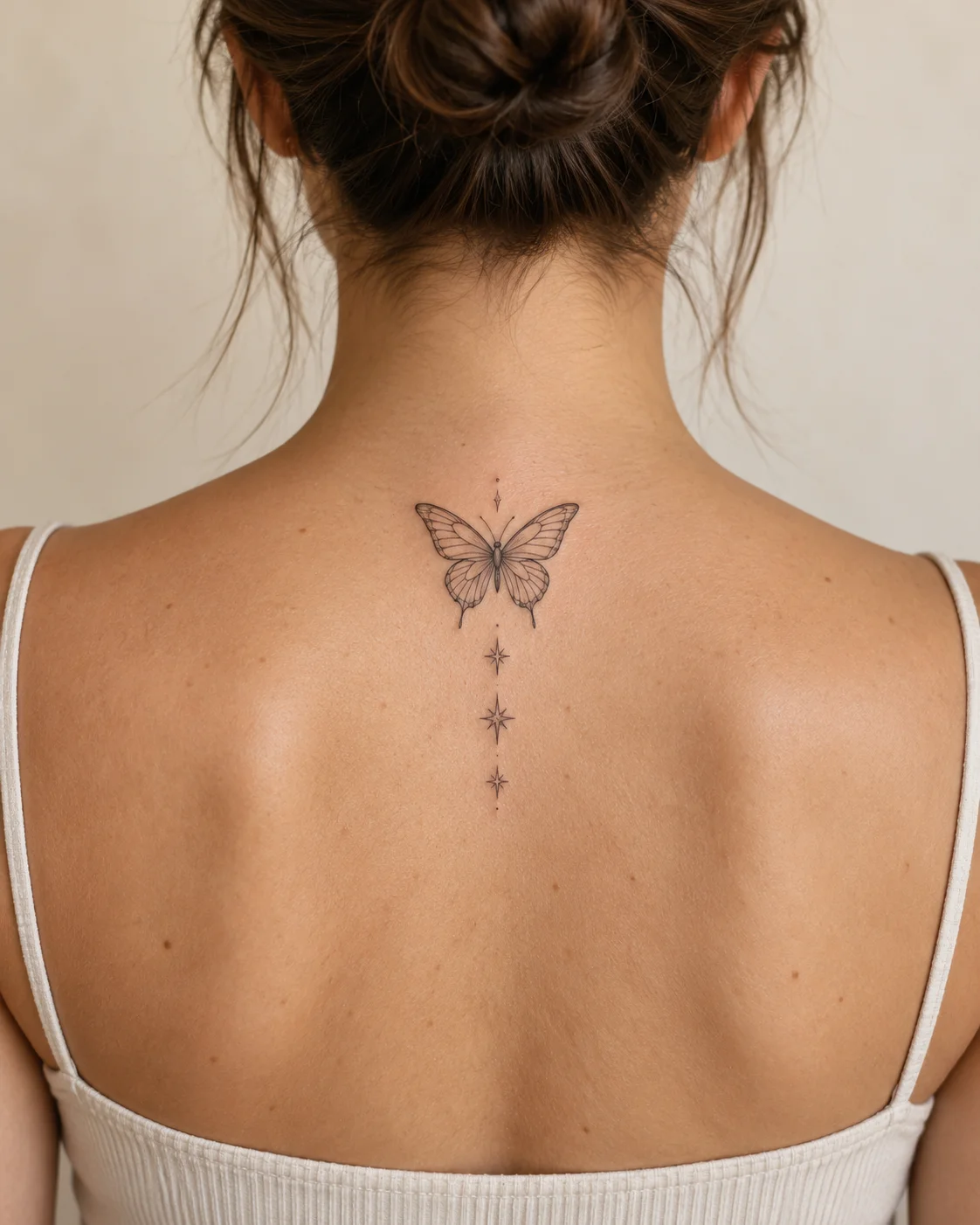
Three small stars arranged below a butterfly can create a delicate celestial trail. Vary the gaps slightly and keep the stars secondary in size. This design feels balanced when the butterfly supplies the width and the stars provide a quiet vertical finish.
15. Butterfly Along a Fine Fern
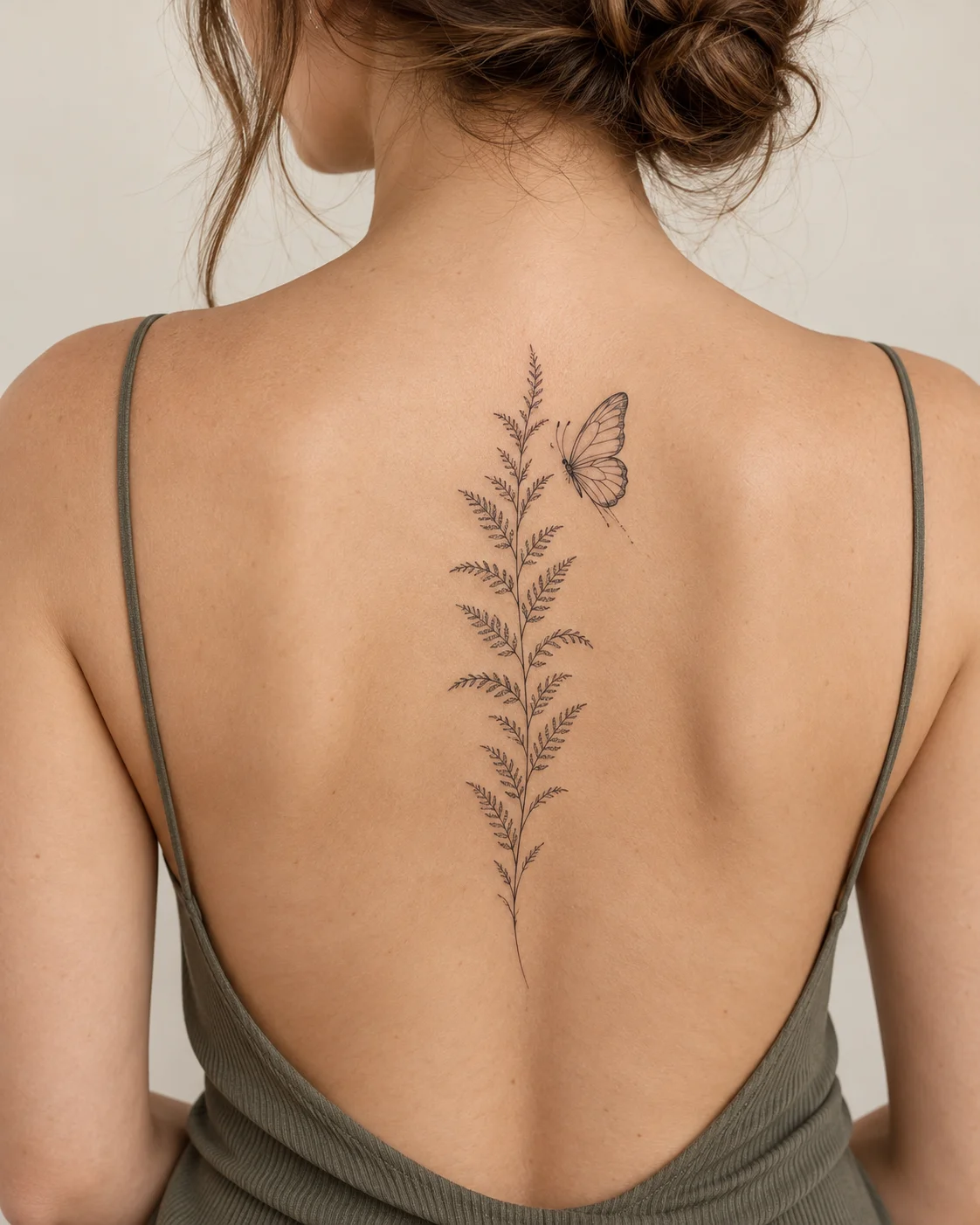
A narrow fern frond gives the spine composition a soft botanical structure. Set the butterfly beside its upper section rather than directly covering the leaves. The fern's tapered leaflets and the butterfly's rounded wings create a pleasing contrast in shape.
16. Butterfly Pair with a Shared Stem
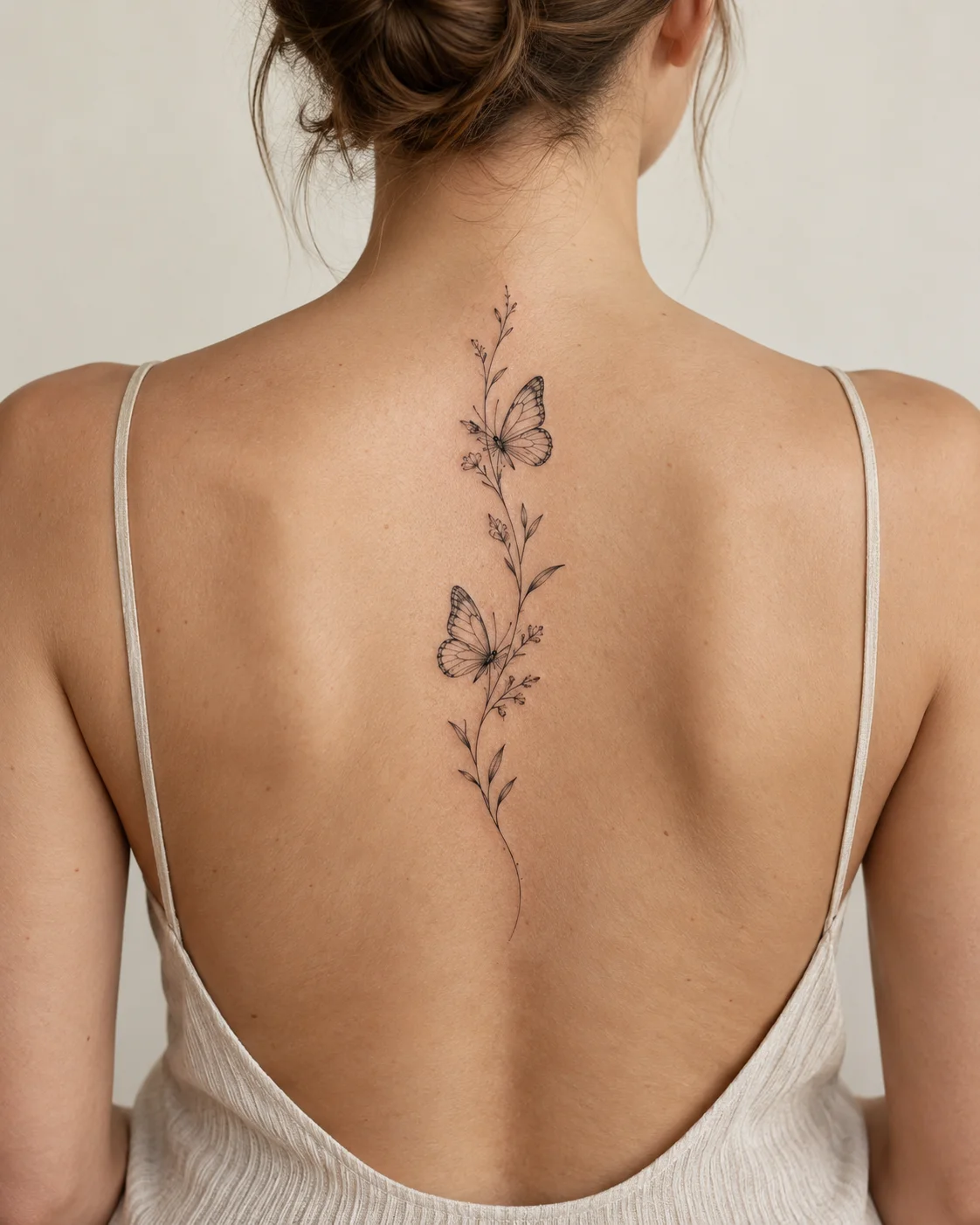
Place two small butterflies at different points along one lightly curved stem. Leave clear space where the wings approach the botanical line. The shared stem ties the composition together while the different positions make it feel like a little scene rather than a decorative stripe.
17. Butterfly with a Fine Diamond Accent
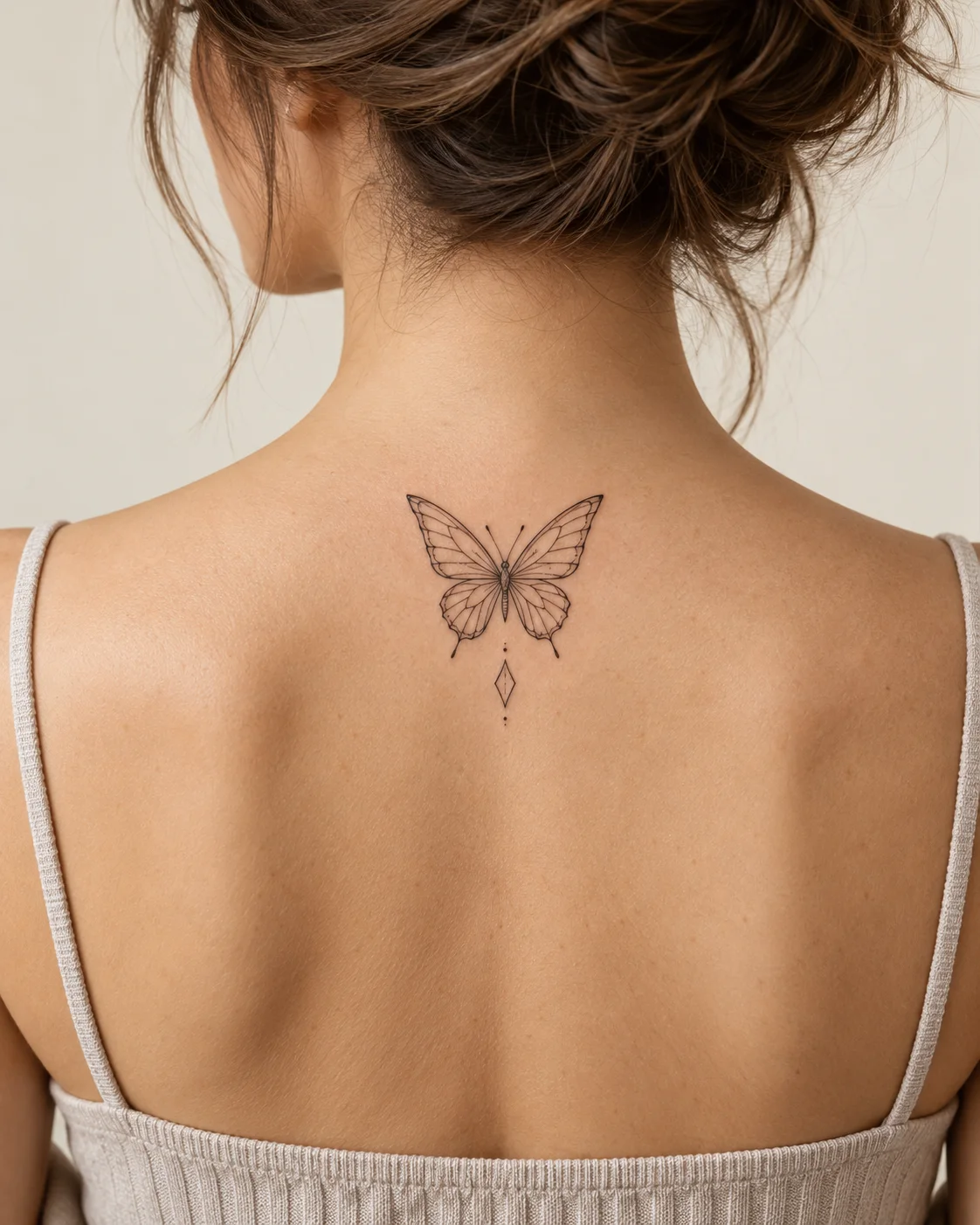
A narrow open diamond below a butterfly adds a crisp geometric detail. Keep the diamond smaller than the wings and separated by a visible gap. The contrast between soft curves and straight lines creates interest without requiring shading or a long string of ornaments.
18. Off-Center Butterfly with Centered Botanicals
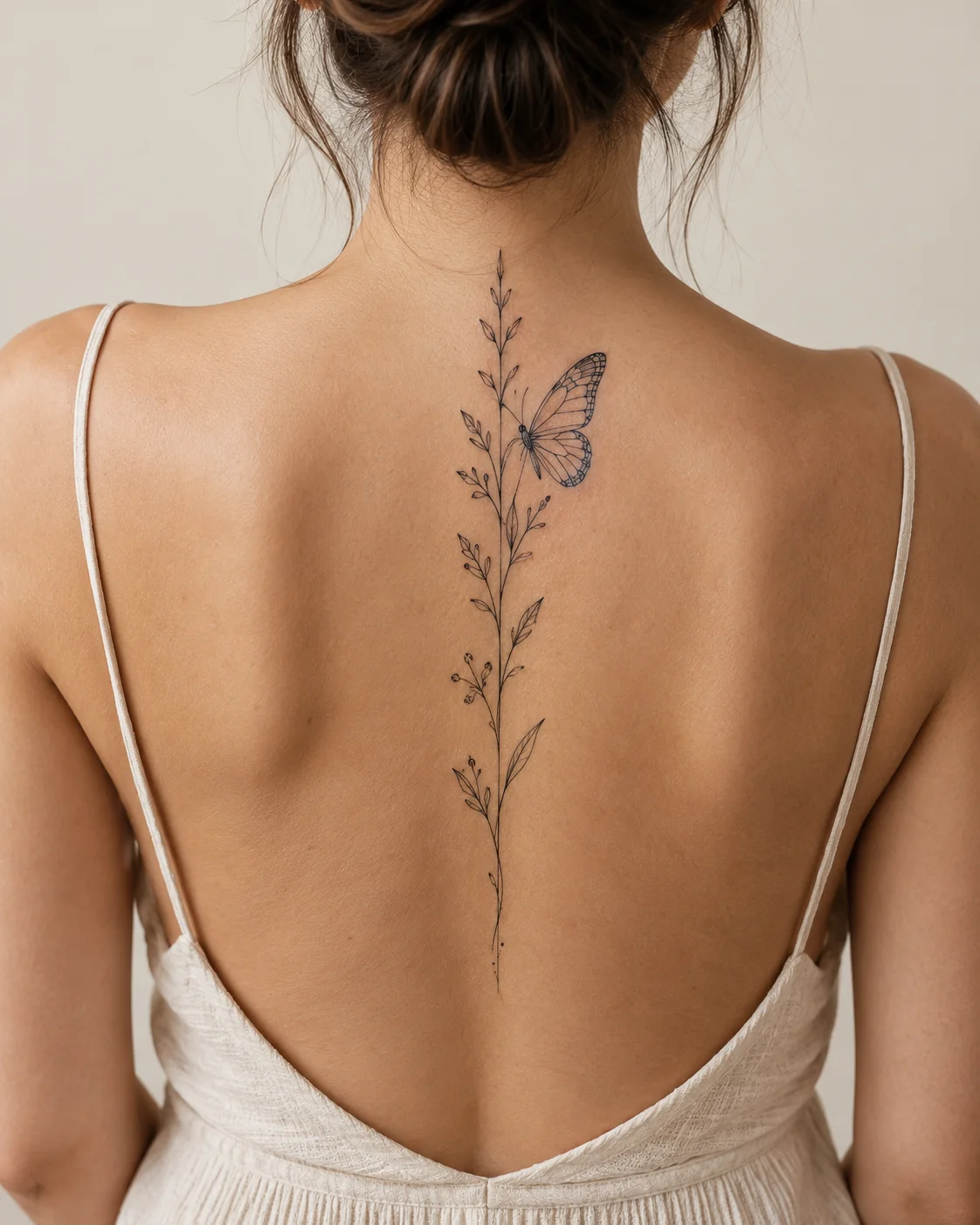
Let a thin botanical stem follow the spine while a butterfly sits just to one side near the top. The off-center wings give the design a relaxed quality. A few well-spaced leaves help bring the eye back to the central line of the back.
19. Butterfly and Falling Petals
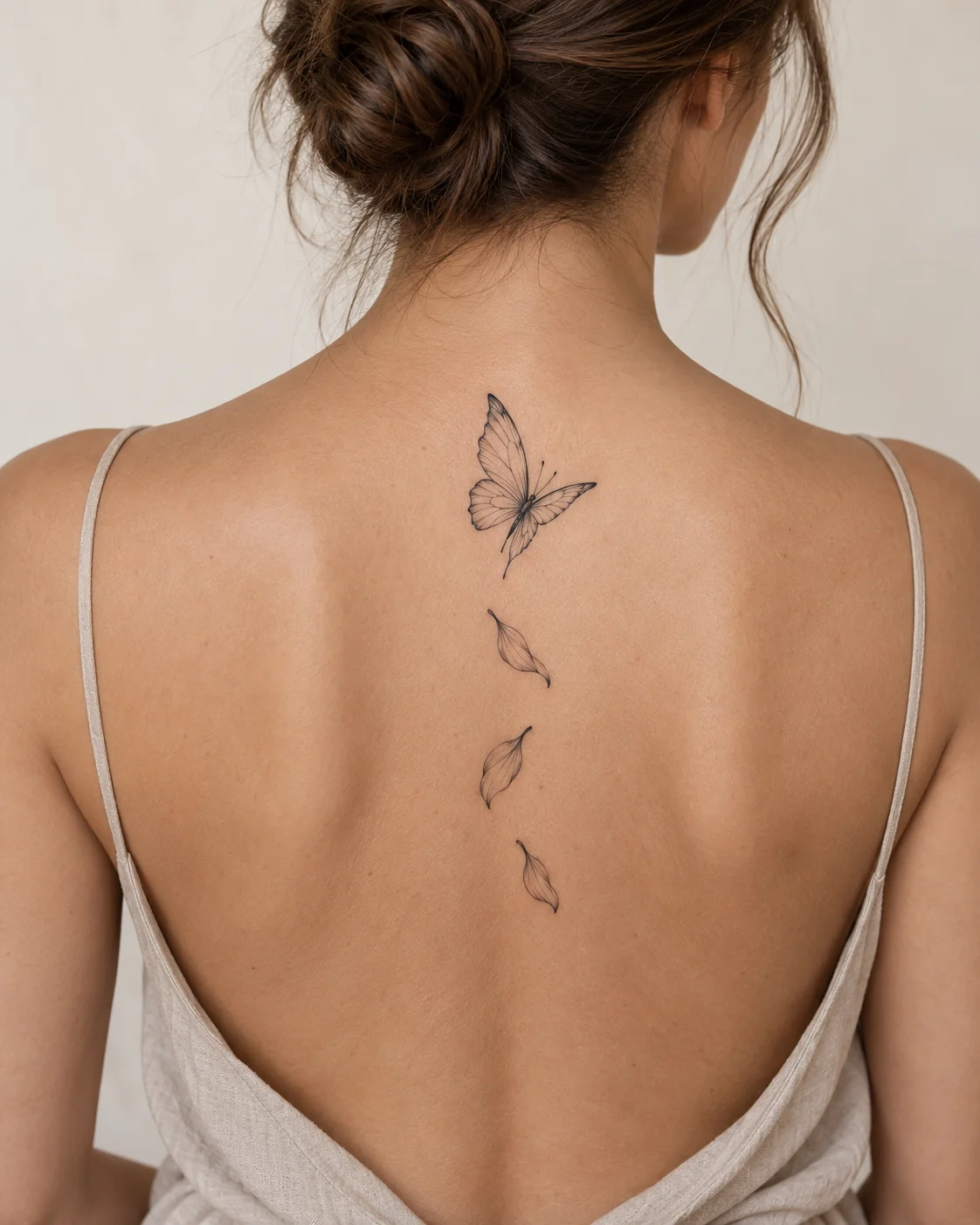
One butterfly above three sparse falling petals creates a romantic vertical composition. Vary the petal angles and keep each shape distinct. The design feels delicate when the petals suggest movement without becoming a dense cascade of small marks down the entire back.
Plan the whole composition before the first line
Decide where the design should begin and end before choosing every small detail. A short upper-back piece and a longer spine composition need different proportions. Look at the full silhouette first, then consider the internal wing details and supporting symbols.
Ask your artist how the design will sit when your shoulders relax and when your arms move. If you prefer a delicate look, use clear spacing instead of simply making every element smaller. A few well-placed shapes can create an elegant vertical design without filling the whole back.