
1. Introduction
Imagine standing on a sun-drenched balcony, the scent of salt air mingling with the sweetness of ripening fruit. That vibrant, revitalizing energy is exactly what we’ve bottled in thisStrawberry Mango Smoothie.
While smoothies are a staple of modern wellness culture, the combination of strawberries and mangoes is a masterclass in flavor balancing. The strawberry provides a familiar, slightly acidic brightness, while the mango offers a buttery, tropical depth that transforms a simple drink into a luxurious treat.
Historically, mangoes—the “king of fruits”—have been celebrated in South Asia for millennia, while strawberries became the darling of European gardens in the 18th century. Bringing them together represents a “global fusion” in a glass. This isn’t just a quick breakfast; it’s a nutrient-dense ritual designed to fuel your body and delight your palate. Whether you’re recovering from a workout or looking for a kid-friendly snack that sneaks in vitamin C, this recipe is your new gold standard.
2. Recipe Overview
- Cuisine Type:Modern American / Tropical Fusion
- Difficulty Level:Easy
- Prep Time:5 minutes
- Total Time:5 minutes
- Dietary Classifications:Vegan, Vegetarian, Gluten-Free, Dairy-Free, Refined Sugar-Free
3. Equipment and Tools
To achieve that signature velvet-like texture, the right tools are essential.
- High-Speed Blender:A motor with at least900 wattsis recommended to pulverize frozen fruit seeds and mango fibers.
- Liquid Measuring Cup:2-cup capacity (500ml) for accurate milk/juice ratios.
- Dry Measuring Cups & Spoons:For consistent fruit volume and add-ins like chia seeds.
- Silicone Spatula:Essential for scraping down the sides of the blender jar.
- Glassware:16 oz (475ml) tall glass or insulated tumbler for serving.
4. Serving Suggestions
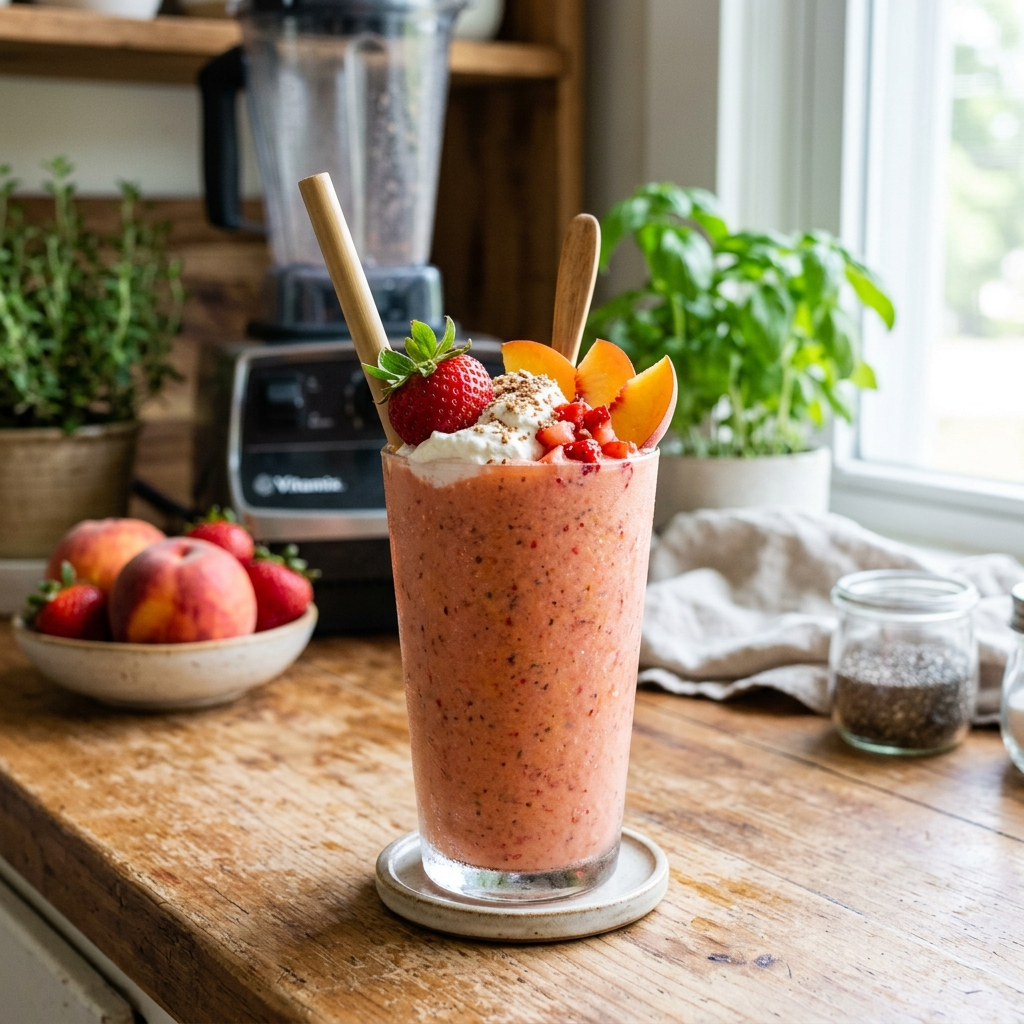
A smoothie should look as good as it tastes. Presentation elevates the experience from a “chore” to a “choice.”
- Plating:Use a chilled glass to keep the smoothie thick for longer. For a “cafe-style” look, drizzle a little coconut cream or agave syrup around the inside of the glass before pouring.
- Garnish Ideas:* A thin slice of fresh mango fanned on the rim.
- A sprinkle of hemp hearts or toasted shredded coconut.
- A sprig of fresh mint for an aromatic lift.
- Side Dishes:Pairs beautifully with a protein-rich side like avocado toast on sourdough or a handful of raw almonds.
- Beverage Pairings:If serving at a brunch, this acts as a vibrant non-alcoholic alternative to a mimosa.
5. Nutritional Information
Per 16 oz Serving (Approximate)
| Nutrient | Amount |
| Calories | 245 kcal |
| Total Fat | 3g |
| Sodium | 45mg |
| Total Carbohydrates | 52g |
| Dietary Fiber | 7g |
| Sugars | 38g (Natural) |
| Protein | 4g |
| Vitamin C | 120% DV |
Health Benefits:This smoothie is an antioxidant powerhouse. The high Vitamin C content supports collagen production and immune health, while the fiber ensures a slow release of energy, preventing the dreaded “sugar crash.”
6. Storage and Reheating
Smoothies are best enjoyed immediately, but life happens.
- Refrigeration:Store in an airtight mason jar for up to24 hours. Note that separation is natural; shake vigorously before drinking.
- Freezing:Pour leftovers into silicone muffin tins or ice cube trays. Once frozen, transfer to a bag. These “smoothie cubes” can be tossed back into a blender with a splash of liquid for an instant refresh.
- Pro Tip:Add a squeeze of lemon juice before storing to help maintain the vibrant pink-orange hue.
7. Expert Tips and Variations
- The “Frozen First” Rule:Use frozen fruit instead of ice. Ice dilutes the flavor; frozen fruit creates a “soft-serve” consistency.
- The Creaminess Factor:For an ultra-creamy texture without dairy, add a quarter of a ripe avocado. You won’t taste it, but the healthy fats add incredible mouthfeel.
- Seasonal Adaptations:In the winter, use frozen berries and canned Alphonso mango pulp. In the summer, use fresh fruit and add a handful of ice.
- Common Mistake:Putting the frozen fruit in the blender first. Always add your liquid first to create a “vortex” that pulls the heavy solids down.
8. Ingredients Section
The Base
- 1 cup (150g)Frozen Mango Chunks (High-quality Tommy Atkins or Kent varieties)
- 1 cup (150g)Frozen Strawberries (Hulled)
- 1 ½ cups (350ml)Unsweetened Almond Milk (or Oat milk for a nut-free version)
The Enhancers (Optional)
- 1 tbspFresh Lime Juice (Cuts through the sweetness)
- 1 tspMaple Syrup or Honey (Only if your fruit is tart)
- 1 scoopVanilla Protein Powder (For a meal replacement)
9. Step-by-Step Instructions
- Liquid Foundation:Pour your chosen liquid (almond milk, coconut water, or juice) into the blender base. This protects your blades and ensures a smooth start.
- Add the “Softs”:Add any powders (protein, collagen), seeds (chia, flax), or sweeteners. Blend for 5 seconds on low to incorporate.
- The Frozen Duo:Add the frozen mango and strawberries.
- The Pulse Start:Pulse the blender 5-7 times to break up the large frozen chunks. This prevents the motor from overheating.
- High-Speed Whirl:Increase the speed to high and blend for45 to 60 seconds.
- Check Consistency:Stop the blender. If the smoothie is too thick, add liquid 2 tablespoons at a time. If too thin, add more frozen fruit.
- The Final Pour:Pour into a chilled glass and garnish immediately.
10. Frequently Asked Questions (FAQ)
Q: Can I use fresh fruit instead of frozen?
A:Yes, but you will need to add 1 cup of ice to achieve a cold, thick texture. Note that the flavor will be slightly more diluted.
Q: My smoothie is too tart. How do I fix it?
A:This usually happens if the strawberries weren’t fully ripe before freezing. Add a half-teaspoon of honey or a Medjool date to balance the acidity.
Q: Is this smoothie safe for kids?
A:Absolutely! It’s a fantastic way to get fruit into picky eaters. You can even freeze the mixture into “smoothie pops” for a healthy dessert.
Q: How do I make this a meal replacement?
A:Add a source of healthy fat (1 tbsp almond butter) and a source of protein (Greek yogurt or protein powder) to make it more satiating.
Q: Can I use orange juice instead of milk?
A:Yes, orange juice makes it more “tart and citrusy,” while milk makes it “creamy and mellow.” Both are delicious!