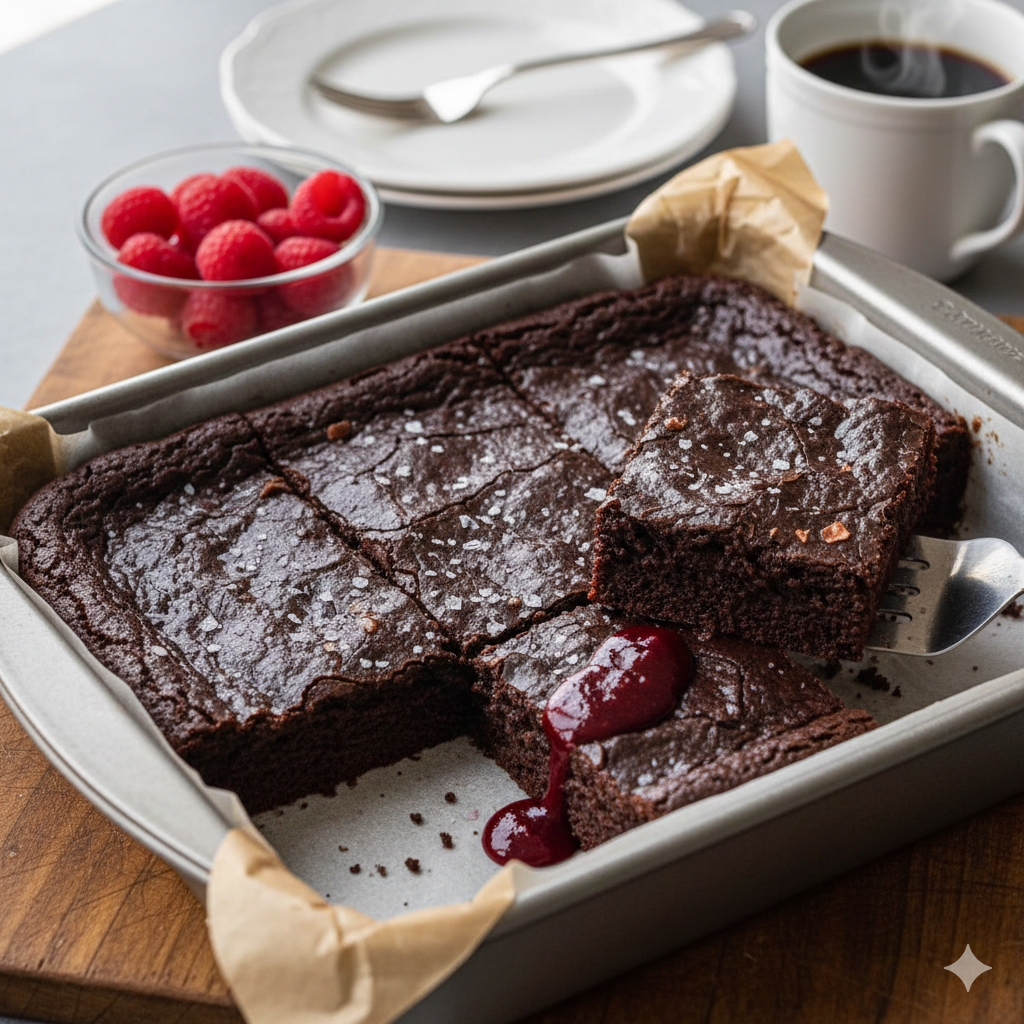
1. Introduction: The Pursuit of Chocolate Perfection
There is a universal language spoken in the kitchen, and it smells remarkably like melting butter and high-quality cocoa. Among all the confections in the baker’s repertoire, thefudgy browniestands as the ultimate crowd-pleaser. It is a dessert that transcends the simple boundary between a cookie and a cake, offering a dense, truffle-like experience that lingers on the palate.
The origin of the brownie is a bit of a culinary mystery, often attributed to the Palmer House Hotel in Chicago in the late 19th century. Legend has it that a socialite requested a dessert that was smaller than a slice of cake but still retained a cake-like richness for boxed lunches. Over the decades, the recipe evolved, diverging into two distinct camps: thecakey brownieand thefudgy brownie.
This recipe is firmly, unapologetically, for the fudgy lovers. This isn’t just about mixing sugar and flour; it’s about the science of fat-to-flour ratios and the transformative power of “blooming” cocoa powder. Whether you are baking for a childhood nostalgia trip or aiming to impress at a dinner party, these brownies represent the pinnacle of home baking—a sophisticated, deep-chocolate indulgence that manages to be both humble and extravagant.
2. Recipe Overview
- Cuisine Type:American Dessert
- Difficulty Level:Intermediate (requires careful melting and folding techniques)
- Prep Time:20 minutes
- Cook Time:25–30 minutes
- Total Time:50 minutes (plus cooling time)
- Dietary Classifications:Vegetarian, Nut-Free (optional)
3. Equipment and Tools
To achieve the iconic crackly top and the precise internal texture, you will need the following tools:
- Baking Pan:8×8 inch (20×20 cm) square metal baking pan.
- Note:Metal conducts heat more efficiently than glass, ensuring a better crust.
- Depth:Minimum 2 inches.
- Mixing Bowls:One large heat-proof bowl for the “double boiler” method and one medium bowl for dry ingredients.
- Whisk & Spatula:A sturdy balloon whisk for aerating eggs and a silicone spatula for gentle folding.
- Parchment Paper:Essential for “slinging” the brownies for easy removal.
- Kitchen Scale:Highly recommended for precise metric measurements.
- Sifter:To ensure the cocoa powder and flour are free of lumps.
4. Serving Suggestions
A brownie this rich deserves a thoughtful presentation.
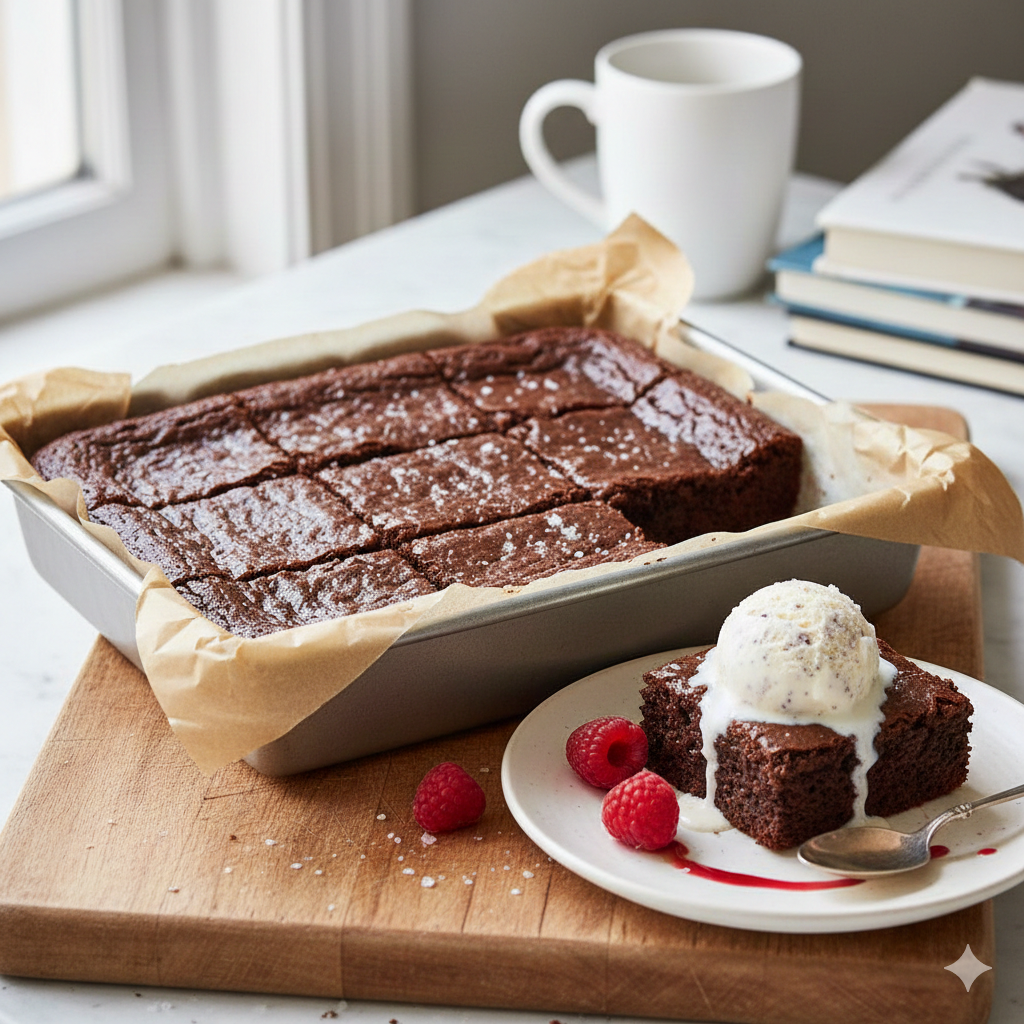
- Plating:Serve slightly warm with a dusting of sea salt flakes to cut through the sweetness.
- The Classic:A generous scoop of high-quality Madagascar vanilla bean ice cream.
- Garnish:Fresh raspberries or a drizzle of tart raspberry coulis to balance the heavy chocolate.
- Pairings:*Coffee:A dark roast espresso or a nutty cold brew.
- Wine:A robust Cabernet Sauvignon or a sweet Tawny Port.
- Non-Alcoholic:A glass of ice-cold whole milk.
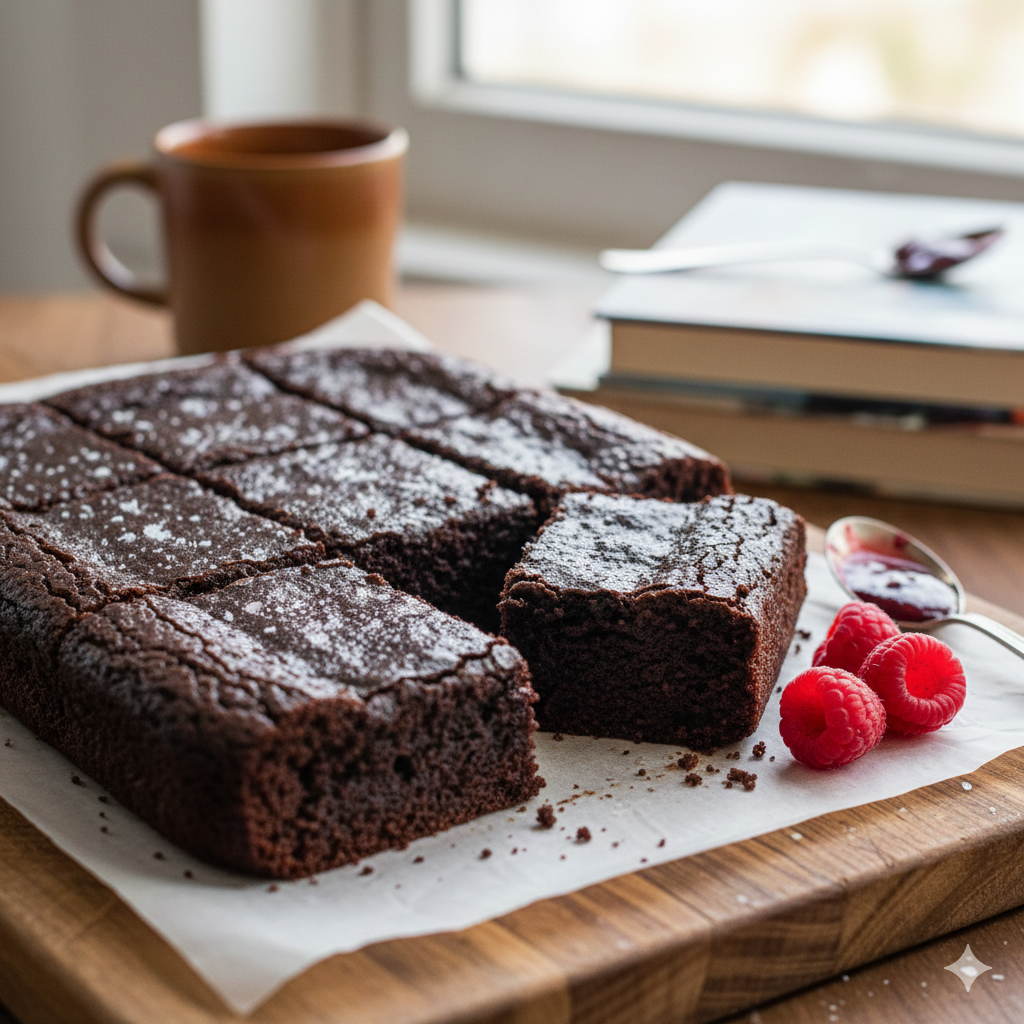
5. Nutritional Information
Per Serving (Based on 16 squares)
| Nutrient | Amount |
| Calories | 280 kcal |
| Total Fat | 16g |
| Saturated Fat | 10g |
| Cholesterol | 55mg |
| Sodium | 110mg |
| Total Carbohydrates | 34g |
| Dietary Fiber | 2g |
| Sugars | 26g |
| Protein | 3g |
Health Note:While indulgent, dark chocolate contains flavonoids which are known antioxidants. To increase the health profile, consider using chocolate with a cacao percentage of $70\%$ or higher.
6. Storage and Reheating
- Room Temperature:Store in an airtight container for up to 3 days.
- Refrigeration:Brownies actually becomefudgierin the fridge. They stay fresh for up to 7 days.
- Freezing:Wrap individual squares in plastic wrap, then place in a freezer bag. They last for 3 months. Thaw at room temperature.
- Reheating:To regain that “just baked” gooeyness, microwave for 10–15 seconds or place in a150°C (300°F)oven for 5 minutes.
7. Expert Tips and Variations
Professional Tips
- The “Crackly Top” Secret:The shiny, paper-thin crust comes from dissolving the sugar completely into the eggs. Whisk your eggs and sugar for at least 3–5 minutes until the mixture is pale and “ribbon-like.”
- Don’t Overbake:A toothpick inserted into the center should come out with a few moist crumbs,notclean. If it’s clean, they are overbaked.
Variations
- The Nutty Professor:Add 1 cup of toasted walnuts or pecans for texture.
- Swirled Cheesecake:Dollop sweetened cream cheese on top and swirl with a knife before baking.
- Salted Caramel:Pour half the batter, add a layer of thick caramel, then top with the remaining batter.
8. Ingredients Section
The Wet Base
- Unsalted Butter:225g (1 cup / 2 sticks) – Use high-quality European-style butter for better fat content.
- Dark Chocolate (60-70% Cacao):200g (7 oz) – Chopped finely. Avoid chocolate chips as they contain stabilizers.
- Granulated Sugar:250g (1 ¼ cups)
- Light Brown Sugar:100g (½ cup, packed) – Adds moisture and a molasses undertone.
- Large Eggs:3 whole eggs + 1 egg yolk (room temperature).
- Vanilla Extract:1 tablespoon – Pure extract, not imitation.
The Dry Mix
- All-Purpose Flour:125g (1 cup)
- Dutch-Processed Cocoa Powder:50g (½ cup) – Provides a darker color and smoother flavor than natural cocoa.
- Espresso Powder:1 teaspoon – Enhances the chocolate flavor without tasting like coffee.
- Sea Salt:½ teaspoon
9. Step-by-Step Instructions
Step 1: Preparation and Lining
Preheat your oven to175°C (350°F). Grease your 8×8 inch pan with butter and line with parchment paper, leaving an overhang on two sides to act as a handle.
Step 2: Melting the Chocolate and Butter
Using a double boiler (a bowl set over a pot of simmering water), melt the butter and chopped dark chocolate together. Stir occasionally until glossy and smooth. Remove from heat and let it cool slightly.
Culinary Note:Melting chocolate too fast can cause it to “seize” or separate. Keep the heat low and steady.
Step 3: The Egg-Sugar Aeration
In a large bowl, combine the granulated sugar, brown sugar, eggs, and egg yolk. Whisk vigorously for about 3-5 minutes. The mixture should double in volume and turn a pale, creamy color. This step is crucial for the brownie’s structure and top crust.
Step 4: Combining the Bases
Slowly stream the melted chocolate/butter mixture into the egg mixture, whisking constantly. Stir in the vanilla extract.
Step 5: Sifting and Folding
Sift the flour, cocoa powder, espresso powder, and salt directly into the wet ingredients. Using a silicone spatula,foldthe ingredients together.
Technique:Do not whisk. Use a circular motion, cutting through the center and lifting from the bottom until no streaks of flour remain.
Step 6: The Bake
Pour the batter into the prepared pan and smooth the top. Bake for25–28 minutes.
Visual Cue:The edges should be set and slightly pulling away from the sides, while the center should have a slight wobble if shaken gently.
Step 7: The Cooling Mandate
This is the hardest part. Let the brownies cool completely in the pan for at least2 hours. This allows the fats to set and the fudgy texture to fully develop.
10. Frequently Asked Questions (FAQ)
Q: Can I use natural cocoa powder instead of Dutch-processed?
A: You can, but the brownies will be lighter in color and slightly more acidic. Dutch-processed is preferred for that deep “Oreo-like” darkness.
Q: My brownies are always too dry. What am I doing wrong?
A: You are likely overbaking them. Every oven is different. Start checking 5 minutes before the recipe suggests. Remember, they continue to cook in the hot pan after being removed from the oven.
Q: Why didn’t I get the shiny top?
A: Usually, this is because the sugar didn’t dissolve. Make sure your eggs are at room temperature and you whisk them with the sugar long enough to create that meringue-like layer.
Q: Can I make these gluten-free?
A: Yes! Substitute the all-purpose flour for a 1:1 gluten-free baking blend. Since these brownies rely more on chocolate and fat for structure than gluten, they adapt very well.
Q: Why add espresso powder?
A: It’s a baker’s secret! Coffee acts as a flavor catalyst for chocolate, making it taste richer and more complex without adding a distinct coffee flavor.