1. Introduction: The Magic of the Snickerdoodle
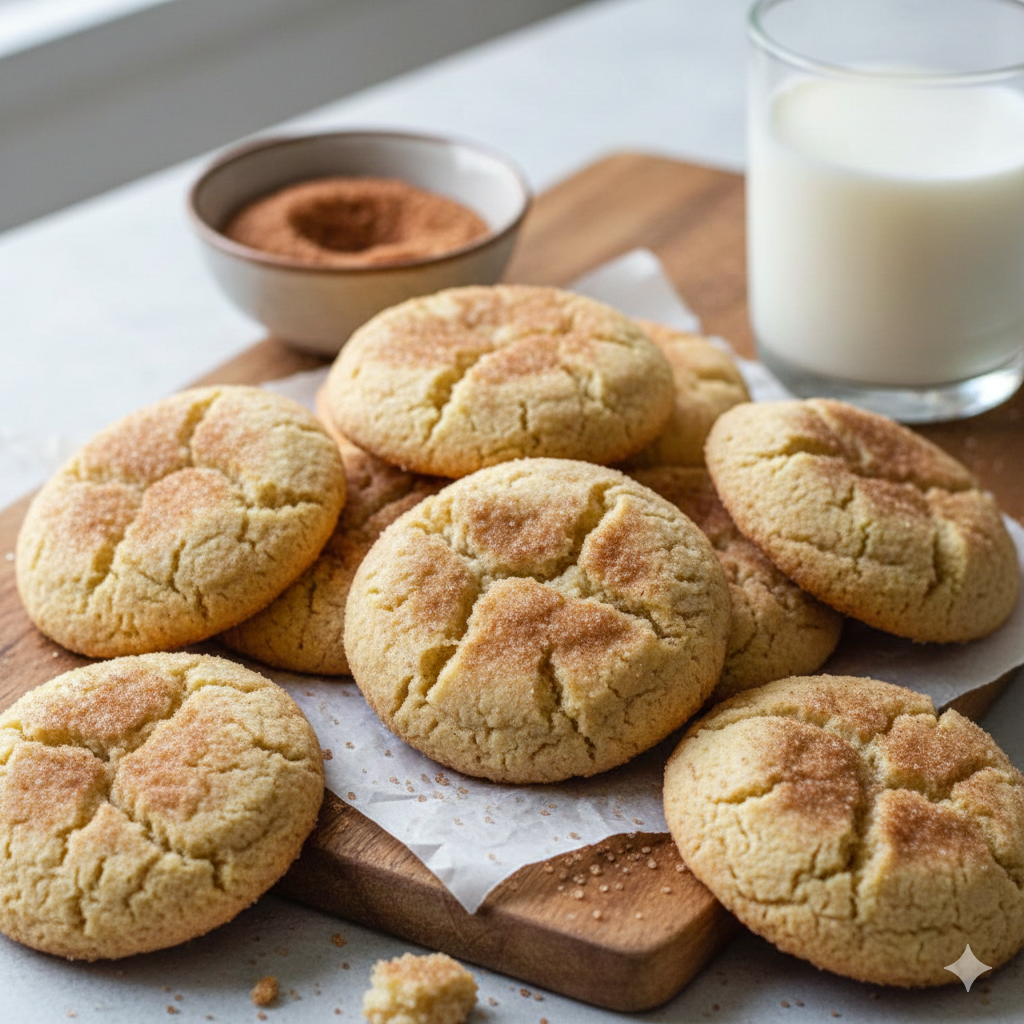
There is a specific kind of nostalgia that only aSnickerdoodlecan evoke. Unlike its cousin, the chocolate chip cookie, which relies on melting pockets of cocoa, the Snickerdoodle is a masterclass in texture and subtle, warm spice. It is the quintessential “cozy” cookie—a pillowy, buttery cloud encased in a crackly, sparkling cinnamon-sugar shell.
The origin of the Snickerdoodle is a bit of a culinary mystery. Some food historians point to a German heritage, suggesting the name derives fromSchneckennudeln(crinkly noodles), while others believe it’s simply a whimsical New England “nonsense word” tradition. Regardless of where it started, the Snickerdoodle earned its place in the American baking pantheon because of one specific, non-negotiable ingredient:Cream of Tartar.
This isn’t just a sugar cookie rolled in cinnamon. The cream of tartar provides a distinct tang and reacts with the baking soda to create that signature chewy, crinkly top. It is the perfect project for a rainy afternoon or a holiday cookie exchange, bridging the gap between sophisticated flavor and childhood comfort.
2. Recipe Overview
- Cuisine Type:American Traditional
- Difficulty Level:Easy / Beginner-Friendly
- Prep Time:15 minutes
- Chill Time:30 minutes (optional but recommended)
- Cook Time:10 minutes
- Total Time:55 minutes
- Dietary Classifications:Vegetarian, Nut-Free
3. Equipment and Tools
To achieve the perfect bake, having the right tools is as important as the ingredients.
- Stand Mixer or Electric Hand Mixer:Crucial for “creaming” the butter and sugar to incorporate air.
- Baking Sheets:Two large, light-colored aluminum rimmed baking sheets (approx. 13×18 inches).
- Parchment Paper or Silicone Baking Mats:Prevents sticking and ensures even browning on the bottom.
- Medium Mixing Bowl:For whisking dry ingredients.
- Small Topping Bowl:For the cinnamon-sugar rolling station.
- Measuring Cups & Spoons:Accuracy is key in baking.
- Cookie Scoop:A 1.5-tablespoon (medium) scoop ensures uniform size and even baking.
- Wire Cooling Rack:Allows air to circulate around the cookies so they don’t get soggy as they cool.
4. Serving Suggestions
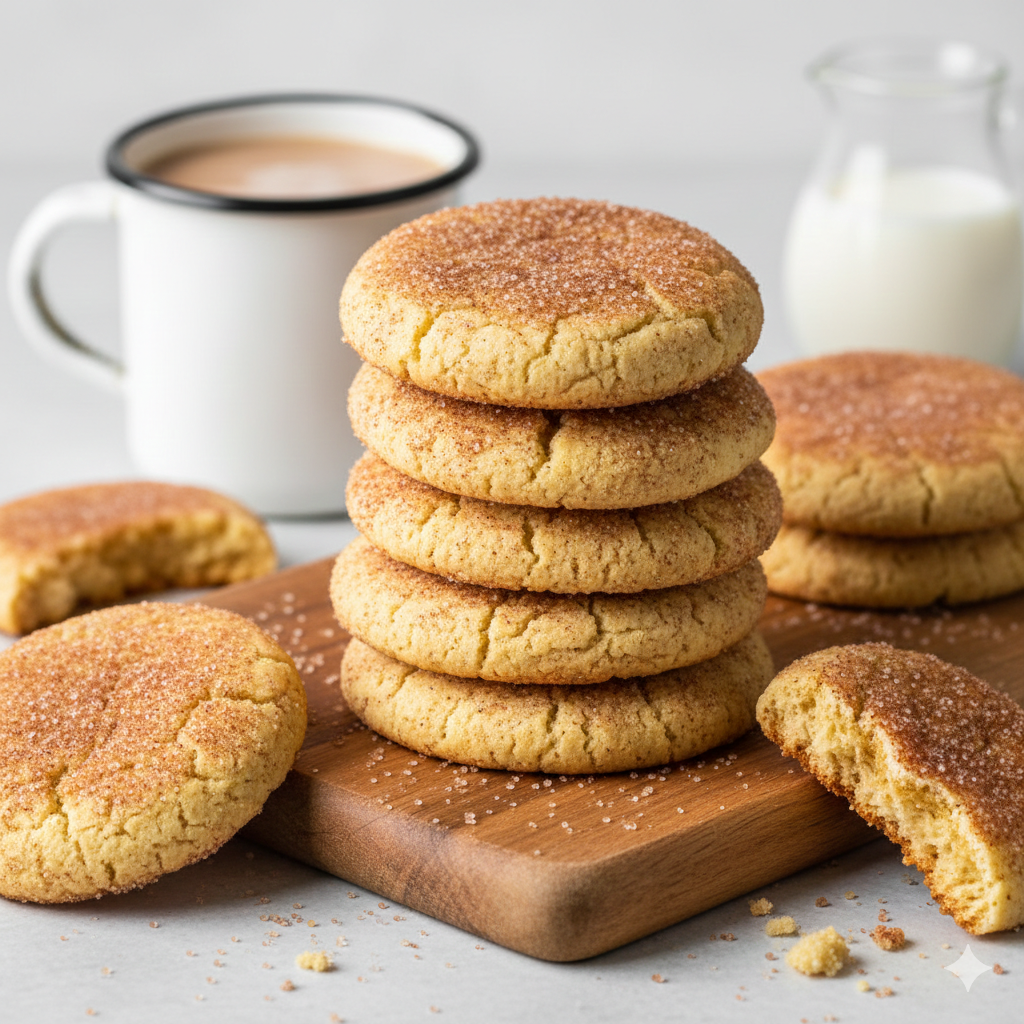
Snickerdoodles are versatile enough for a fancy platter or a casual glass of milk.
- The Classic Pairing:Serve warm with a tall glass of cold whole milk or a creamy oat milk.
- The Coffee House Vibe:Pair with a spiced chai latte or a dark roast coffee to balance the sweetness.
- Ice Cream Sandwiches:Take two cooled Snickerdoodles and sandwich a scoop of salted caramel or vanilla bean ice cream in the middle.
- Plating Tip:Dust the serving platter with a tiny extra pinch of cinnamon and serve while still slightly warm to the touch.
5. Nutritional Information (Per Cookie)
- Calories:145 kcal
- Total Fat:7g
- Saturated Fat:4.5g
- Carbohydrates:20g
- Sugar:12g
- Protein:1.5g
- Sodium:95mg
Note: Snickerdoodles are a high-energy treat. For a healthier twist, you can substitute half the all-purpose flour with white whole wheat flour, though the texture will be denser.
6. Storage and Reheating
To keep that “just baked” softness, follow these steps:
- Room Temperature:Store in an airtight container for up to 5 days.Pro Tip:Place a slice of white bread in the container; the cookies will absorb the moisture from the bread and stay soft longer.
- Freezing Dough:Roll the dough into balls (don’t roll in cinnamon sugar yet) and freeze on a tray. Once solid, transfer to a freezer bag. Bake directly from frozen, adding 1-2 minutes to the cook time.
- Freezing Baked Cookies:Wrap tightly in foil and place in a freezer bag for up to 3 months.
- Reheating:Microwave a single cookie for 8–10 seconds to restore that gooey, soft-from-the-oven texture.
7. Expert Tips and Variations
Professional Chef Tips
- Room Temperature Ingredients:Ensure your butter and eggs are at room temperature. This creates an emulsion that traps air, leading to a fluffier cookie.
- Don’t Overbake:This is the golden rule. Snickerdoodles should look slightly “underdone” and puffy when you pull them out. They will firm up on the hot pan.
- The Spoon and Level Method:If not using a scale, fluff your flour with a spoon, scoop it into the cup, and level it off with a knife. Packing flour leads to dry, tough cookies.
Creative Variations
- Pumpkin Spice Snickerdoodles:Replace the cinnamon in the coating with pumpkin pie spice.
- Brown Butter Snickerdoodles:Melt and brown the butter first, then let it solidify back to a soft state before creaming. This adds a nutty, toasted depth.
- Chai-Doodles:Add cardamom, ginger, and cloves to the sugar coating.
8. Ingredients Section
For the Dough
| Ingredient | Imperial | Metric |
| Unsalted Butter (Softened) | 1 Cup | 226g |
| Granulated White Sugar | 1 ½ Cups | 300g |
| Large Eggs (Room Temp) | 2 | 2 |
| Pure Vanilla Extract | 2 tsp | 10ml |
| All-Purpose Flour | 2 ¾ Cups | 345g |
| Cream of Tartar | 2 tsp | 6g |
| Baking Soda | 1 tsp | 6g |
| Kosher Salt | ½ tsp | 3g |
For the Coating
- Granulated Sugar:¼ Cup (50g)
- Ground Cinnamon:2 Tbsp (15g)
9. Step-by-Step Instructions
Step 1: Prep and Creaming
Preheat your oven to375°F (190°C). In a large bowl or stand mixer, beat the softened butter and 1 ½ cups of sugar on medium-high speed for about 3–5 minutes. You are looking for the mixture to turn pale yellow and look fluffy.
Step 2: Liquid Ingredients
Add the eggs one at a time, beating well after each addition. Scrape down the sides of the bowl. Stir in the vanilla extract.
Step 3: Sift the Dry Ingredients
In a separate medium bowl, whisk together the flour, cream of tartar, baking soda, and salt.
Step 4: Combine
Turn the mixer to low. Gradually add the dry ingredients to the wet ingredients. Mixonly until just combined. Overmixing will develop too much gluten and make the cookies tough.
Step 5: The Cinnamon-Sugar Roll
In a small bowl, combine the ¼ cup sugar and 2 tablespoons of cinnamon. Scoop about 1.5 tablespoons of dough and roll it into a smooth ball (about 1 inch in diameter). Roll the ball generously in the cinnamon-sugar mixture until fully coated.
Step 6: Bake
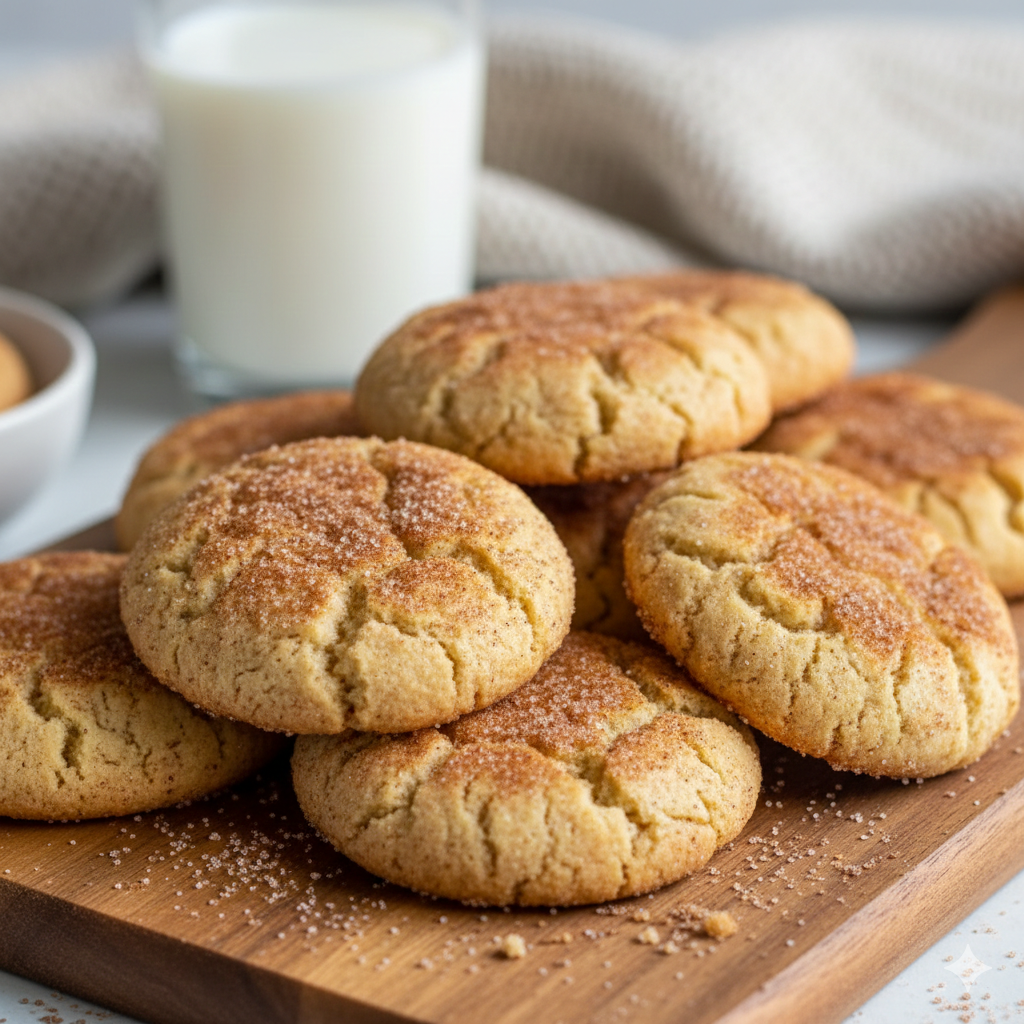
Place the balls on the prepared baking sheet, spaced 2 inches apart. Bake for8 to 10 minutes. The edges should be set, but the centers should still look soft and slightly cracked.
Step 7: The Cool Down
Let the cookies rest on the baking sheet for 5 minutes. This “carry-over cooking” is essential for the chewy texture. Transfer to a wire rack to cool completely.
10. Frequently Asked Questions (FAQ)
Q: Can I make these without cream of tartar?
A: Technically yes, you can substitute the cream of tartar and baking soda with 2 teaspoons of baking powder. However, you will lose that signature “tang” and the specific crinkly texture that defines a Snickerdoodle.
Q: Why did my cookies turn out flat?
A: Usually, this is because the butter was too warm (almost melting) or the oven wasn’t hot enough. Try chilling your dough for 30 minutes before baking to help the fat stay solid longer.
Q: Can I use salted butter?
A: Yes! Just reduce the added salt in the recipe to ¼ teaspoon to ensure they don’t taste overly salty.
Q: Why are they called Snickerdoodles?
A: Most culinary historians believe the name is a corruption of the German wordSchneckennudeln, which refers to a cinnamon-dusted pastry.
Q: How do I get those perfect cracks on top?
A: The cracks come from the chemical reaction between the cream of tartar and baking soda. Make sure your leavening agents aren’t expired!