1. Introduction
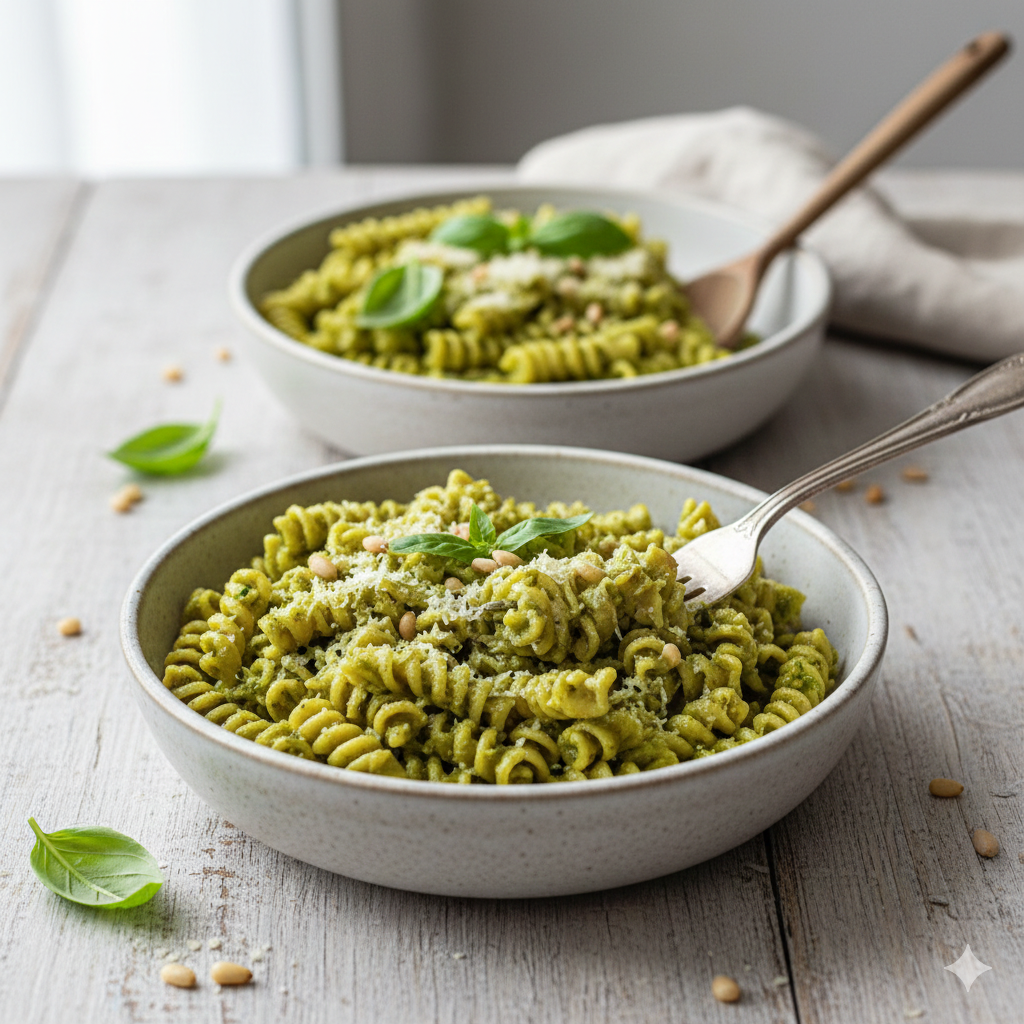
We have all been there: the clock strikes 6:30 PM, the workday has drained your creative energy, and the thought of a mountain of leftovers or a complex kitchen cleanup feels overwhelming. Enter theSmall-Batch Creamy Pesto Pasta. This isn’t just a recipe; it’s a culinary “safety net” designed for those who crave a high-quality, gourmet experience without the logistical commitment of a family-sized feast.
Pesto itself traces its lineage back to the sun-drenched hills of Genoa, Italy. Historically known aspesto alla genovese, the traditional mortar-and-pestle method was a laborious act of love. However, the “creamy” variation is a modern evolution, blending the herbal punch of basil with the silky indulgence of dairy—a fusion that has become a staple in Mediterranean-inspired bistros across the globe.
What makes this specific version unique is itssmall-batch architecture. By focusing on 1-2 servings, we manage the heat and emulsification more precisely. This prevents the delicate basil from oxidizing into a muddy brown and ensures every strand of pasta is perfectly cloaked in a velvet-green sauce. It is a dish that honors the vibrancy of Italian tradition while respecting the constraints of the modern schedule.
2. Recipe Overview
- Cuisine Type:Italian-Fusion
- Difficulty Level:Beginner/Easy
- Total Time:15 minutes (5 mins prep, 10 mins cooking)
- Dietary Classifications:Vegetarian. Can be made Gluten-Free (with chickpea or brown rice pasta) and Nut-Free (see variations).
3. Equipment and Tools
For small-batch cooking, the size of your tools matters to prevent moisture loss and scorching.
- Medium Saucepan/Pot:3-quart volume for boiling the pasta.
- Large Skillet or Sauté Pan:10-inch diameter. A wide surface area helps the cream reduce evenly.
- Microplane or Fine Grater:To ensure the Parmesan is “snow-like” so it melts instantly.
- Silicone Tongs:Essential for tossing the pasta without breaking the strands.
- Colander:To drain the pasta (though a spider strainer is preferred to keep that liquid gold—pasta water—accessible).
- Liquid Measuring Cup:For measuring the cream and reserved pasta water.
4. Serving Suggestions
Plating Recommendations:
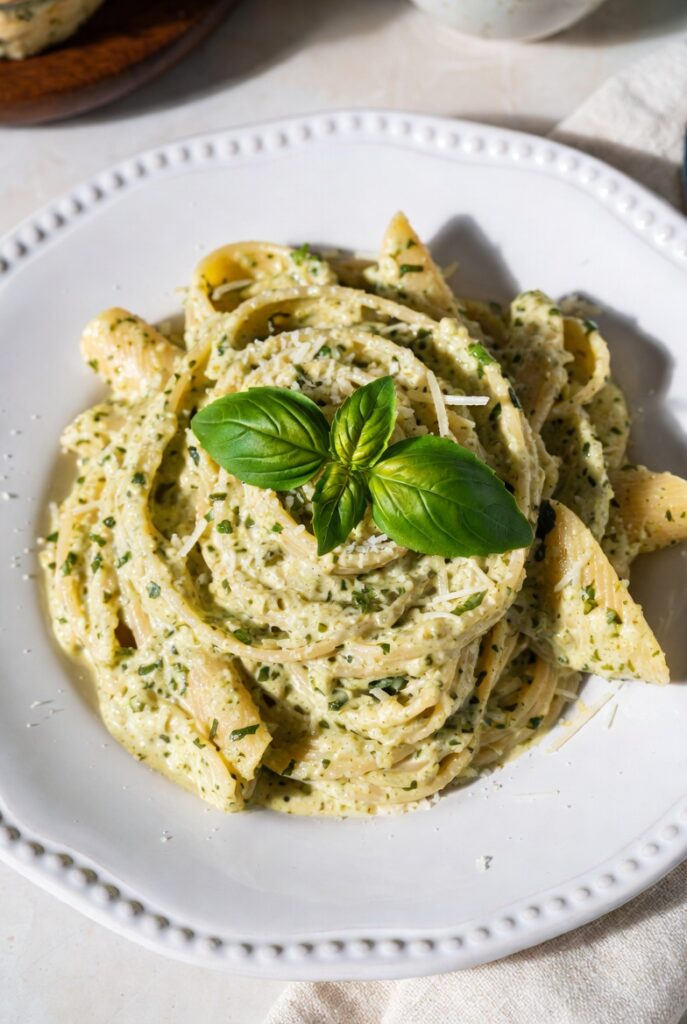
Twirl the pasta into a high nest using a carving fork and a large spoon. Place it in a shallow, wide bowl. The extra sauce should pool slightly at the base.
Garnish Ideas:
- Pine Nuts:Toasted for 2 minutes in a dry pan for a smoky crunch.
- Fresh Basil Leaves:Small “micro” leaves placed on top.
- Burrata:For an ultra-luxe version, place half a ball of cold burrata on top of the hot pasta.
Beverage Pairings:
- White Wine:A crispVermentinoorPinot Grigio. The acidity cuts through the heavy cream.
- Non-Alcoholic:A sparkling lemon-infused water or a light elderflower spritz.
5. Nutritional Information
Per serving (based on 2 servings):
| Nutrient | Amount |
| Calories | 480 kcal |
| Total Fat | 26g |
| Saturated Fat | 14g |
| Carbohydrates | 48g |
| Fiber | 3g |
| Protein | 14g |
Health Insight:Basil is a powerhouse of Vitamin K and antioxidants. To make this lighter, you can swap half of the heavy cream for the starchy pasta water to create a lower-fat emulsion.
6. Storage and Reheating
- Refrigeration:Store in an airtight container for up to 2 days.
- Freezing:Not recommended. Cream-based sauces tend to “break” or separate when frozen and thawed.
- Reheating:This is the most important part! Do not microwave on high. Instead, place in a pan over low heat and add a splash of milk or water. Stir constantly until the sauce becomes creamy again.
7. Expert Tips and Variations
- The Golden Rule of Pasta Water:Never discard your pasta water until the dish is finished. The starch in the water acts as a “glue,” binding the oily pesto to the watery cream.
- Pesto Quality:If using store-bought, choose the refrigerated kind over the shelf-stable jar. The flavor difference is night and day.
- Variations:
- The Nut-Free Alternative:Use a pepita (pumpkin seed) pesto.
- Add Protein:Stir in pre-cooked rotisserie chicken or sautéed shrimp in the final 2 minutes.
- The “Kick”:Add a pinch of red pepper flakes to the garlic as it sautés.
8. Ingredients Section
- Dry Pasta:6 oz (170g) — Linguine, Fettuccine, or Fusilli work best.
- Prepared Basil Pesto:1/4 Cup (60g).
- Heavy Cream:1/3 Cup (80ml).
- Garlic:1 large clove, minced.
- Unsalted Butter:1 tbsp (14g).
- Freshly Grated Parmesan:1/4 Cup (25g).
- Reserved Pasta Water:1/4 Cup (as needed).
- Salt & Pepper:To taste.
9. Step-by-Step Instructions
- Boil the Pasta:Bring a pot of salted water to a boil. Cook the pasta for 1-2 minuteslessthan the package instructions (trueal dente).Reserve 1/2 cup of pasta waterbefore draining.
- Sauté the Aromatics:In your skillet over medium heat, melt the butter. Add the minced garlic and sauté for only 30-45 seconds until fragrant but not browned.
- Build the Cream Base:Pour the heavy cream into the skillet. Let it come to a gentle simmer for 1-2 minutes until it slightly thickens.
- Emulsify the Pesto:Turn the heat toLow. Whisk in the pesto and the Parmesan cheese. Stir until the cheese is melted and the sauce is a uniform, vibrant green.
- The Toss:Add the cooked pasta directly to the skillet.
- Adjust Consistency:If the sauce looks too thick or “clumpy,” add your reserved pasta water one tablespoon at a time. Toss vigorously. The starch will create a glossy, restaurant-quality finish.
- Final Seasoning:Taste first (the pesto and cheese are salty!). Add black pepper or a pinch of salt if necessary.
10. Frequently Asked Questions (FAQ)
Q: Can I use half-and-half instead of heavy cream?
A: You can, but the sauce will be thinner and more prone to curdling if boiled. Keep the heat very low if using lower-fat dairy.
Q: Why did my pesto turn brown?
A: Heat is the enemy of basil. Never boil the pesto. Always add it at the very end over low heat to maintain its bright green color.
Q: What is the best pasta shape for this?
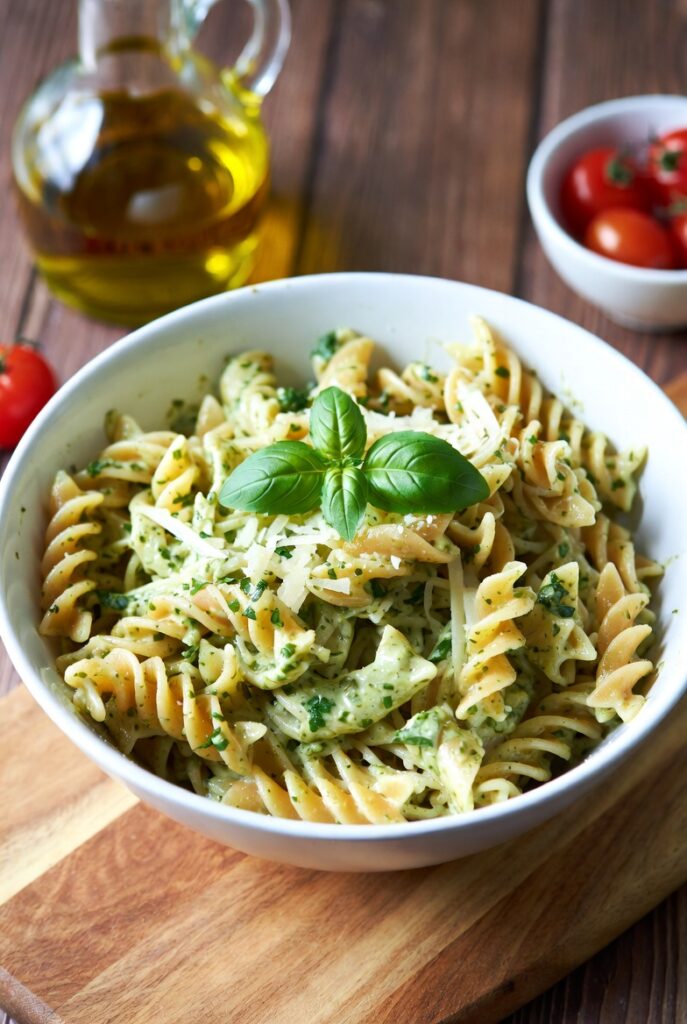
A: Long, flat noodles like fettuccine provide the most surface area for the cream to cling to. If you prefer short pasta, Fusilli is great because the sauce gets trapped in the spirals.
Q: Can I make my own pesto?
A: Absolutely! A quick blend of basil, garlic, pine nuts, parmesan, and olive oil is always superior.
Q: Is it okay to use pre-grated cheese?
A: Try to avoid it. Pre-grated cheese is coated in potato starch to prevent clumping, which can make your sauce feel gritty instead of smooth.